Most traders spend years refining strategies, testing indicators, and searching for the perfect entry model. Yet time and time again, the difference between profitable traders and those who struggle isn’t found on the chart — it’s found in the mind.
This is where emotional intelligence in trading becomes a decisive advantage.
At DAK Markets, we see a clear pattern across thousands of traders: those who understand and manage their emotions execute better, manage risk more effectively, and remain consistent through different market conditions. Emotional intelligence (often referred to as EQ) is not about eliminating emotions — it’s about using them intelligently.
What Is Emotional Intelligence in Trading?
Emotional intelligence is the ability to recognise, understand, and regulate emotions — both your own and, indirectly, those of other market participants.
In trading, emotions such as fear, greed, frustration, and overconfidence are unavoidable. Markets are uncertain by nature. Emotional intelligence allows traders to:
- Identify emotional responses in real time
- Avoid impulsive decisions
- Maintain discipline during drawdowns
- Execute strategies consistently
High-EQ traders do not trade emotionally — they trade aware of their emotions.
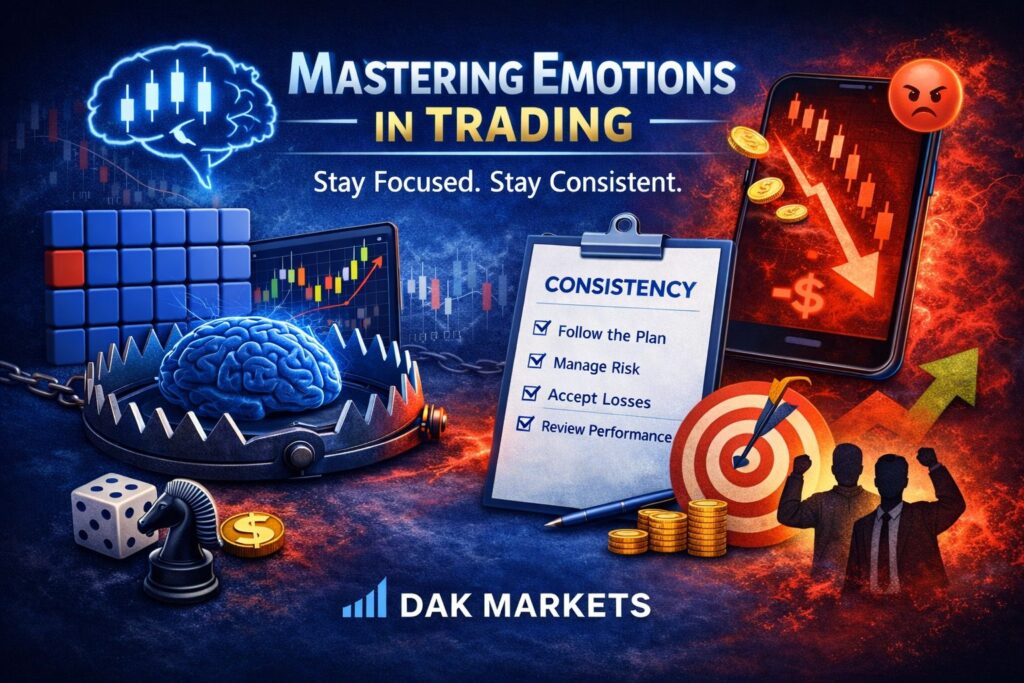
Why Emotional Intelligence Matters More Than Strategy
A trading strategy is only as good as its execution.
Two traders can use the same system, on the same instrument, under the same conditions — and still achieve drastically different results. The difference often comes down to emotional control.
Emotional intelligence directly impacts:
- Risk management: Sticking to predefined risk instead of increasing position size emotionally
- Consistency: Following the plan trade after trade, not just when it “feels right”
- Decision quality: Avoiding revenge trading, overtrading, or panic exits
- Longevity: Surviving losing periods without psychological collapse
Markets reward discipline, not emotional reactions.
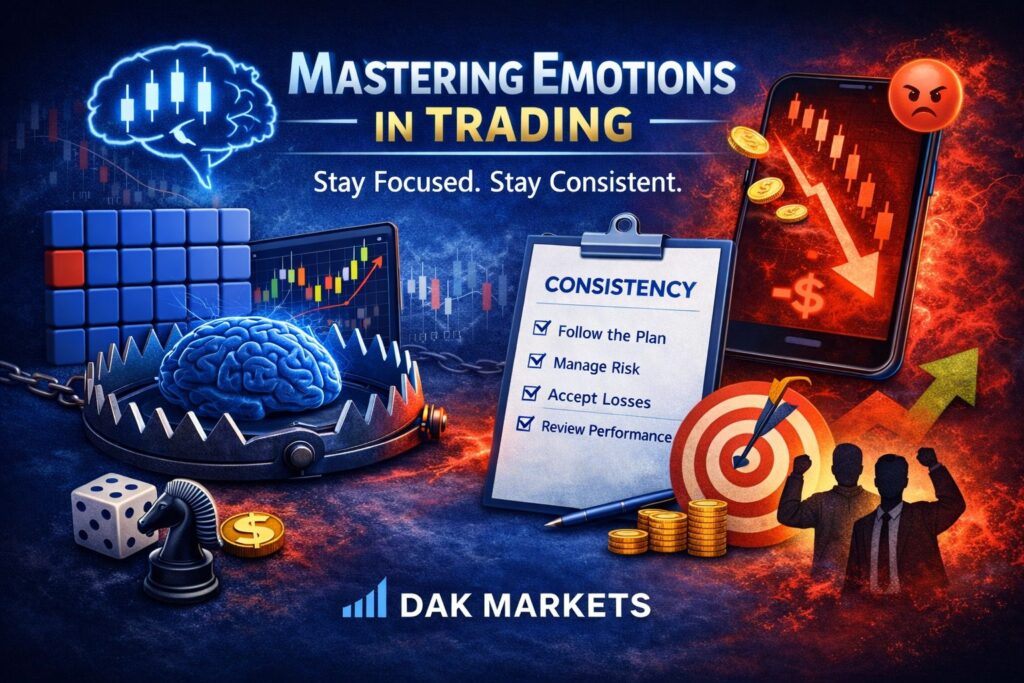
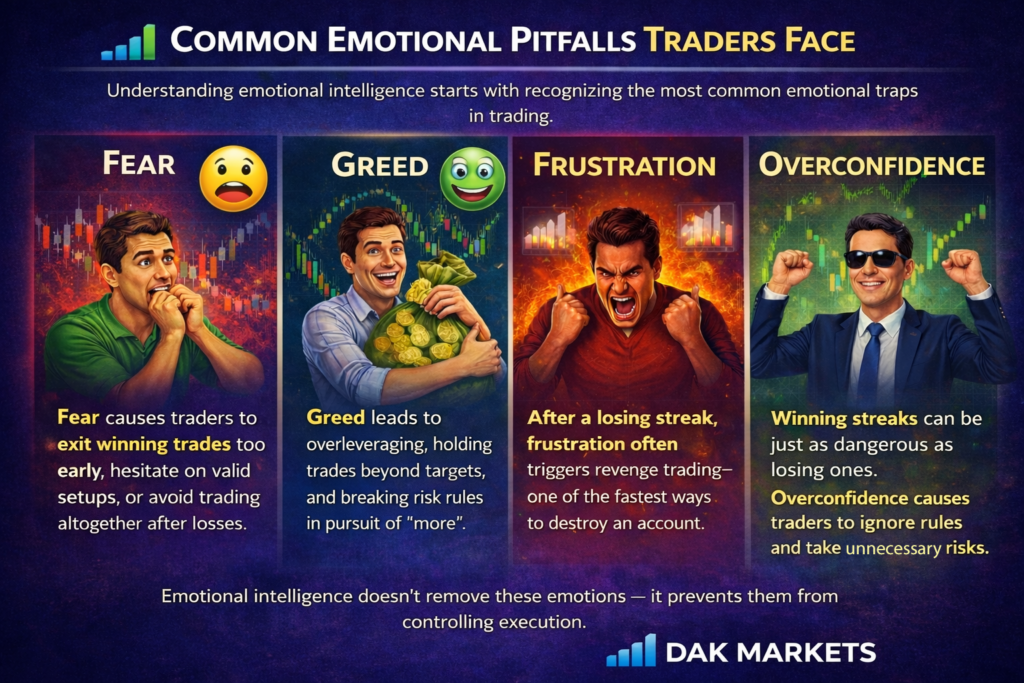
Common Emotional Pitfalls Traders Face
Understanding emotional intelligence starts with recognising the most common emotional traps in trading.
Fear
Fear causes traders to exit winners too early, hesitate on valid setups, or avoid trading altogether after losses.
Greed
Greed leads to overleveraging, holding trades beyond targets, and breaking risk rules in pursuit of “more.”
Frustration
After a losing streak, frustration often triggers revenge trading — one of the fastest ways to destroy an account.
Overconfidence
Winning streaks can be just as dangerous as losing ones. Overconfidence causes traders to ignore rules and take unnecessary risk.
Emotional intelligence doesn’t remove these emotions — it prevents them from controlling execution.
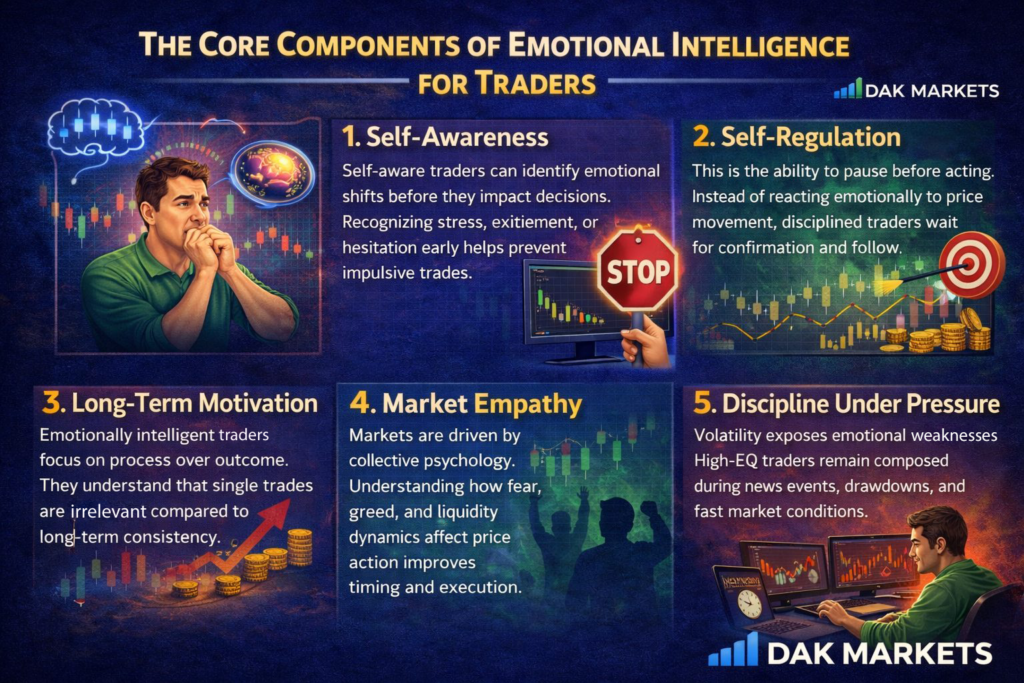
The Core Components of Emotional Intelligence for Traders
1. Self-Awareness
Self-aware traders can identify emotional shifts before they impact decisions. Recognising stress, excitement, or hesitation early helps prevent impulsive trades.
2. Self-Regulation
This is the ability to pause before acting. Instead of reacting emotionally to price movement, disciplined traders wait for confirmation and follow their plan.
3. Long-Term Motivation
Emotionally intelligent traders focus on process over outcome. They understand that single trades are irrelevant compared to long-term consistency.
4. Market Empathy
Markets are driven by collective psychology. Understanding how fear, greed, and liquidity dynamics affect price action improves timing and execution.
5. Discipline Under Pressure
Volatility exposes emotional weaknesses. High-EQ traders remain composed during news events, drawdowns, and fast market conditions.
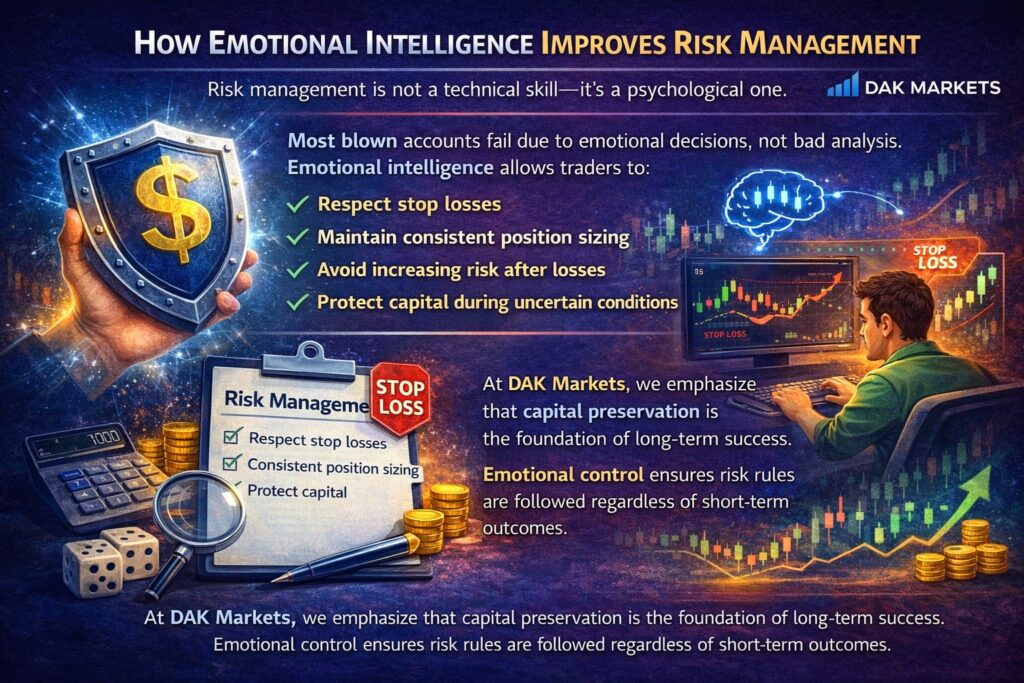
How Emotional Intelligence Improves Risk Management
Risk management is not a technical skill — it’s a psychological one.
Most blown accounts fail due to emotional decisions, not bad analysis. Emotional intelligence allows traders to:
- Respect stop losses
- Maintain consistent position sizing
- Avoid increasing risk after losses
- Protect capital during uncertain conditions
At DAK Markets, we emphasize that capital preservation is the foundation of long-term success. Emotional control ensures risk rules are followed regardless of short-term outcomes.
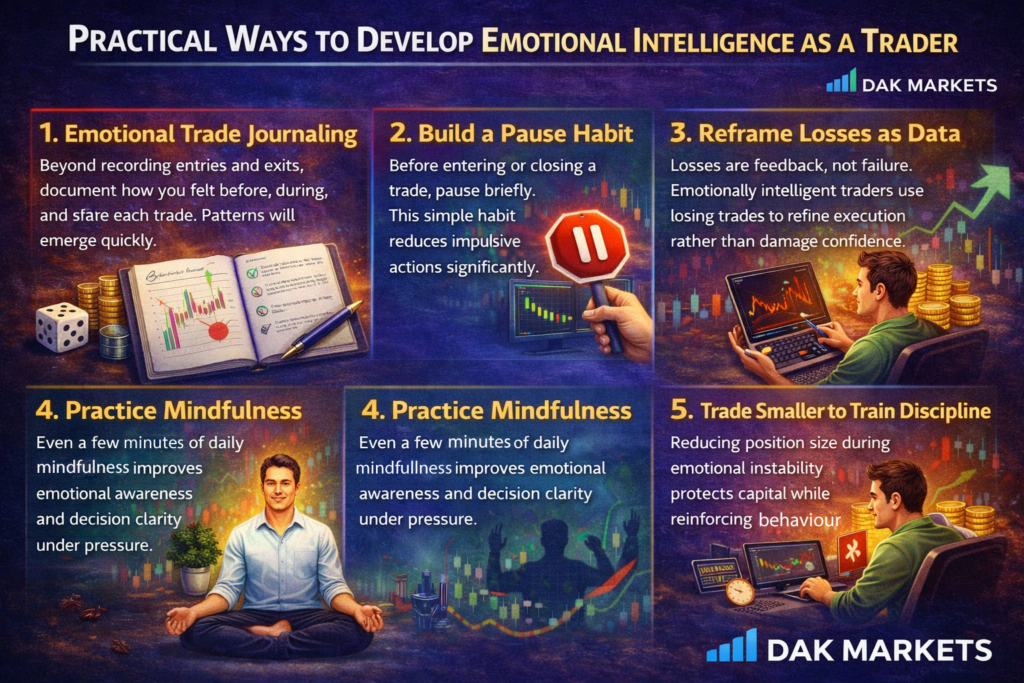
Practical Ways to Develop Emotional Intelligence as a Trader
1. Emotional Trade Journaling
Beyond recording entries and exits, document how you felt before, during, and after each trade. Patterns will emerge quickly.
2. Build a Pause Habit
Before entering or closing a trade, pause briefly. This simple habit reduces impulsive actions significantly.
3. Reframe Losses as Data
Losses are feedback, not failure. Emotionally intelligent traders use losing trades to refine execution rather than damage confidence.
4. Practice Mindfulness
Even a few minutes of daily mindfulness improves emotional awareness and decision clarity under pressure.
5. Trade Smaller to Train Discipline
Reducing position size during emotional instability protects capital while reinforcing correct behaviour.
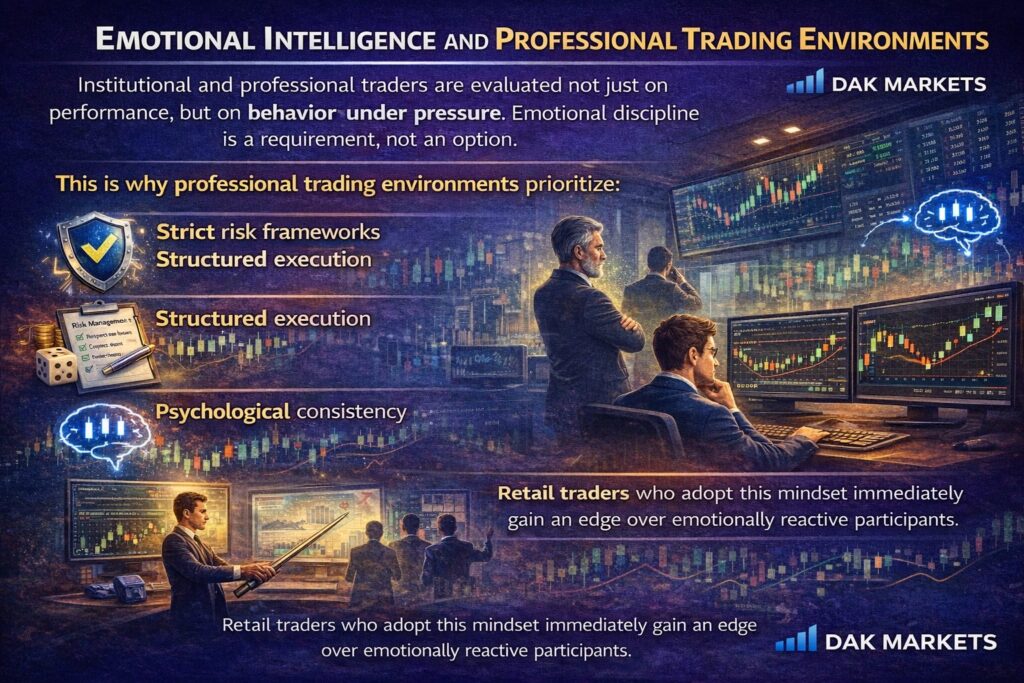
Emotional Intelligence and Professional Trading Environments
Institutional and professional traders are evaluated not just on performance, but on behaviour under pressure. Emotional discipline is a requirement, not an option.
This is why professional trading environments prioritize:
- Strict risk frameworks
- Structured execution
- Psychological consistency
- Accountability
Retail traders who adopt this mindset immediately gain an edge over emotionally reactive participants.
The DAK Markets Perspective
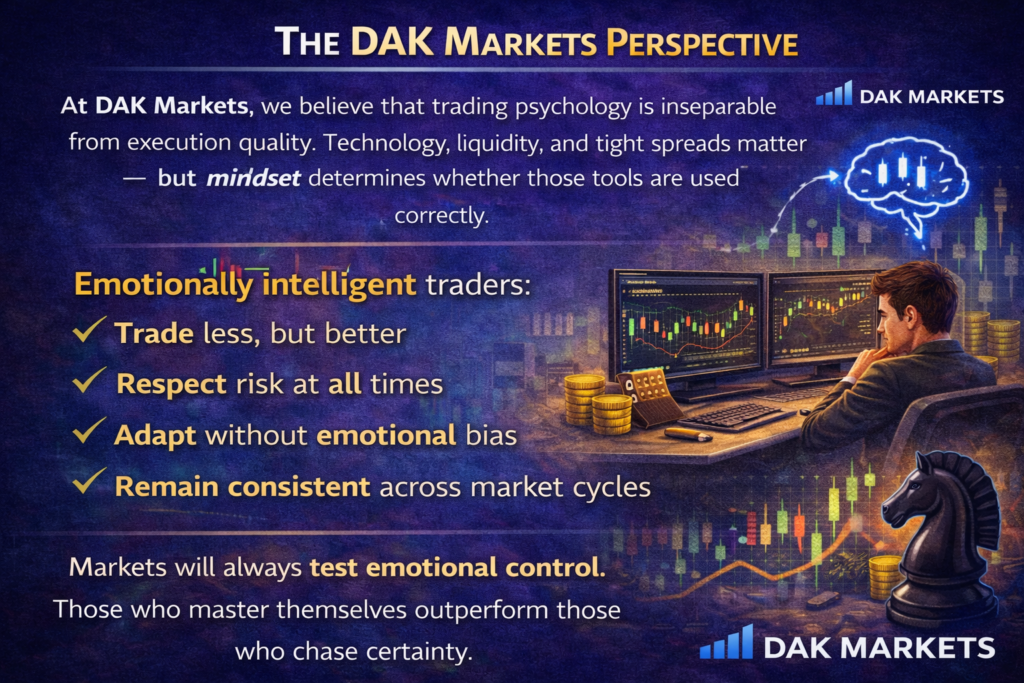
At DAK Markets, we believe that trading psychology is inseparable from execution quality. Technology, liquidity, and tight spreads matter — but mindset determines whether those tools are used correctly.
Emotionally intelligent traders:
- Trade less, but better
- Respect risk at all times
- Adapt without emotional bias
- Remain consistent across market cycles
Markets will always test emotional control. Those who master themselves outperform those who chase certainty.
Final Thoughts
Emotional intelligence is not a “soft skill” — it is a core trading skill.
Strategies evolve. Markets change. Volatility shifts. But the trader who can manage emotions, execute with discipline, and protect capital will always remain competitive.
In the long run, the market rewards clarity, patience, and emotional control — not impulse.
Develop your strategy. Refine your execution.
But most importantly, master yourself.