Every serious trader understands the importance of analysis, market knowledge, and execution. Yet despite having access to advanced platforms, tight spreads, and real-time data, many traders struggle to achieve consistent results.
The reason is often not technical — it is structural.
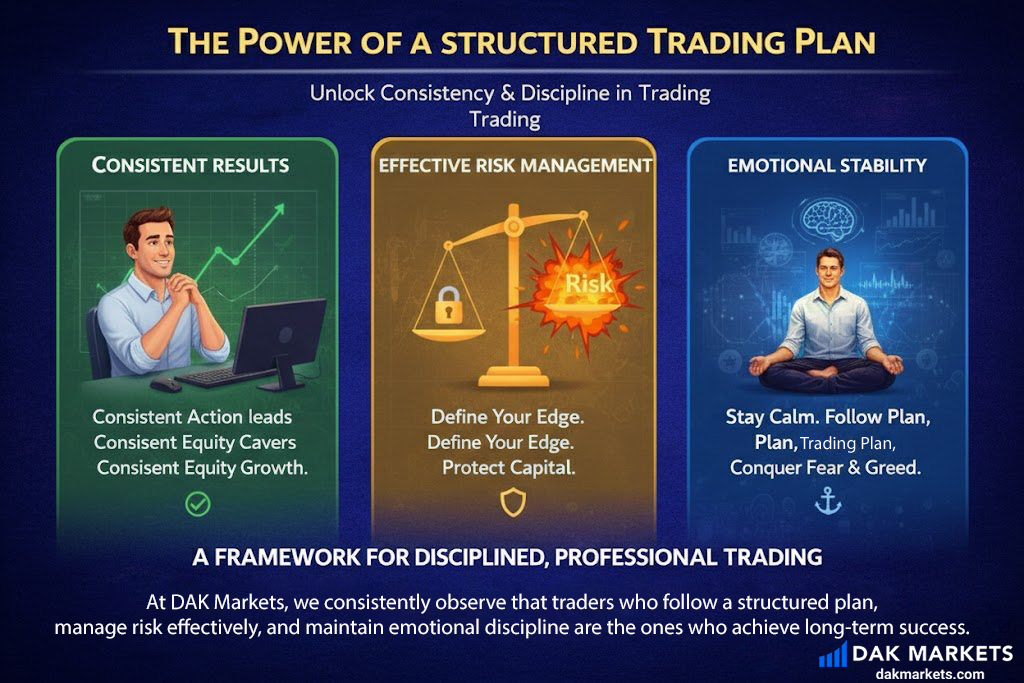
At DAK Markets, we consistently observe that traders who operate with a structured trading plan perform more consistently, manage risk more effectively, and remain emotionally stable across different market conditions. A structured trading plan is not a restriction on freedom — it is the framework that enables disciplined, professional trading.
What Is a Structured Trading Plan?
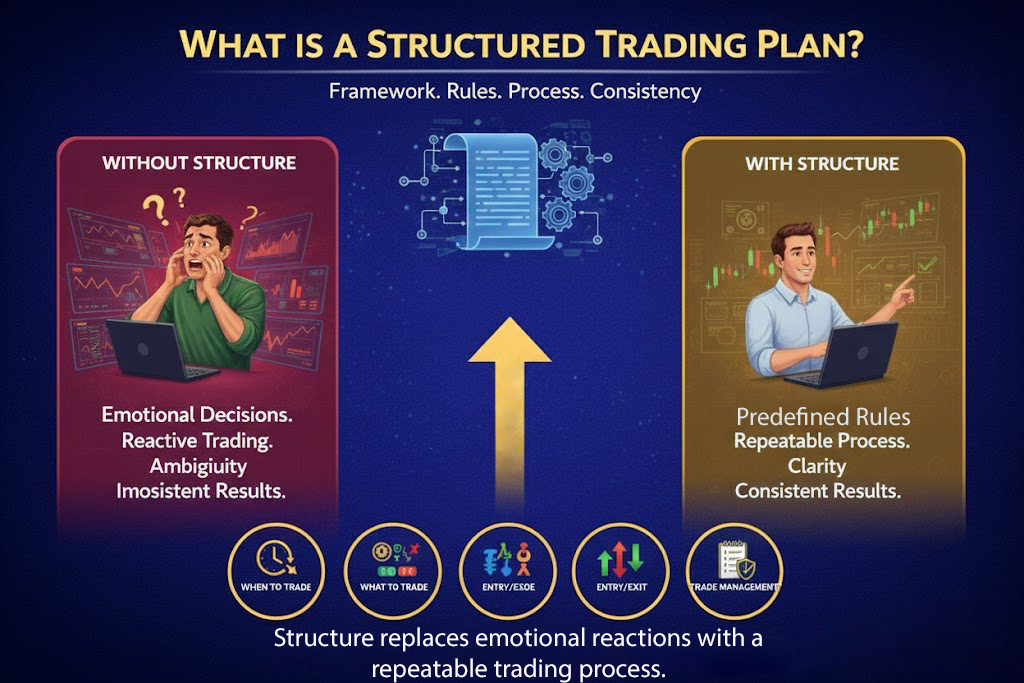
A structured trading plan is a clearly defined framework that governs how a trader interacts with the market. It removes ambiguity and replaces emotional decision-making with predefined rules.
A proper trading plan defines:
- When to trade
- What to trade
- How to enter and exit positions
- How much risk to take
- How trades are managed after entry
Without structure, trading decisions become reactive. With structure, trading becomes a repeatable process.
Why Structure Matters More Than Strategy
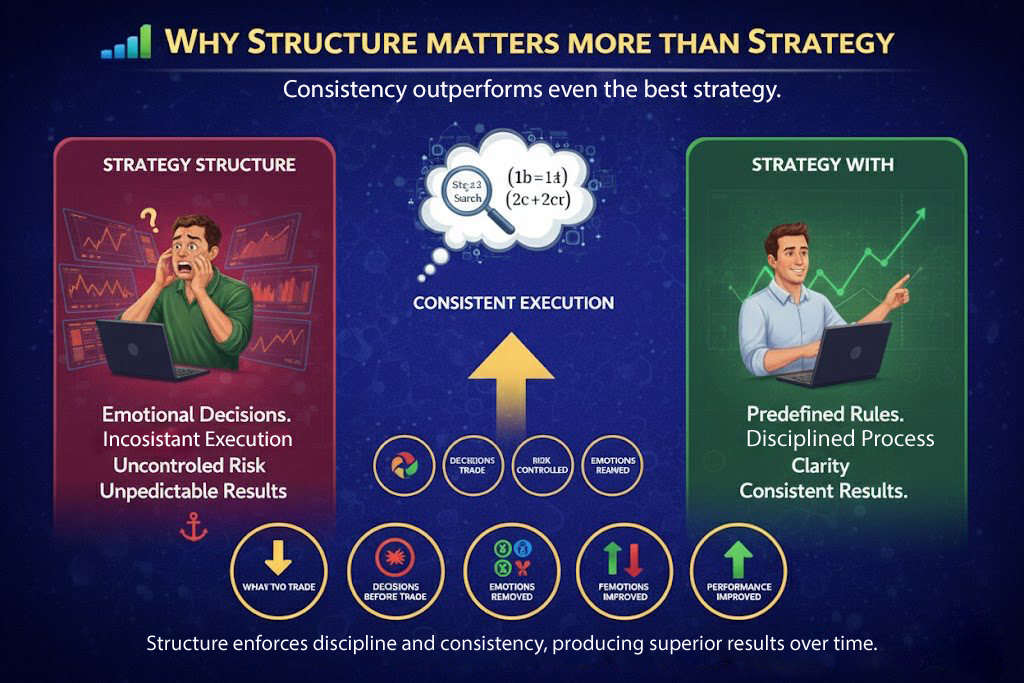
Many traders spend years searching for the “perfect” strategy. However, even the best strategy will fail without consistent execution.
Structure ensures that:
- Decisions are made before the trade, not during it
- Risk is controlled regardless of market volatility
- Emotions do not interfere with execution
- Performance can be measured and improved
Two traders can trade the same setup — but the one with structure will outperform over time due to consistency.
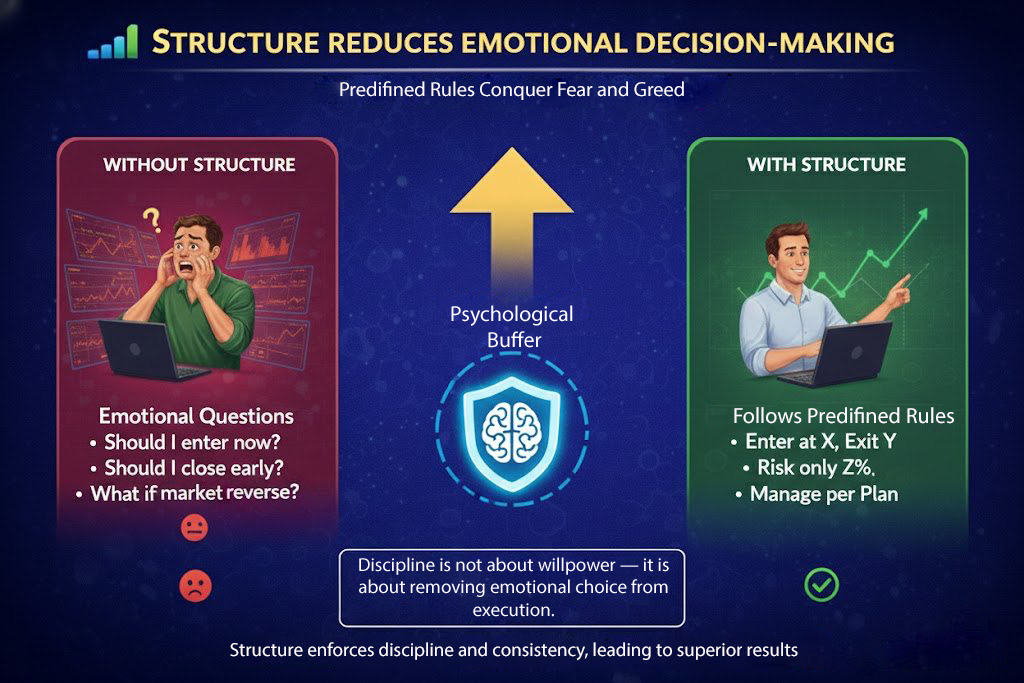
Structure Reduces Emotional Decision-Making
Markets naturally trigger emotional responses: fear during drawdowns, greed during winning streaks, and frustration during consolidation phases.
A structured trading plan acts as a psychological buffer.
Instead of asking:
- “Should I enter now?”
- “Should I close early?”
- “What if the market reverses?”
The trader simply follows predefined rules. This reduces stress, hesitation, and impulsive actions.
Discipline is not about willpower — it is about removing emotional choice from execution.
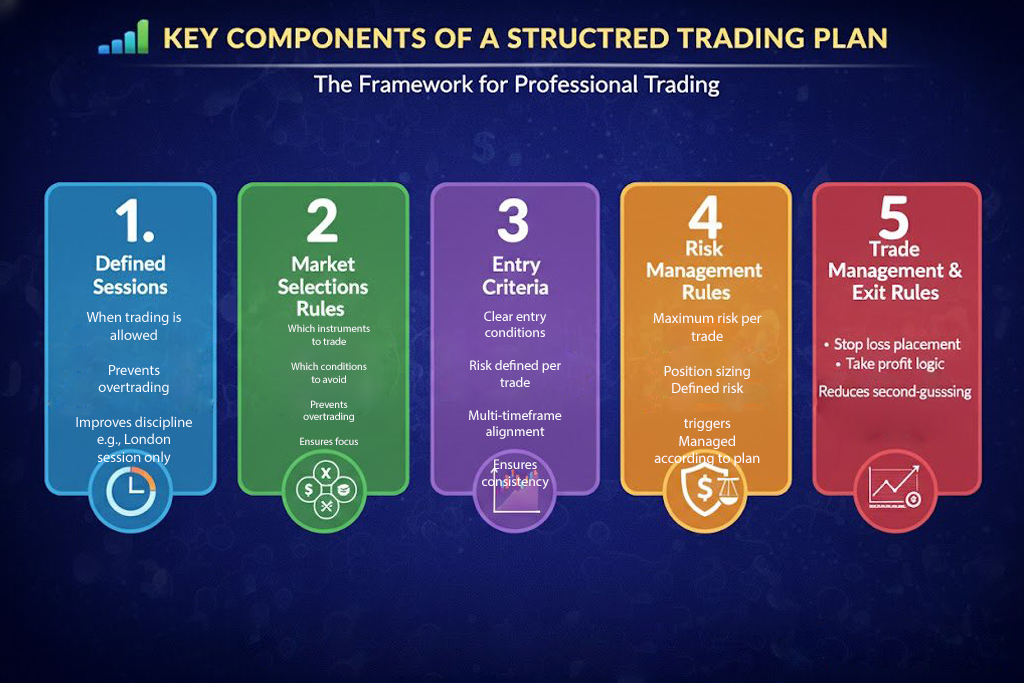
The Key Components of a Structured Trading Plan
1. Defined Trading Sessions
A trading plan should specify when trading is allowed. This prevents overtrading and fatigue.
Examples include:
- London session only
- New York session overlap
- Specific hours based on liquidity conditions
Trading outside defined sessions increases randomness and emotional exposure.
2. Market Selection Rules
Professional traders do not trade everything.
A structured plan defines:
- Which instruments are traded
- Which market conditions are avoided
- When volatility is acceptable or excessive
This ensures focus and consistency rather than constant market hopping.
3. Entry Criteria
Clear entry rules remove guesswork.
Instead of vague concepts like “strong move” or “confirmation,” structured plans define:
- Timeframe alignment
- Technical or fundamental conditions
- Exact triggers for entry
If conditions are not met, the trade does not exist.
4. Risk Management Rules
Risk management is the foundation of longevity in trading.
A structured plan defines:
- Maximum risk per trade
- Position sizing methodology
- Maximum daily or session risk
At DAK Markets, we emphasize that capital preservation always comes before profit generation.
5. Trade Management and Exit Rules
Many traders define entries but improvise exits — often emotionally.
A structured plan specifies:
- Stop loss placement
- Take profit logic
- Rules for adjusting positions
Consistency in trade management reduces regret and emotional second-guessing.
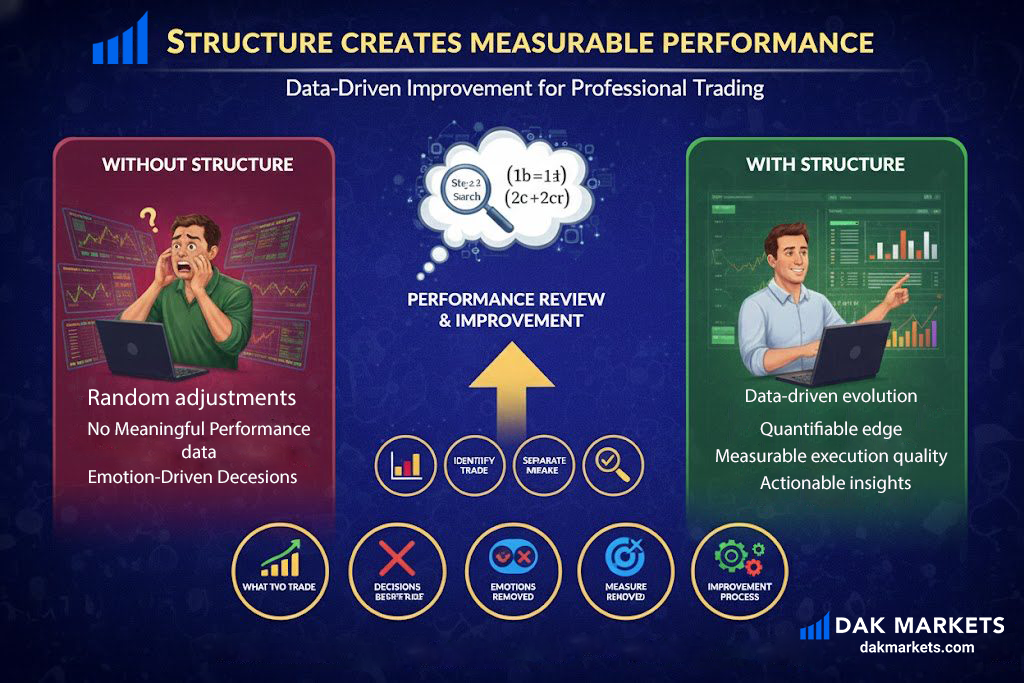
Structure Creates Measurable Performance
Without structure, performance analysis is meaningless.
A structured trading plan allows traders to:
- Identify strengths and weaknesses
- Measure execution quality
- Separate strategy performance from emotional mistakes
- Improve through data, not opinion
This is how professional traders evolve — through structured review, not random adjustment.
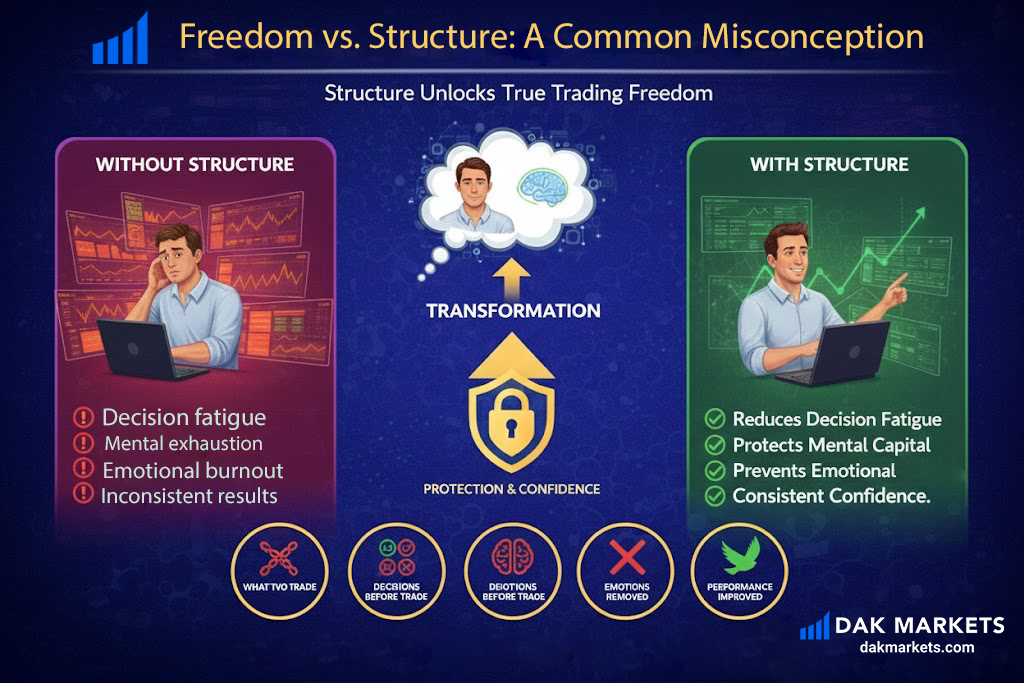
Freedom vs. Structure: A Common Misconception
Many traders associate trading with freedom and resist rules. In reality, structure creates freedom.
Structure:
- Reduces decision fatigue
- Protects mental capital
- Prevents emotional burnout
- Allows confidence through repetition
The most consistent traders are not the most aggressive — they are the most structured.
The Role of Checklists in Trading Discipline
Even experienced professionals rely on checklists.
A trading checklist ensures:
- All criteria are met before entry
- Emotional trades are filtered out
- Execution remains consistent under pressure
Checklists reduce cognitive load and protect traders during high-stress market conditions.
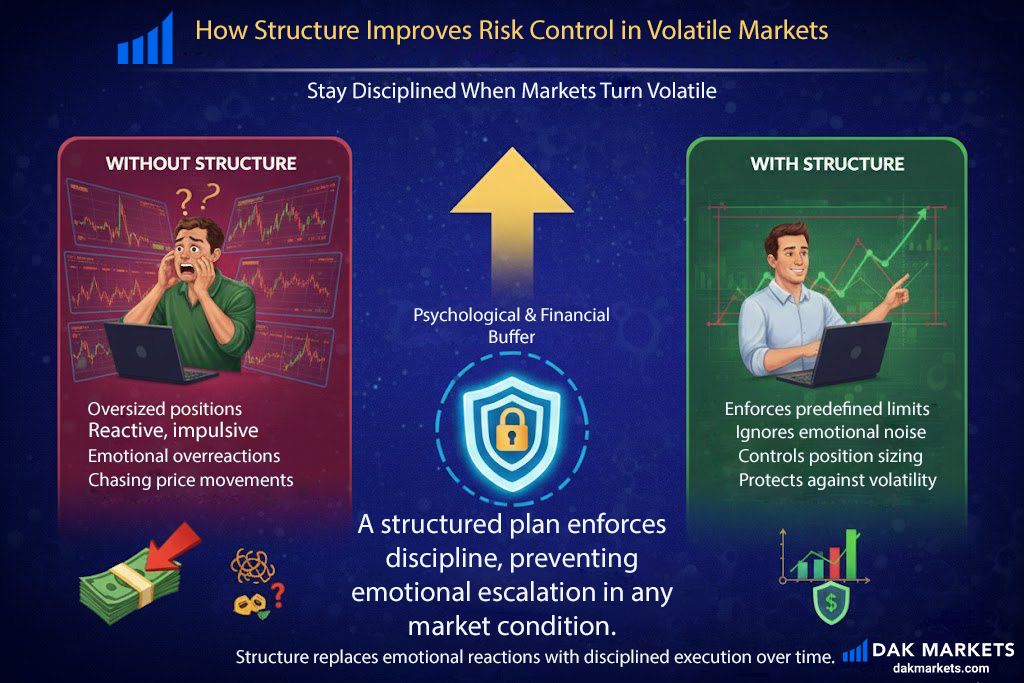
How Structure Improves Risk Control in Volatile Markets
During periods of high volatility, unstructured traders tend to:
- Oversize positions
- React impulsively
- Chase price movement
A structured plan prevents emotional escalation by enforcing predefined limits — regardless of market behaviour.
This is especially important during news events or sudden volatility spikes.
The DAK Markets Perspective
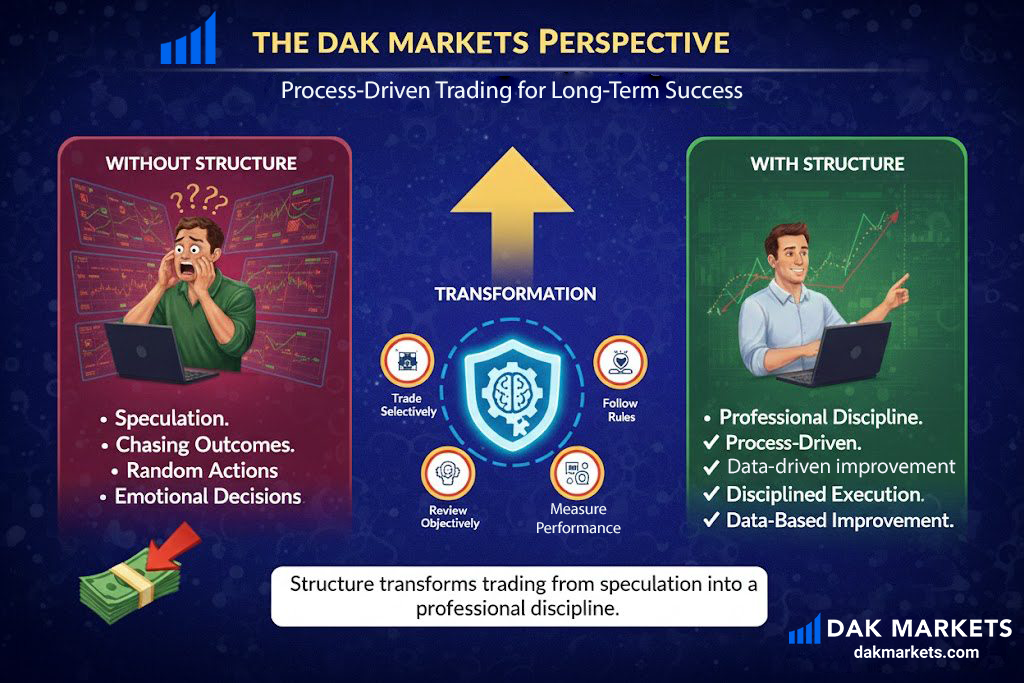
At DAK Markets, we believe that successful trading is process-driven, not outcome-driven.
Technology, liquidity, and execution quality matter — but without structure, those advantages cannot be used effectively.
Traders who succeed long-term:
- Trade selectively
- Respect risk at all times
- Follow predefined rules
- Review performance objectively
Structure transforms trading from speculation into a professional discipline.
Final Thoughts
A structured trading plan is not optional for traders seeking consistency — it is essential.
Markets will always be uncertain. What separates professional traders from emotional participants is the ability to operate within a defined framework regardless of short-term outcomes.
Structure creates clarity.
Clarity creates discipline.
Discipline creates consistency.
At DAK Markets, we encourage traders to focus less on finding the perfect strategy and more on building a robust, structured trading process that stands the test of time.