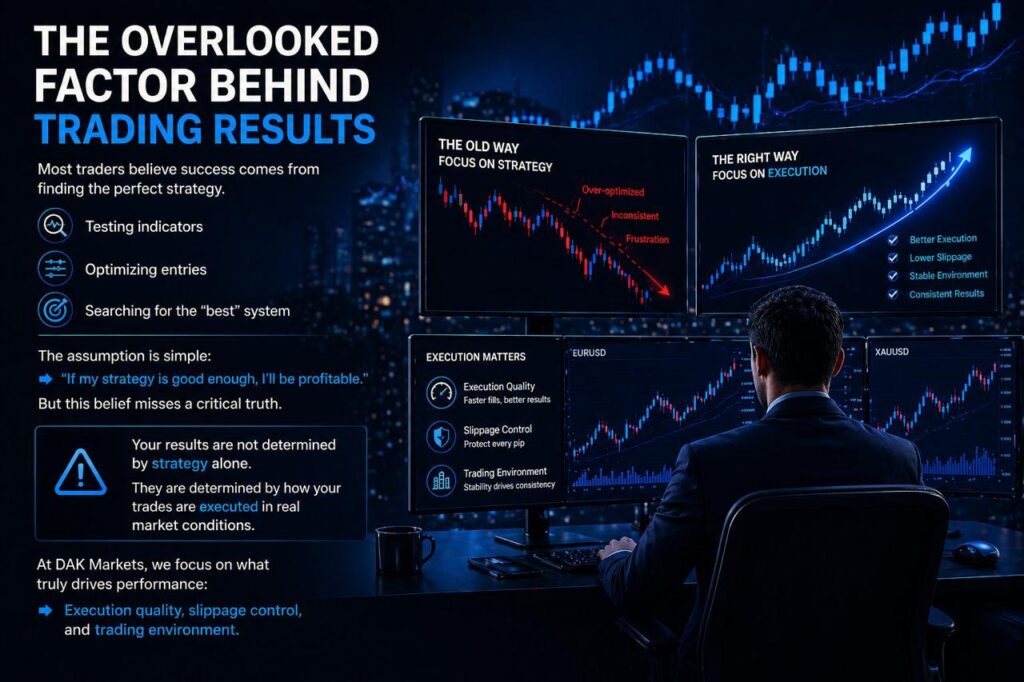
Introduction: The Overlooked Factor Behind Trading Results
Most traders believe success comes from finding the perfect strategy.
They spend countless hours:
- Testing indicators
- Optimizing entries
- Searching for the “best” system
The assumption is simple:
👉 “If my strategy is good enough, I’ll be profitable.”
But this belief misses a critical truth.
👉 Your results are not determined by strategy alone.
They are determined by how your trades are executed in real market conditions.
At DAK Markets, we focus on what truly drives performance:
👉 Execution quality, slippage control, and trading environment
What Is Slippage in Trading?
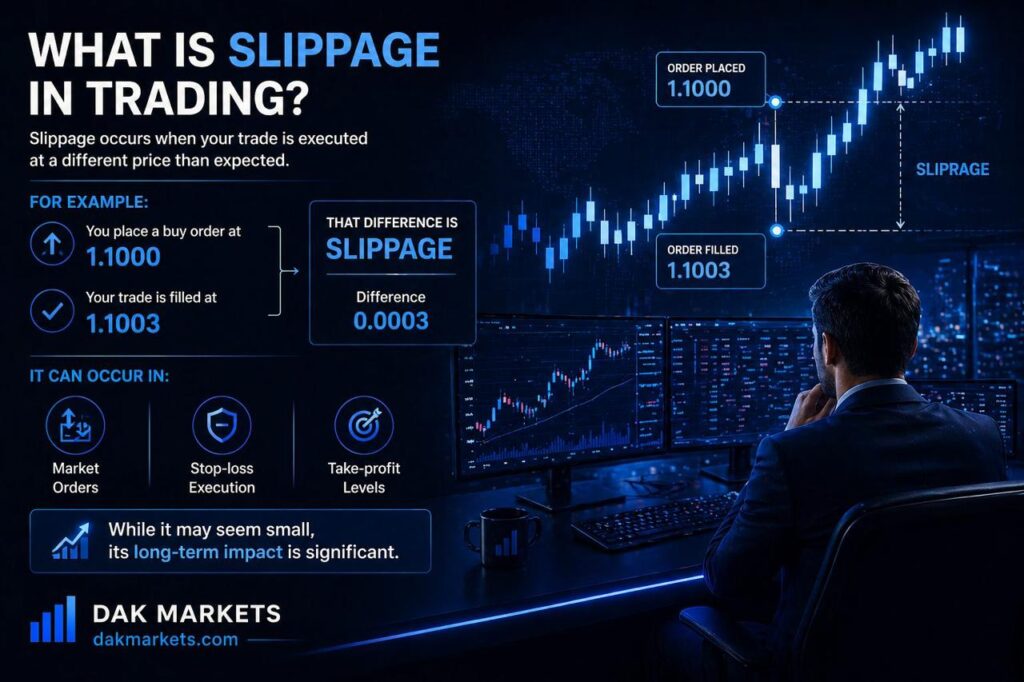
Slippage occurs when your trade is executed at a different price than expected.
Example:
- You place a buy order at 1.1000
- Your trade is filled at 1.1003
👉 That difference is slippage
It can occur in:
- Market orders
- Stop-loss execution
- Take-profit levels
While it may seem small, its long-term impact is significant.
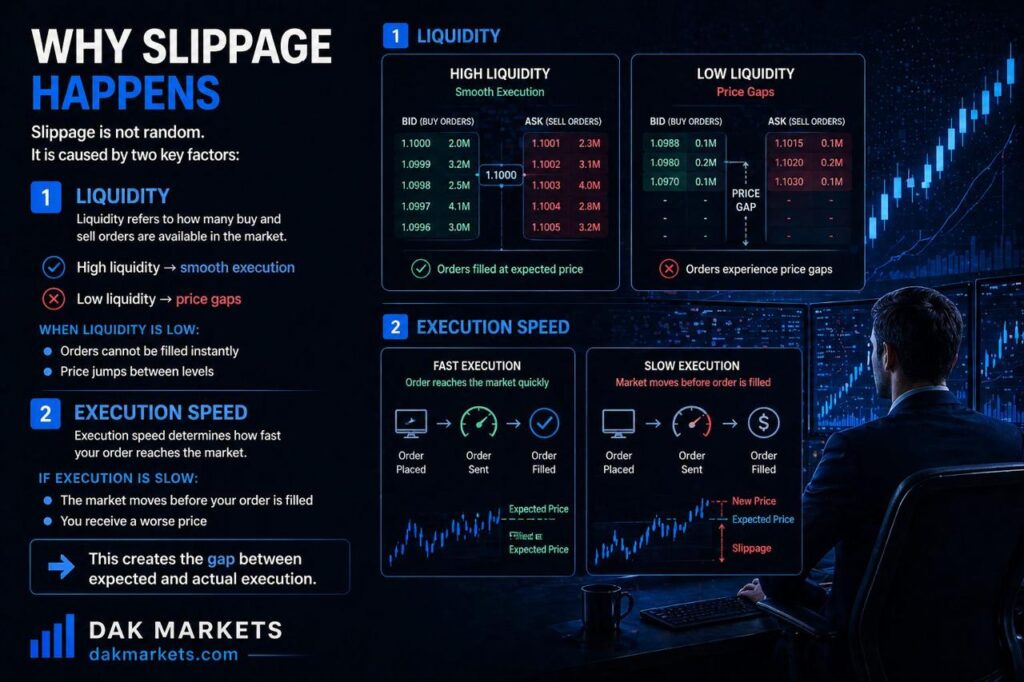
Why Slippage Happens
Slippage is not random. It is driven by two key factors:
1. Liquidity
Liquidity refers to how many buy and sell orders are available in the market.
- High liquidity → smooth execution
- Low liquidity → price gaps
When liquidity is low:
- Orders cannot be filled instantly
- Price jumps between levels
2. Execution Speed
Execution speed determines how fast your order reaches the market.
If execution is slow:
- The market moves before your order is filled
- You receive a worse price
👉 This creates the gap between expected and actual execution.
The Hidden Cost of Slippage
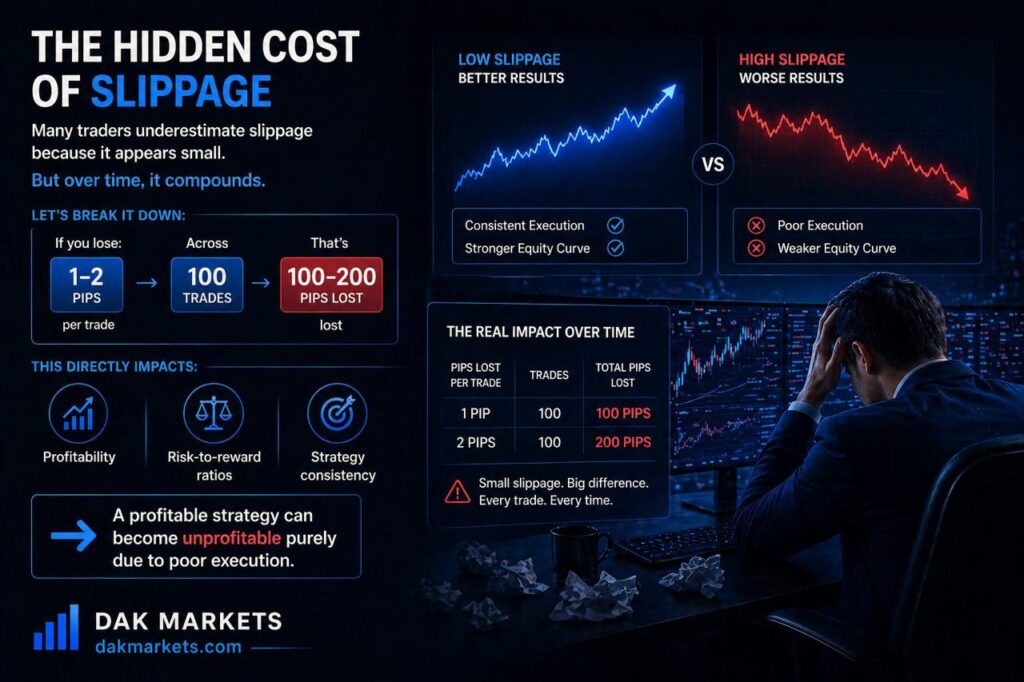
Many traders underestimate slippage because it appears small.
But over time, it compounds.
Example:
- 1–2 pips lost per trade
- Across 100 trades
👉 That’s 100–200 pips lost
This directly impacts:
- Profitability
- Risk-to-reward ratios
- Strategy consistency
👉 A profitable strategy can become unprofitable purely due to poor execution.
Why Execution Speed Matters More Than Strategy
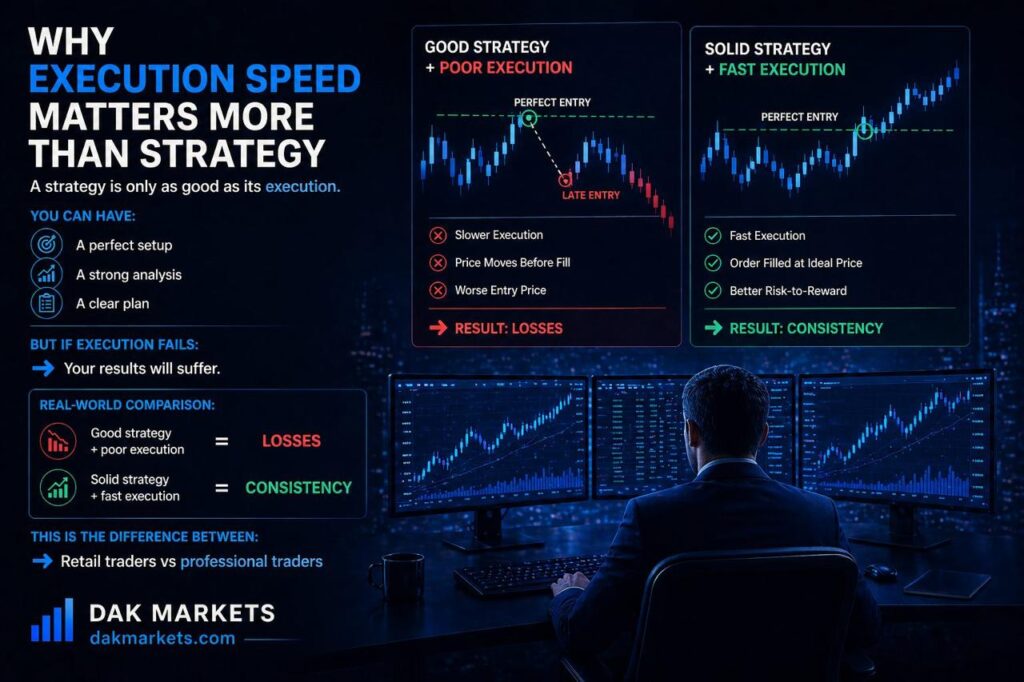
A strategy is only as good as its execution.
You can have:
- A perfect setup
- Strong analysis
- A clear plan
But if execution fails:
👉 Your results will suffer
Real-world comparison:
- Good strategy + poor execution = losses
- Solid strategy + fast execution = consistency
👉 This is the difference between retail traders and professionals
Where Slippage Happens Most
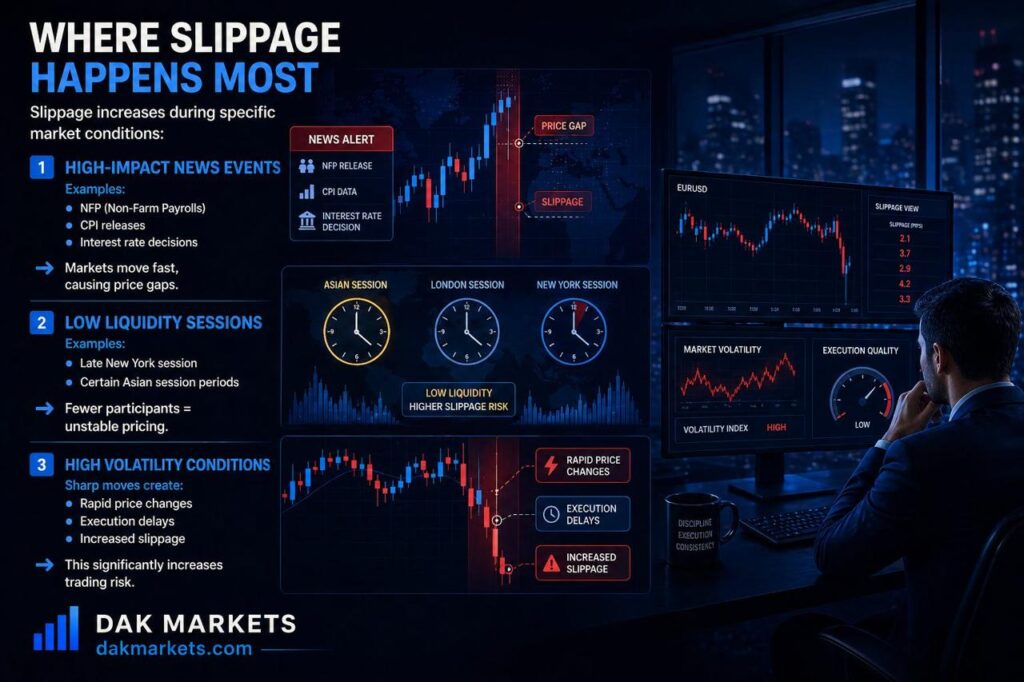
Slippage increases during specific market conditions:
1. High-Impact News Events
Examples:
- NFP (Non-Farm Payrolls)
- CPI releases
- Interest rate decisions
👉 Markets move fast, causing price gaps
2. Low Liquidity Sessions
Examples:
- Late New York session
- Certain Asian session periods
👉 Fewer participants = unstable pricing
3. High Volatility Conditions
Sharp market moves create:
- Rapid price changes
- Execution delays
- Increased slippage
👉 This significantly increases trading risk
Why Most Traders Ignore Execution Quality
There are three main reasons:
1. It’s Not Visible on Charts
Charts show price—but not execution quality
👉 You don’t “see” slippage directly
2. Backtesting Is Unrealistic
Most backtests assume:
👉 Perfect execution
But real markets are not perfect
3. Traders Blame Their Strategy
When performance drops, traders think:
👉 “My strategy stopped working”
In reality:
👉 Execution conditions changed
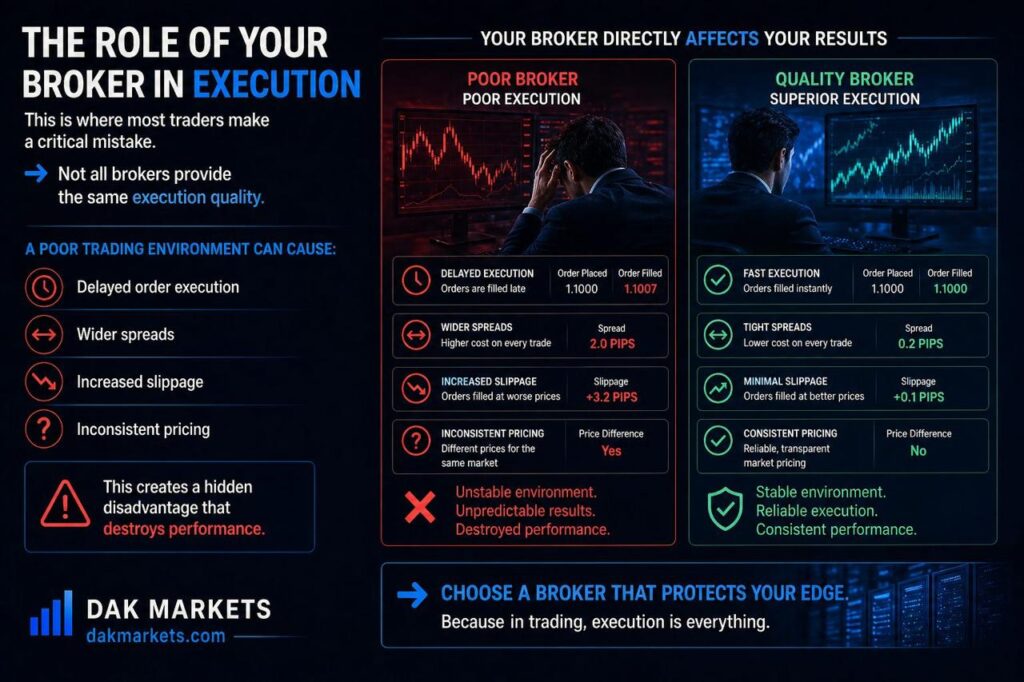
The Role of Your Broker in Execution
This is where most traders make a critical mistake.
👉 Not all brokers provide the same execution quality
A poor trading environment can cause:
- Delayed order execution
- Wider spreads
- Increased slippage
- Inconsistent pricing
👉 This creates a hidden disadvantage that destroys performance
How DAK Markets Optimizes Execution
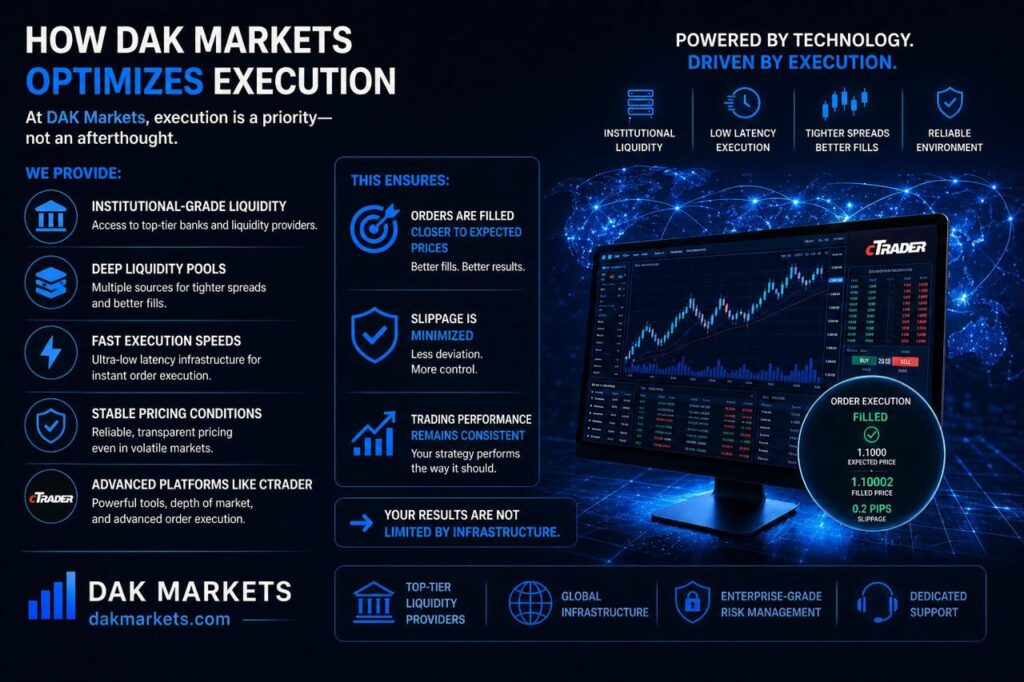
At DAK Markets, execution is a priority—not an afterthought.
We provide:
- Institutional-grade liquidity
- Deep liquidity pools
- Fast execution speeds
- Stable pricing conditions
- Advanced platforms like cTrader
This ensures:
- Orders are filled closer to expected prices
- Slippage is minimized
- Trading performance remains consistent
👉 Your results are not limited by infrastructure
How to Reduce Slippage in Your Trading
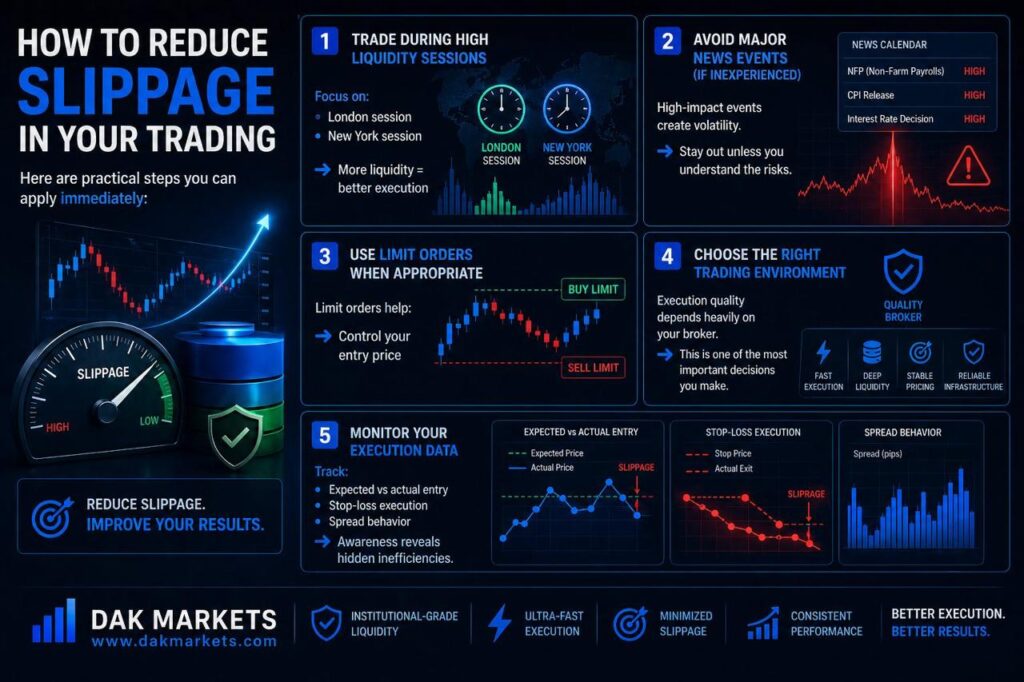
Here are practical steps you can apply immediately:
1. Trade During High Liquidity Sessions
Focus on:
- London session
- New York session
👉 More liquidity = better execution
2. Avoid Major News Events (If Inexperienced)
High-impact events create volatility
👉 Stay out unless you understand the risks
3. Use Limit Orders When Appropriate
👉 Helps control your entry price
4. Choose the Right Trading Environment
Execution quality depends heavily on your broker
👉 One of the most important decisions you make
5. Monitor Your Execution Data
Track:
- Expected vs actual entry
- Stop-loss execution
- Spread behavior
👉 Awareness reveals hidden inefficiencies
The Long-Term Advantage of Strong Execution
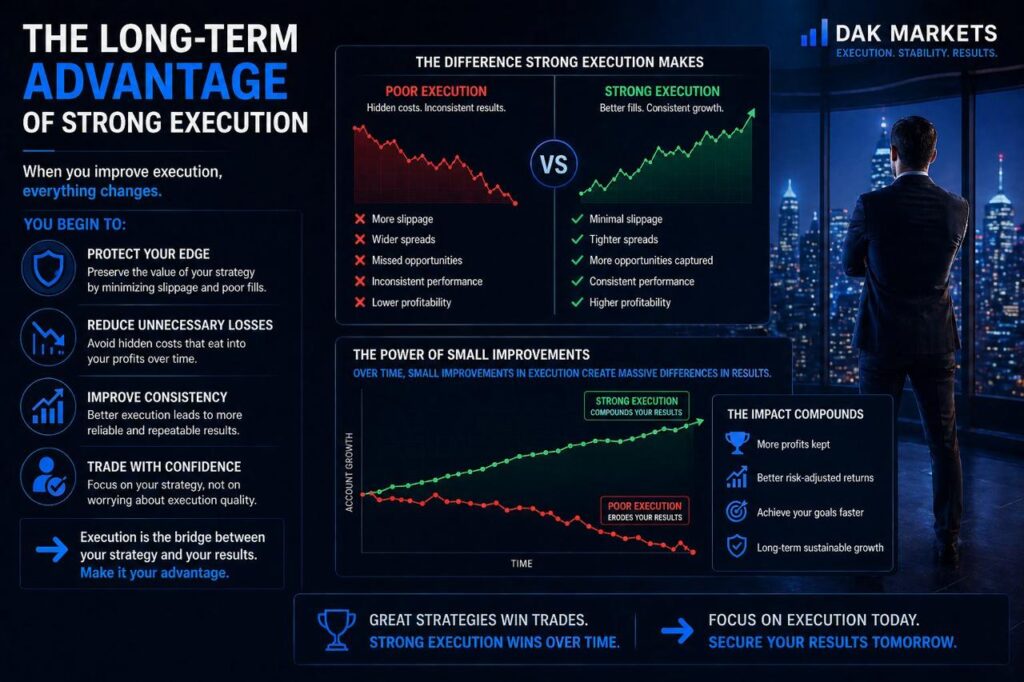
When you improve execution, everything changes.
You begin to:
- Protect your edge
- Reduce unnecessary losses
- Improve consistency
- Trade with confidence
👉 Small improvements in execution create massive long-term results
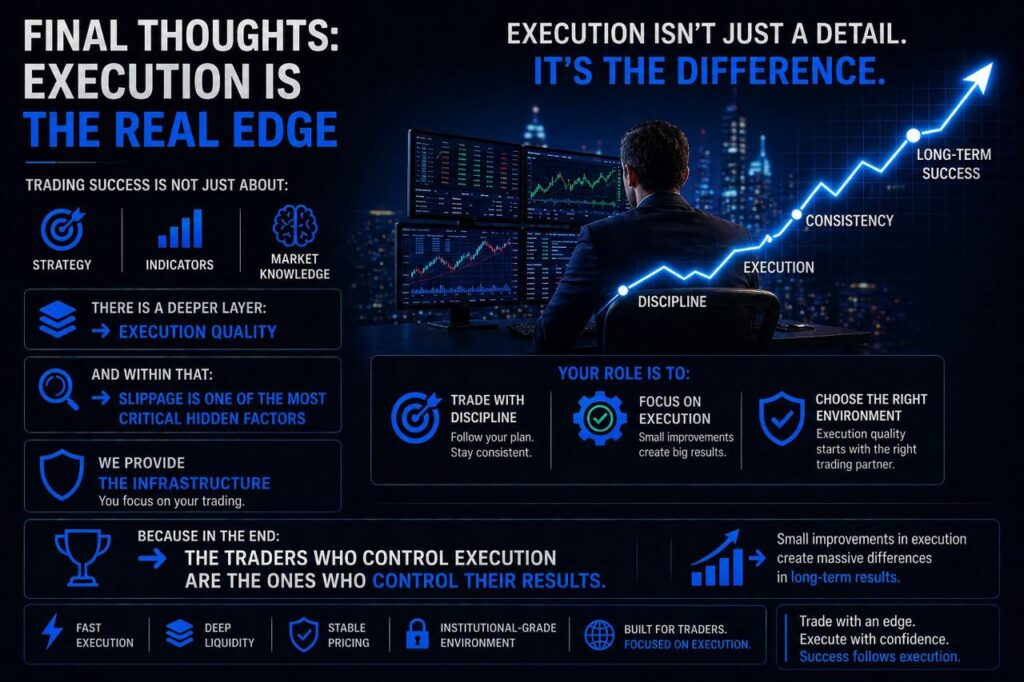
Final Thoughts: Execution Is the Real Edge
Trading success is not just about:
- Strategy
- Indicators
- Market knowledge
There is a deeper layer:
👉 Execution quality
And within that:
👉 Slippage is one of the most critical hidden factors
At DAK Markets, we provide the infrastructure.
Your role is to:
- Trade with discipline
- Focus on execution
- Choose the right environment
Because in the end:
👉 The traders who control execution are the ones who control their results