When traders compare forex brokers, cost is often one of the first things they consider.
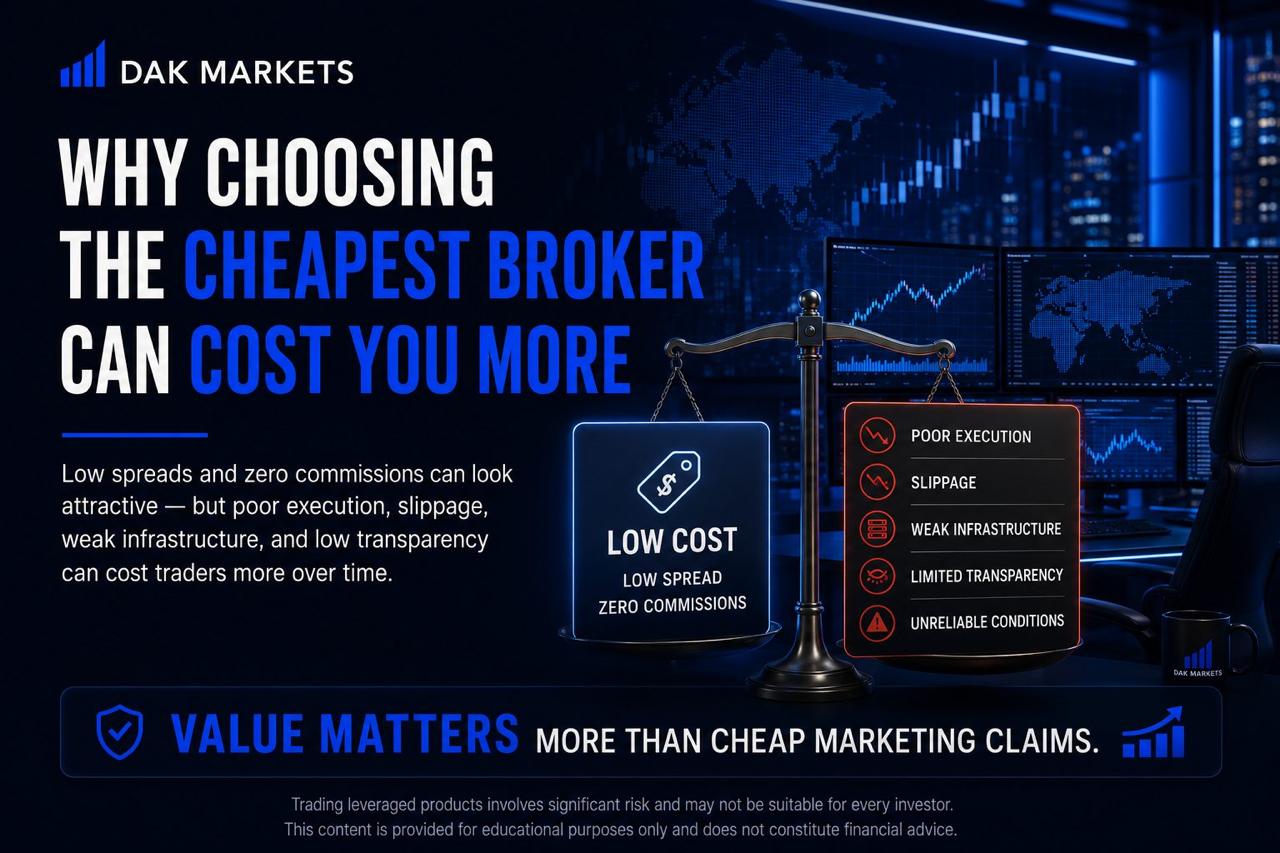
Low spreads, zero commissions, and inexpensive trading conditions can sound attractive—especially to traders who want to keep their expenses as low as possible. At first glance, choosing the cheapest broker may appear to be the smartest decision.
However, the true cost of trading is not always as simple as the advertised spread or commission.
A broker offering the lowest visible price is not automatically providing the best overall value. Poor execution, frequent slippage, unstable pricing, weak infrastructure, limited transparency, or unreliable service can make an apparently inexpensive broker far more costly over time.
Successful trading is not only about finding the lowest possible price. It is about operating in a professional environment where pricing, execution, transparency, technology, and reliability work together.
For serious traders, real value matters more than cheap marketing claims.
Key Takeaways
Before choosing a broker, traders should consider more than spreads and commissions.
The complete trading experience includes:
- Execution quality
- Spread consistency
- Platform stability
- Liquidity conditions
- Commission structure
- Transparency
- Customer support
- Deposit and withdrawal procedures
- Available instruments
- Risk-management tools
A slightly higher visible cost may provide better overall value when it is supported by more stable execution and clearer trading conditions.
The Difference Between Cheap Trading and Real Value
Many brokers promote extremely low trading costs to attract attention.
These offers may include tight spreads, commission-free accounts, temporary discounts, or promotional pricing. Although lower costs can benefit traders, the most important question is:
What am I actually receiving for that cost?
A broker may advertise low spreads, but that does not necessarily mean traders will receive better execution.
When a platform experiences delays, unstable pricing, rejected orders, or excessive slippage during active market conditions, the trader’s true cost may become significantly higher than expected.
Real value comes from the entire trading experience—not from one number displayed on a website.
This includes:
- How quickly orders are processed
- How stable the platform remains during volatility
- How consistently prices are displayed
- How clearly commissions and fees are explained
- How efficiently withdrawals are handled
- How responsive the support team is
A slightly tighter spread means very little if a trader cannot enter, manage, or exit a position efficiently when the market is moving.
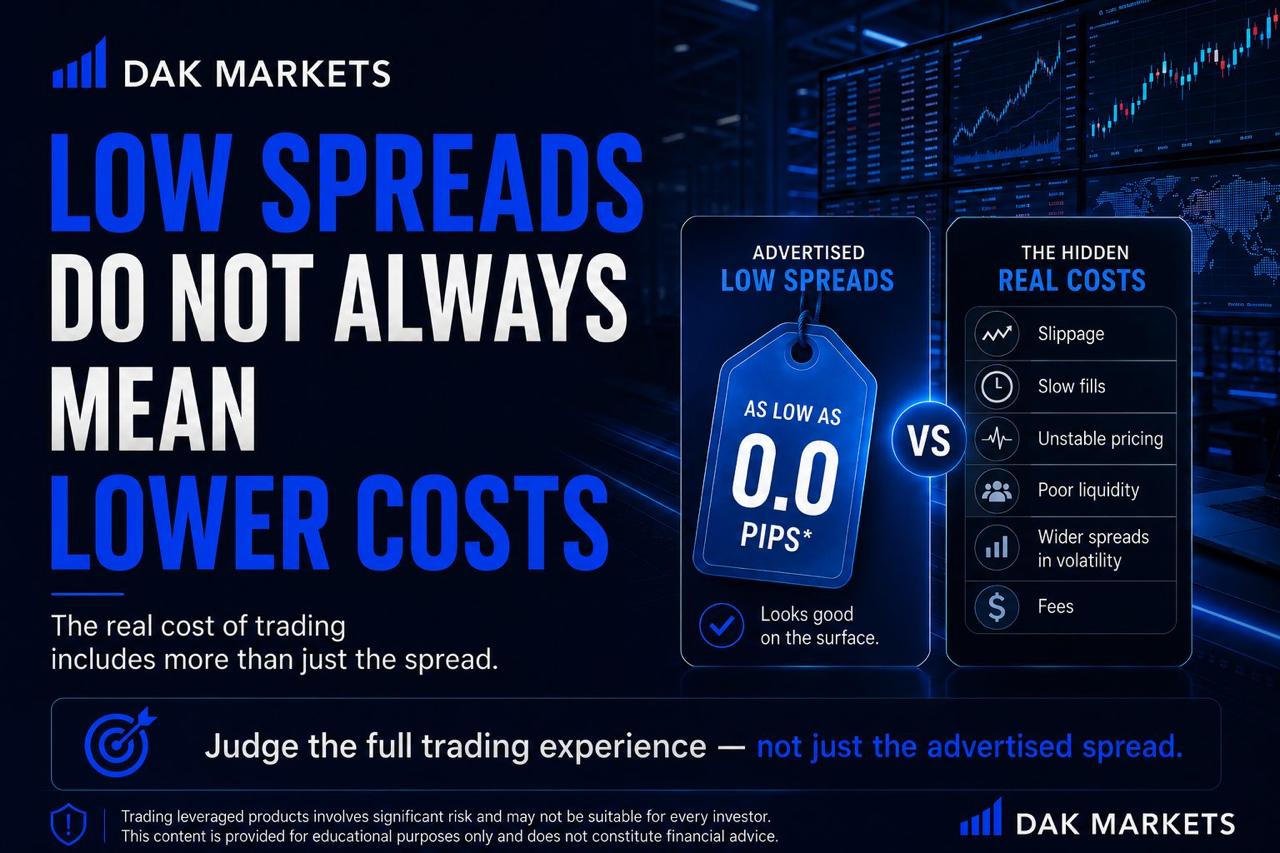
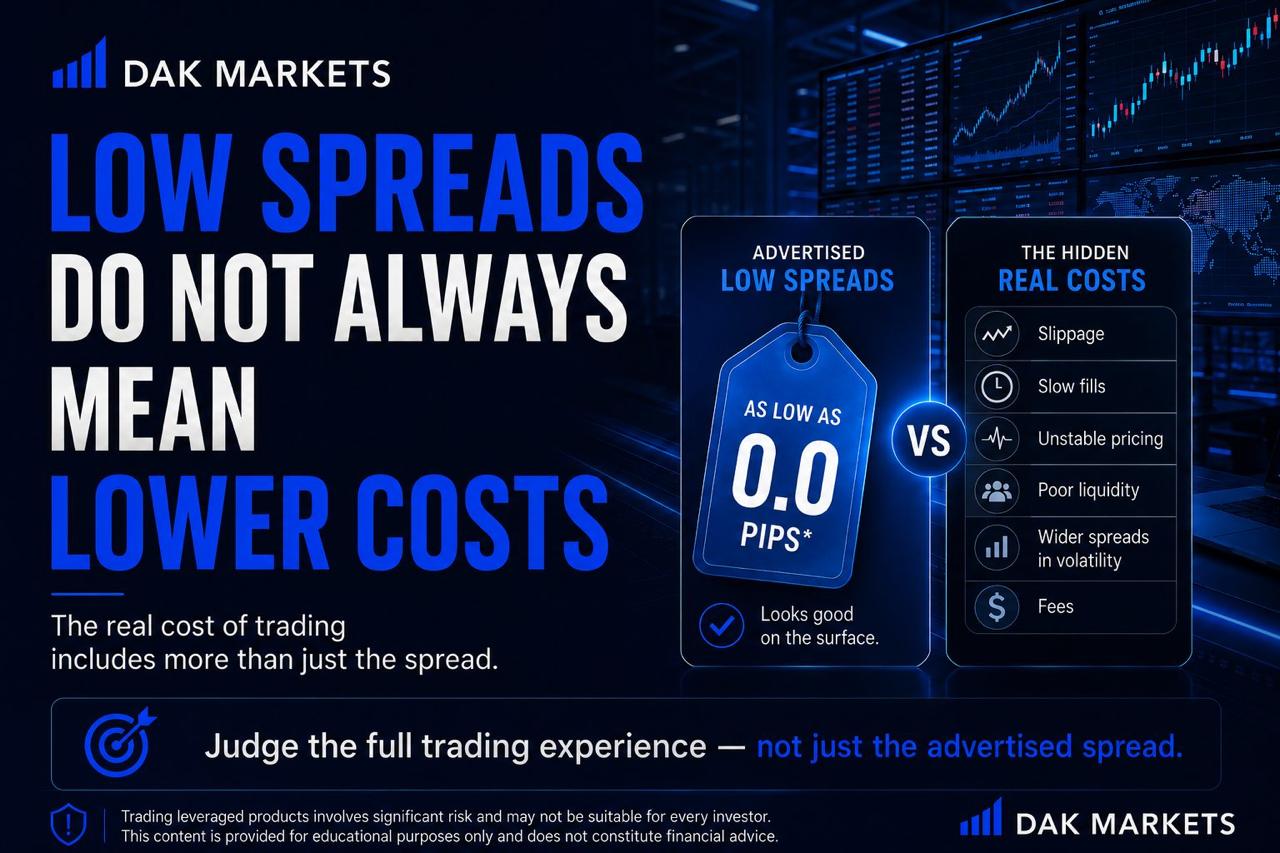
Low Spreads Do Not Always Mean Lower Trading Costs
The spread is one of the most visible costs in forex trading.
It represents the difference between the bid price and the ask price of an instrument. In general, a tighter spread can reduce the immediate cost of opening and closing a position.
However, the spread is only one part of the total cost of trading.
Other direct and indirect costs may include:
- Slippage
- Slow order fills
- Commissions
- Overnight swap charges
- Wider spreads during volatility
- Delayed execution
- Platform instability
- Deposit or withdrawal fees
For example, a trader may choose a broker because EURUSD is advertised with a very low spread.
However, if the trader regularly receives worse-than-expected entry or exit prices, the total cost may be higher than it would have been with a broker offering a slightly wider but more stable spread.
This is why traders should not judge a broker only by the smallest spread displayed on its website.
The real question is how the broker performs under genuine market conditions.
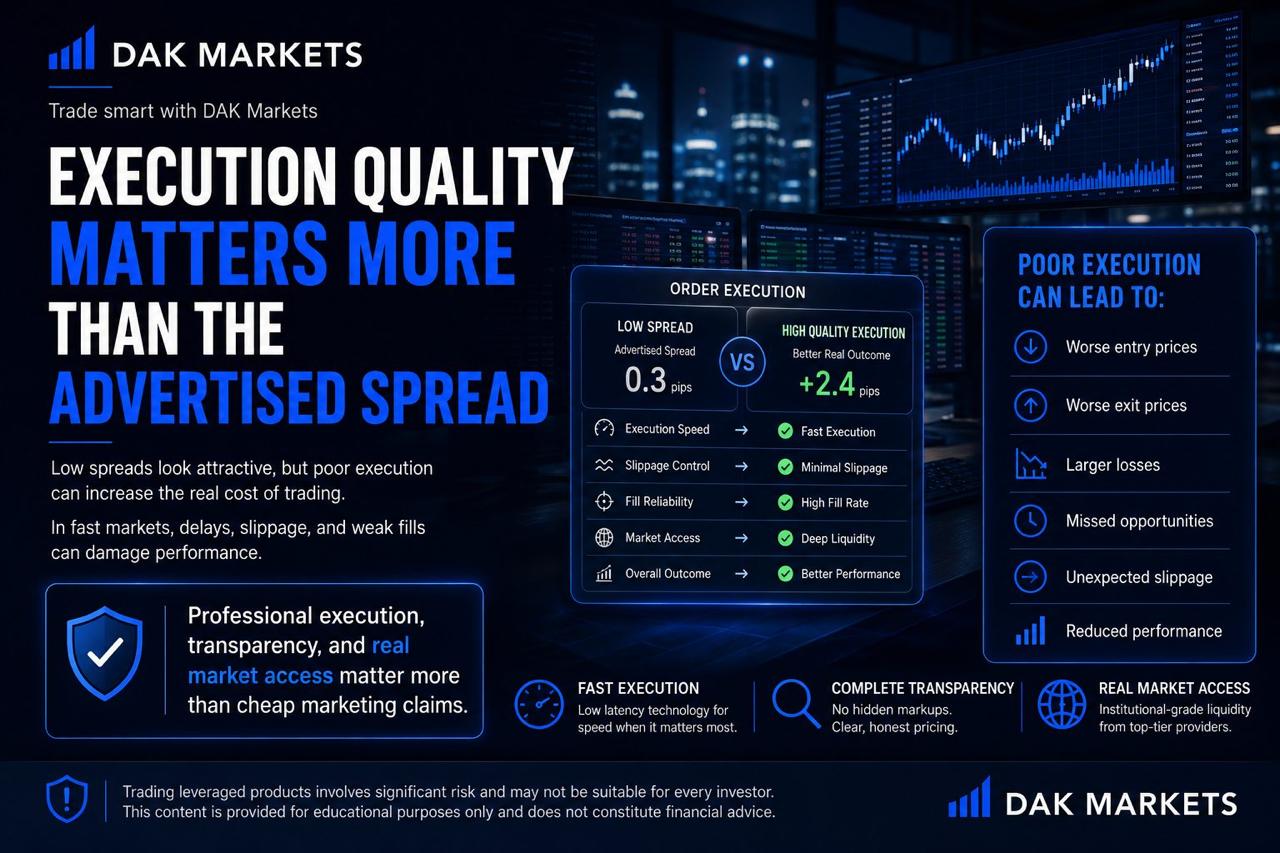
Execution Quality Can Matter More Than the Advertised Spread
Execution quality determines how efficiently an order is processed after a trader clicks buy or sell.
In fast-moving markets, even a small delay can affect the final price received. This can be especially important for traders who:
- Use short-term strategies
- Trade during active sessions
- Enter around economic news
- Use tight stop-loss levels
- Require precise entries and exits
Poor execution may lead to:
- Worse entry prices
- Worse exit prices
- Unexpected slippage
- Larger losses than planned
- Missed opportunities
- Reduced strategy performance
A broker may appear inexpensive on paper, but weak execution can create additional costs trade after trade.
Professional traders understand that execution is part of risk management. A stable and transparent execution environment can help traders follow their plans with greater structure and consistency.
At DAK Markets, the focus is not only on competitive trading conditions, but also on providing a professional environment built around execution, transparency, and reliable market access.
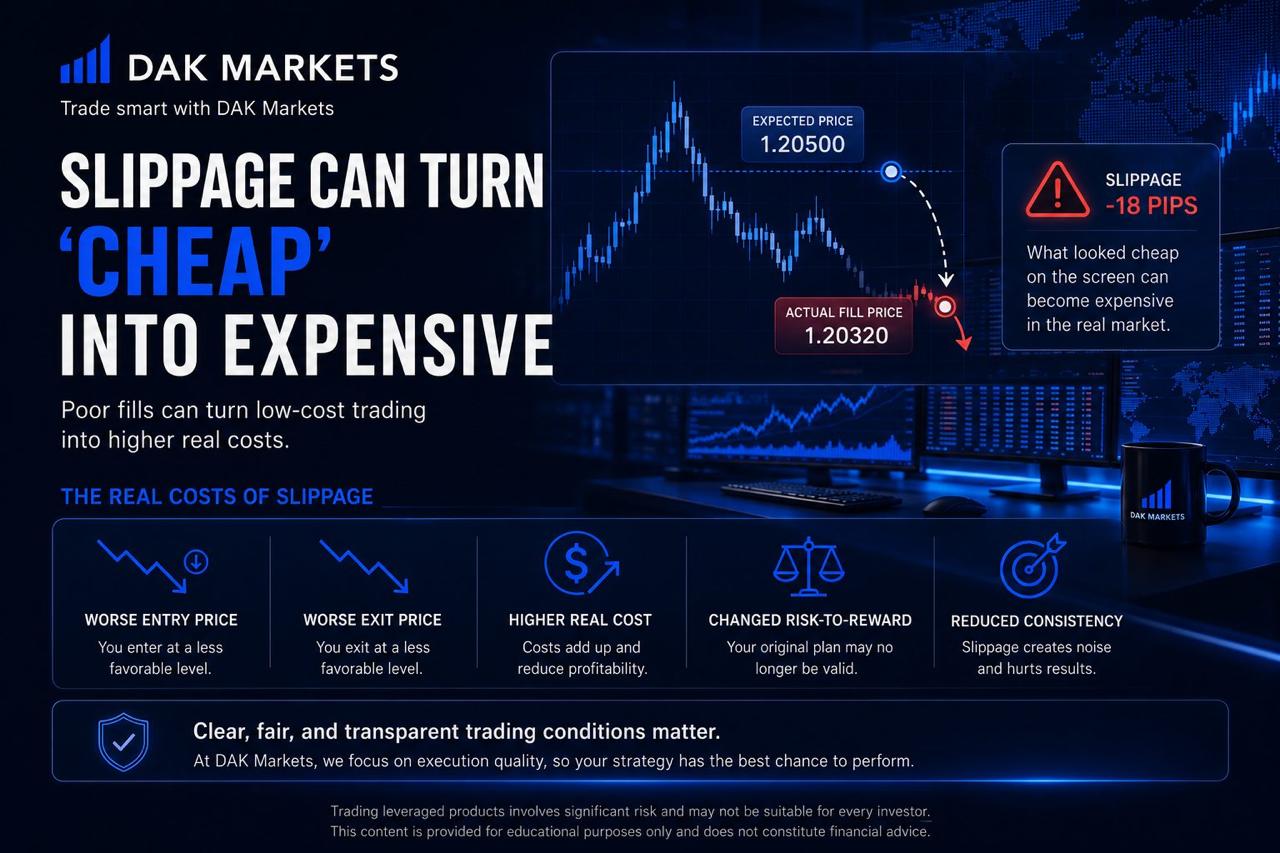
Slippage Can Turn “Cheap” Trading Into Expensive Trading
Slippage occurs when an order is executed at a different price from the one a trader expected.
It may happen during:
- High volatility
- Low liquidity
- Major economic announcements
- Market gaps
- Rapid price movement
Some slippage is a normal part of market-based trading because prices can change between the moment an order is submitted and the moment it is executed.
However, frequent or excessive slippage can significantly affect a trader’s results.
Consider a trader using a tight stop loss and a carefully calculated risk-to-reward ratio. If the entry is filled at a worse price than expected, the structure of the trade changes immediately.
The trader may now be:
- Risking more than planned
- Receiving less potential reward
- Entering farther away from the intended level
- Operating with a weaker risk-to-reward ratio
These small differences can accumulate over time, particularly for traders whose strategies depend on precision.
A professional broker should provide clear and transparent trading conditions so traders can understand the environment in which their orders are being executed.
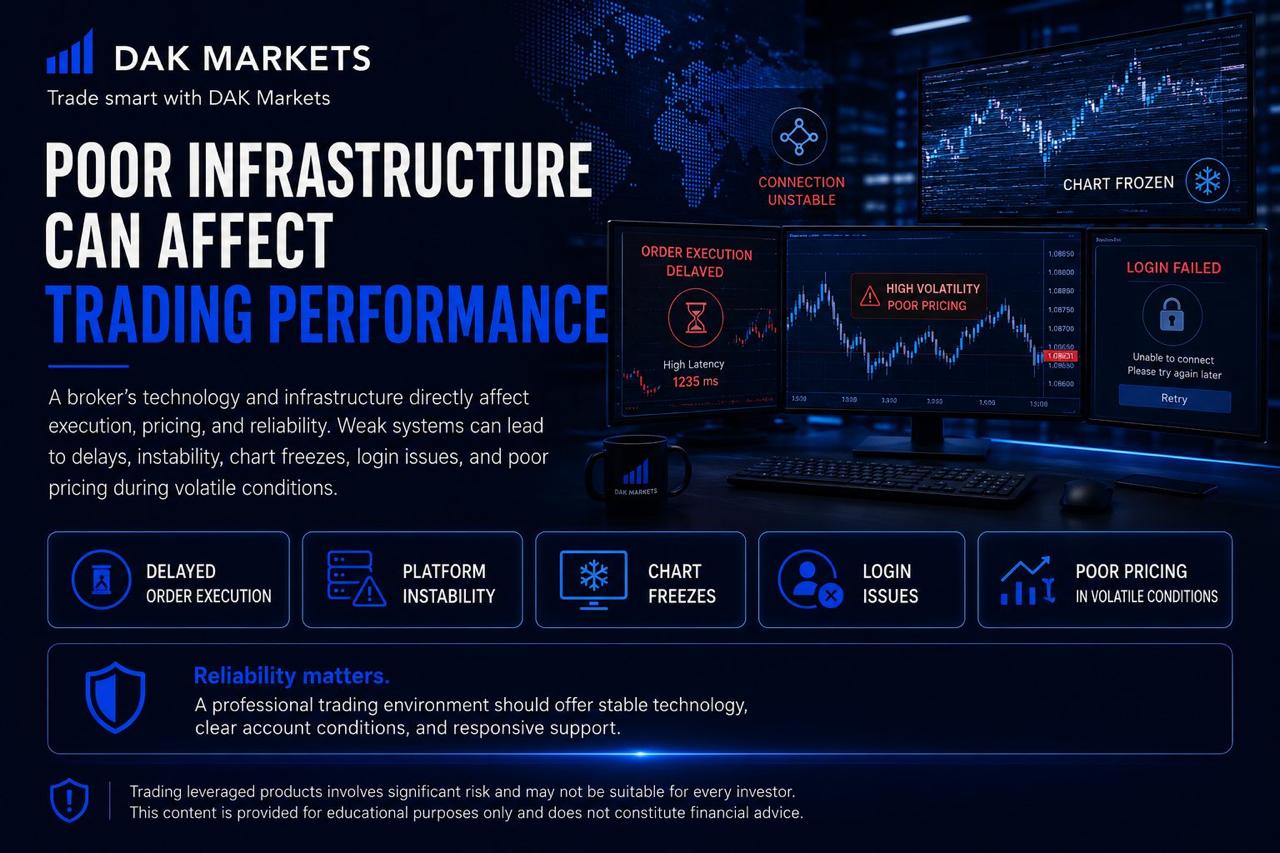
Platform Infrastructure Can Affect Trading Performance
A broker’s technology and infrastructure play an important role in the trading experience.
Traders need a platform that operates smoothly—especially during periods of increased activity.
Low advertised costs do not automatically guarantee strong technological infrastructure. Problems such as delayed execution, chart freezing, login issues, unstable pricing, or platform interruptions can directly affect a trader’s ability to manage risk.
For example:
- A platform freeze may prevent a trader from closing a position.
- Delayed execution may result in a worse fill.
- Unstable pricing may make it difficult to manage a stop loss.
- Login problems may prevent access during an important market move.
These are not simply technical inconveniences. They can have a direct financial impact.
In trading, reliability matters.
A professional trading environment should support traders before, during, and after every transaction through stable technology, clear account conditions, and responsive customer support.
The Hidden Cost of Poor Transparency
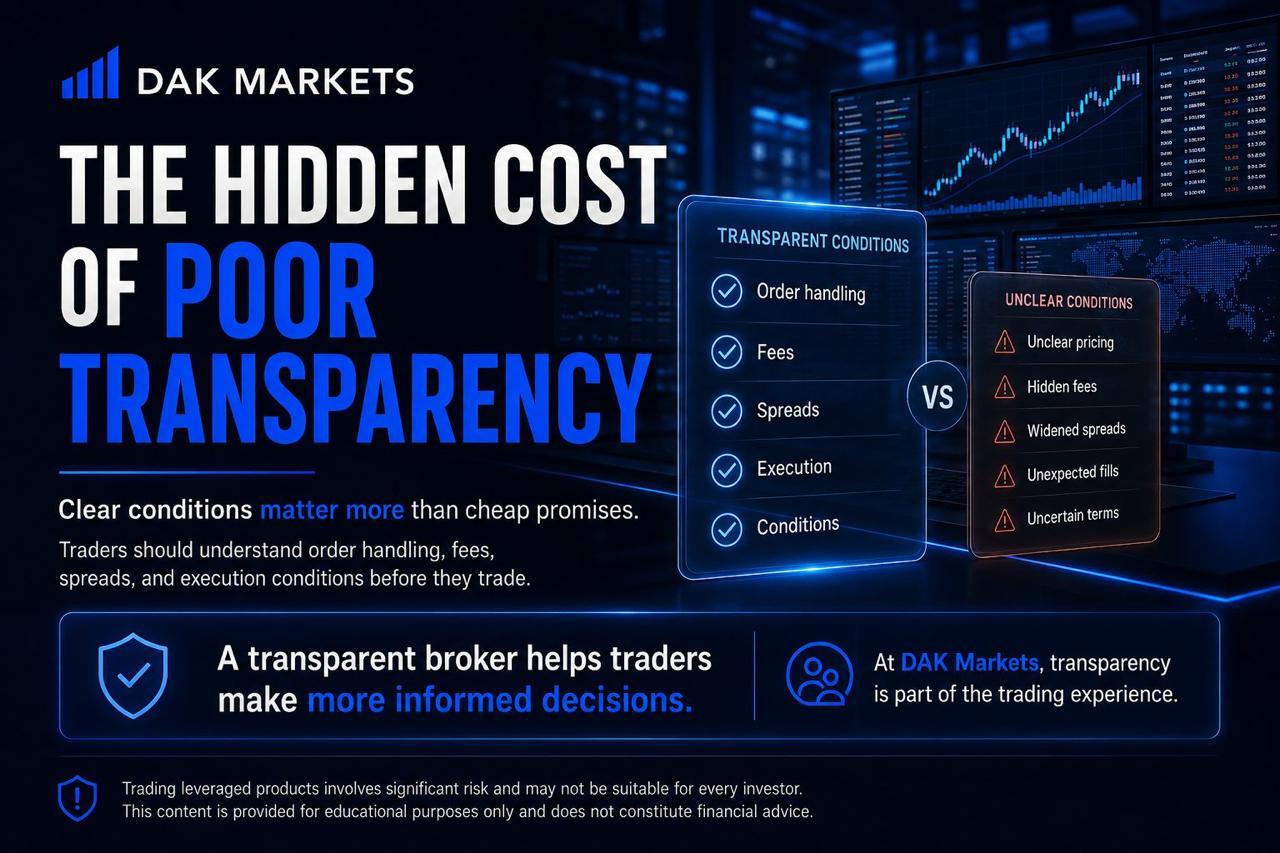
Transparency is another essential factor when choosing a broker.
A broker may appear inexpensive, but when its trading conditions are unclear, additional costs or restrictions may only become visible later.
Before opening an account, traders should understand:
- How orders are processed
- Which commissions apply
- When spreads may widen
- Whether overnight charges apply
- Which instruments are available
- What withdrawal conditions apply
- How trading conditions may change during volatility
A lack of transparency can create confusion and mistrust.
Traders may be left wondering why an order filled at a particular price, why a spread widened, or why the final execution differed from what they expected.
A transparent broker helps traders make better-informed decisions.
This does not mean that every trade will be executed at the exact requested price or that losses can be avoided. Trading always involves risk, and market conditions can change quickly.
However, traders deserve clear information, fair conditions, and the ability to understand the rules before they begin trading.
At DAK Markets, transparency is treated as an important part of the trading experience. Traders should not have to guess how their broker operates.
The Cheapest Broker May Not Support Long-Term Growth
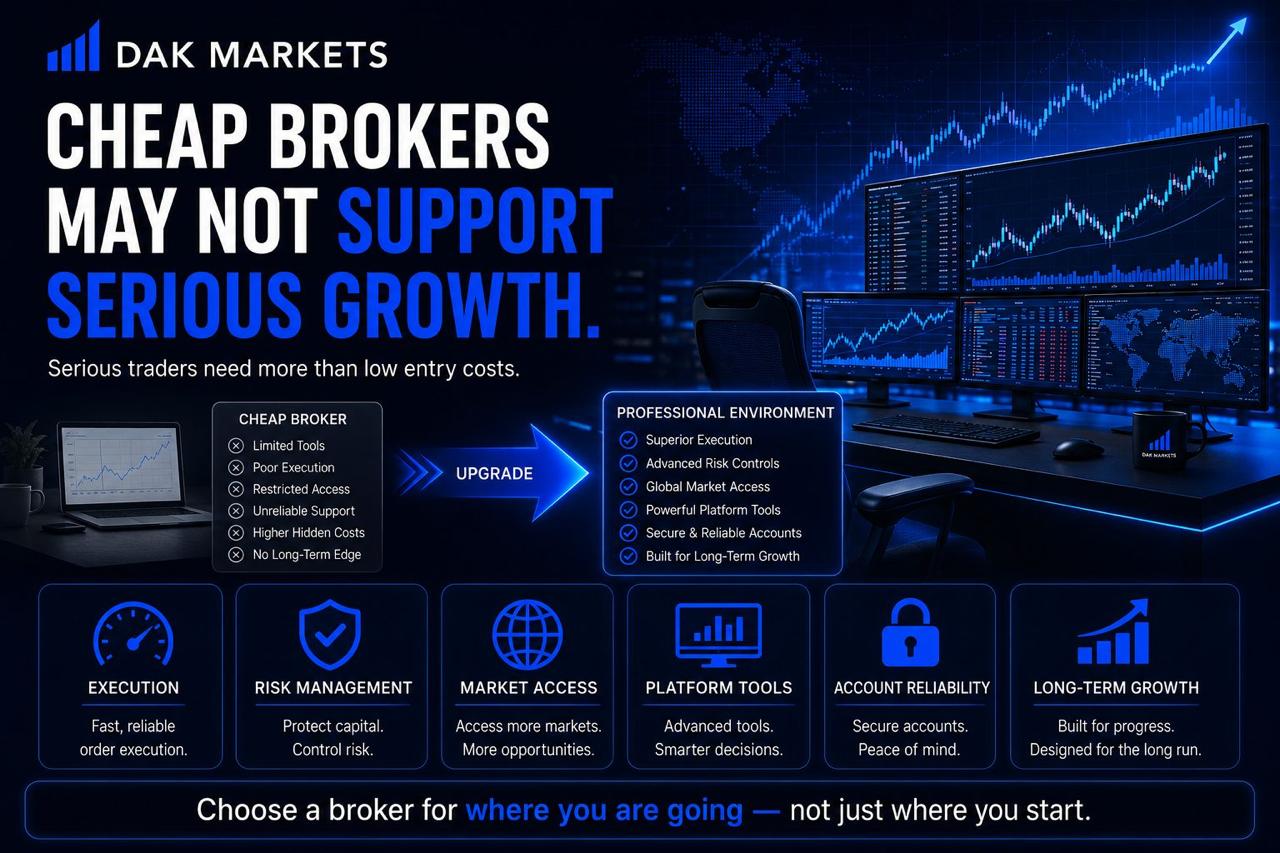
A trader’s needs often change as their knowledge and experience develop.
A beginner may initially focus almost entirely on low spreads and commissions. Over time, however, the trader may begin to place greater importance on:
- Execution quality
- Platform tools
- Risk management
- Market access
- Account reliability
- Trading conditions
- Customer support
A broker that appears suitable at the beginning may not provide the infrastructure or service required as the trader becomes more advanced.
Serious traders need more than a low-cost entry point. They need an environment that allows them to trade with structure, discipline, and confidence.
Choosing a broker should therefore be viewed as a long-term decision—not simply as a quick comparison of advertised spreads.
What Traders Should Look for Instead
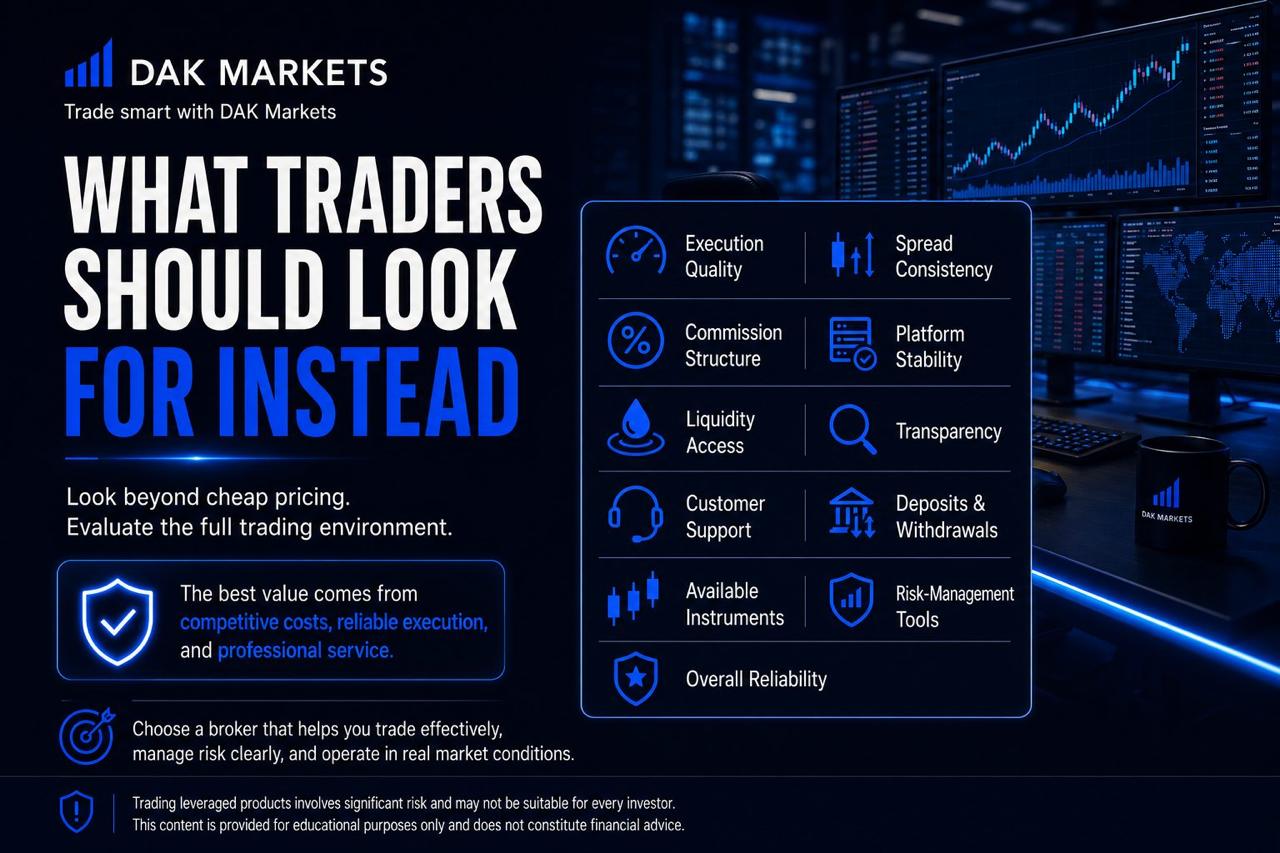
Rather than choosing a broker solely because it appears to be the cheapest option, traders should evaluate the complete trading environment.
Execution quality
Consider how efficiently orders are processed and how the platform performs during active market conditions.
Spread consistency
The lowest possible spread is not always the most important factor. Traders should also consider how spreads behave during different sessions and levels of volatility.
Commission structure
All commissions and fees should be clearly explained before a trader opens an account.
Platform stability
The trading platform should remain reliable during normal and volatile conditions.
Liquidity conditions
Liquidity can influence spreads, slippage, and the speed at which orders are executed.
Transparency
A trader should understand the broker’s fees, account conditions, execution model, and trading rules.
Customer support
Reliable support becomes especially important when a trader experiences a technical, account-related, or withdrawal issue.
Deposits and withdrawals
Funding and withdrawal procedures should be clear, secure, and easy to understand.
Risk-management tools
A professional platform should provide traders with the tools needed to manage orders, stop losses, take-profit levels, and overall exposure.
A broker does not need to be the cheapest to provide strong value.
In many cases, the best value comes from a broker that combines competitive trading costs with stable execution, transparent conditions, professional technology, and reliable service.
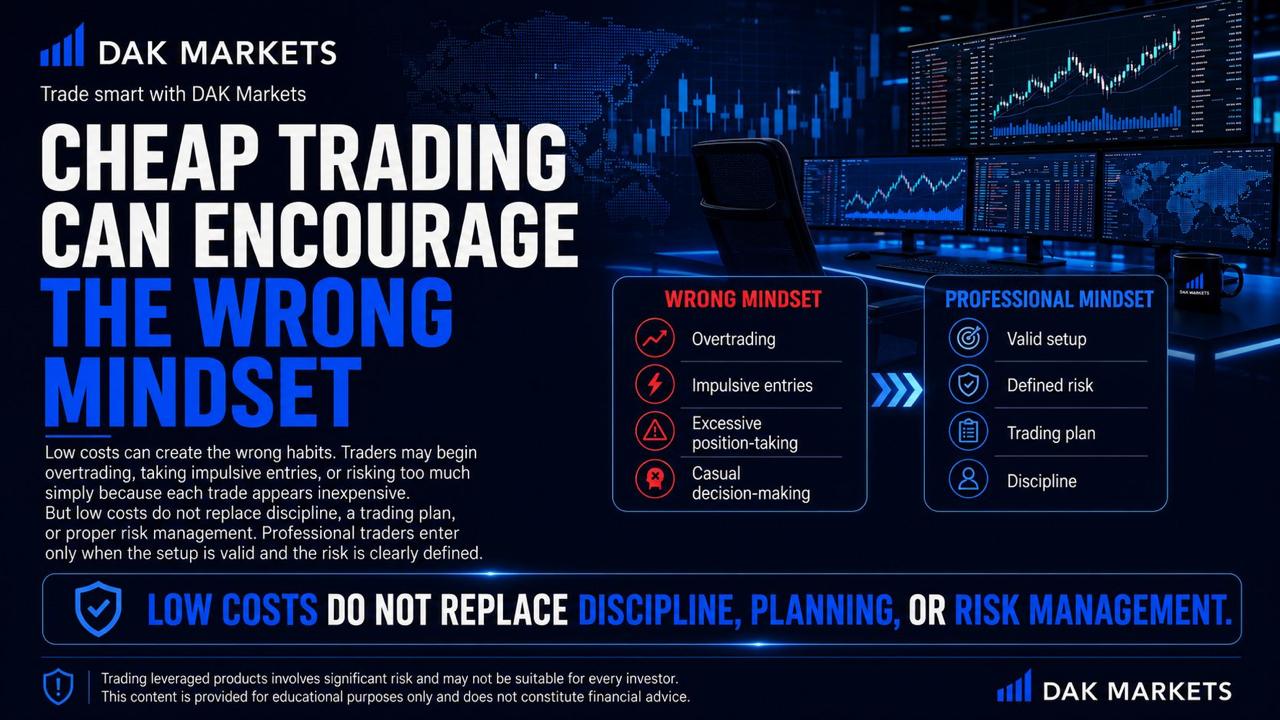
Cheap Trading Can Encourage the Wrong Mindset
There is also a psychological element to consider.
When traders focus too heavily on cheap trading conditions, they may begin to treat individual trades too casually.
Low costs can sometimes encourage:
- Overtrading
- Impulsive entries
- Excessive position-taking
- Poor-quality setups
- Emotional decision-making
However, every position still carries risk.
A low spread does not make a poor setup more effective. A small commission does not protect an account from emotional trading. Cheap execution costs cannot replace discipline, preparation, or risk management.
Professional traders do not enter the market simply because it is inexpensive to do so.
They trade because:
- The setup is valid
- The risk is clearly defined
- The conditions match their strategy
- The position fits their overall trading plan
Final Thoughts
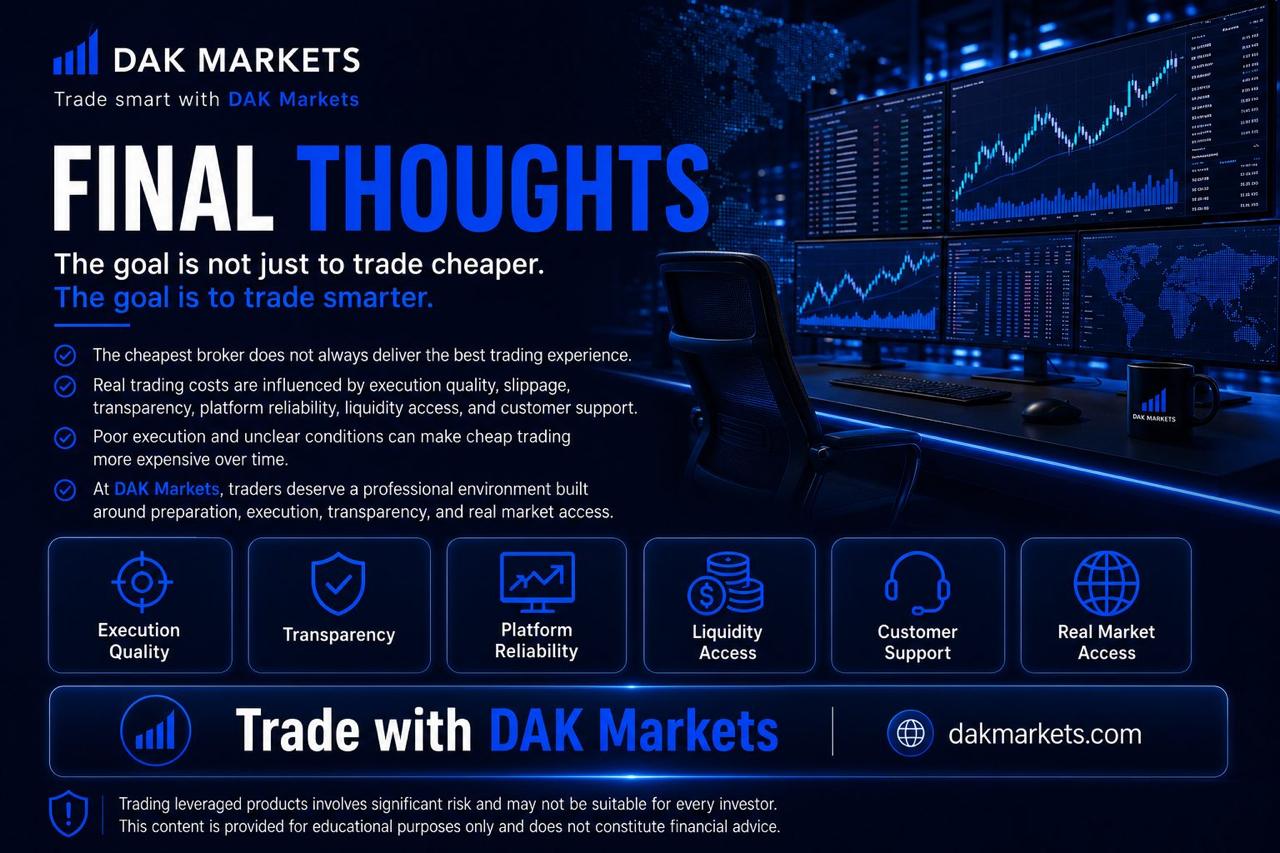
Choosing the cheapest broker may seem like a simple way to reduce trading expenses, but the lowest advertised price does not always provide the best trading experience.
Spreads and commissions matter, but they are only part of the complete picture.
Execution quality, slippage, platform reliability, liquidity, transparency, account support, and withdrawal procedures can all affect the true cost of trading.
A seemingly cheap broker can become expensive when:
- Orders are filled at worse prices
- Platform problems interfere with trade management
- Trading conditions are unclear
- Hidden fees appear later
- Support is unavailable when needed
At DAK Markets, we believe traders deserve more than low-cost marketing claims.
They deserve a professional trading environment built around preparation, execution, transparency, and dependable market access.
The goal is not simply to trade cheaper.
The goal is to trade smarter.
Trade With DAK Markets
Visit dakmarkets.com to learn more about our available trading accounts, platform features, and trading conditions.