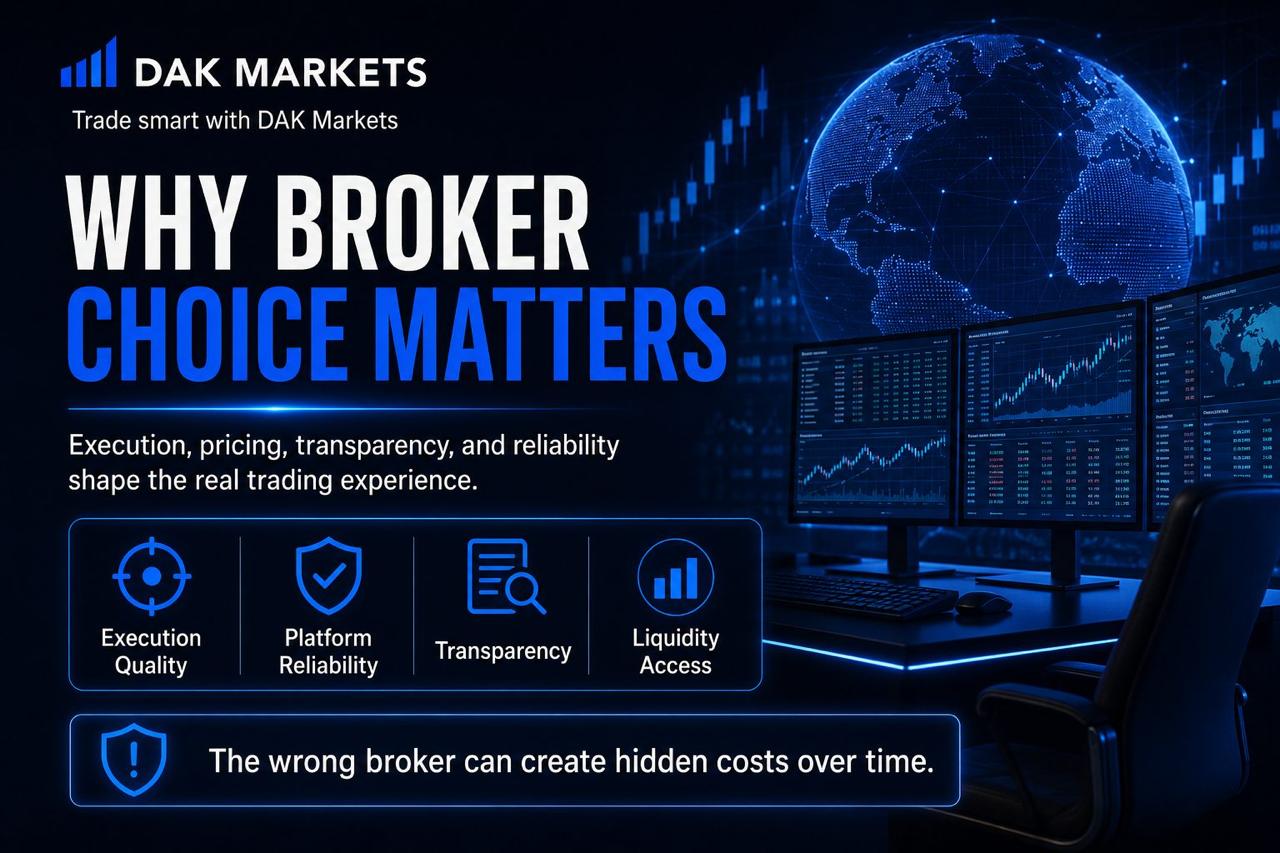
Choosing a forex broker is one of the most important decisions a trader can make.
Traders may spend hours analyzing charts, refining strategies, identifying entry points, and managing risk. However, many overlook the environment in which their trades are actually executed.
A broker is more than a platform for opening and closing positions. It can influence:
- Order execution
- Pricing
- Platform reliability
- Liquidity access
- Trading conditions
- Withdrawals
- Customer support
- Overall trading experience
The wrong broker may create costs that are not immediately visible. Poor execution, unstable technology, unclear conditions, weak support, and limited market access can gradually affect a trader’s performance.
A broker that appears convenient or inexpensive at the beginning may become costly if it consistently interferes with the trader’s ability to follow a plan.
In this article, we examine the hidden costs of choosing the wrong broker and explain what traders should consider before selecting a trading partner.
Key Takeaways
The true cost of using a broker is not limited to spreads and commissions.
Hidden costs may include:
- Worse entry and exit prices
- Frequent slippage
- Platform interruptions
- Unclear account conditions
- Delayed support
- Limited instruments
- Increased emotional pressure
A professional broker should provide an environment that helps traders execute decisions clearly and manage risk effectively.
Why Broker Choice Matters in Forex Trading
The forex market can move quickly.
Prices may change within seconds, particularly during active trading sessions, economic announcements, and periods of increased volatility.
In these conditions, traders need access to:
- Stable technology
- Reliable order execution
- Clear pricing
- Consistent account conditions
- Responsive support
A trader may have a well-tested strategy, but the results can still suffer when the broker cannot support the strategy properly.
Execution delays, excessive slippage, unstable pricing, or platform interruptions can prevent a trader from following the original plan.
Broker selection should therefore not be treated as a minor administrative decision.
It is part of the foundation of the trading environment.
A suitable broker should help traders access the market with greater clarity and structure. The wrong broker can make trading more difficult, stressful, and potentially more expensive.
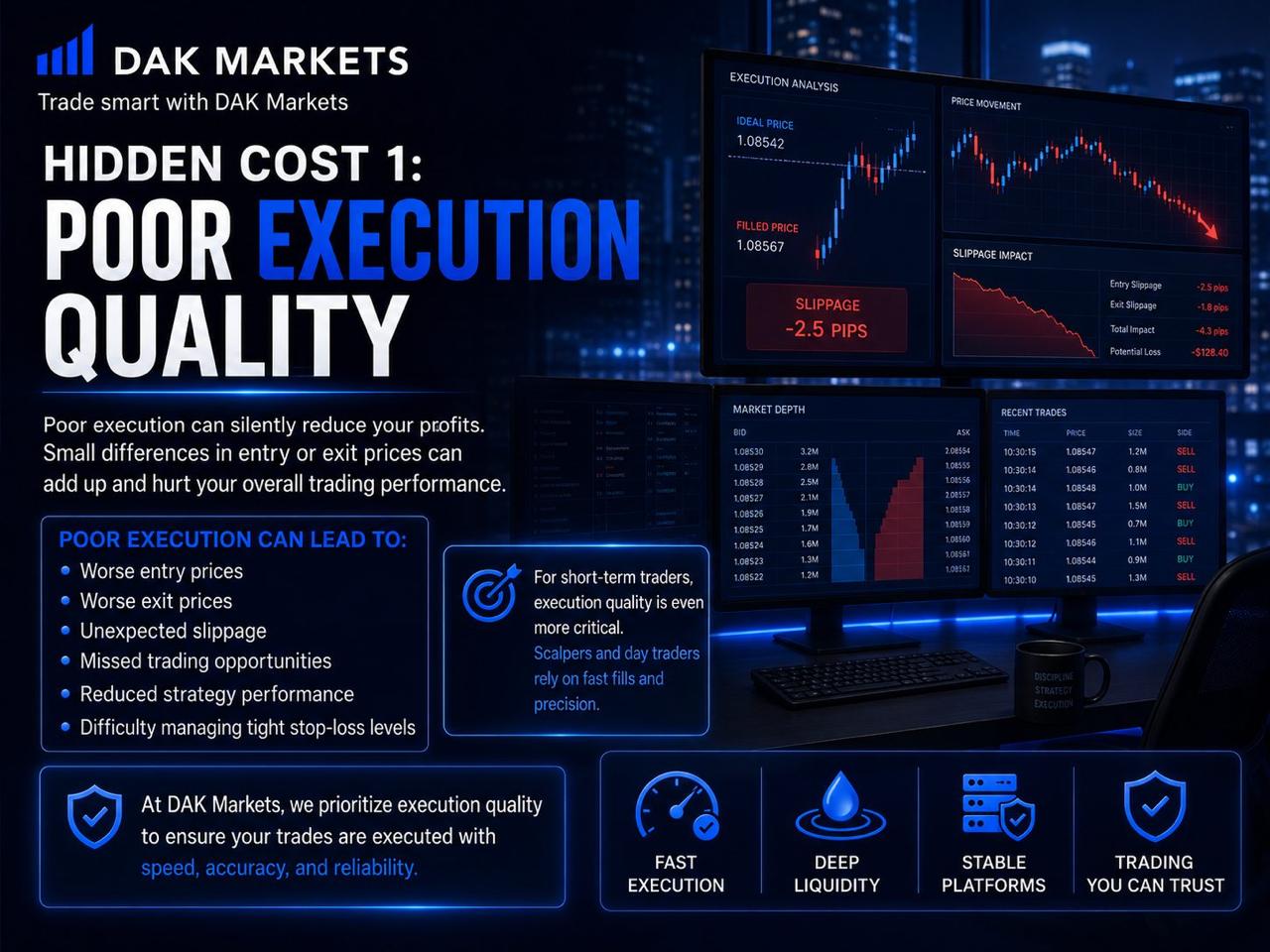
Hidden Cost 1: Poor Execution Quality
Execution quality refers to how efficiently an order is processed after a trader clicks buy or sell.
When execution is weak, traders may receive a different price from the one they expected.
This can happen because of:
- Delayed order processing
- Weak liquidity access
- Technical limitations
- Poor order-routing infrastructure
- Fast market movement
For example, a trader may plan to enter EURUSD at a particular price.
If the order is delayed and executed at a worse level, the difference may appear small on one trade. Across many transactions, however, these differences can accumulate.
Poor execution may lead to:
- Worse entry prices
- Worse exit prices
- Unexpected slippage
- Missed trading opportunities
- Reduced strategy performance
- Difficulty managing tight stop losses
Execution quality can be especially important for scalpers, intraday traders, and anyone relying on precise entries and exits.
At DAK Markets, execution quality is treated as an important part of the trading environment because traders need conditions that support their decisions rather than work against them.
Hidden Cost 2: Slippage and Unstable Pricing
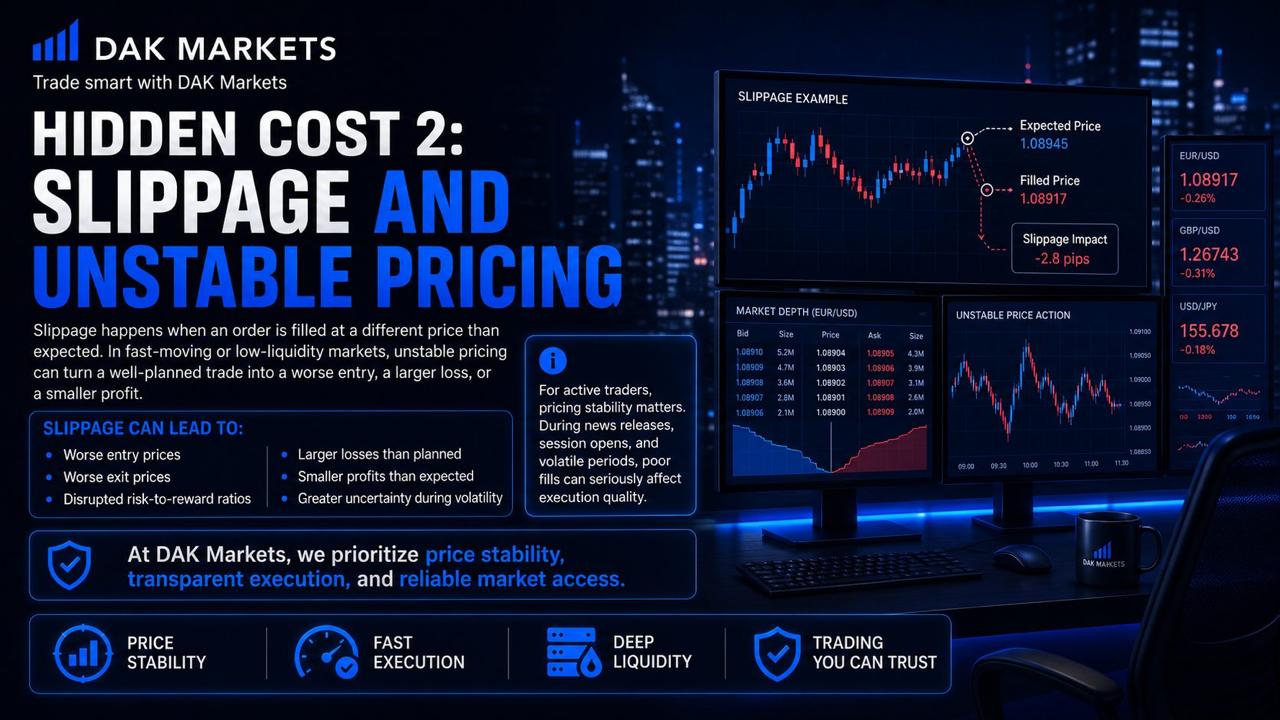
Slippage occurs when an order is executed at a different price from the expected price.
Some slippage is a normal part of market-based trading. Prices can change quickly, especially during:
- Economic news releases
- Session openings
- Low-liquidity periods
- Market gaps
- Sudden increases in volatility
However, frequent or excessive negative slippage can become a significant cost.
Slippage affects more than the entry price.
A trader may calculate a setup using a specific:
- Entry
- Stop loss
- Take-profit level
- Position size
- Risk-to-reward ratio
When the entry is filled at a worse price, the entire structure of the trade may change.
The trader may be risking more than planned or receiving less potential reward.
Slippage at the exit may also result in:
- A larger loss
- A smaller profit
- A less favorable average execution price
- Reduced consistency over time
A broker may advertise competitive spreads, but those savings can lose their value if trades are repeatedly executed at unfavorable prices.
Hidden Cost 3: Weak Platform Stability
Platform stability is another major factor in the trading experience.
Traders need a platform that works properly when it matters most.
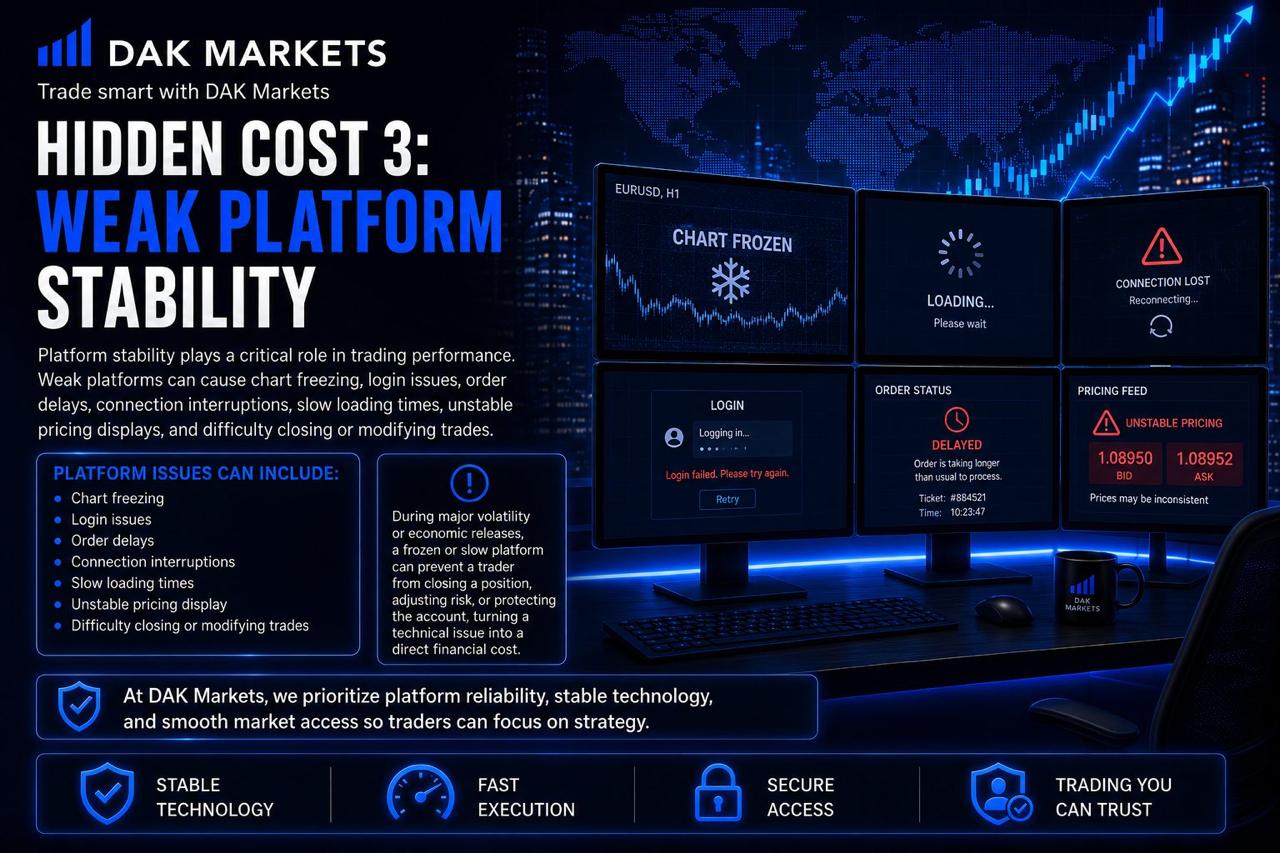
A weak or unstable trading platform may create problems such as:
- Frozen charts
- Login failures
- Delayed orders
- Connection interruptions
- Slow loading times
- Unstable price displays
- Difficulty modifying positions
- Difficulty closing trades
These issues can be frustrating during normal market conditions, but they become far more serious during volatility.
Imagine a trader holding an open position during a major economic announcement.
The market begins moving rapidly, but the platform freezes. The trader may be unable to close the position, adjust the stop loss, or reduce the exposure.
This is not merely a technical inconvenience.
It can become a direct financial cost.
A professional broker should provide reliable infrastructure so traders can focus on their strategies instead of worrying about whether the platform will function correctly.
Hidden Cost 4: Lack of Transparency
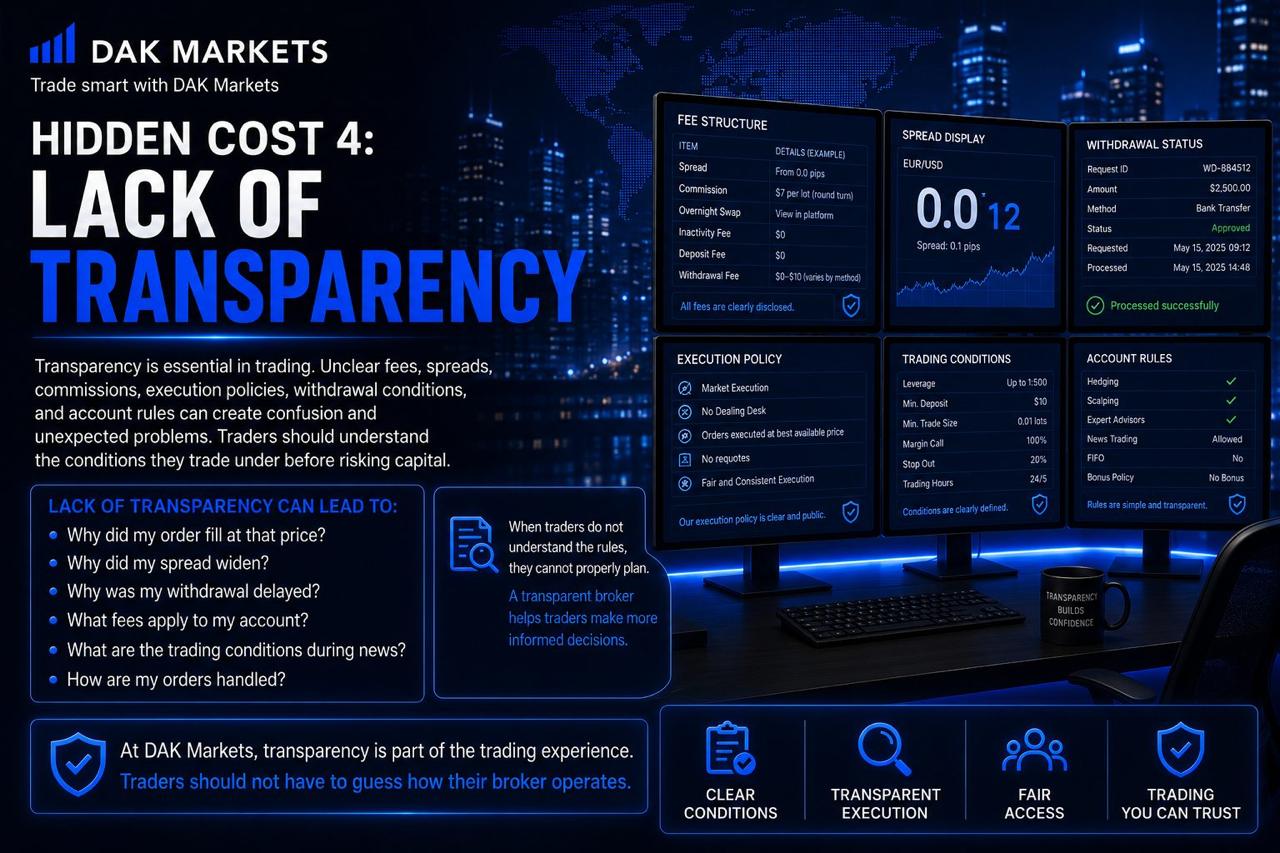
Transparency is one of the most important qualities traders should consider when evaluating a broker.
Before depositing capital, traders should understand:
- How orders are handled
- Which fees apply
- How commissions are calculated
- When spreads may widen
- Which withdrawal conditions apply
- What instrument specifications are used
- Which account rules must be followed
- How trading conditions may change during news
The wrong broker may not explain these details clearly.
A lack of transparency can leave traders asking:
- Why was my order executed at that price?
- Why did the spread widen?
- Why was my withdrawal delayed?
- Which fees apply to my account?
- What happens during high-impact news?
- How are my orders processed?
When the rules are unclear, traders cannot plan effectively.
Transparency does not remove market risk, and it does not guarantee profitable results. However, traders deserve clear information and understandable conditions before they begin trading.
At DAK Markets, transparency is considered part of the trading experience. Traders should not have to guess how their broker operates.
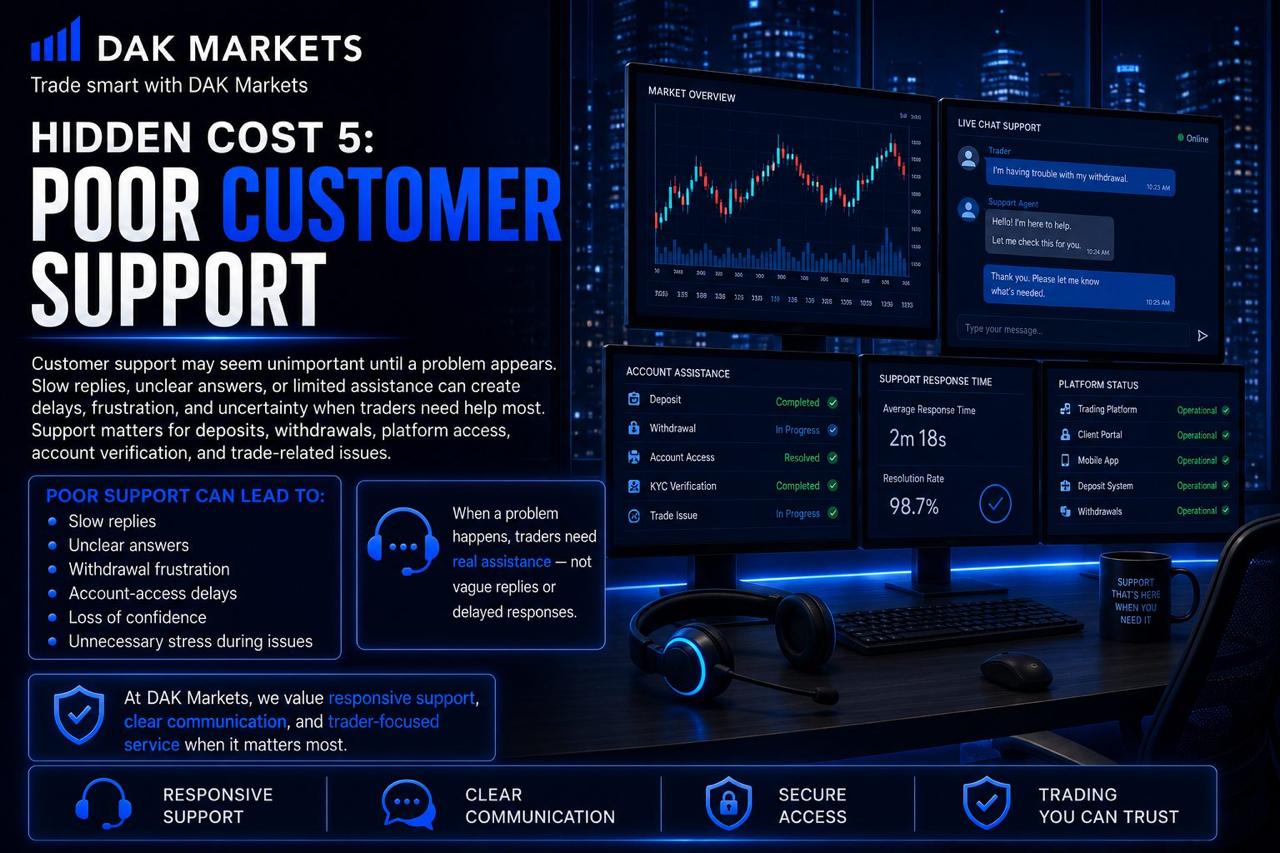
Hidden Cost 5: Poor Customer Support
Customer support may not appear important until a problem occurs.
When everything is functioning properly, traders may rarely think about support.
However, assistance becomes extremely valuable when there is an issue involving:
- Platform access
- Deposits
- Withdrawals
- Account verification
- Trading conditions
- Technical problems
- Security concerns
The wrong broker may provide slow responses, unclear explanations, or limited assistance.
Poor customer support can cost traders:
- Time
- Confidence
- Trading opportunities
- Access to funds
- Peace of mind
For example, if a trader cannot access an account or has a pending withdrawal, clear communication becomes essential.
Automated replies and vague explanations may increase uncertainty rather than resolve the problem.
A professional broker should treat support as an important part of the overall trading environment.
Traders need access to meaningful assistance when it matters.
Hidden Cost 6: Limited Market Access
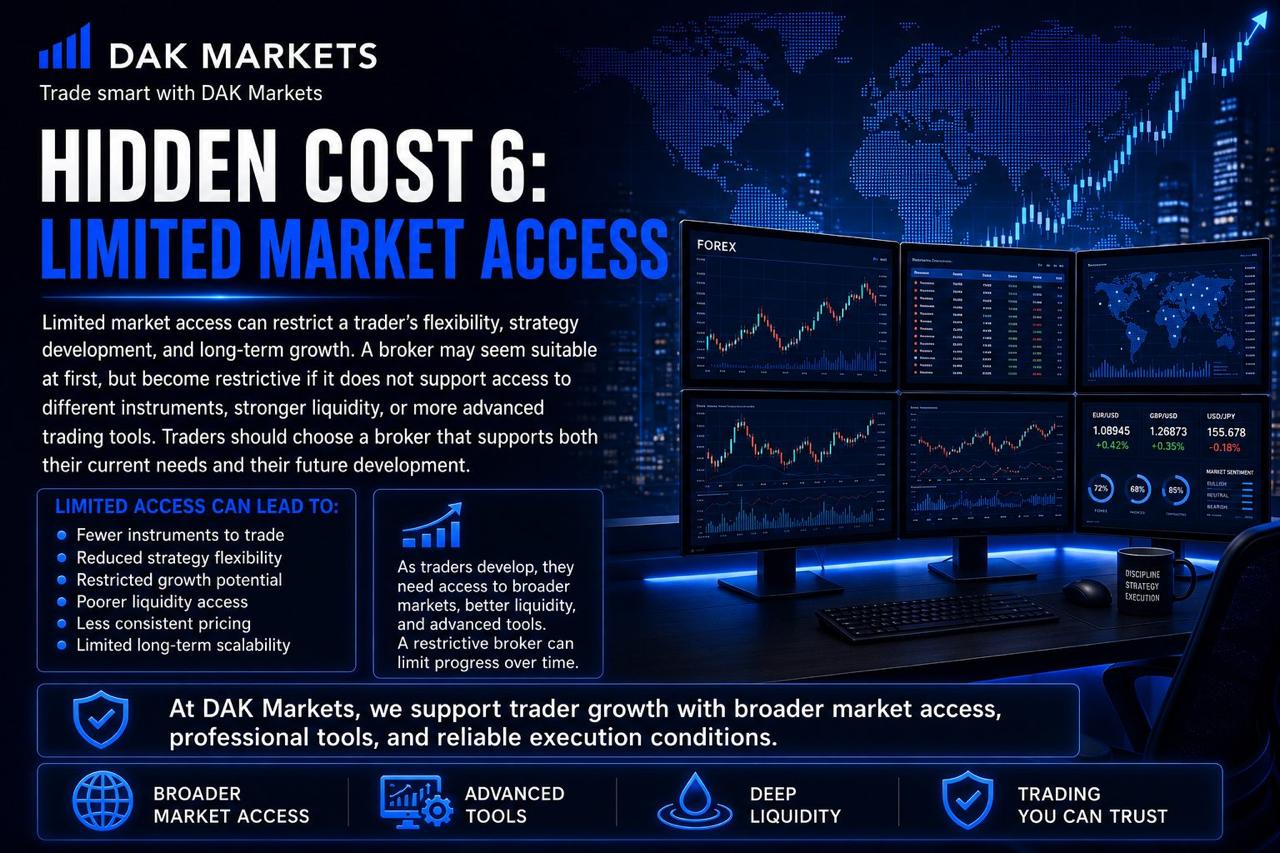
Another hidden cost of choosing the wrong broker is limited access to instruments, liquidity, and trading tools.
A trader’s needs may change over time.
As traders gain experience, they may want to:
- Explore additional asset classes
- Test new strategies
- Use advanced order-management tools
- Access deeper liquidity
- Trade different sessions
- Diversify market exposure
A broker that appears suitable at the beginning may become restrictive later.
Limited market access can reduce flexibility, while weak liquidity access may affect:
- Pricing
- Execution speed
- Spread consistency
- Slippage
- Order availability
A broker should support both the trader’s current needs and future development.
The decision should not be based only on where the trader is today, but also on where the trader wants to go.
Hidden Cost 7: Emotional Pressure and Loss of Confidence
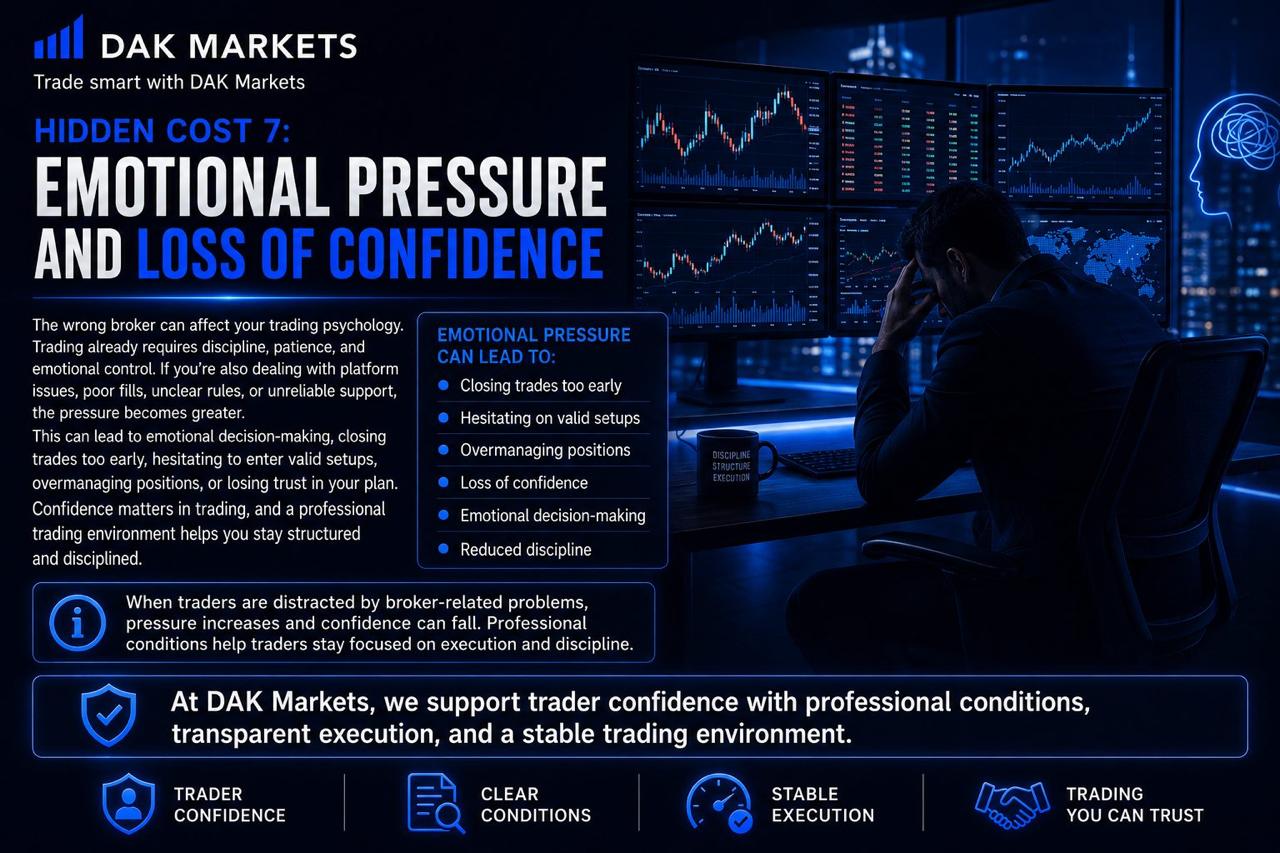
The wrong broker can also affect trading psychology.
Trading already requires:
- Discipline
- Patience
- Emotional control
- Consistent decision-making
- Confidence in a tested plan
When a trader is also dealing with platform problems, poor fills, unclear conditions, or unreliable support, the emotional pressure can increase.
This may lead to:
- Closing trades too early
- Hesitating on valid setups
- Overmanaging positions
- Entering impulsively
- Losing confidence in the strategy
- Making decisions based on fear or frustration
A trader should be focused on executing the trading plan—not worrying about whether the broker will create additional problems.
A professional trading environment cannot guarantee successful results, but it can reduce unnecessary distractions and allow traders to operate with greater structure.
What Traders Should Look for in a Broker
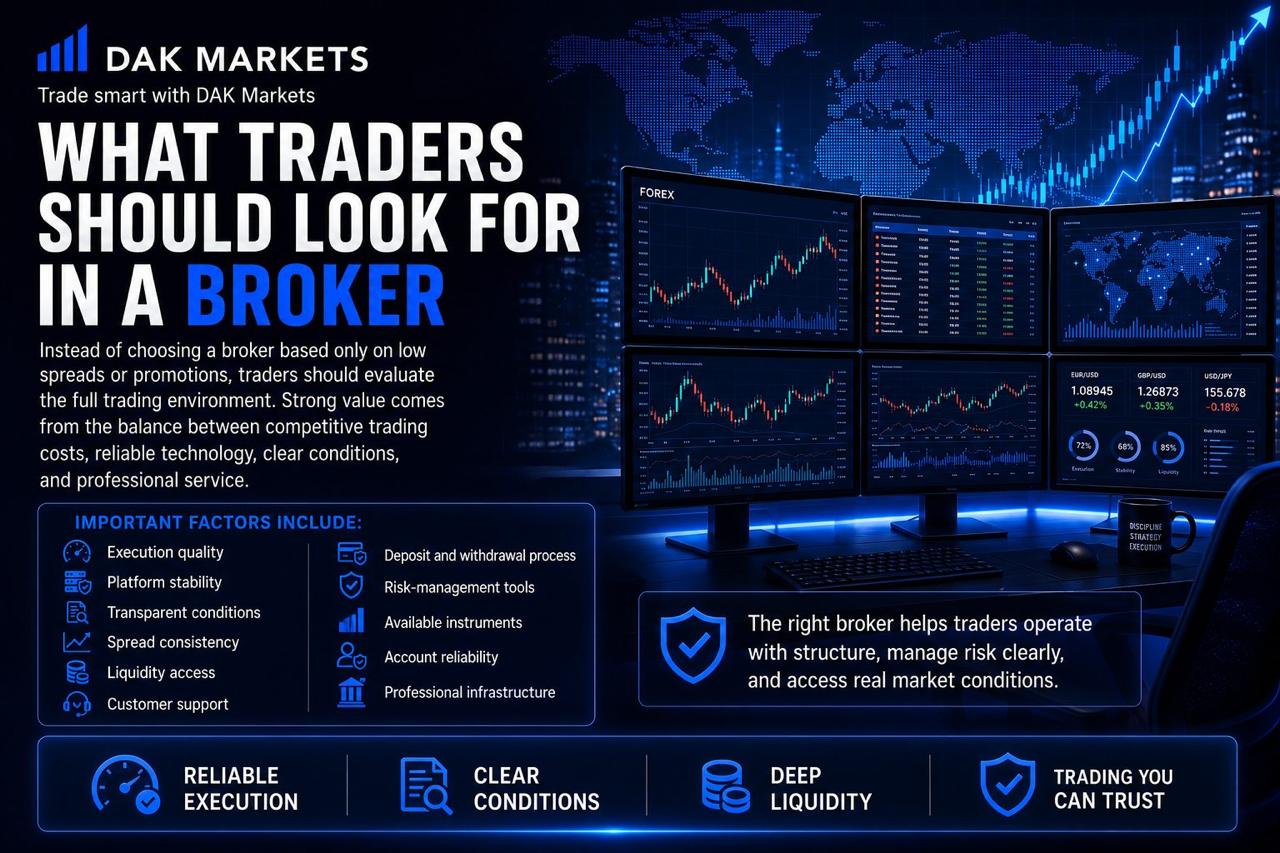
Rather than choosing a broker based only on spreads, commissions, or promotions, traders should evaluate the complete trading environment.
Execution quality
Consider how efficiently orders are processed and how execution behaves during active market conditions.
Platform stability
The platform should remain reliable during normal trading and periods of increased volatility.
Transparent conditions
Fees, spreads, commissions, account rules, and execution policies should be clearly explained.
Spread consistency
The lowest advertised spread is not the only consideration. Traders should also examine how spreads behave during different sessions and market conditions.
Liquidity access
Liquidity can influence execution speed, available pricing, spread behavior, and slippage.
Customer support
Support should be responsive, professional, and capable of providing clear assistance.
Deposits and withdrawals
Funding procedures should be secure and understandable, with withdrawal conditions clearly communicated.
Risk-management tools
The platform should provide useful tools for managing stop losses, take profits, pending orders, and overall exposure.
Available instruments
A wider selection of instruments can give traders greater flexibility as their strategies develop.
Account reliability
Traders should feel confident that they can access and manage their accounts when needed.
Professional infrastructure
Stable technology and dependable systems are essential for a consistent trading experience.
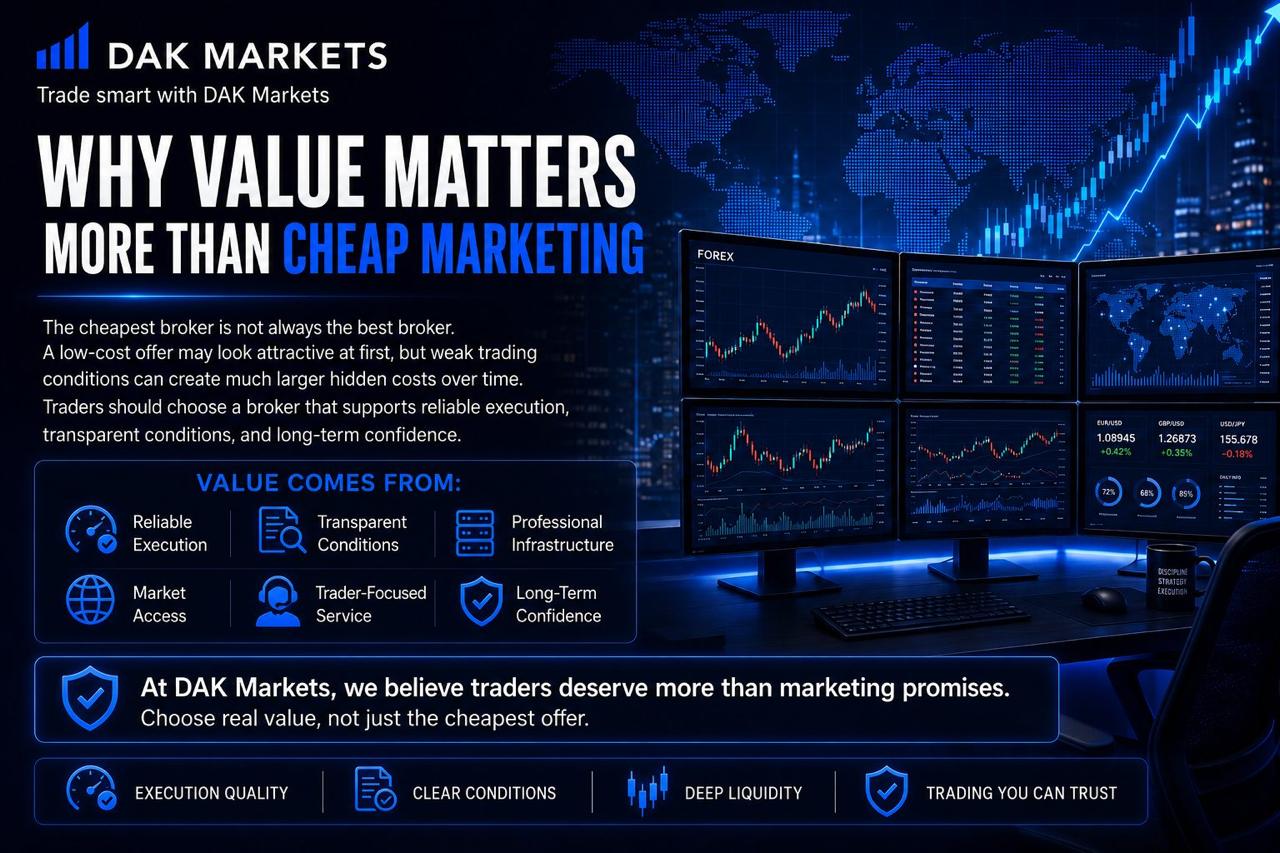
A broker does not need to be the cheapest option to provide strong value.
In many cases, value comes from balancing:
- Competitive costs
- Reliable execution
- Stable technology
- Clear conditions
- Professional service
The most important question is whether the broker helps the trader operate effectively, manage risk clearly, and access real market conditions.
Why Value Matters More Than Marketing Claims
The cheapest or most heavily promoted broker is not automatically the best choice.
An attractive offer may appear valuable at first, but weak trading conditions can create costs that are far greater than the advertised savings.
Traders should think long-term.
A broker should support:
- Consistent decision-making
- Reliable execution
- Transparent conditions
- Effective risk management
- Professional development
The broker should not make trading more complicated.
It should provide the technology, infrastructure, and environment traders need to focus on their strategies.
At DAK Markets, we believe traders deserve more than marketing promises.
They deserve a professional trading environment built around execution, transparency, market access, and trader-focused conditions.
Final Thoughts
Choosing the wrong broker can create hidden costs that are not always visible at the beginning.
Poor execution, slippage, unstable platforms, unclear conditions, weak support, and limited market access can all affect the real cost of trading.
A broker is not simply a service provider.
It is part of the trader’s execution environment.
The goal is not only to find the cheapest or most convenient option.
The goal is to choose a broker that provides:
- Real value
- Reliable conditions
- Transparent information
- Professional infrastructure
- A structured trading experience
For traders who take the markets seriously, broker choice matters.
Trade With DAK Markets
Learn more about DAK Markets, our trading accounts, and available platform features at dakmarkets.com.