When choosing a forex broker, many traders begin by comparing costs. Tight spreads, zero commissions, promotional bonuses, and low-cost trading accounts can all appear attractive—especially to traders looking to reduce their expenses.
At first glance, the cheapest broker may seem like the most logical choice.
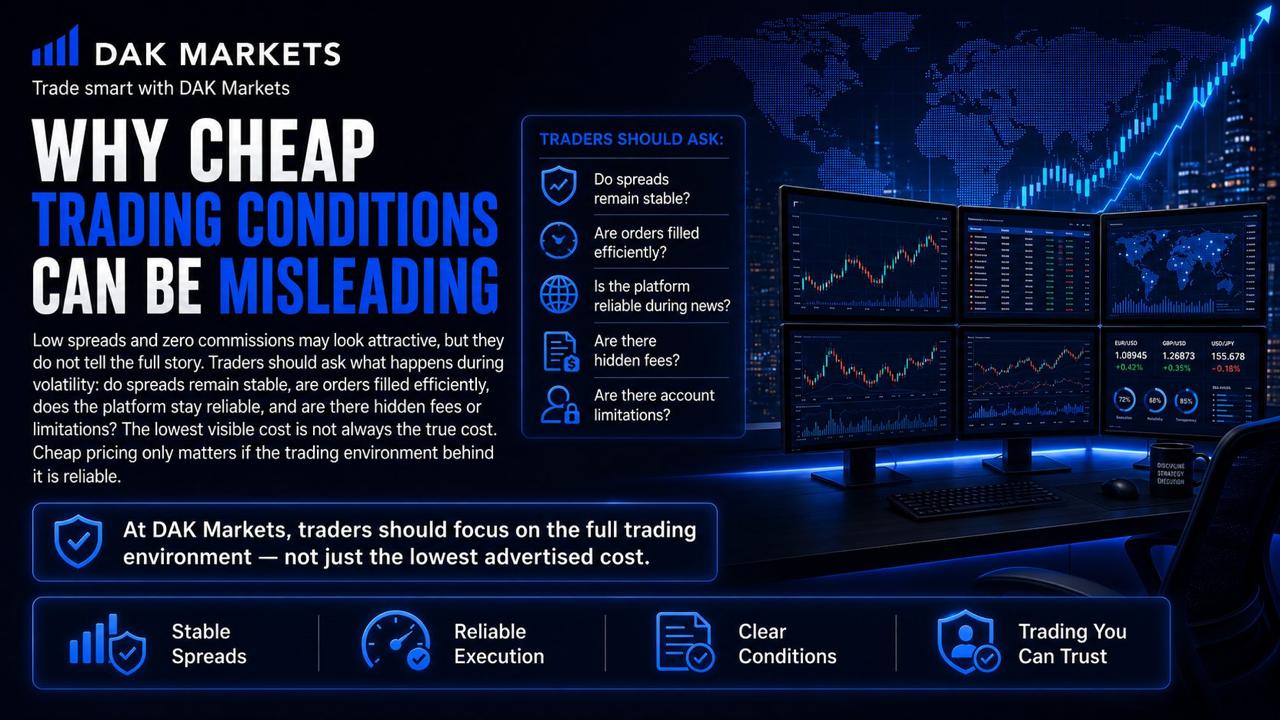
However, successful trading is not simply about paying the lowest possible fee. It is about operating in a professional environment that supports reliable execution, stable pricing, transparent conditions, strong liquidity, and long-term consistency.
A broker that appears inexpensive on the surface may not always provide the best overall trading experience. Poor execution, excessive slippage, platform instability, unclear fees, limited support, and restricted market access can ultimately make trading significantly more expensive.
This is why traders should look beyond the cheapest advertised offer and focus on real value.
Why Cheap Trading Conditions Can Be Misleading
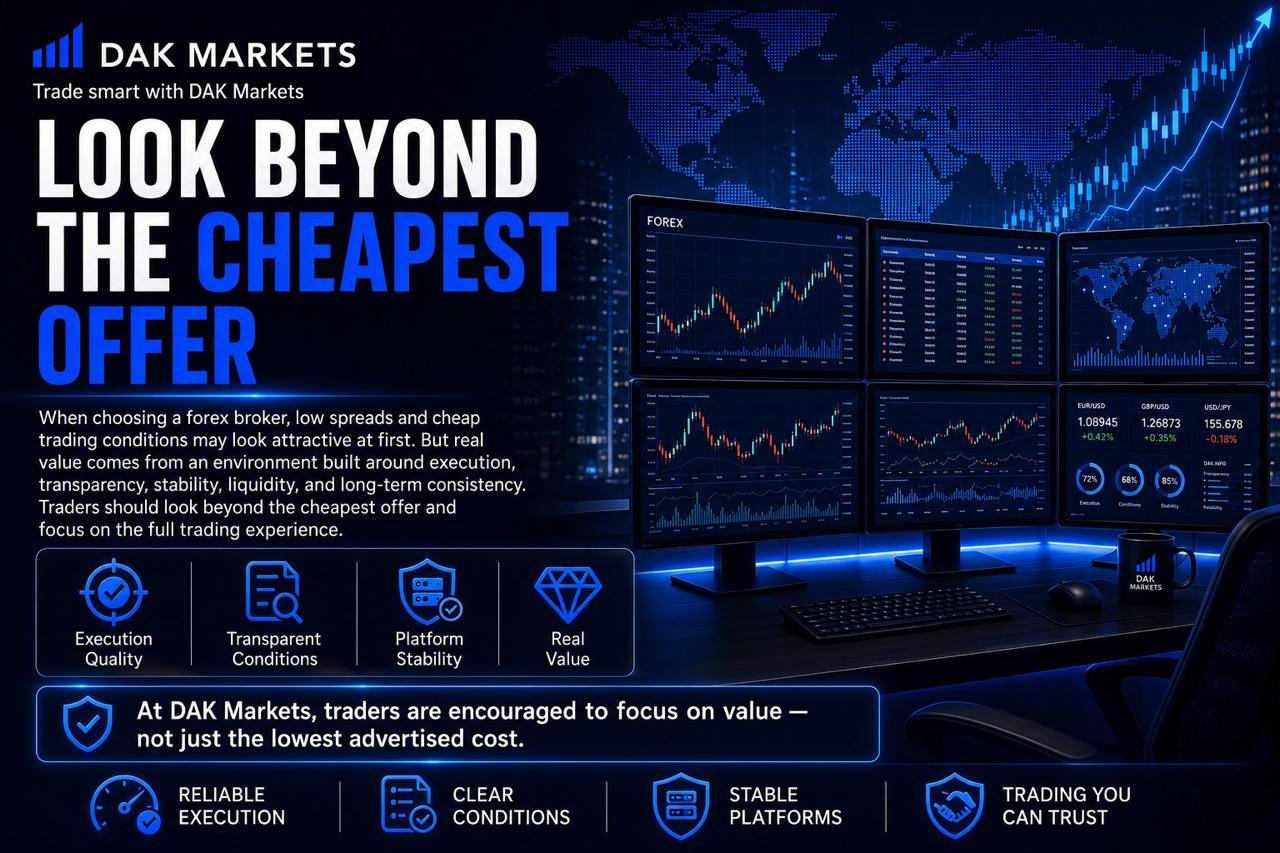
Many brokers promote low spreads or zero commissions as their main selling point. While competitive pricing can be beneficial, these figures do not always tell the complete story.
Before opening an account, traders should consider several important questions:
- Do spreads remain competitive during volatile market conditions?
- Are orders executed efficiently and at the requested price?
- Does the platform remain stable during high-impact economic events?
- Are all commissions, swap charges, and account fees clearly disclosed?
- Are there restrictions that may affect the trader’s strategy?
The lowest visible cost is not always the true cost of trading.
For example, a trader may choose a broker because it advertises an extremely low spread on EURUSD. However, if orders are regularly executed at worse prices or the platform becomes unstable during active market sessions, the trader may lose far more than they save through the reduced spread.
Competitive pricing only provides value when the trading infrastructure behind it is reliable.
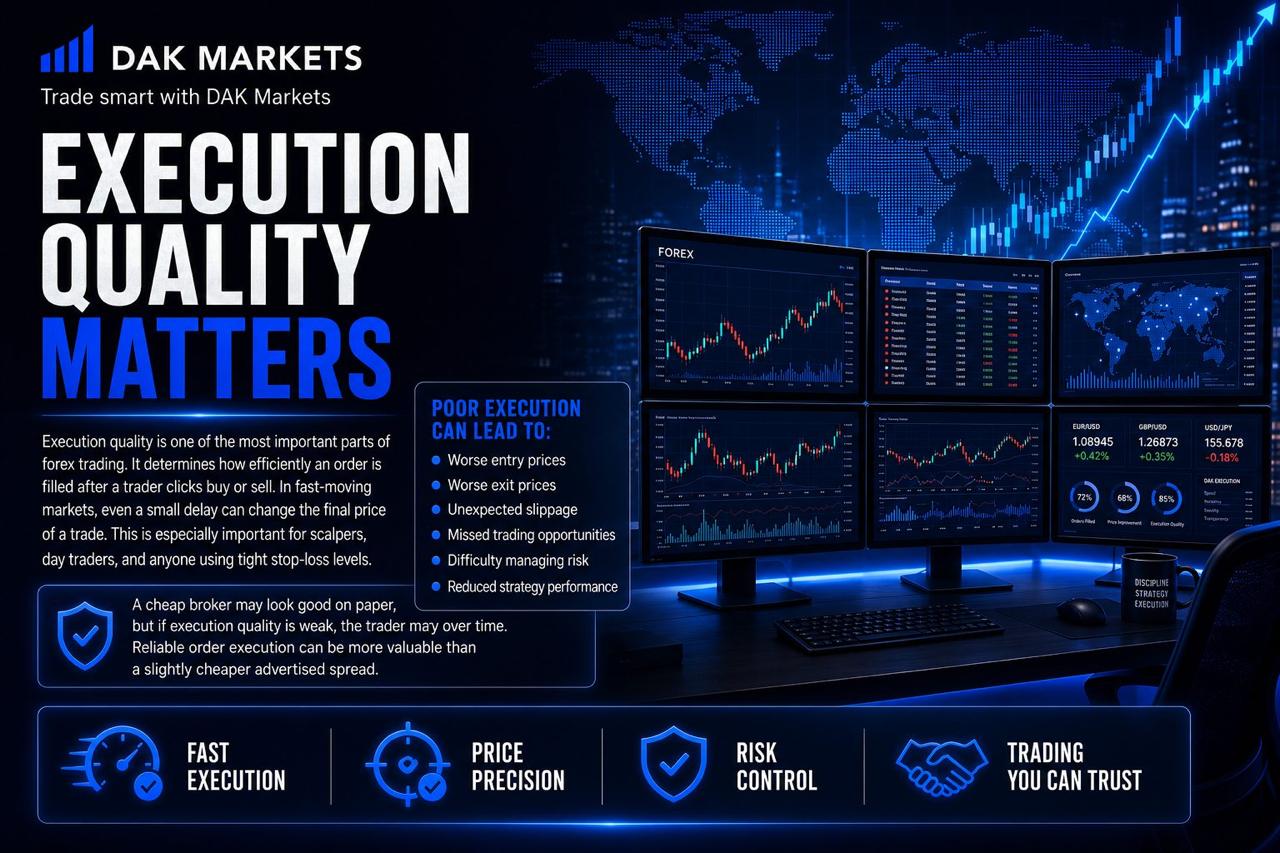
Execution Quality Matters
Execution quality is one of the most important components of the trading experience. It determines how quickly and efficiently an order is processed after a trader submits a buy or sell instruction.
In fast-moving markets, even a small delay can affect the final execution price. This is particularly important for scalpers, intraday traders, algorithmic strategies, and traders who use tight stop-loss levels.
Poor execution may result in:
- Unfavorable entry prices
- Unfavorable exit prices
- Unexpected slippage
- Missed trading opportunities
- Difficulty managing risk
- Reduced strategy performance
A broker may appear attractive on paper because of its advertised spreads, but weak execution can increase the trader’s actual costs over time. And this is where DAK Markets comes into play.
A low spread provides limited benefit if an order is filled late or at an unfavorable price.
Experienced traders understand that execution is part of the real cost of trading. Reliable and efficient order execution can be far more valuable than saving a fraction of a pip on the advertised spread.
Slippage Can Increase the Real Cost of Trading
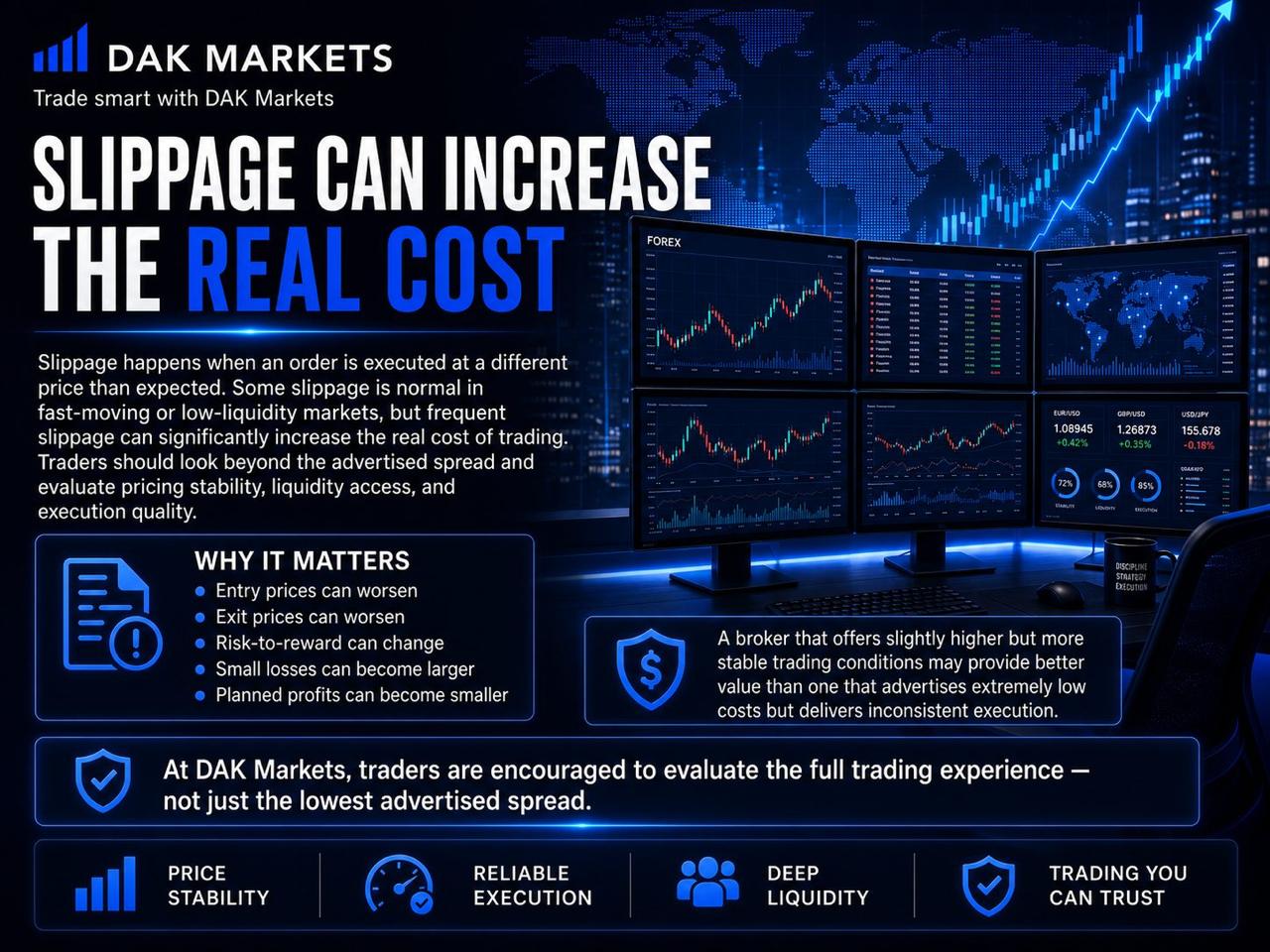
Slippage occurs when an order is executed at a different price from the price requested by the trader.
Some slippage is a natural part of real-market trading, particularly during high-impact news releases, periods of low liquidity, market openings, or rapidly changing conditions. However, frequent or excessive slippage can significantly affect trading performance.
When slippage occurs, it may alter the entire structure of a trade.
A trader may calculate an entry price, stop loss, and take-profit level based on a specific risk-to-reward ratio. If the entry is executed at a worse price, the risk-to-reward structure may change immediately.
Similarly, slippage at the exit may:
- Increase the size of a loss
- Reduce a planned profit
- Trigger a stop loss at a worse price
- Affect the consistency of the trading strategy
This is why traders should not judge a broker solely by the advertised spread. They should evaluate the full trading environment, including pricing stability, available liquidity, execution speed, and the broker’s order-execution model.
A broker offering slightly higher but more consistent trading conditions may provide greater long-term value than one advertising extremely low costs while delivering unreliable execution.
Platform Stability Is Essential
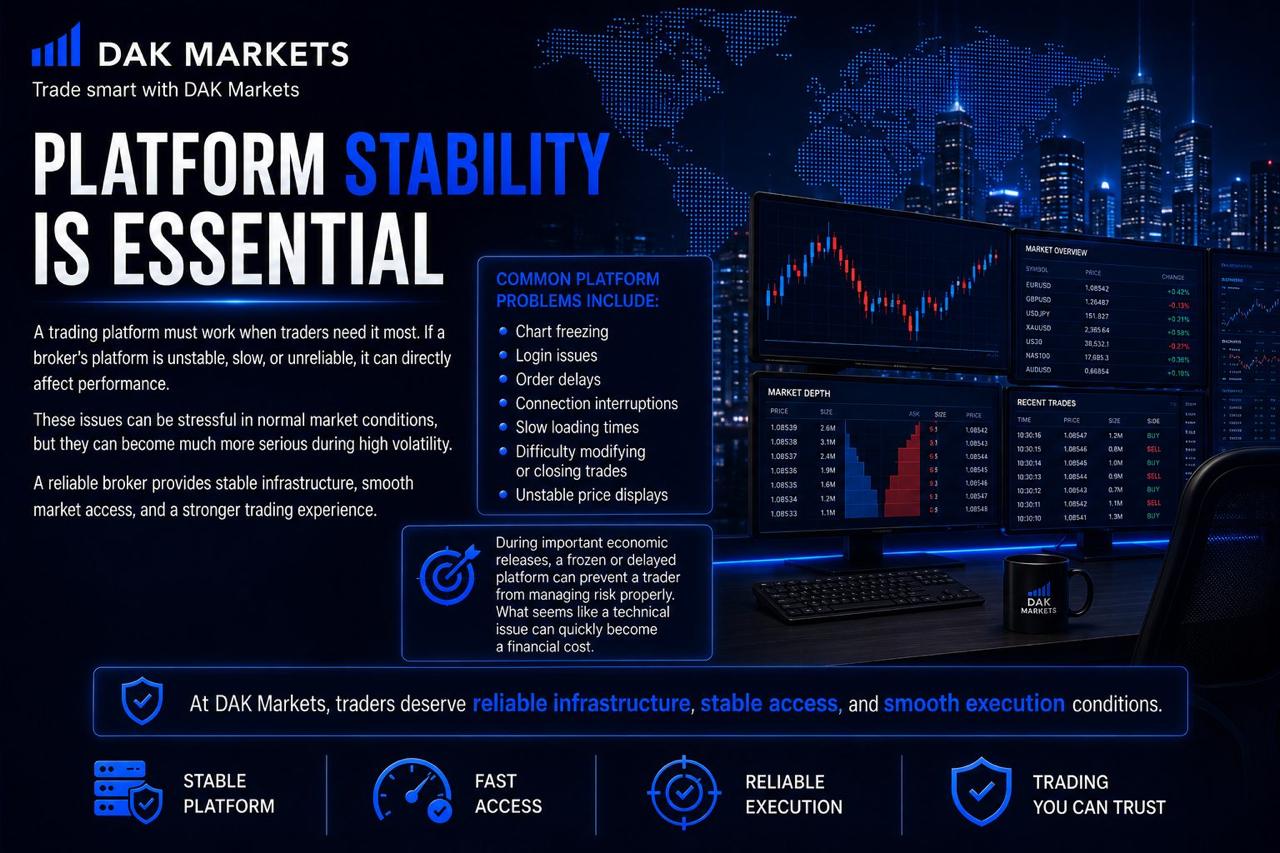
A trading platform must remain accessible and reliable when traders need it most.
If a broker’s platform is slow, unstable, or frequently interrupted, it can directly affect a trader’s ability to open, manage, or close positions.
Common platform-related issues include:
- Frozen charts
- Login problems
- Delayed order execution
- Connection interruptions
- Slow loading times
- Difficulty modifying positions
- Difficulty closing trades
- Unstable or delayed price displays
These issues can be frustrating during normal market conditions, but they can become far more serious during periods of high volatility.
Imagine holding an open position during an important economic announcement. The market begins moving rapidly, and the trader needs to close or adjust the trade. If the platform freezes or the order is delayed, the trader may be unable to manage the position effectively.
At that point, a technical problem becomes a financial cost.
The best broker is therefore not always the broker offering the lowest price. The better choice is often the broker that provides reliable technology, stable market access, and a professional trading infrastructure.
Transparency Builds Trust
Transparency is another essential factor when choosing a broker.
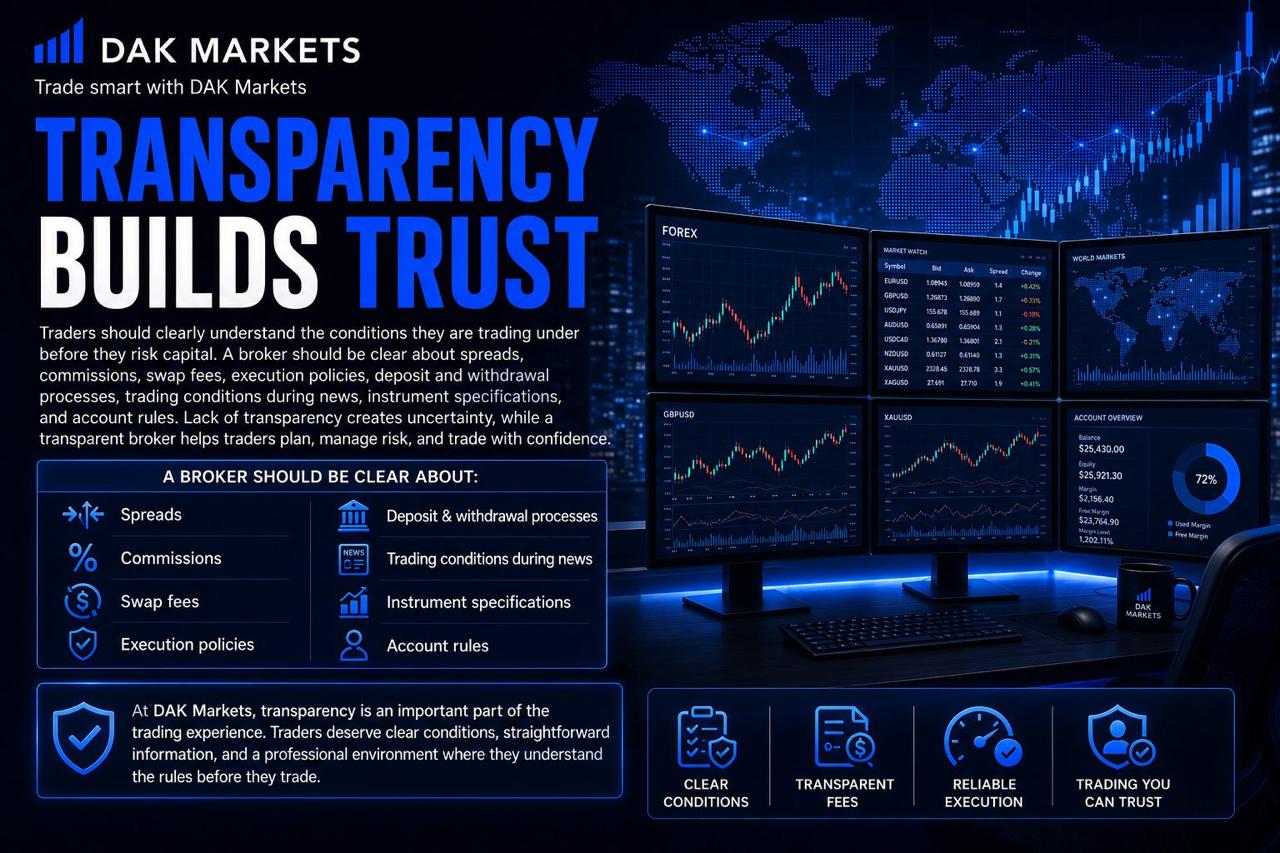
Before risking capital, traders should clearly understand the conditions under which they will be trading.
A professional broker should provide clear information regarding:
- Spreads
- Commissions
- Swap and overnight financing charges
- Execution policies
- Deposit and withdrawal procedures
- Trading conditions during economic news
- Contract and instrument specifications
- Margin and leverage requirements
- Account rules and limitations
When a broker is not transparent, traders may encounter unexpected issues later. They may not understand why spreads widened, why an order was executed at a particular price, or why certain fees were charged to their account.
A lack of transparency creates uncertainty. That uncertainty makes it more difficult for traders to plan effectively, manage risk, and trust their trading environment.
A transparent broker allows traders to make informed decisions. Trading will always involve risk, but traders should not be required to guess how their broker operates.
At DAK Markets, transparency is an important part of the trading experience. Traders deserve clear conditions, straightforward information, and a professional environment in which the rules are understood before trading begins.
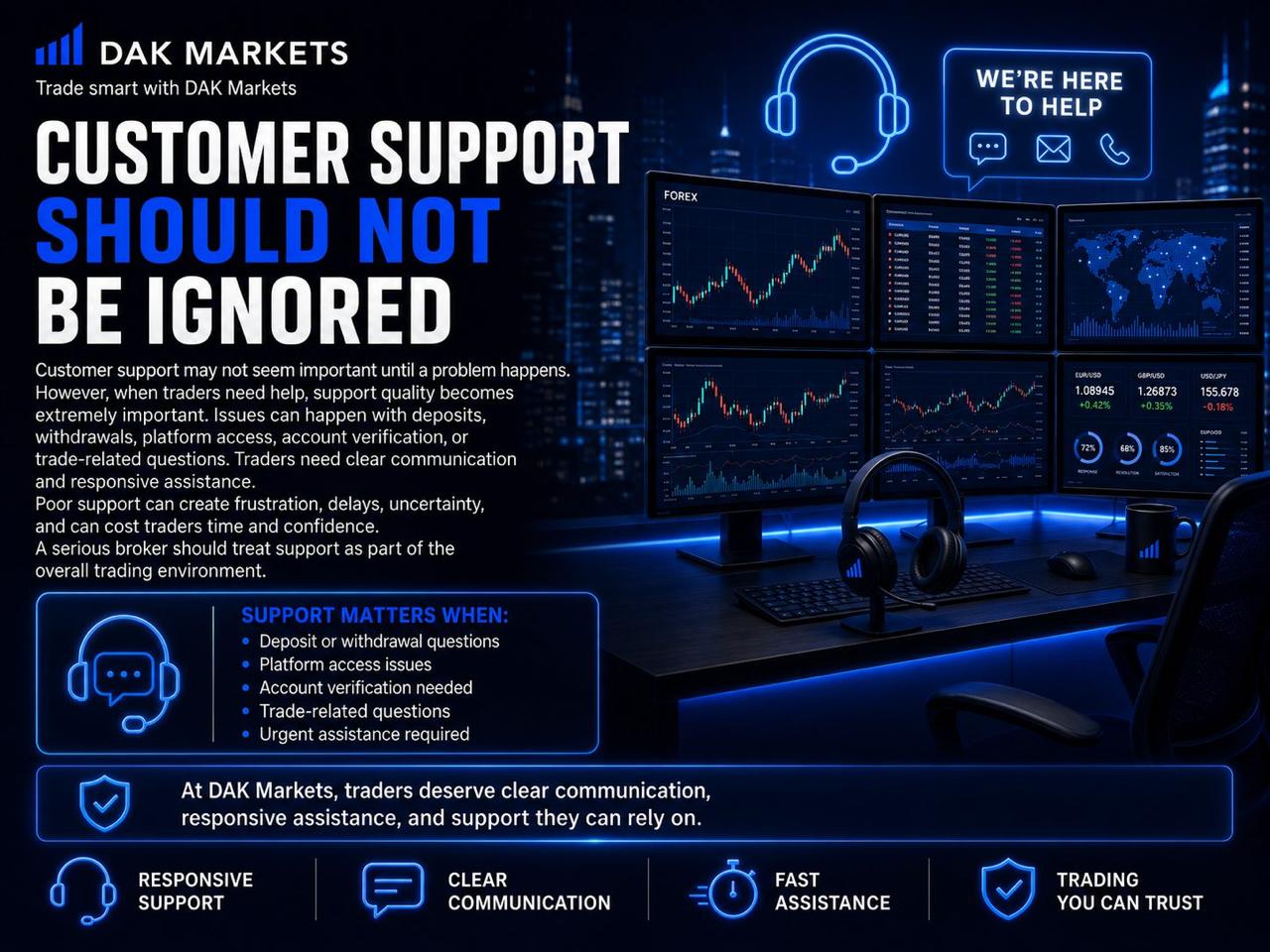
Customer Support Should Not Be Ignored
Customer support may not appear important until a problem occurs.
However, when traders require assistance, the quality and responsiveness of a broker’s support team can become extremely important.
Traders may need help with:
- Deposits and withdrawals
- Account verification
- Platform access
- Login credentials
- Technical problems
- Trading-account questions
- Instrument specifications
- Trade-related enquiries
Some low-cost brokers may reduce operating expenses by providing limited support or slow response times. This can lead to frustration, unnecessary delays, and uncertainty.
Poor customer support can cost traders both time and confidence. In certain situations, it may also affect how quickly an account-related issue can be resolved.
A professional broker should consider customer support an essential part of the overall trading environment. Traders need responsive assistance, clear communication, and practical solutions—not vague answers or unnecessary delays.
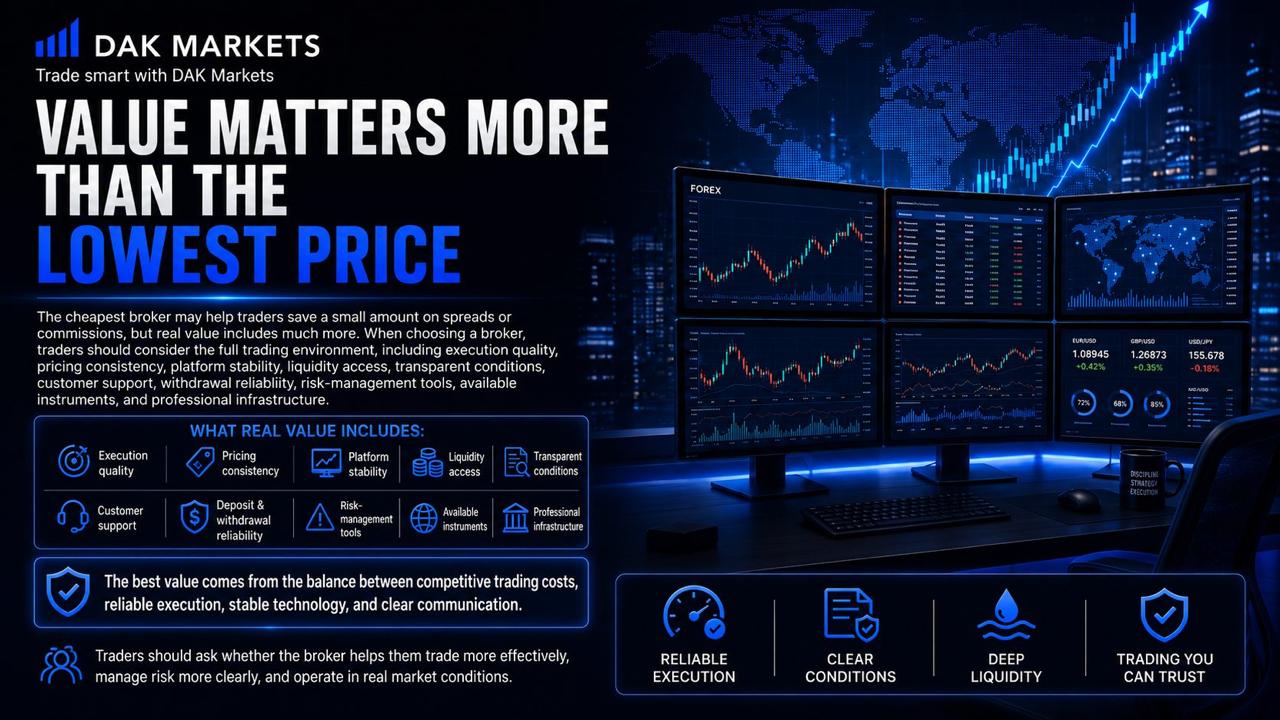
Value Matters More Than the Lowest Price
The cheapest broker may help traders save a small amount on spreads or commissions, but genuine value includes much more than the advertised cost of opening a position.
When evaluating a broker, traders should consider:
- Execution quality
- Pricing consistency
- Platform stability
- Liquidity access
- Transparent trading conditions
- Customer support
- Deposit and withdrawal reliability
- Risk-management tools
- Available financial instruments
- Professional infrastructure
A broker does not need to be the cheapest in the market to provide strong value.
In many cases, the best overall value comes from a balance of competitive pricing, reliable execution, stable technology, transparent policies, and professional customer service.
The more important question is not simply:
“Which broker is the cheapest?”
The better question is:
“Which broker provides the environment I need to trade effectively and manage risk professionally?”
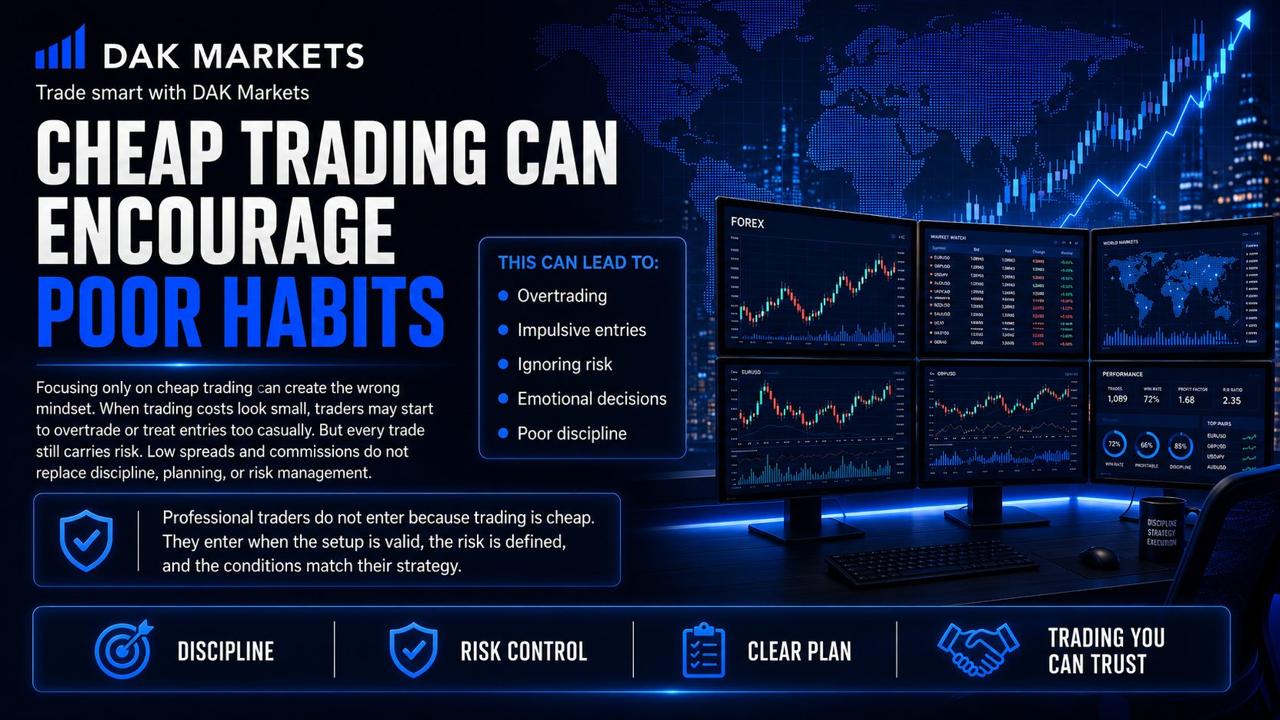
Cheap Trading Can Encourage Poor Habits
Focusing exclusively on low trading costs can also affect a trader’s mindset.
When trades appear inexpensive to enter, some traders may begin to overtrade. Low spreads and small commissions can create the impression that opening additional positions carries little consequence.
However, every trade still involves financial risk.
A poor-quality setup can still result in a loss, regardless of how low the spread may be. Emotional decision-making can still damage a trading account, even when commissions are minimal.
Low trading costs cannot replace:
- Discipline
- Patience
- Risk management
- A structured trading plan
- Careful trade selection
- Emotional control
Professional traders do not open positions simply because trading appears inexpensive. They enter the market when the setup is valid, the risk is clearly defined, and the market conditions align with their strategy.
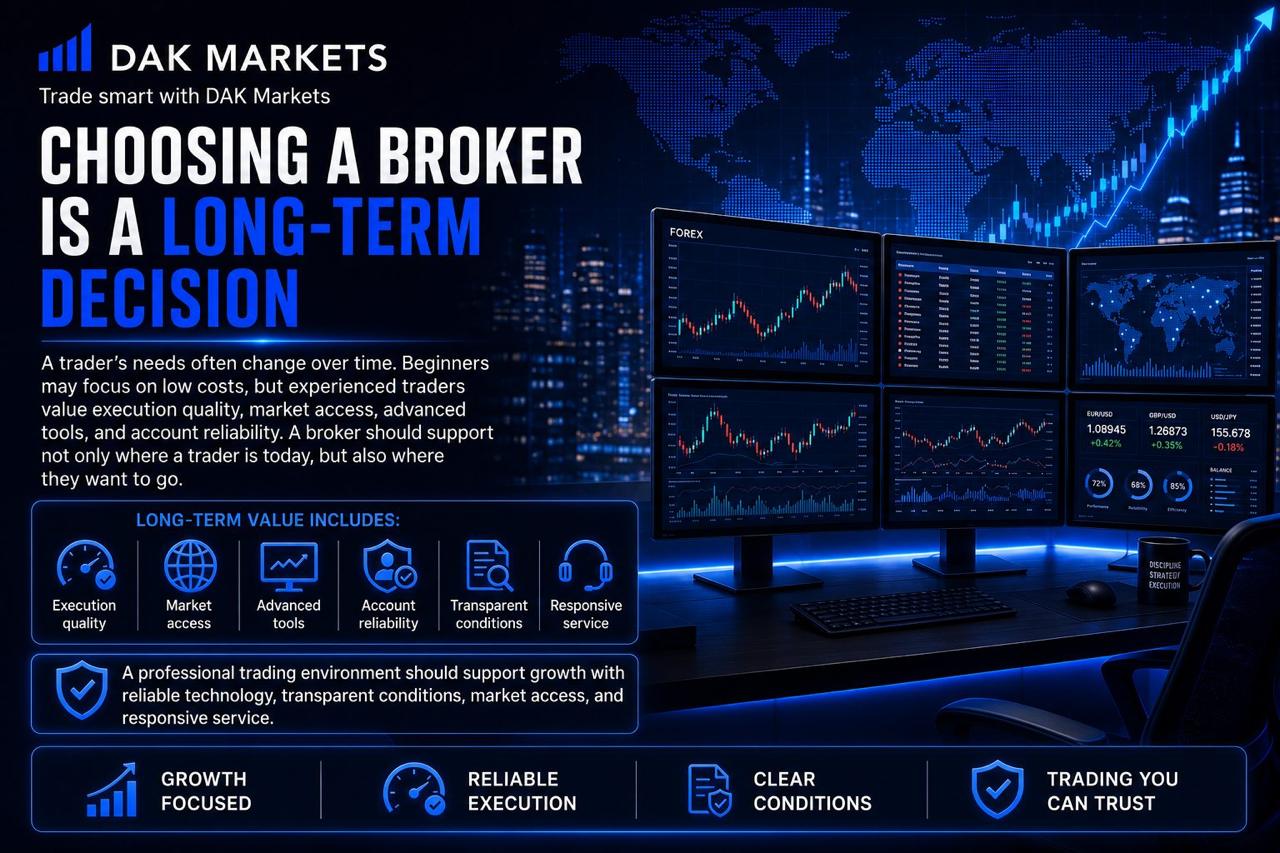
Choosing a Broker Is a Long-Term Decision
A trader’s needs may change as their experience, capital, and strategy develop.
A beginner may initially focus on low costs. However, as the trader gains experience, execution quality, market access, advanced tools, account reliability, and professional support may become increasingly important.
A broker that appears suitable at the beginning may become restrictive later if it cannot support the trader’s development.
Choosing a broker should therefore not be based only on where a trader is today. It should also take into account where the trader intends to go.
A professional trading environment should support traders through reliable technology, transparent conditions, broad market access, responsive service, and infrastructure designed for long-term participation in the financial markets.
Final Thoughts
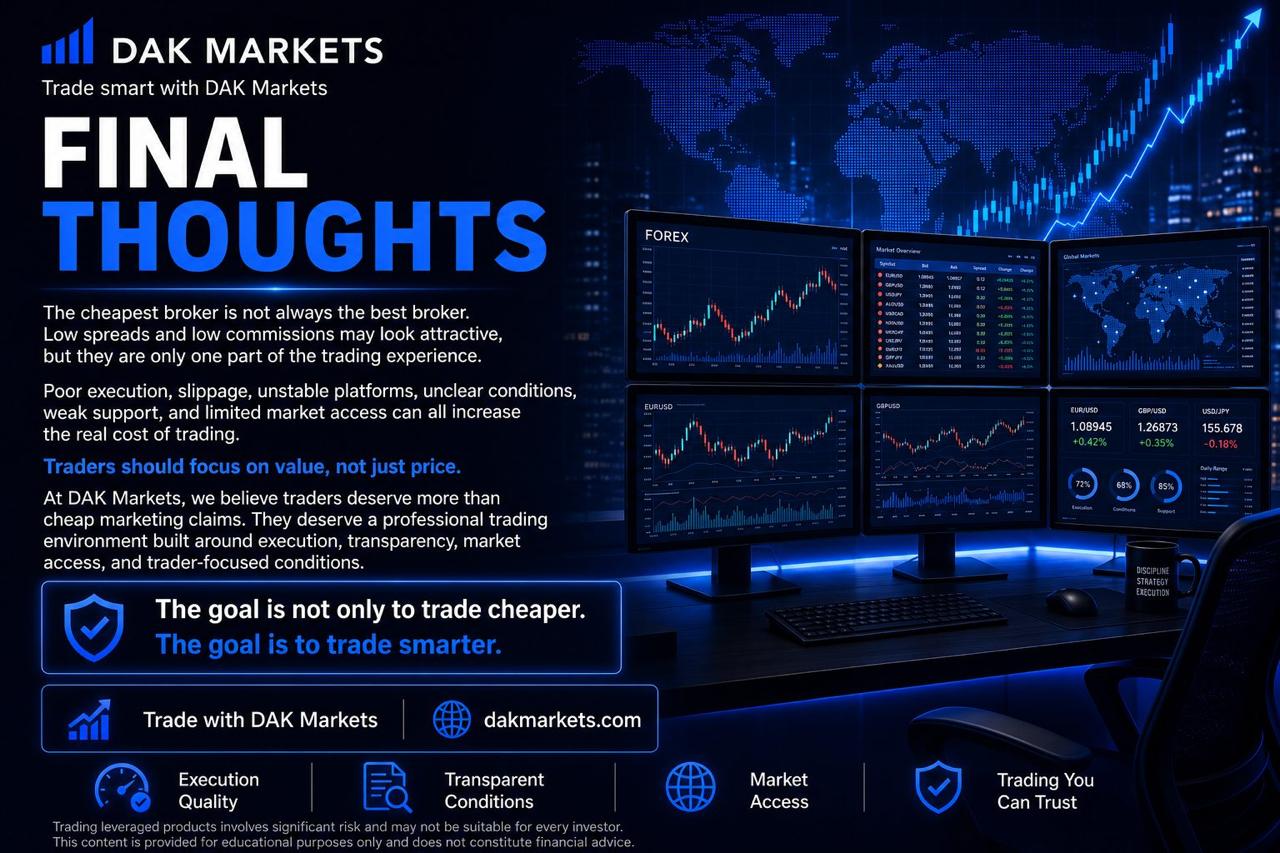
The cheapest broker is not always the best broker.
Low spreads and low commissions may appear attractive, but they represent only one part of the overall trading experience.
Poor execution, excessive slippage, unstable platforms, unclear conditions, limited market access, and weak customer support can all increase the real cost of trading.
Traders should focus on value—not simply price.
At DAK Markets, we believe traders deserve more than low-cost marketing claims. They deserve a professional trading environment built around execution, transparency, market access, competitive conditions, and trader-focused service.
The goal is not simply to trade cheaper.
The goal is to trade smarter.
Trade with DAK Markets
Visit dakmarkets.com to learn more about our available account types, trading conditions, platforms, and financial instruments.
Trading leveraged financial products involves a significant level of risk and may not be suitable for every investor. You may lose more than your initial investment. This content is provided for general educational and informational purposes only and does not constitute investment, financial, legal, or trading advice. Please ensure that you fully understand the risks involved before trading.