Forex Trading Dictionary: Essential Trading Terms Explained
Every trader wants better results.
More consistency.
Better risk management.
Stronger emotional control.
Improved profitability.
But many traders make the same mistake: they try to change everything at once.
They overhaul their strategy after a few losses. They switch indicators weekly. They jump between timeframes. They increase risk to accelerate progress. And in doing so, they create instability instead of growth.
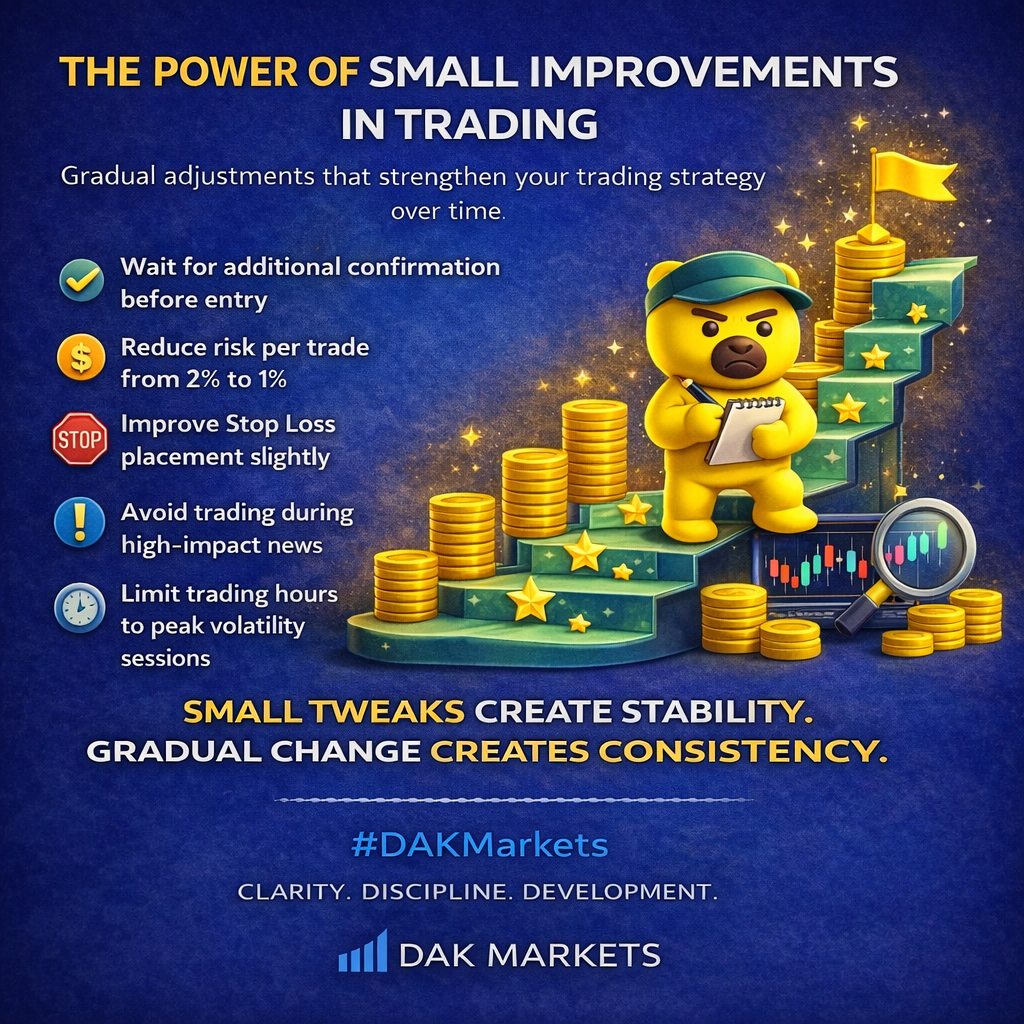
If you truly want better trading results, the answer may not be radical change — it may be small, consistent improvements over time.
At DAK Markets, we believe long-term trading success is built on structure, discipline, and continuous development. In this article, we’ll explore how the concept of small incremental improvement can dramatically enhance your trading performance.
Trading Is a Process, Not a Single Outcome
Technical Analysis Terms
Trading is not about one winning trade.
It’s not about one profitable week.
It’s not even about one strong month.
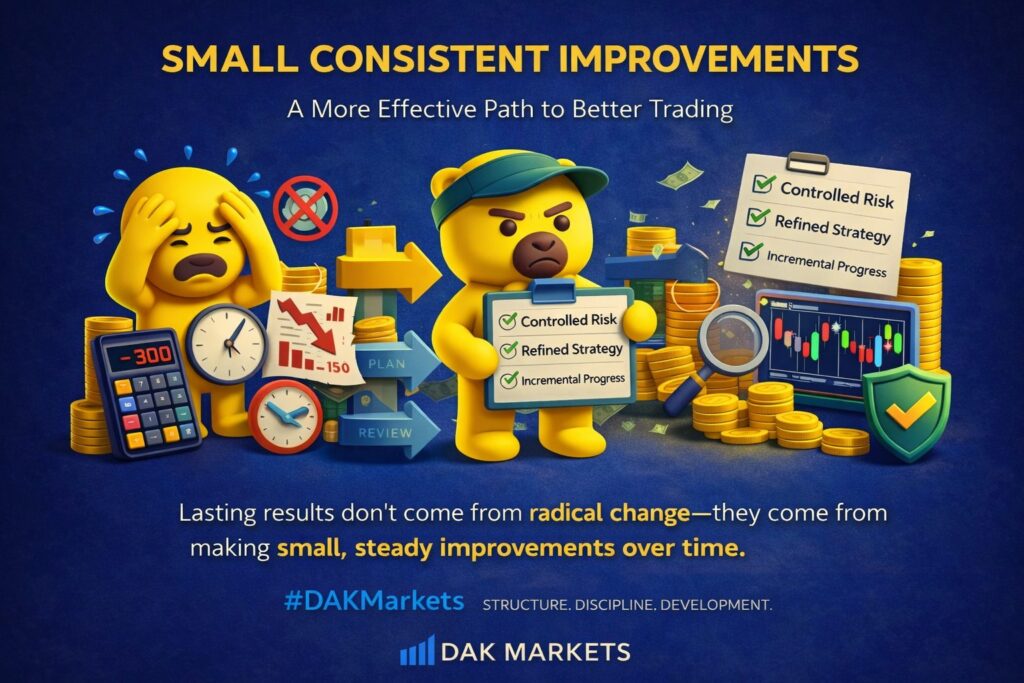
Trading is a long-term performance activity built on repetition, data, refinement, and discipline. The most successful traders understand that progress comes from gradual improvement — not dramatic reinvention.
When traders try to “fix everything” after a few bad trades, they often destroy a strategy that was statistically sound.
Instead of revolution, focus on evolution.
The Power of Small Improvements in Trading
The idea of continuous improvement is simple:
Make small adjustments, test them, evaluate them, and integrate them gradually.
This approach works particularly well in forex and CFD trading because markets are dynamic. Strategies naturally experience drawdowns. Even strong systems go through losing periods.
If you constantly rebuild your trading strategy after short-term losses, you never give it enough time to perform over a meaningful sample size.
Small improvements create stability.
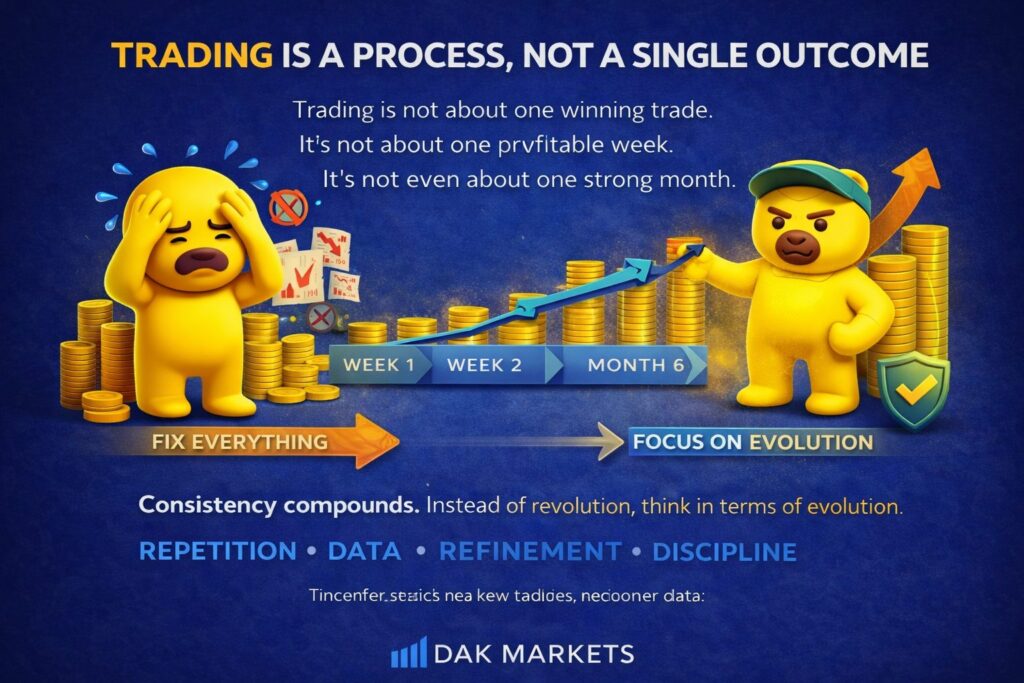
Examples of incremental trading improvements:
- Waiting for additional confirmation before entry
- Reducing risk per trade from 2% to 1%
- Improving Stop Loss placement slightly
- Avoiding trading during high-impact news
- Limiting trading hours to peak volatility sessions
Individually, these changes seem minor.
Collectively, they can significantly improve long-term performance.
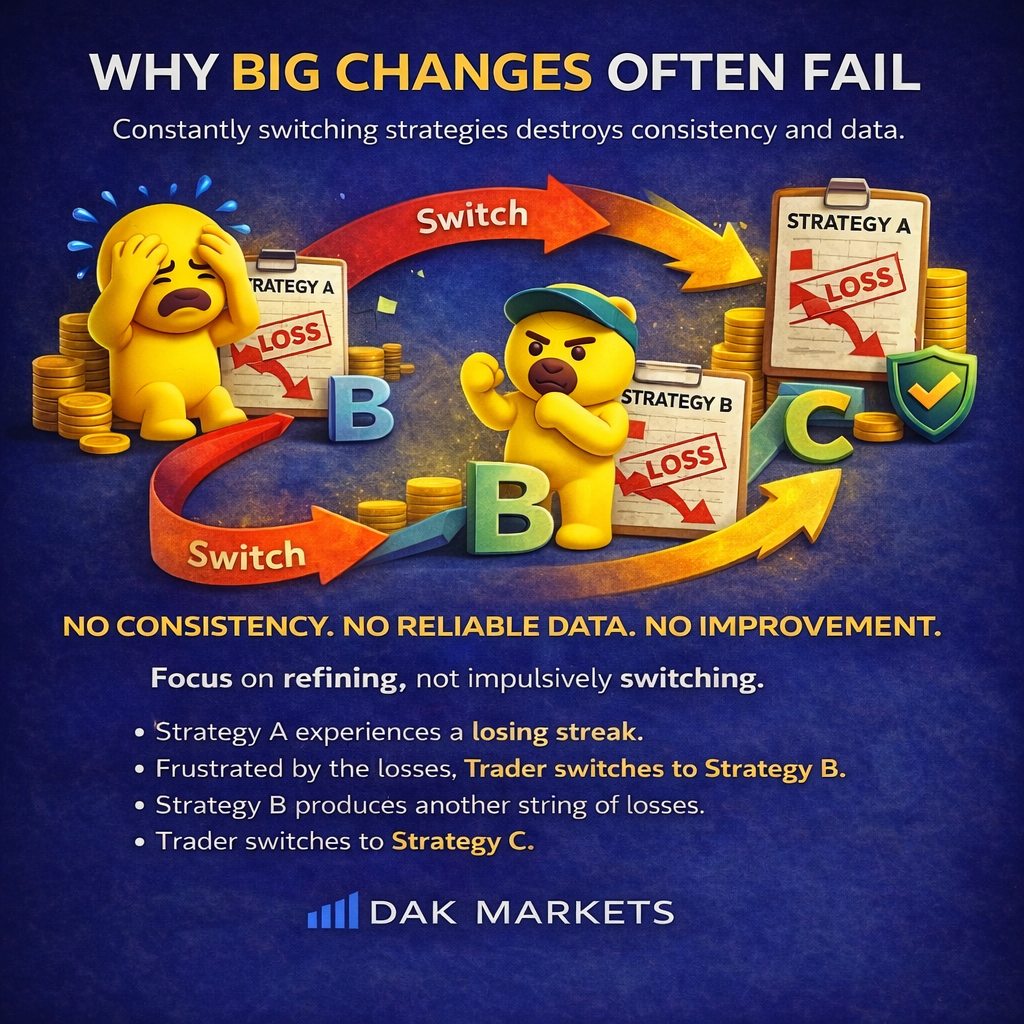
Why Big Changes Often Fail
Many traders fall into the “strategy hopping” cycle:
- Strategy A produces losses.
- Trader switches to Strategy B.
- Strategy B experiences a losing streak.
- Trader switches again.
The result? No consistency. No reliable data. No structured improvement.
At DAK Markets, we encourage traders to focus on structured development instead of impulsive change. The goal is not perfection — it’s controlled refinement.
Apply the Plan–Test–Review Cycle
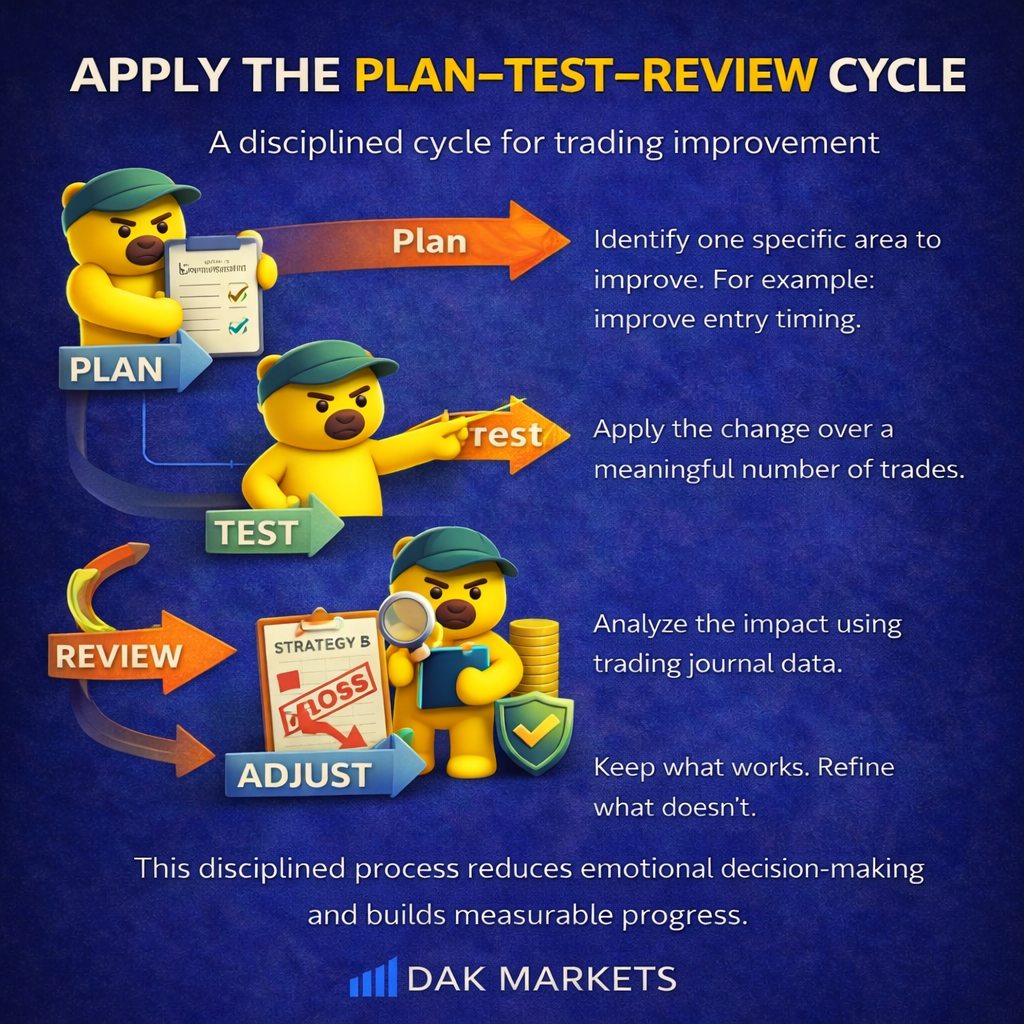
One of the most effective methods for trading improvement follows a simple cycle:
1. Plan
Identify one specific area to improve. For example: improve entry timing.
2. Test
Apply the change over a meaningful number of trades.
3. Review
Analyze the impact using trading journal data.
4. Adjust
Keep what works. Refine what doesn’t.
This disciplined process reduces emotional decision-making and builds measurable progress.
Trading Psychology: Improve in Small Steps
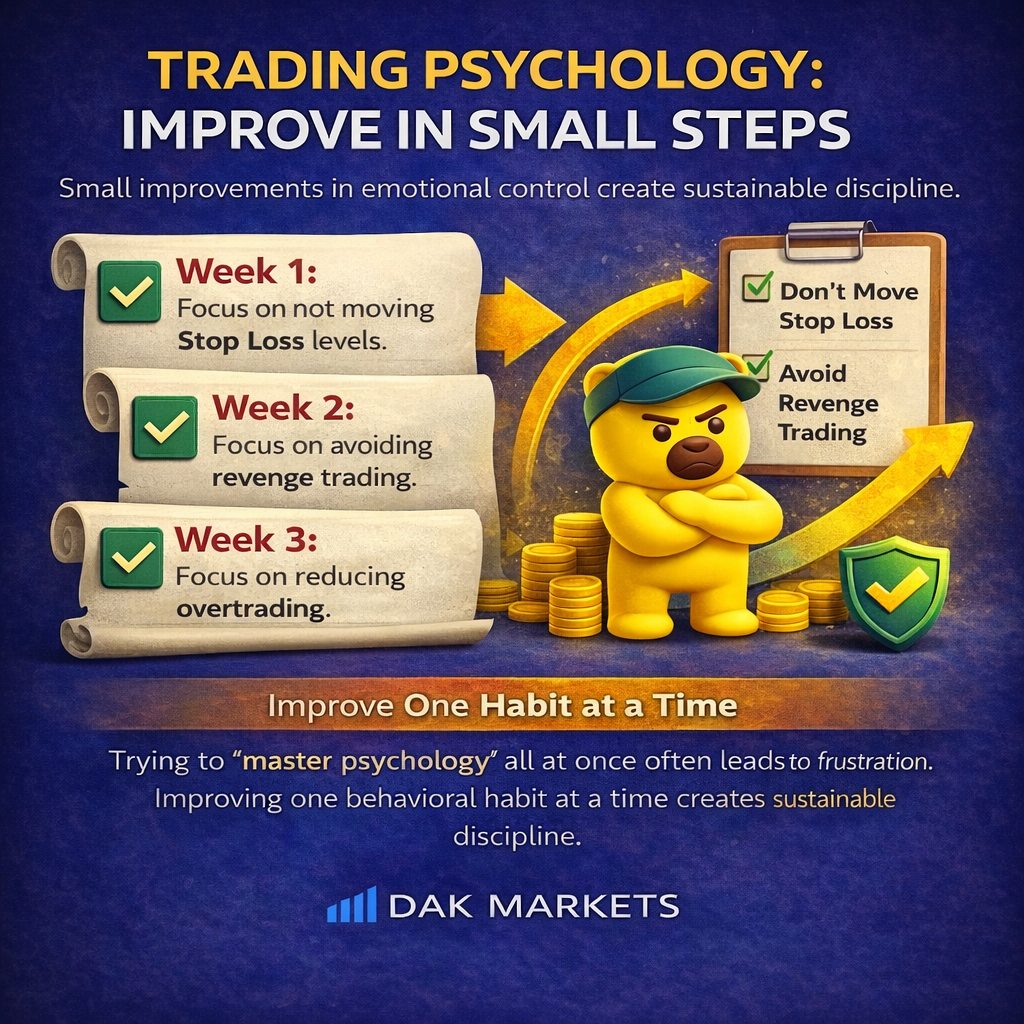
Small improvements are especially powerful in trading psychology.
Emotional control cannot be fixed overnight. But it can be improved gradually.
For example:
- Week 1: Focus on not moving Stop Loss levels.
- Week 2: Focus on avoiding revenge trading.
- Week 3: Focus on reducing overtrading.
Trying to “master psychology” all at once often leads to frustration. Improving one behavioral habit at a time creates sustainable discipline.
Risk Management: Small Adjustments, Big Impact
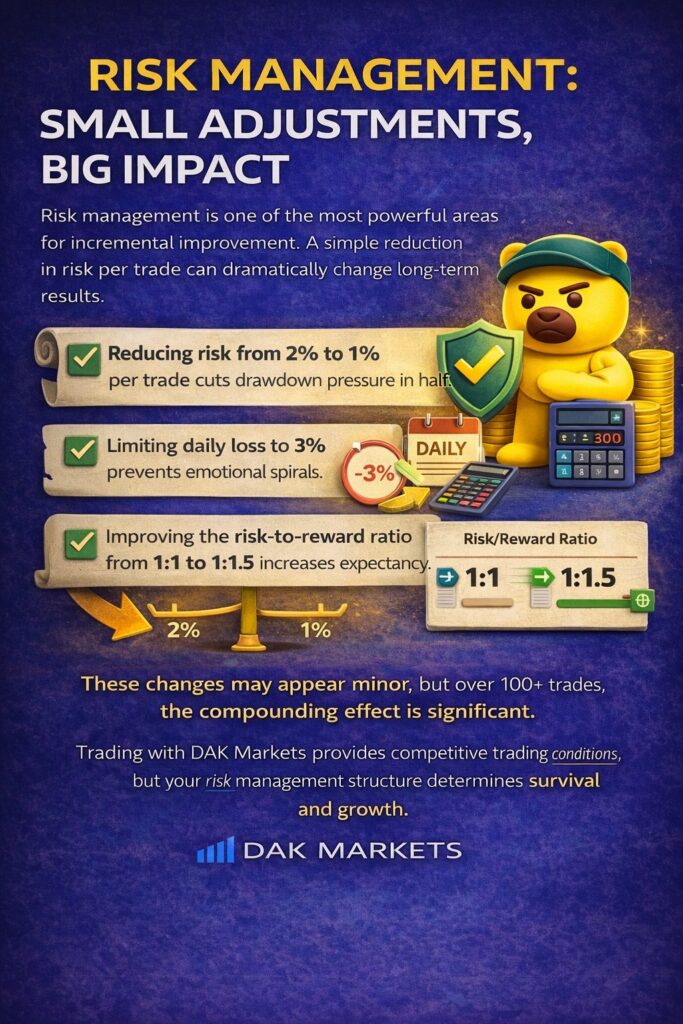
Risk management is one of the most powerful areas for incremental improvement.
A simple reduction in risk per trade can dramatically change long-term results.
For example:
- Reducing risk from 2% to 1% per trade cuts drawdown pressure in half.
- Limiting daily loss to 3% prevents emotional spirals.
- Improving risk-to-reward ratio from 1:1 to 1:1.5 increases expectancy.
These changes may appear minor, but over 100+ trades, the compounding effect is significant.
Trading with DAK Markets provides competitive trading conditions, but your risk management structure determines survival and growth.
Patience: The Hidden Edge in Trading
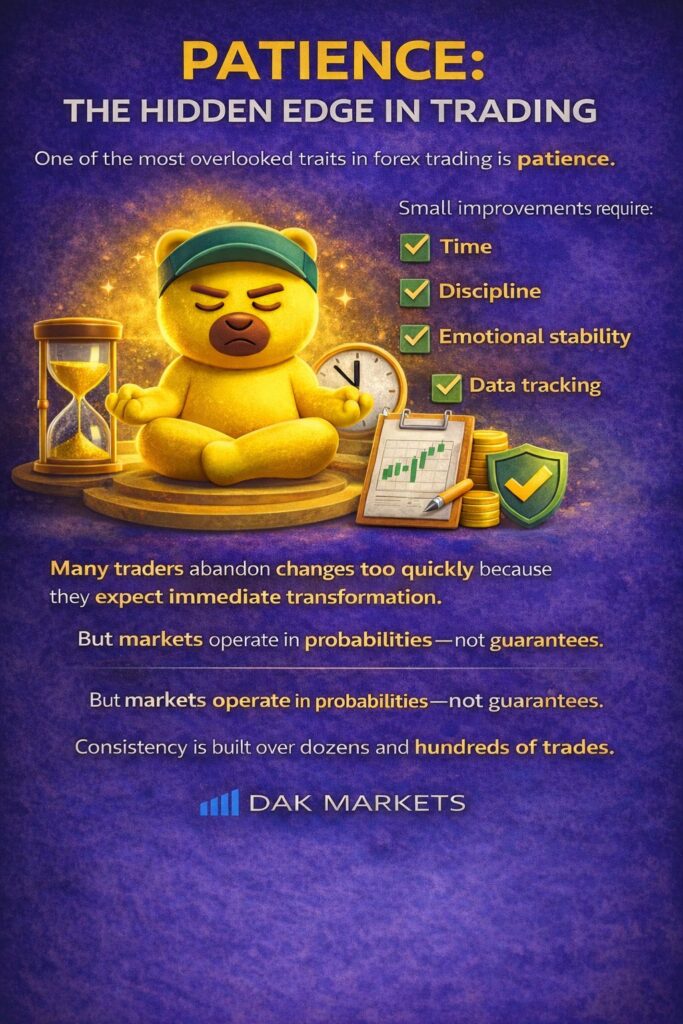
One of the most overlooked traits in forex trading is patience.
Small improvements require:
- Time
- Discipline
- Emotional stability
- Data tracking
Many traders abandon changes too quickly because they expect immediate transformation.
But markets operate in probabilities — not guarantees.
Consistency is built over dozens and hundreds of trades.
Example of Small-Step Improvement in Action
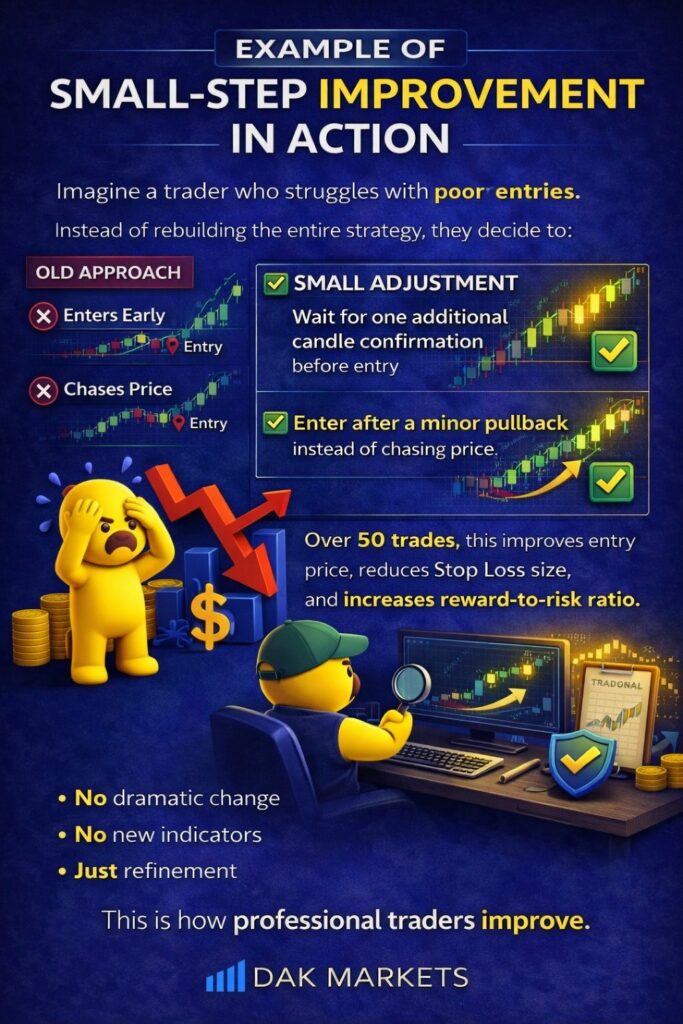
Imagine a trader who struggles with poor entries.
Instead of rebuilding the entire strategy, they decide to:
- Wait for one additional candle confirmation before entry.
- Enter after a minor pullback instead of chasing price.
Over 50 trades, this improves entry price, reduces Stop Loss size, and increases reward-to-risk ratio.
No dramatic change.
No new indicators.
Just refinement.
This is how professional traders improve.
Continuous Adaptation to Market Conditions
Markets evolve. Volatility shifts. Liquidity changes. News cycles influence behavior.
A trader who applies small adjustments regularly can adapt without destabilizing their strategy.
For example:
- During high volatility, widen Stop Loss slightly.
- During low volatility, reduce position size.
- Avoid trading during uncertain macroeconomic periods.
These adaptive improvements protect capital and preserve consistency.
At DAK Markets, trading discipline combined with adaptability creates long-term opportunity.
The Role of a Trading Journal in Small Improvements
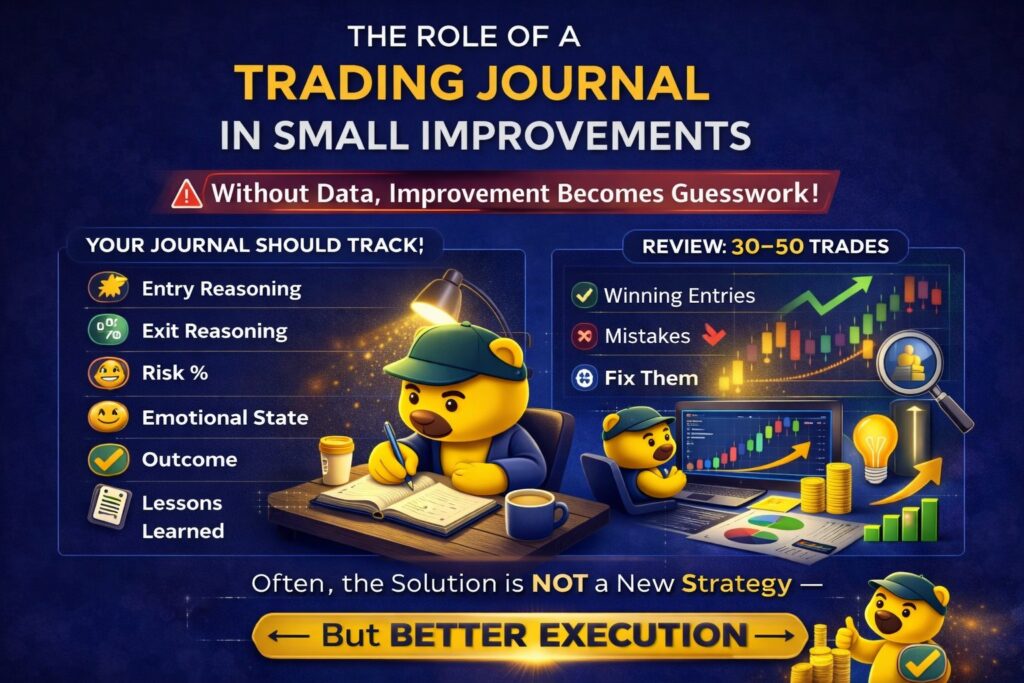
A trading journal is essential for incremental progress.
Without data, improvement becomes guesswork.
Your journal should track:
- Entry reasoning
- Exit reasoning
- Risk percentage
- Emotional state
- Outcome
- Lessons learned
Reviewing 30–50 trades provides clarity on what truly needs adjustment.
Often, the solution is not a new strategy — but better execution.
Why Continuous Improvement Builds Confidence
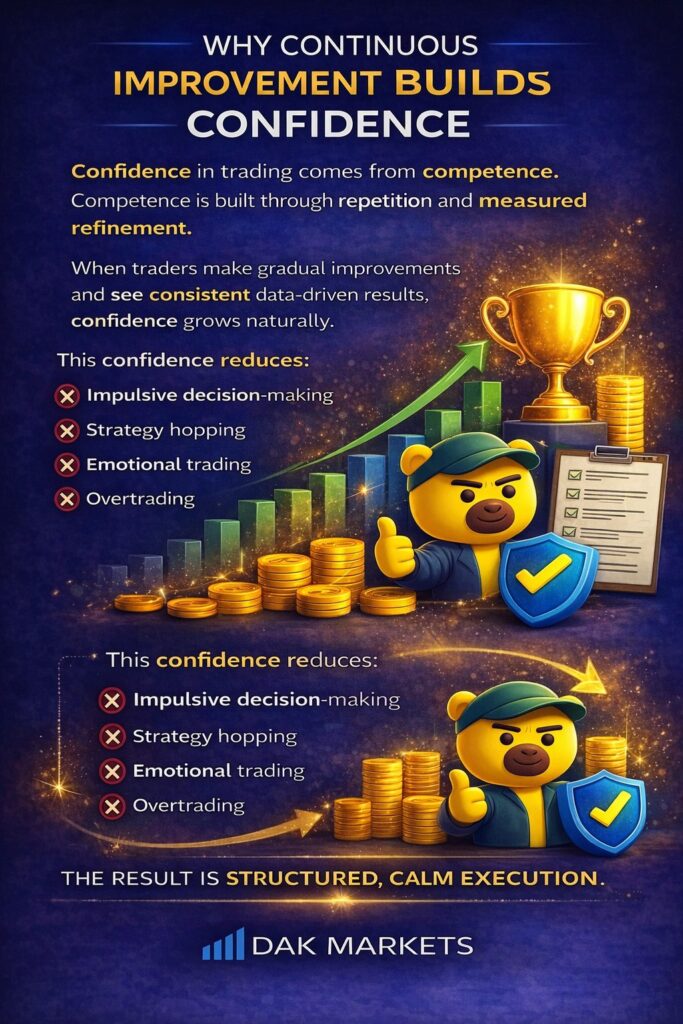
Confidence in trading comes from competence.
Competence is built through repetition and measured refinement.
When traders make gradual improvements and see consistent data-driven results, confidence grows naturally.
This confidence reduces:
- Impulsive decision-making
- Strategy hopping
- Emotional trading
- Overtrading
The result is structured, calm execution.
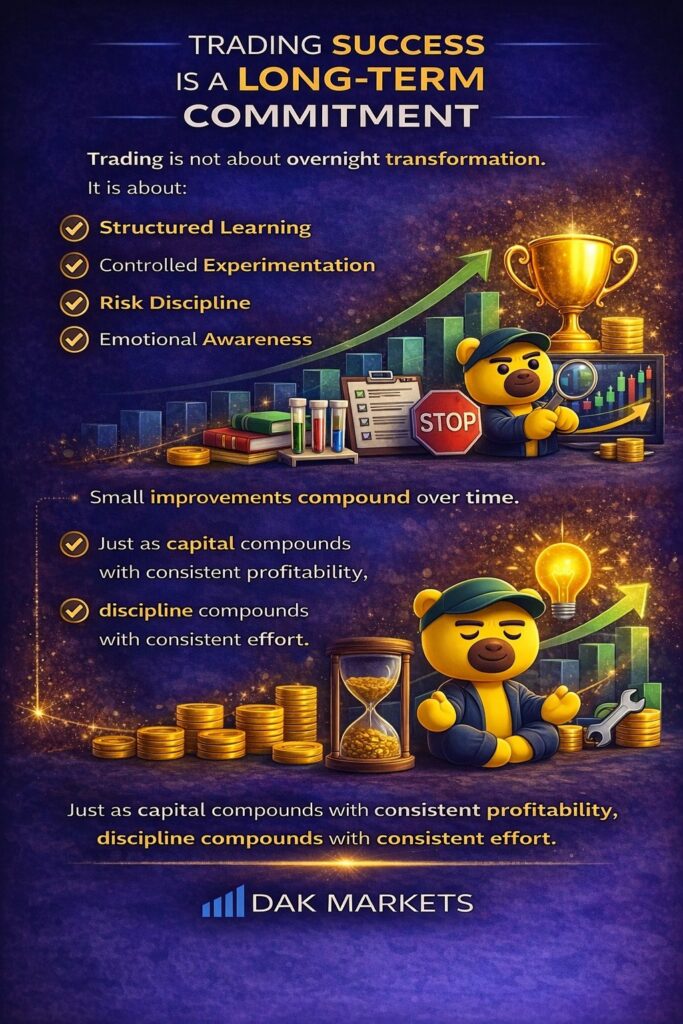
Trading Success Is a Long-Term Commitment
Trading is not about overnight transformation.
It is about:
- Structured learning
- Controlled experimentation
- Risk discipline
- Emotional awareness
- Continuous refinement
Small improvements compound over time.
Just as capital compounds with consistent profitability, discipline compounds with consistent effort.
Final Thoughts: Improve Step by Step with DAK Markets
If you want better trading results, avoid radical changes after short-term setbacks.
Instead:
- Improve one aspect of your strategy at a time.
- Test changes over meaningful trade samples.
- Strengthen risk management gradually.
- Develop psychological discipline step by step.
- Stay patient and consistent.
At DAK Markets, we support traders with competitive conditions and a professional trading environment. But sustainable success always comes from internal discipline and continuous development.
Better trading results are not built in one leap.
They are built in small, intentional steps — repeated consistently over time.