Introduction
Every trader enters the financial markets with a similar goal:
To become consistently profitable.
Yet despite the endless educational content, trading strategies, indicators, and market analysis available today, consistency remains one of the most elusive achievements in trading.
Many traders experience periods of success. Some generate impressive profits for weeks or even months. However, maintaining those results over the long term is where the real challenge begins.
The difference between successful traders and struggling traders is rarely a single strategy or indicator.
More often than not, the difference lies in a combination of discipline, execution quality, risk management, and the trading environment in which they operate.
At DAK Markets, we believe consistency is the true measure of trading success. While large profits may attract attention, long-term consistency is what allows traders to survive and thrive in the financial markets.

The Myth of the Perfect Strategy
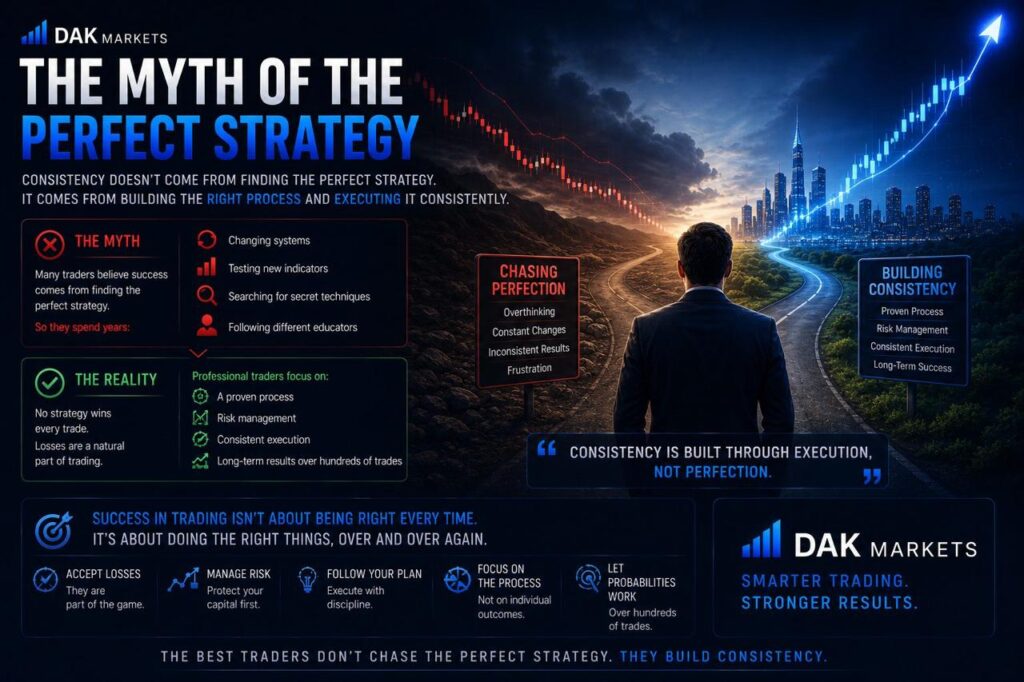
One of the biggest misconceptions in trading is the belief that consistency comes from finding the perfect strategy.
Many traders spend years:
- Changing systems
- Testing new indicators
- Searching for secret techniques
- Following different educators
The result is often frustration rather than progress.
The reality is that no strategy wins every trade.
Professional traders understand that losses are a natural part of trading.
Their objective is not perfection.
Their objective is to create a process that produces positive results over hundreds of trades rather than focusing on individual outcomes.
Consistency is built through execution, not perfection.
Why Emotional Trading Destroys Consistency
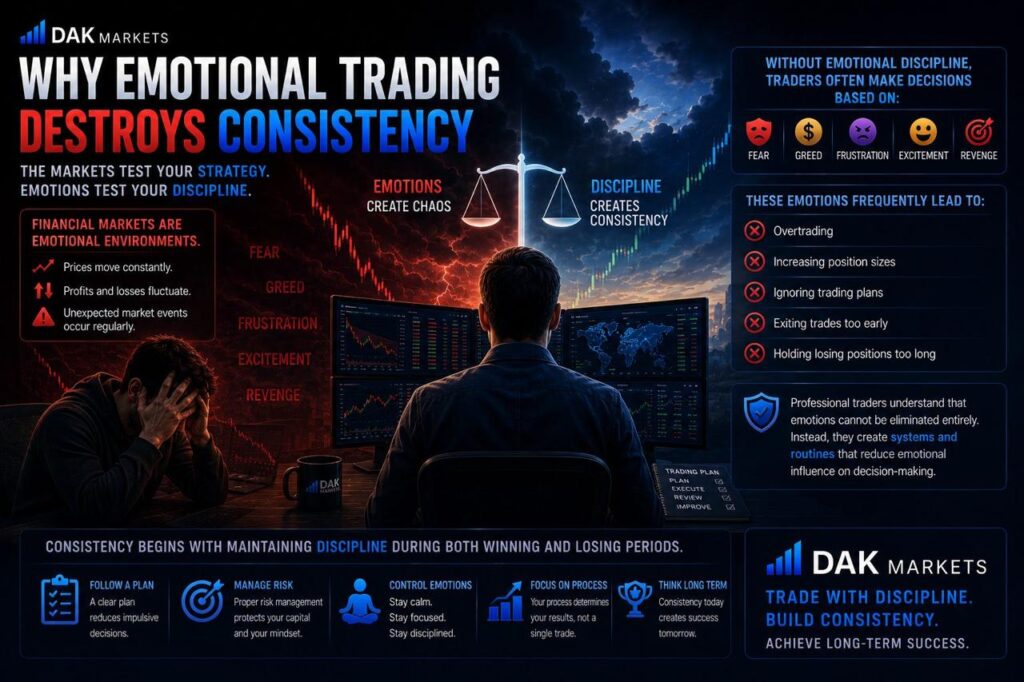
Financial markets are emotional environments.
Prices move constantly.
Profits and losses fluctuate.
Unexpected market events occur regularly.
Without emotional discipline, traders often make decisions based on:
- Fear
- Greed
- Frustration
- Excitement
- Revenge
These emotions frequently lead to:
- Overtrading
- Increasing position sizes
- Ignoring trading plans
- Exiting trades too early
- Holding losing positions too long
Professional traders understand that emotions cannot be eliminated entirely.
Instead, they create systems and routines that reduce emotional influence on decision-making.
Consistency begins with maintaining discipline during both winning and losing periods.
The Importance of Risk Management
Risk management is one of the most overlooked aspects of trading consistency.
Many traders focus exclusively on how much they can make.
Professional traders focus equally on how much they can lose.
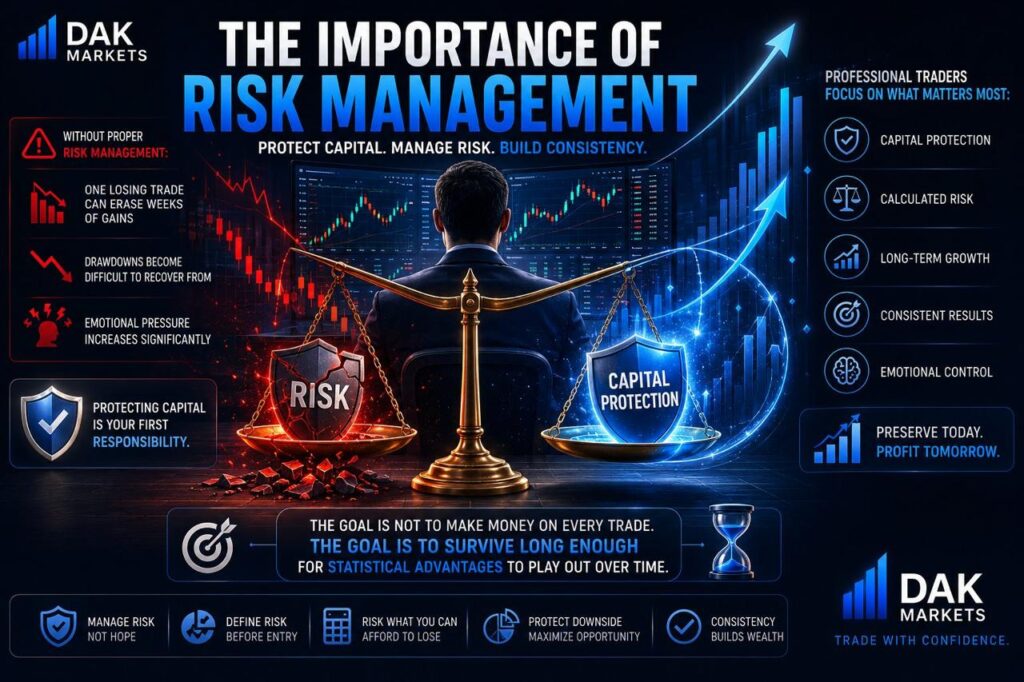
Successful traders understand that protecting capital is their first responsibility.
Without proper risk management:
- One losing trade can erase weeks of gains
- Drawdowns become difficult to recover from
- Emotional pressure increases significantly
A consistent trader recognizes that preserving capital creates opportunities for future success.
The goal is not to maximize profit on every trade.
The goal is to survive long enough for statistical advantages to play out over time.
Consistency Requires Reliable Execution
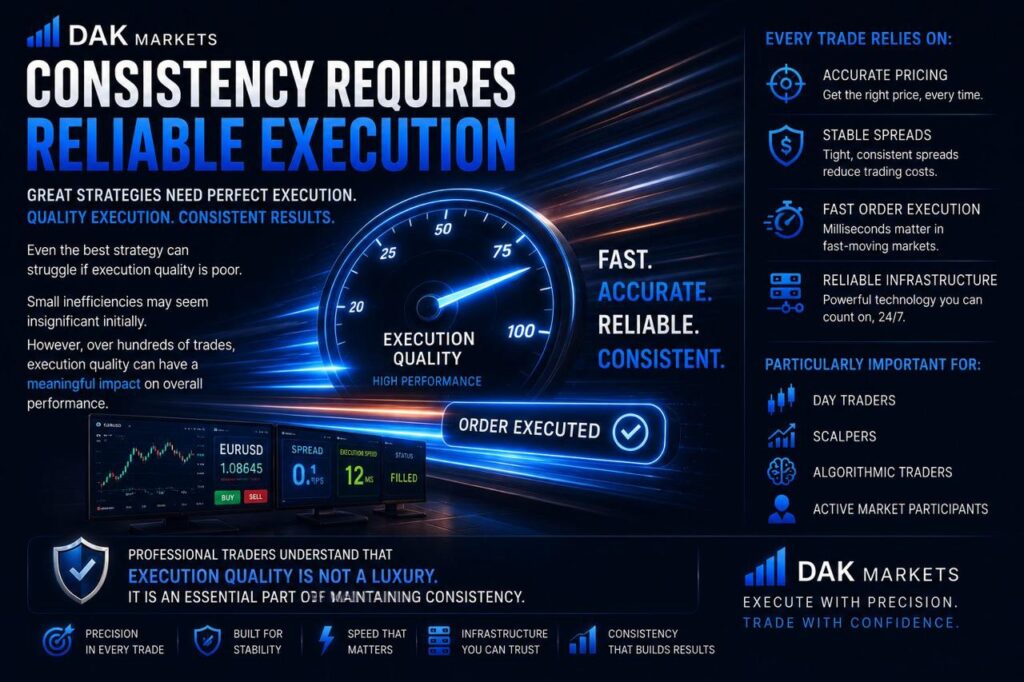
Even the best strategy can struggle if execution quality is poor.
Every trade relies on:
- Accurate pricing
- Stable spreads
- Fast order execution
- Reliable infrastructure
Small inefficiencies may seem insignificant initially.
However, over hundreds of trades, execution quality can have a meaningful impact on overall performance.
This is particularly important for:
- Day traders
- Scalpers
- Algorithmic traders
- Active market participants
Professional traders understand that execution quality is not a luxury.
It is an essential part of maintaining consistency.
Why Trading Environment Matters
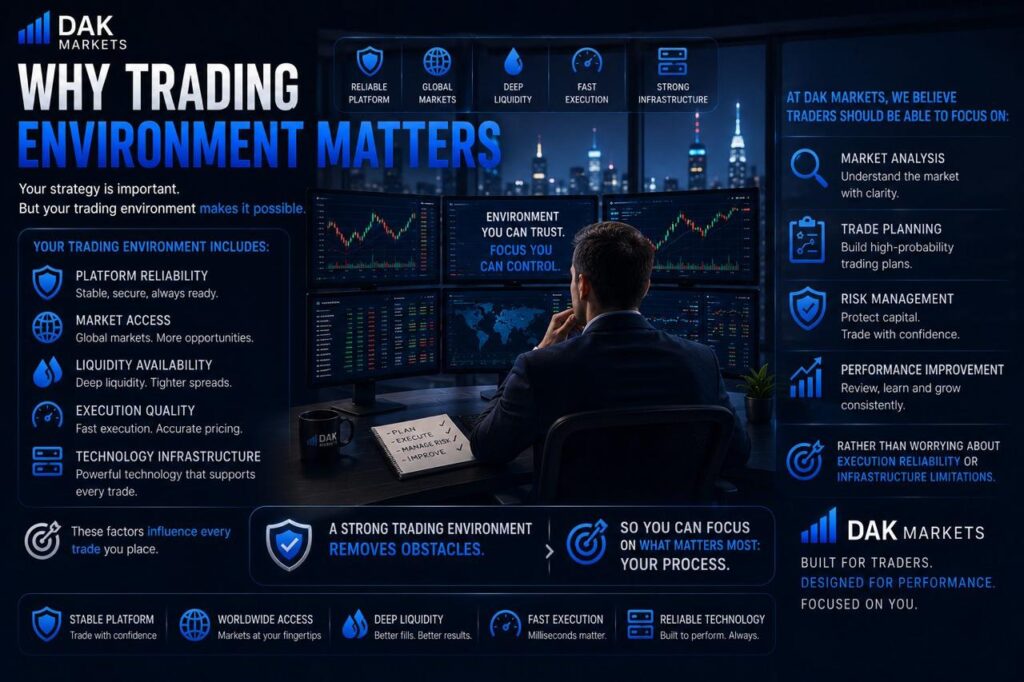
Many traders focus exclusively on strategy while overlooking the environment in which those strategies operate.
Your trading environment includes:
- Platform reliability
- Market access
- Liquidity availability
- Execution quality
- Technology infrastructure
These factors influence every trade you place.
At DAK Markets, we believe traders should be able to focus on:
- Market analysis
- Trade planning
- Risk management
- Performance improvement
Rather than worrying about execution reliability or infrastructure limitations.
A strong trading environment allows traders to concentrate on their process instead of external obstacles.
Building a Professional Trading Routine
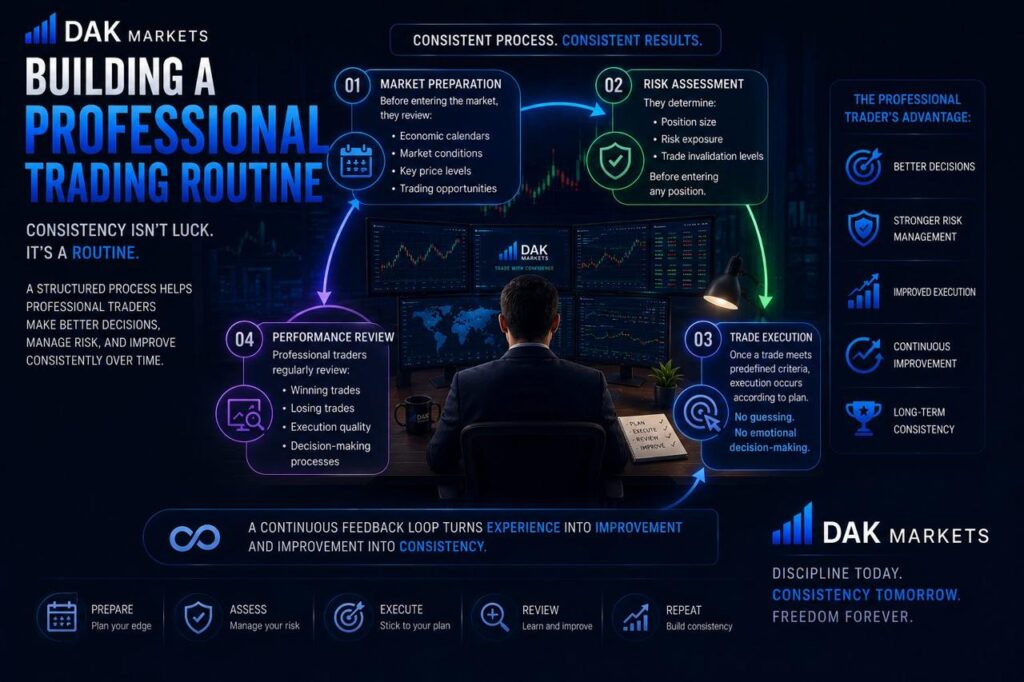
Consistency rarely happens by accident.
It is usually the result of a structured routine.
Many successful traders follow a process that includes:
Market Preparation
Before entering the market, they review:
- Economic calendars
- Market conditions
- Key price levels
- Trading opportunities
Risk Assessment
They determine:
- Position size
- Risk exposure
- Trade invalidation levels
Before entering any position.
Trade Execution
Once a trade meets predefined criteria, execution occurs according to plan.
No guessing.
No emotional decision-making.
Performance Review
Professional traders regularly review:
- Winning trades
- Losing trades
- Execution quality
- Decision-making processes
This continuous feedback loop helps improve long-term consistency.
Long-Term Thinking Creates Better Results
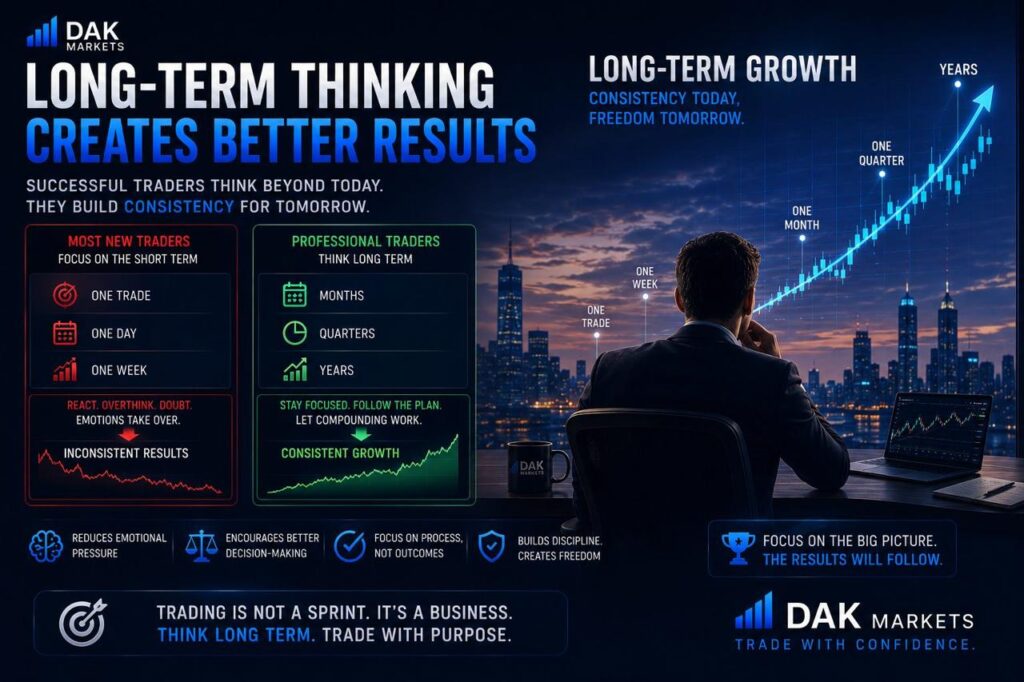
One of the defining characteristics of successful traders is their ability to think long term.
Many new traders evaluate performance based on:
- One trade
- One day
- One week
Professional traders evaluate performance over:
- Months
- Quarters
- Years
They understand that individual outcomes matter far less than maintaining a consistent process.
This mindset reduces emotional pressure and encourages better decision-making.
Trading becomes a business rather than a series of isolated events.
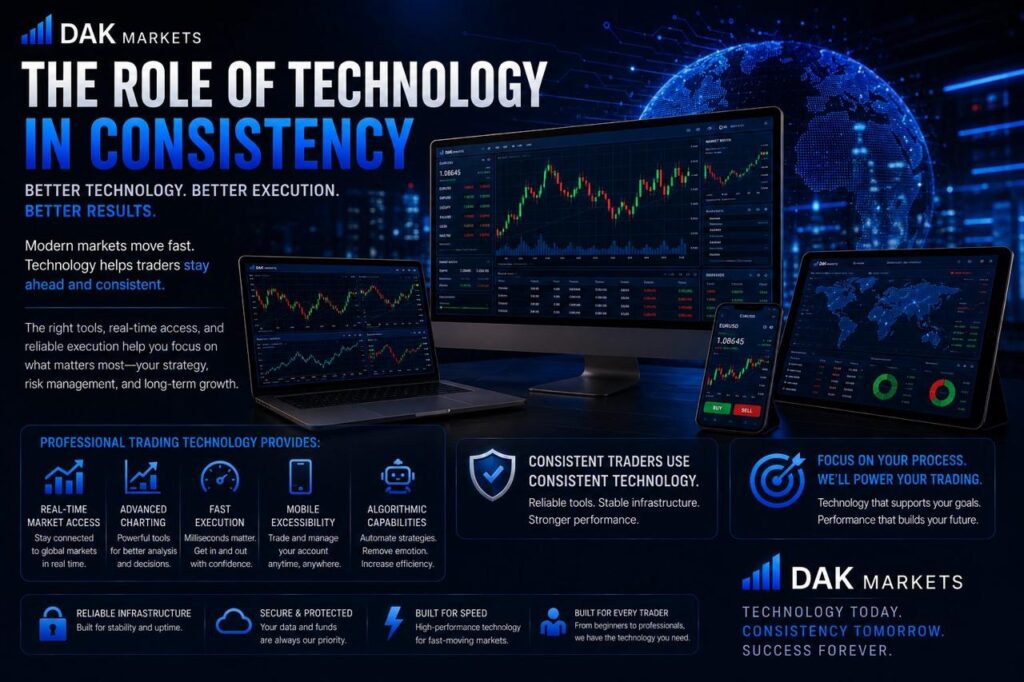
The Role of Technology in Consistency
Modern financial markets move quickly.
Technology plays an increasingly important role in helping traders remain competitive.
Professional trading technology provides:
- Real-time market access
- Advanced charting
- Fast execution
- Mobile accessibility
- Algorithmic trading capabilities
The ability to access markets efficiently can help traders maintain consistency and react appropriately to changing market conditions.
At DAK Markets, our objective is to provide technology that supports both beginner and professional traders as they work toward long-term success.
Final Thoughts
Consistency is the goal that every trader pursues.
However, consistency is not achieved through luck, shortcuts, or perfect strategies.
It is built through:
- Discipline
- Risk management
- Emotional control
- Reliable execution
- Professional technology
- A strong trading environment
At DAK Markets, we remain committed to providing traders with the tools, infrastructure, and support necessary to pursue their goals with confidence.
Because in trading, success is not defined by your best trade.
Success is defined by your ability to perform consistently over time.
And consistency is where long-term trading success truly begins.