
Developing a profitable trader mindset is one of the most important steps toward long-term success in financial markets. Many beginner traders believe they must achieve perfection in order to succeed.
However, this belief is one of the most damaging myths in trading.
The truth is simple: you do not need to be perfect to become a profitable trader.
Developing a Profitable Trader Mindset
In fact, many professional traders succeed while being wrong a significant percentage of the time. What truly matters is risk management, discipline, and consistency over the long term.
At DAK Markets, experienced traders understand that profitability comes from managing probabilities rather than chasing perfection. Learning this principle can completely change how traders approach the markets.

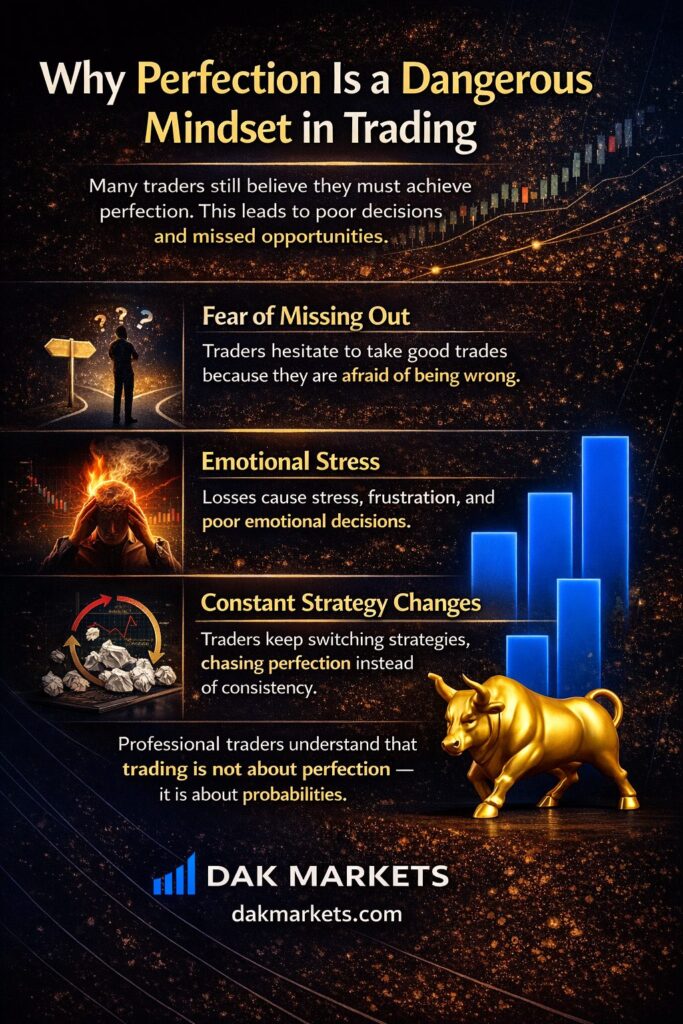
Why Perfection Is a Dangerous Mindset in Trading
The financial markets are complex and unpredictable. Prices move due to economic data, global events, institutional activity, and market sentiment. Because of this, no trader can predict every move correctly.
Despite this reality, many traders still attempt to achieve perfection.
This mindset creates several problems.
First, traders may hesitate to take valid trading opportunities because they are afraid of being wrong. They wait for the “perfect” setup that rarely appears.
Second, traders who expect perfection often experience emotional stress after losing trades. Instead of seeing losses as part of trading, they interpret them as personal failures.
Finally, perfectionism can lead traders to constantly change strategies. When a system produces a losing trade, they abandon it and search for another strategy. Over time, this creates inconsistency and confusion.
Professional traders understand that trading is not about perfection — it is about probabilities.
The Reality of Professional Trading
One of the most surprising facts for new traders is that many profitable traders have relatively modest win rates.
For example, a trader might win only 50% to 60% of their trades and still be highly profitable.
How is this possible?
The answer lies in risk-to-reward ratios and disciplined execution.
Consider this example:
Trader A
• Win rate: 50%
• Average loss: $100
• Average profit: $250
Even though Trader A loses half of their trades, their winning trades are larger than their losing trades. Over time, this creates a profitable outcome.
This simple example demonstrates an important principle: trading success does not depend on winning every trade.
Instead, successful traders focus on managing risk and allowing profitable trades to grow.

Why Risk Management Matters More Than Perfection
Risk management is one of the most important skills in trading. Professional traders understand that protecting capital is the foundation of long-term success.
Without proper risk management, even a strong trading strategy can fail.
Disciplined traders typically risk only a small percentage of their capital on each trade. This approach protects them from large drawdowns and allows them to survive losing streaks.
At DAK Markets, traders are encouraged to focus on responsible risk management rather than unrealistic expectations of perfection.
Effective risk management allows traders to remain calm during losing trades and maintain consistency in their execution.

The Role of Consistency in Trading Success
Consistency is another key factor that separates profitable traders from struggling traders.
Many beginners search endlessly for the “perfect strategy.” However, professional traders know that consistency matters far more than perfection.
Consistent traders follow their trading plan, respect their risk limits, and execute trades according to predefined rules.
Even when markets become volatile, disciplined traders stick to their process.
Over time, this consistency allows statistical advantages to play out. Trading becomes less emotional and more structured.
When traders stop chasing perfection and start focusing on consistency, their performance often improves significantly.

Why Emotional Discipline Is Essential
Trading is not only a technical activity; it is also a psychological challenge. Emotional reactions can influence trading decisions more than many traders realize.
Fear, greed, frustration, and impatience can all lead to poor decisions.
For example, traders may close profitable trades too early because they fear losing profits. On the other hand, they may hold losing trades too long because they hope the market will reverse.
These behaviors often occur when traders expect perfection.
However, disciplined traders understand that losses are a normal part of trading. Instead of reacting emotionally, they focus on executing their strategy.
Developing emotional discipline allows traders to maintain a clear mindset and avoid impulsive decisions.

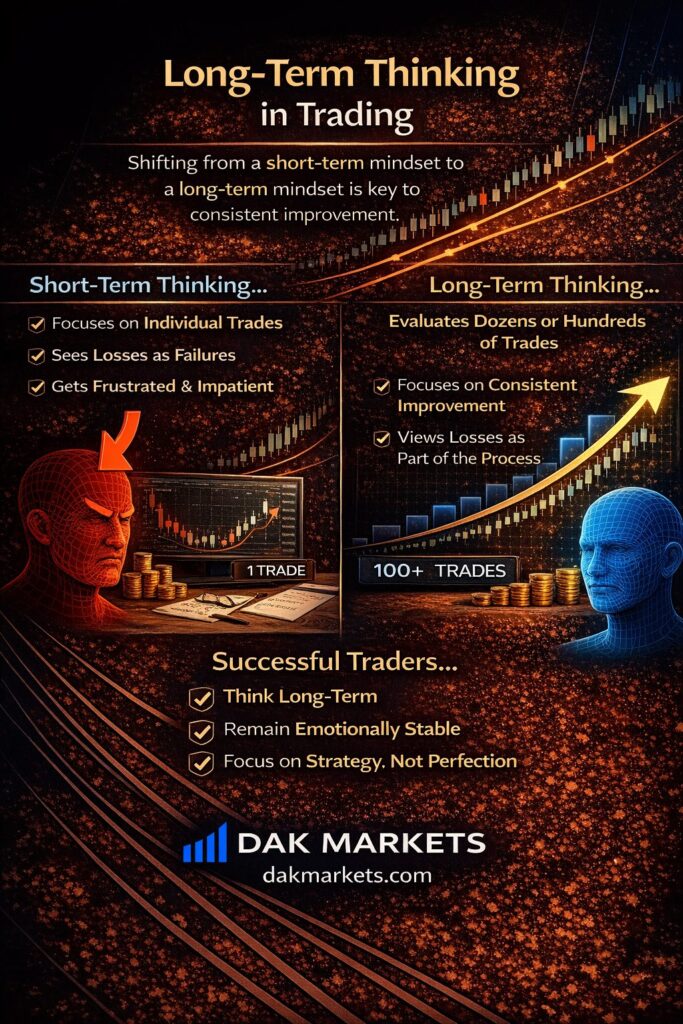
Long-Term Thinking in Trading
One of the most important shifts in a trader’s mindset is moving from short-term thinking to long-term thinking.
Many beginner traders judge their success based on individual trades. If a trade loses money, they believe they failed.
Professional traders view trading differently.
They evaluate performance over dozens or even hundreds of trades, not a single trade.
This long-term perspective helps traders remain emotionally stable and focused on their strategy.
When traders adopt this mindset, they stop trying to achieve perfection and instead focus on consistent improvement.
How Traders Can Build a Profitable Mindset
Developing the right mindset requires practice and discipline. Fortunately, several habits can help traders move away from perfectionism and toward sustainable success.
First, traders should focus on following their strategy rather than trying to predict every market move perfectly.
Second, traders should accept that losses are inevitable. Even the best trading systems experience losing trades.
Third, maintaining a trading journal can help traders analyze their performance objectively. Journaling allows traders to review their decisions and identify areas for improvement.
Finally, traders should measure success based on discipline and execution rather than individual trade outcomes.
These habits help traders maintain emotional balance and improve long-term performance.

Trading With Discipline at DAK Markets
At DAK Markets, traders are encouraged to approach the financial markets with discipline, structure, and patience.
Successful trading requires more than just a good strategy. It requires emotional control, risk management, and consistent execution.
By focusing on these principles, traders can reduce stress and improve their decision-making process.
Most importantly, traders learn that perfection is not required for profitability.
Instead, sustainable trading success comes from managing risk, maintaining discipline, and thinking long term.

Final Thoughts
The idea that traders must be perfect is one of the most common misconceptions in the trading world.
In reality, profitable trading does not require predicting every market move correctly. Instead, success comes from risk management, consistency, emotional discipline, and long-term thinking.
Traders who abandon the pursuit of perfection often experience greater clarity and improved performance.
By focusing on process rather than perfection, traders can build a healthier relationship with the markets and increase their probability of long-term success.
At DAK Markets, traders who adopt this mindset place themselves in a stronger position to navigate the financial markets with confidence and discipline.