
Introduction: The Missing Piece in Most Trading Strategies
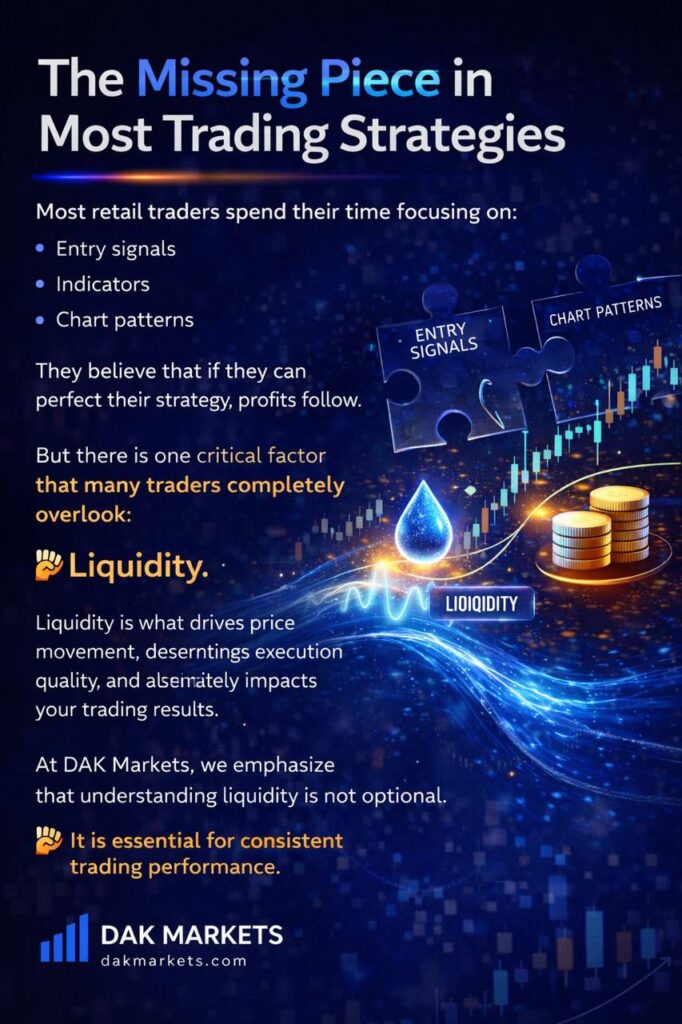
Most retail traders spend their time focusing on:
- Entry signals
- Indicators
- Chart patterns
They believe that if they can perfect their strategy, profits will follow.
But there is one critical factor that many traders completely overlook:
👉 Liquidity.
Liquidity is what drives price movement, determines execution quality, and ultimately impacts your trading results.
At DAK Markets, we emphasize that understanding liquidity is not optional.
👉 It is essential for consistent trading performance.
What Is Liquidity in Trading?
Liquidity refers to how easily an asset can be bought or sold without significantly affecting its price.
In simple terms:
👉 High liquidity = smooth execution
👉 Low liquidity = volatility and risk
Highly liquid markets:
- Major Forex pairs (EUR/USD, GBP/USD)
- Gold (XAUUSD)
- Large indices
Low liquidity markets:
- Exotic pairs
- Off-market hours
- Illiquid instruments
Why Liquidity Is the Real Driver of Price
Price does not move randomly.
It moves because of orders being filled.
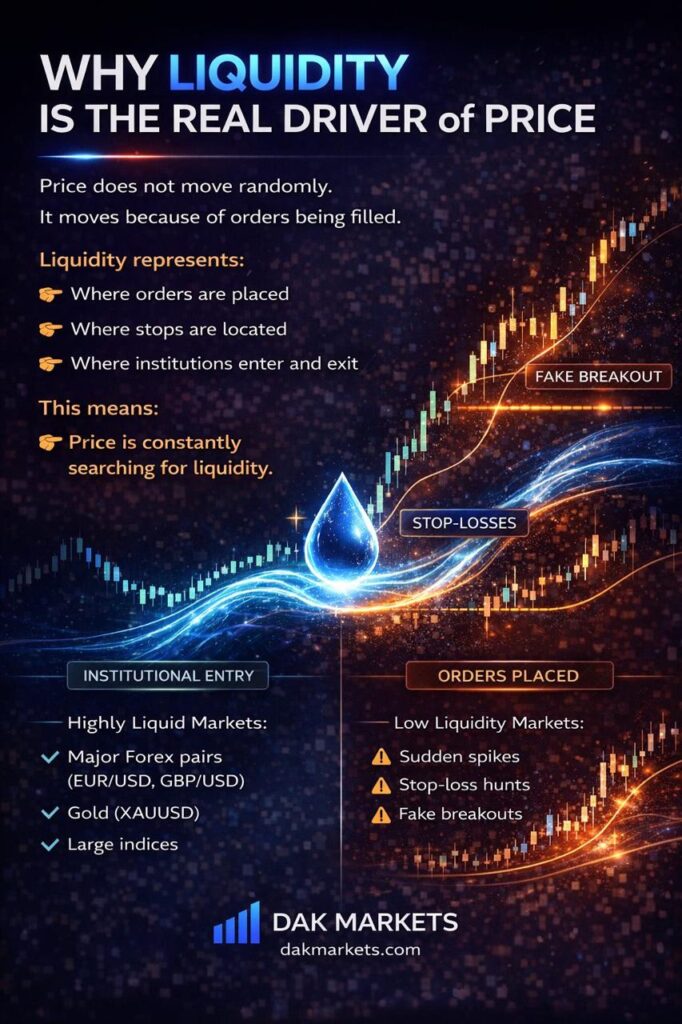
Liquidity represents:
- Where orders are placed
- Where stops are located
- Where institutions enter and exit
This means:
👉 Price is constantly searching for liquidity.
This is why you often see:
- Sudden spikes
- Stop-loss hunts
- Fake breakouts
These are not random.
They are driven by liquidity dynamics.
How Liquidity Affects Your Trading Results
Liquidity directly impacts your trading in several ways:
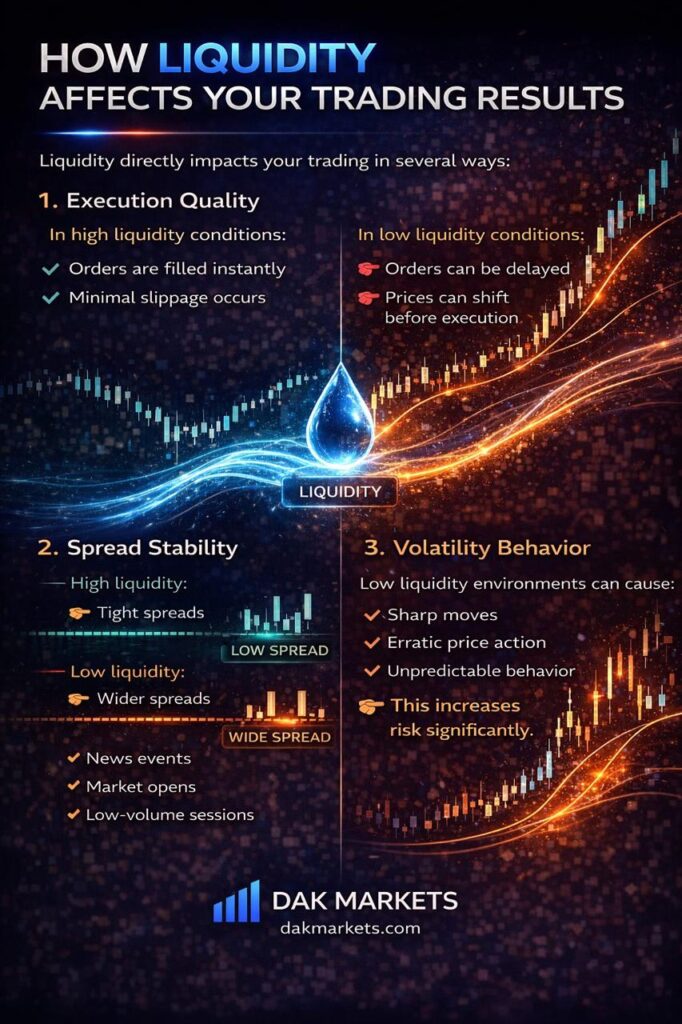
1. Execution Quality
In high liquidity conditions:
- Orders are filled instantly
- Minimal slippage occurs
In low liquidity conditions:
- Orders can be delayed
- Prices can shift before execution
2. Spread Stability
Liquidity affects spreads.
High liquidity:
👉 Tight spreads
Low liquidity:
👉 Wider spreads
This is especially important during:
- News events
- Market opens
- Low-volume sessions
3. Volatility Behavior
Low liquidity environments can cause:
- Sharp moves
- Erratic price action
- Unpredictable behavior
👉 This increases risk significantly.
Why Most Retail Traders Ignore Liquidity
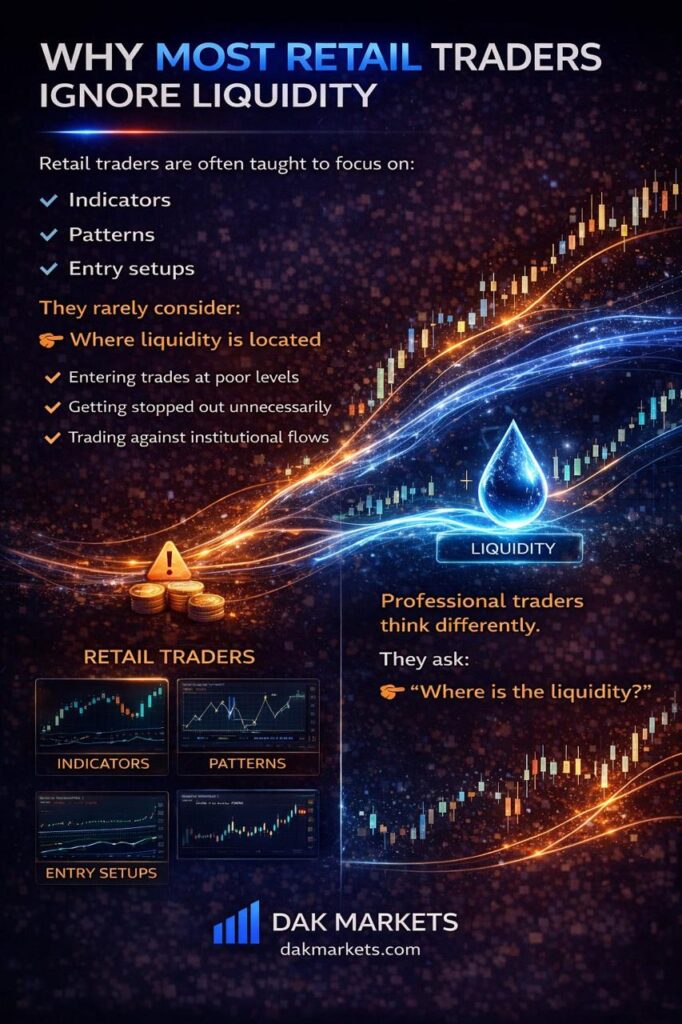
Retail traders are often taught to focus on:
- Indicators
- Patterns
- Entry setups
They rarely consider:
👉 Where liquidity is located
This leads to:
- Entering trades at poor levels
- Getting stopped out unnecessarily
- Trading against institutional flows
Professional traders think differently.
They ask:
👉 “Where is the liquidity?”
The Institutional Perspective
Institutions do not trade like retail traders.
They require:
- Large order sizes
- Deep liquidity pools
- Efficient execution
Because of this, they:
- Target liquidity zones
- Enter positions strategically
- Move the market through volume
👉 Understanding this gives you a major edge.
How to Use Liquidity in Your Trading
Here are practical ways to apply liquidity concepts:
1. Identify Liquidity Zones
Look for:
- Equal highs/lows
- Key support and resistance
- Previous highs and lows
👉 These areas attract orders.
2. Avoid Low Liquidity Periods
Be cautious during:
- Late New York session
- Asian session (for some pairs)
- Before major news
3. Trade During High Liquidity Sessions
Focus on:
- London session
- New York session
👉 This ensures better execution and tighter spreads.
4. Combine Liquidity with Structure
Use:
- Market structure
- Trend direction
- Key levels
👉 Liquidity + structure = higher probability trades
The Role of Execution in Liquidity-Based Trading
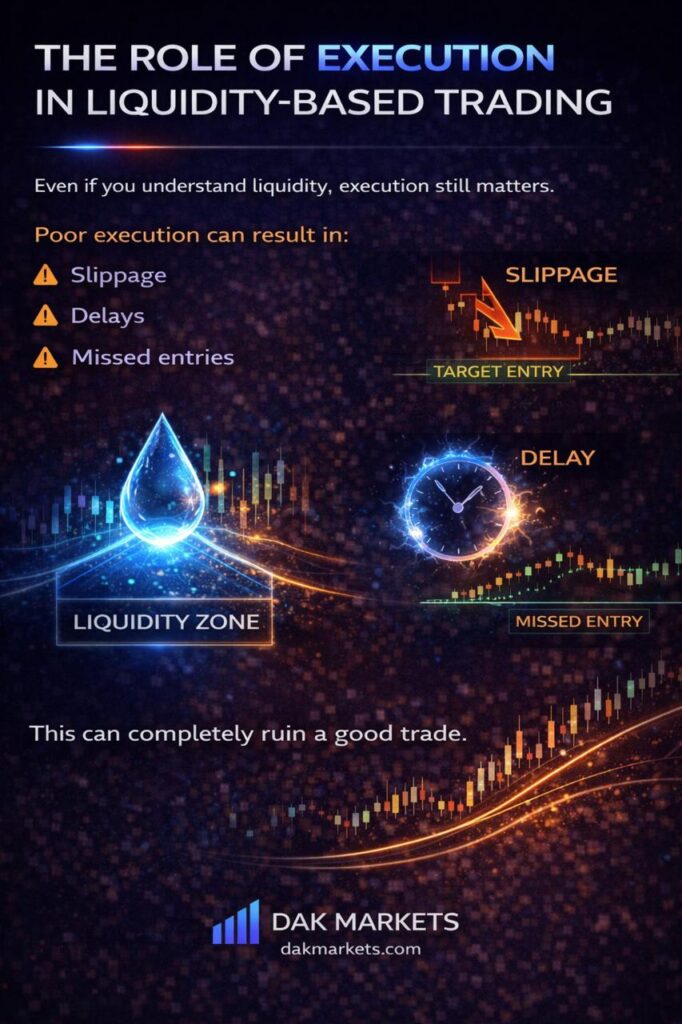
Even if you understand liquidity, execution still matters.
Poor execution can result in:
- Slippage
- Delays
- Missed entries
This can completely ruin a good trade.
How DAK Markets Provides a Liquidity Advantage
At DAK Markets, we understand that liquidity is critical for professional trading.
That’s why we provide:
• Institutional-grade liquidity
• Deep liquidity pools
• Fast execution speeds
• Stable pricing conditions
With our infrastructure:
👉 Your trades are executed efficiently, even in fast-moving markets
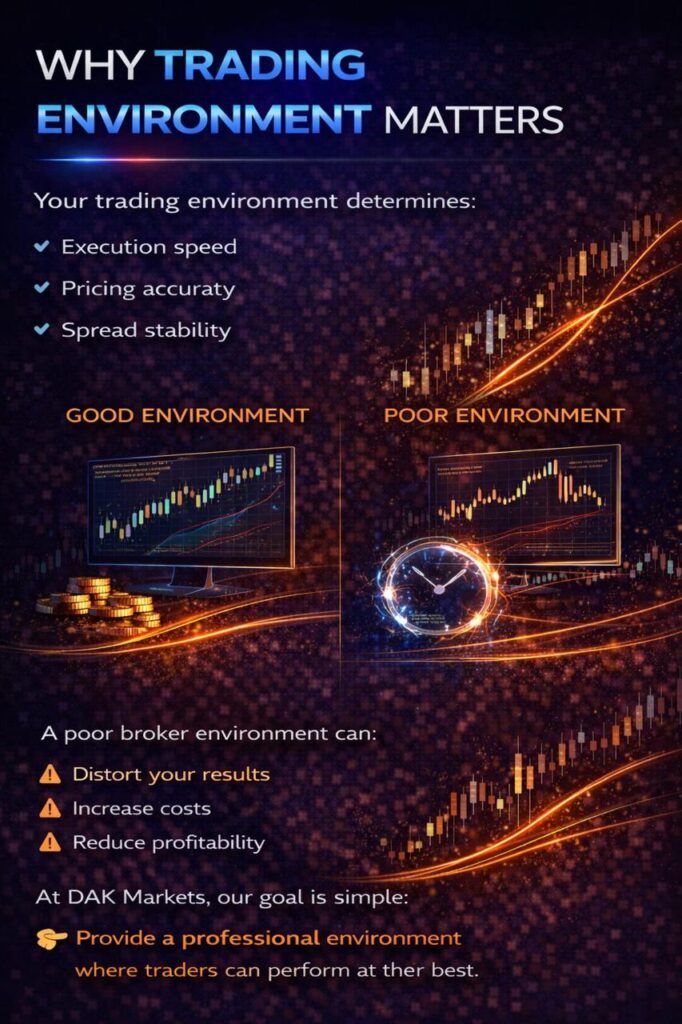
Why Trading Environment Matters
Your trading environment determines:
- Execution speed
- Pricing accuracy
- Spread stability
A poor broker environment can:
- Distort your results
- Increase costs
- Reduce profitability
At DAK Markets, our goal is simple:
👉 Provide a professional environment where traders can perform at their best.
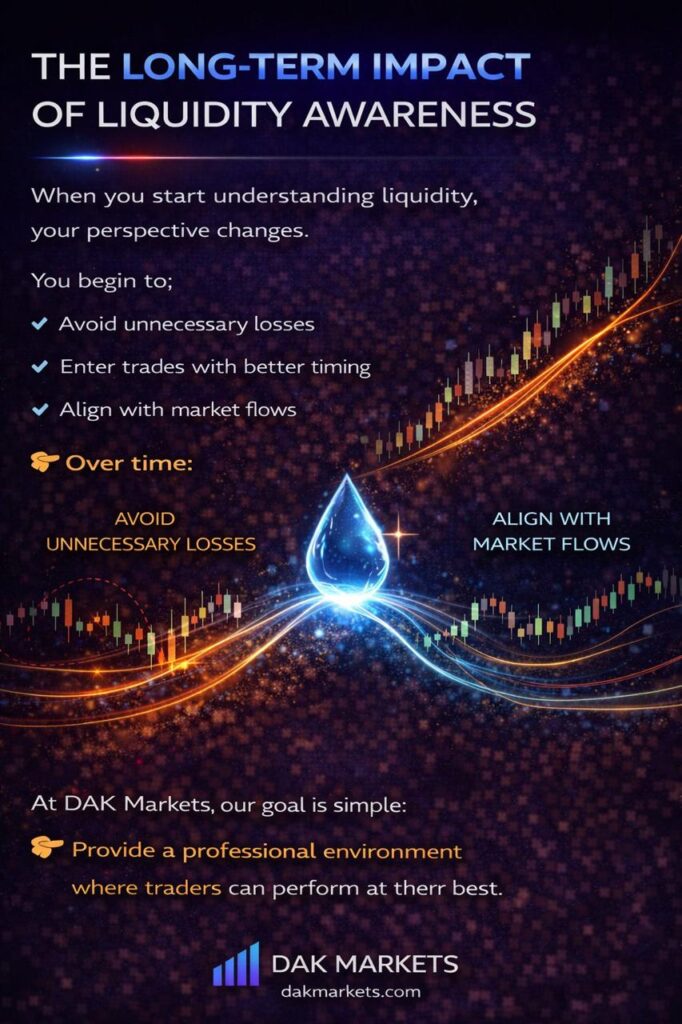
The Long-Term Impact of Liquidity Awareness
When you start understanding liquidity, your perspective changes.
You begin to:
- Avoid unnecessary losses
- Enter trades with better timing
- Align with market flows
Over time:
👉 This leads to consistent performance.
Final Thoughts: Trade with the Real Edge
Trading success is not about finding more indicators.
It is about understanding how the market truly works.
👉 Liquidity drives price
👉 Execution determines results
👉 Environment supports performance
At DAK Markets, we provide the infrastructure.
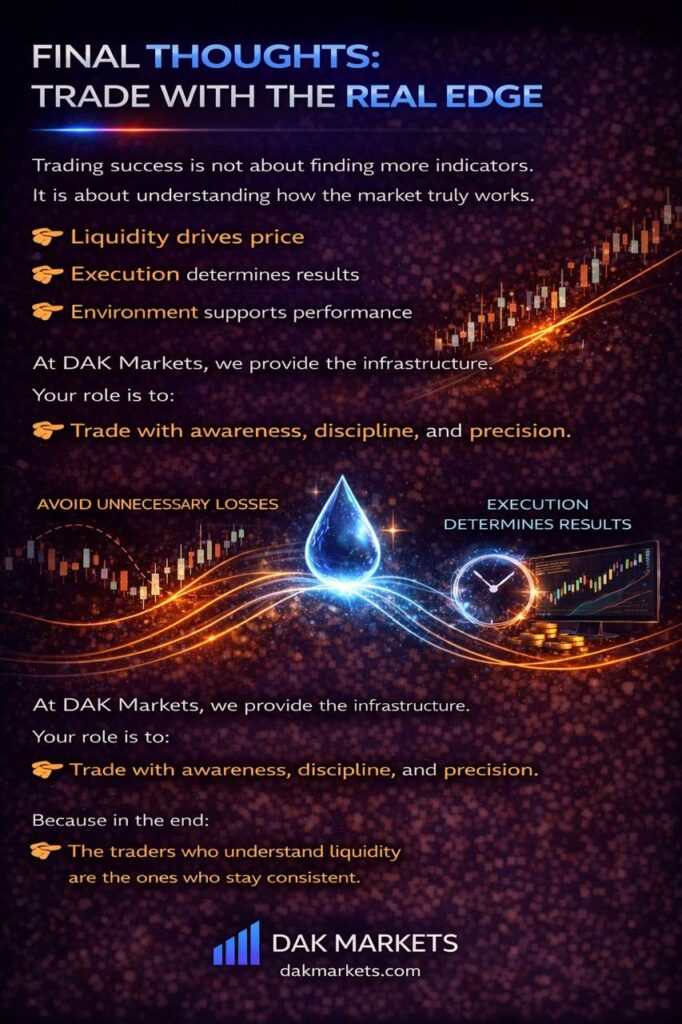
Your role is to:
👉 Trade with awareness, discipline, and precision.
Because in the end:
👉 The traders who understand liquidity are the ones who stay consistent.