
Successful trading does not begin when a trader clicks buy or sell. It begins before the first position is opened. Many traders focus only on entries, indicators, or market direction, but preparation is one of the most important parts of long-term trading consistency.
The forex market moves quickly. Prices can react aggressively to news, liquidity conditions, market sessions, and sudden changes in sentiment. Without a clear plan, traders may enter positions emotionally, chase price movement, or take unnecessary risk during volatile conditions.
A strong daily trading routine helps traders approach the market with more structure. It does not guarantee profits, but it can help traders make more informed decisions, avoid unnecessary mistakes, and stay focused on their trading plan.
Below is a simple daily trading checklist every forex trader should consider before entering the market.
1. Check Today’s High-Impact News
Before opening any trade, one of the first things traders should do is check the economic calendar. Websites such as Forex Factory provide a clear overview of scheduled economic events, including high-impact news releases that may affect currency pairs.
High-impact news can create sudden volatility in the forex market. These events may cause sharp price movements, wider spreads, slippage, or unexpected reversals. Traders who are unaware of upcoming news may enter a position right before the market becomes unstable.
Some of the most important economic events to watch include:
Interest rate decisions, inflation reports, employment data, GDP releases, central bank speeches, PMI data, and major policy announcements.
For example, if the United States is releasing inflation data, USD-related pairs may experience increased volatility. This can affect EURUSD, GBPUSD, USDJPY, USDCAD, and even gold, depending on market expectations.
Checking the news calendar does not mean a trader must avoid the market completely. It simply means the trader should understand when volatility may increase and decide whether the trading conditions match their strategy.
Preparation begins with awareness.

2. Know Which Currency Is Affected
Many traders make the mistake of only looking at the currency pair they want to trade. However, every forex pair is made of two currencies. If one of those currencies has a high-impact news event scheduled, the pair may become more volatile.
For example, if there is major USD news, it can impact pairs such as EURUSD, GBPUSD, XAUUSD, USDCAD, and USDJPY. Even if the trader is not trading the dollar directly as the first currency in the pair, USD can still strongly influence the movement.
The same applies to other major currencies such as GBP, EUR, CAD, AUD, NZD, JPY, and CHF.
A trader looking at GBPUSD should not only focus on the technical chart. They should also ask: Is there GBP news today? Is there USD news today? Are there central bank speeches or economic releases that could affect either side of the pair?
This simple habit helps traders avoid being surprised by market movement. It also helps them understand why a pair may behave differently than expected during certain times of the day.
Do not just check the pair. Check the currencies inside the pair.

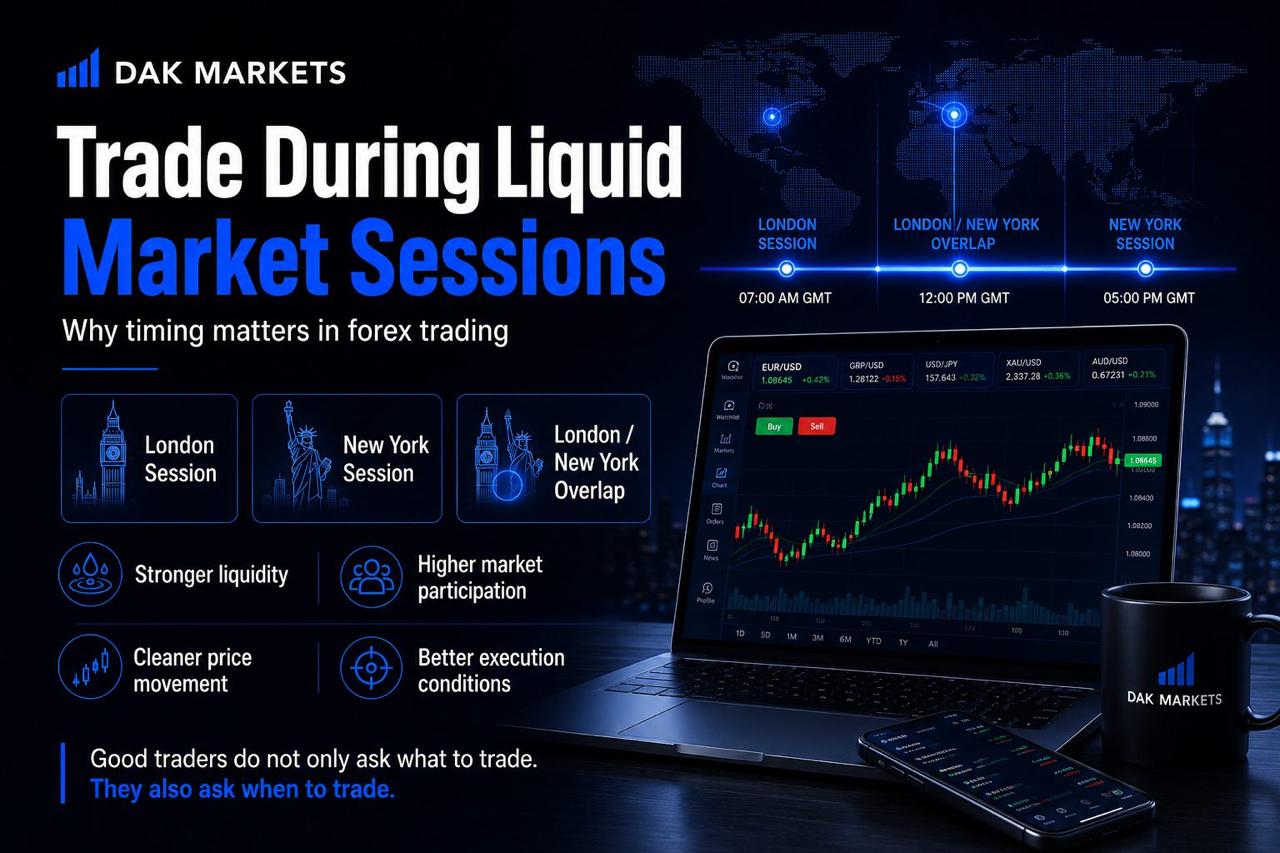
3. Trade During Liquid Market Sessions
Liquidity is another important part of daily trading preparation. The forex market is open 24 hours a day during the trading week, but not all hours provide the same quality of market movement.
The most active trading sessions are usually the London session, the New York session, and the London/New York overlap. These periods often provide stronger liquidity, higher market participation, and cleaner price movement compared to quieter sessions.
The London session is important because it often brings strong movement in European currencies such as EUR and GBP. The New York session is important because USD-related pairs become highly active. The overlap between London and New York can be especially liquid because both major financial centers are active at the same time.
For many traders, these sessions offer better trading conditions because there is more volume in the market. More liquidity can support tighter pricing, stronger execution conditions, and more meaningful market structure.
This does not mean every move during London or New York is a good opportunity. Traders still need to follow their strategy. However, focusing on liquid sessions can help traders avoid low-volume periods where price may move slowly, behave unpredictably, or create false signals.
Good traders do not only ask what to trade. They also ask when to trade.
4. Prepare a Trading Plan Before Entry
One of the biggest mistakes traders make is entering a position simply because the market is moving. Fast price action can create fear of missing out, especially when candles are moving aggressively. However, entering without a plan often leads to emotional decisions.
Before taking any trade, a trader should clearly define the key parts of the setup.
This includes the entry level, stop loss, take profit, risk per trade, and invalid setup conditions.
The entry level is where the trader plans to open the position. The stop loss is where the trader accepts that the trade idea is wrong. The take profit is where the trader plans to secure profits. The risk per trade defines how much capital the trader is willing to risk. Invalid setup conditions explain what would make the trade no longer valid.
Having these details prepared before entry helps remove emotional decision-making. It also gives the trader a clear structure to follow once the trade is active.
Without a plan, a trader may move their stop loss, close too early, hold too long, or increase risk after a loss. These emotional behaviors can damage consistency over time.
A trade should never be based only on excitement, hope, or urgency. It should be based on a clear plan.
Do not enter because the market is moving. Enter because your plan is ready.

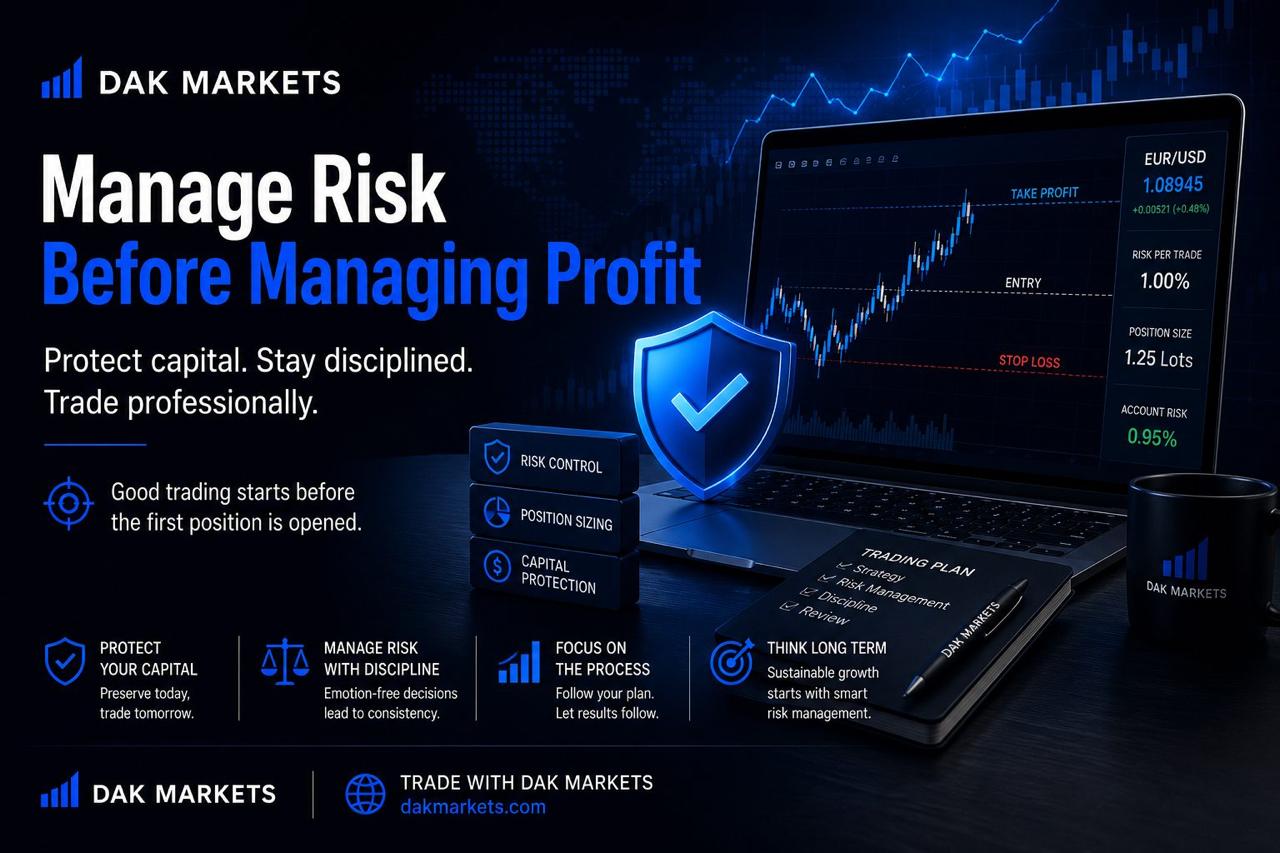
5. Manage Risk Before Managing Profit
Risk management is one of the most important parts of professional trading. Many traders spend too much time thinking about how much they can make, but not enough time thinking about how much they can lose.
Before entering any position, traders should know the exact risk of the trade. This includes the position size, stop loss distance, and percentage of account equity being risked.
Strong risk management helps traders protect their capital and stay active in the market longer. Even a good strategy can fail if the trader uses poor risk management. A few oversized trades can erase weeks or months of progress.
Managing risk also supports better psychology. When traders risk too much, they are more likely to panic, overmanage trades, or make emotional decisions. When risk is controlled, traders can think more clearly and follow their plan with more discipline.
Good trading is not only about finding opportunities. It is about protecting capital while waiting for the right opportunities.
Final Thoughts
A daily trading checklist can help traders approach the market with more discipline and confidence. Before trading, it is important to check high-impact news, understand which currencies may be affected, focus on liquid trading sessions, prepare a clear trading plan, and manage risk properly.
The goal is not to predict every move perfectly. The goal is to avoid unnecessary mistakes and make better trading decisions under real market conditions.
At DAK Markets, we believe traders deserve a professional trading environment built around preparation, execution, transparency, and risk awareness.
Good trading starts before the first position is opened.
Prepare first.
Plan carefully.
Trade with discipline.
Trade with DAK Markets
dakmarkets.com