Introduction
When traders discuss success in financial markets, the conversation often focuses on strategy, risk management, psychology, or technology.
While all of these factors are important, there is another component that frequently receives less attention than it deserves:
Market access.
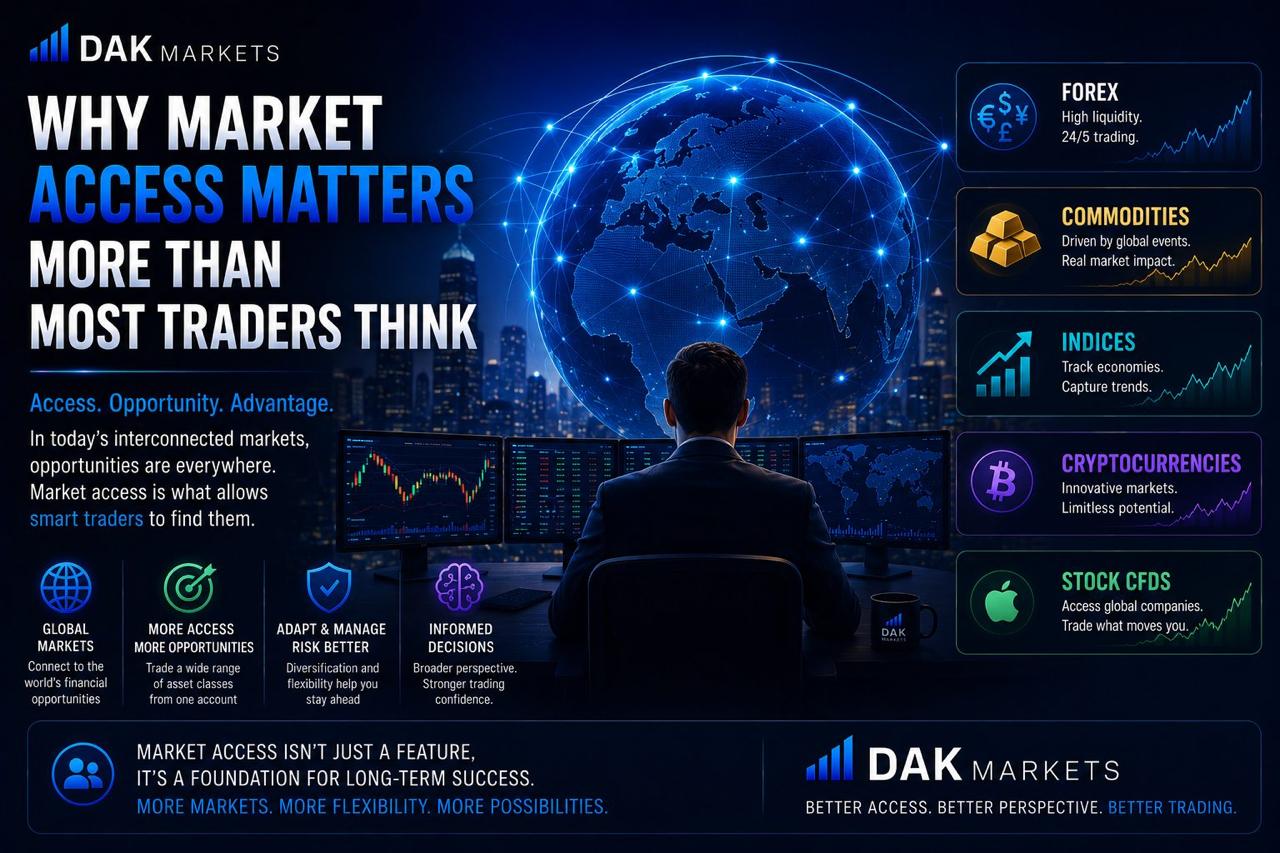
The ability to access a broad range of financial instruments can significantly influence how traders identify opportunities, manage risk, and adapt to changing market conditions.
Modern financial markets are more interconnected than ever before. Economic events, geopolitical developments, interest rate decisions, and shifts in investor sentiment can create opportunities across multiple asset classes at the same time.
Traders who have access to a diverse range of markets may be better positioned to react to these opportunities.
At DAK Markets, we believe market access is an important part of creating a professional trading environment. Understanding why it matters can help traders make more informed decisions and develop a broader perspective on global financial markets.
What Is Market Access?
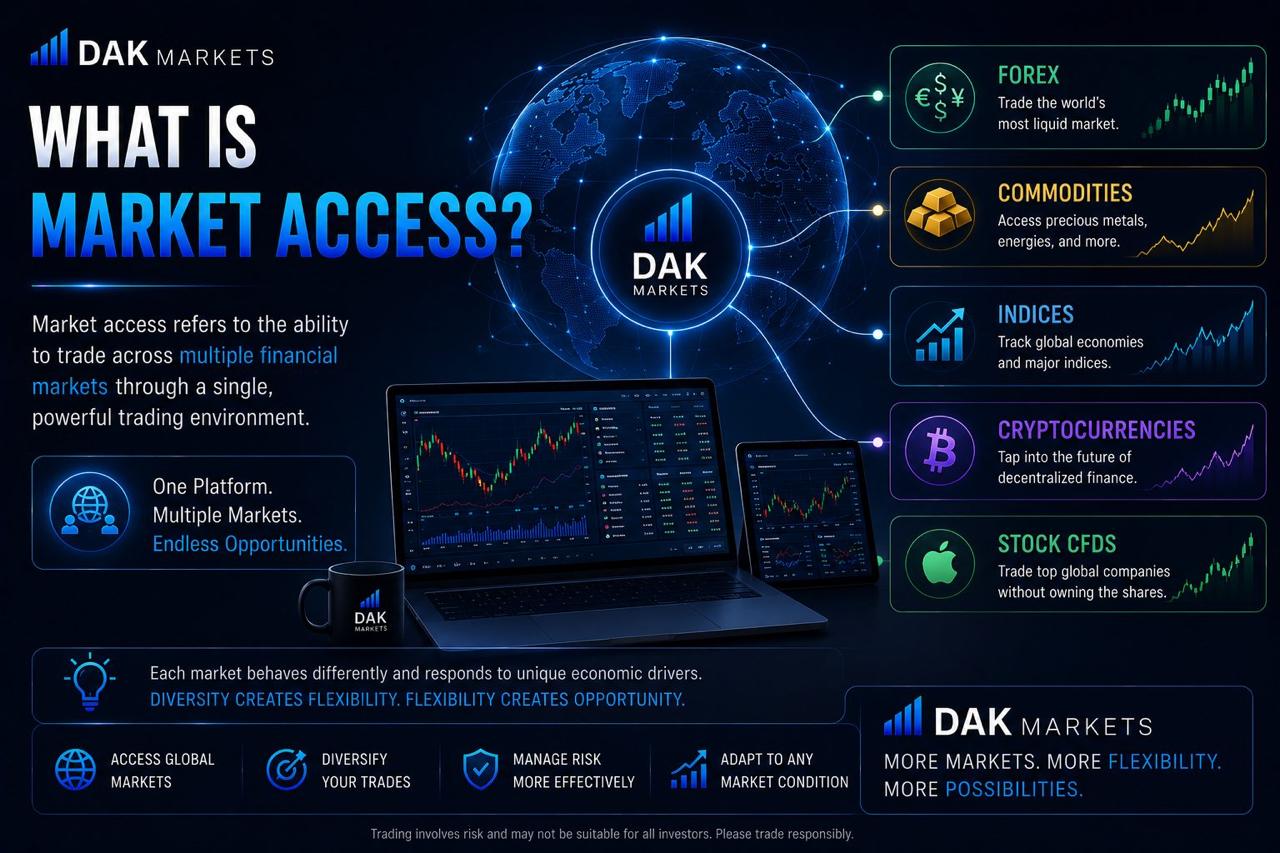
Market access refers to the ability of traders to participate in different financial markets through a single trading environment.
Instead of being limited to one instrument or one asset class, traders can access multiple markets, including:
- Forex
- Commodities
- Indices
- Cryptocurrencies
- Stock CFDs
Each market behaves differently and responds to different economic drivers.
This variety gives traders more flexibility and allows them to explore opportunities beyond a single market sector.
Why Diversification of Opportunities Matters
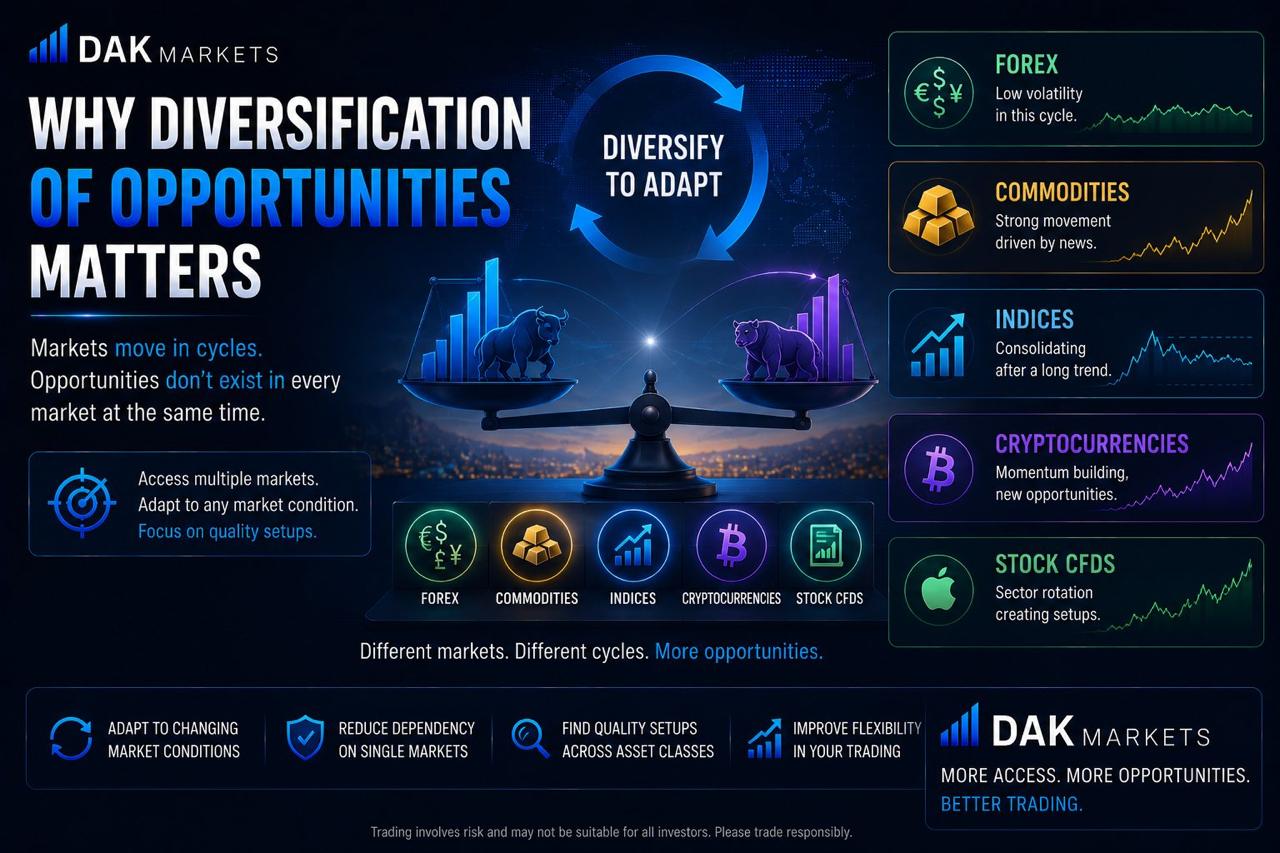
Financial markets move in cycles.
There are periods when certain asset classes experience strong trends while others remain relatively inactive.
For example, the Forex market may experience low volatility while commodities are reacting to major economic news.
An equity index may enter a consolidation phase while cryptocurrency markets experience increased momentum.
Having access to multiple markets allows traders to adapt instead of forcing trades in conditions where quality opportunities may not exist.
Professional traders often focus on finding high-quality setups rather than trying to trade every market condition.
Broader market access can support this approach.
Different Markets Offer Different Opportunities
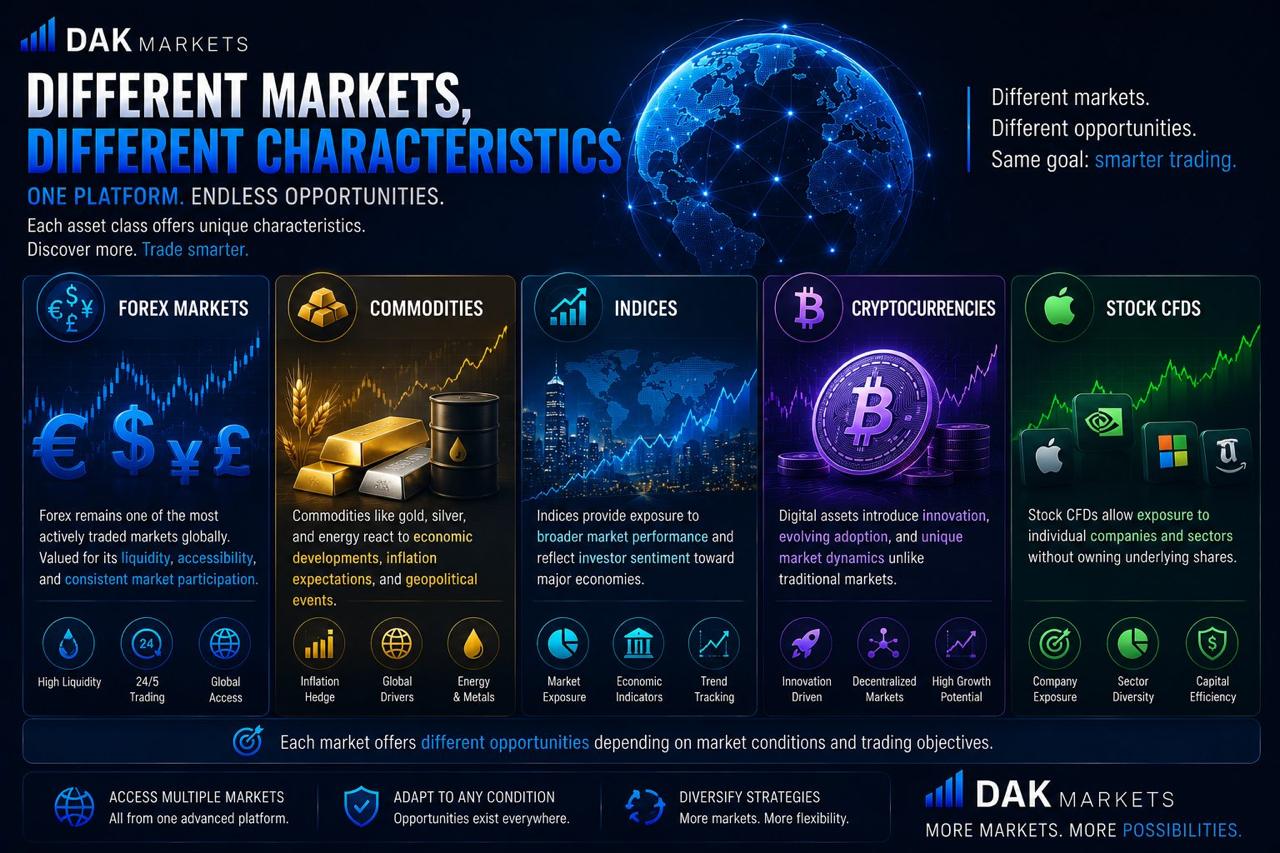
Each asset class has unique characteristics that may appeal to different types of traders.
Forex Markets
Forex remains one of the most actively traded markets globally.
Many traders are attracted to its liquidity, accessibility, and consistent market participation.
Commodities
Commodities such as gold, silver, and energy products often react to economic developments, inflation expectations, supply and demand changes, and geopolitical events.
Indices
Indices provide exposure to broader market performance and can reflect investor sentiment toward major economies.
Cryptocurrencies
Digital assets have introduced a new category of market participation, characterized by innovation, evolving adoption, and unique market dynamics.
Stock CFDs
Stock CFDs allow traders to gain exposure to individual companies and sectors without directly owning the underlying shares.
Each market can offer different opportunities depending on market conditions, volatility, and the trader’s objectives.
Understanding Market Correlations
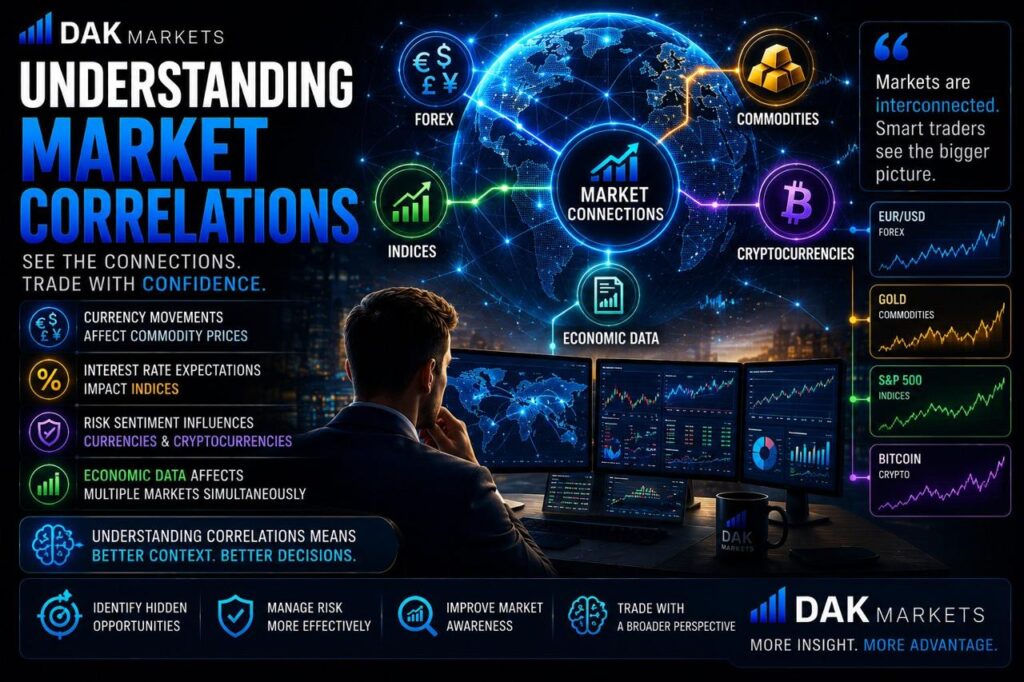
One of the benefits of accessing multiple markets is the ability to observe relationships between different asset classes.
Financial instruments often influence one another.
Examples include:
- Currency movements affecting commodity prices
- Interest rate expectations impacting indices
- Risk sentiment influencing currencies and cryptocurrencies
- Economic data affecting multiple markets simultaneously
Understanding these relationships can provide additional market context and improve overall decision-making.
Professional traders often monitor multiple markets to gain a broader understanding of global market sentiment.
Adapting to Changing Market Conditions
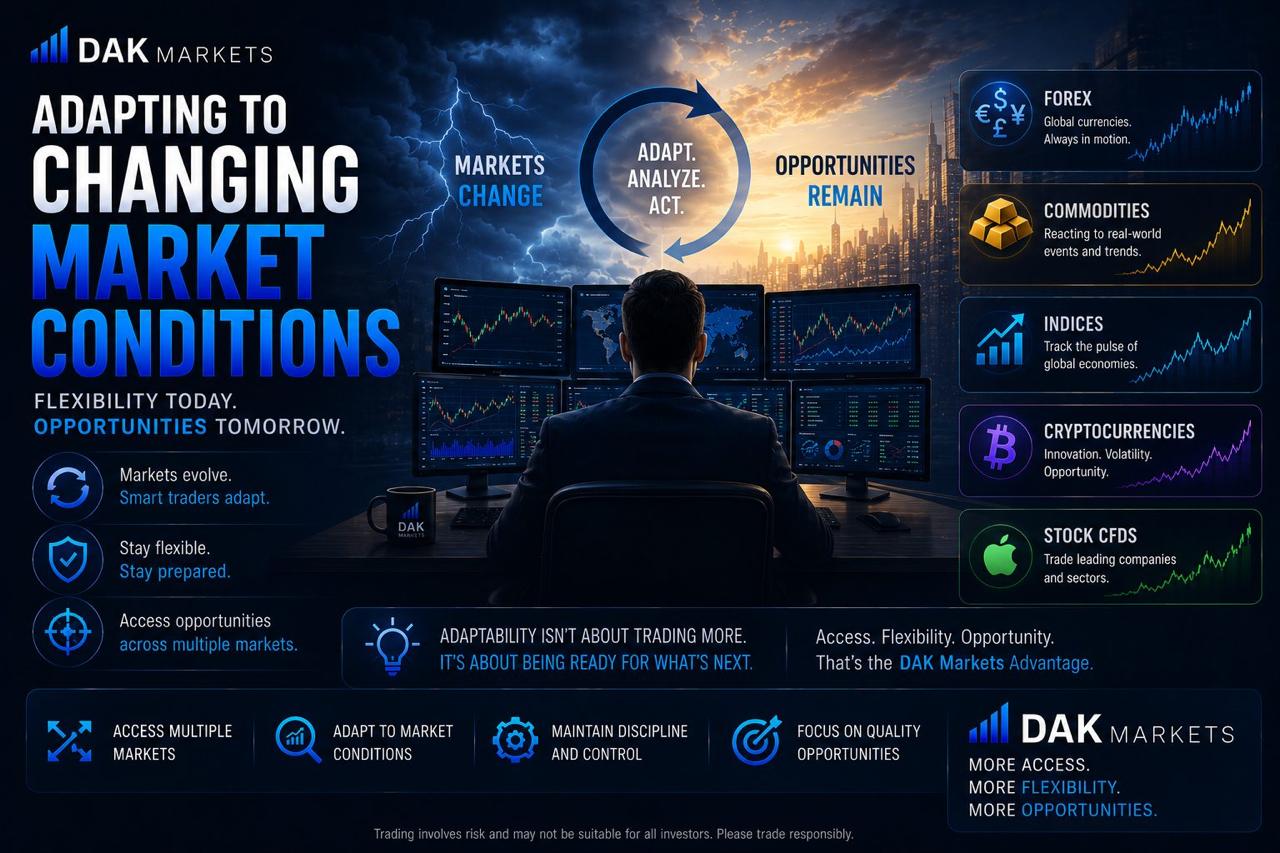
Financial markets are constantly evolving.
Strategies that perform well in one environment may require adjustments in another.
Market access provides flexibility.
Instead of becoming dependent on a single instrument, traders can evaluate opportunities across multiple sectors and asset classes.
This flexibility can help traders remain engaged during changing market conditions while maintaining a disciplined approach.
The objective is not necessarily to trade more markets.
The objective is to have access to opportunities when they arise.
Supporting Different Trading Styles
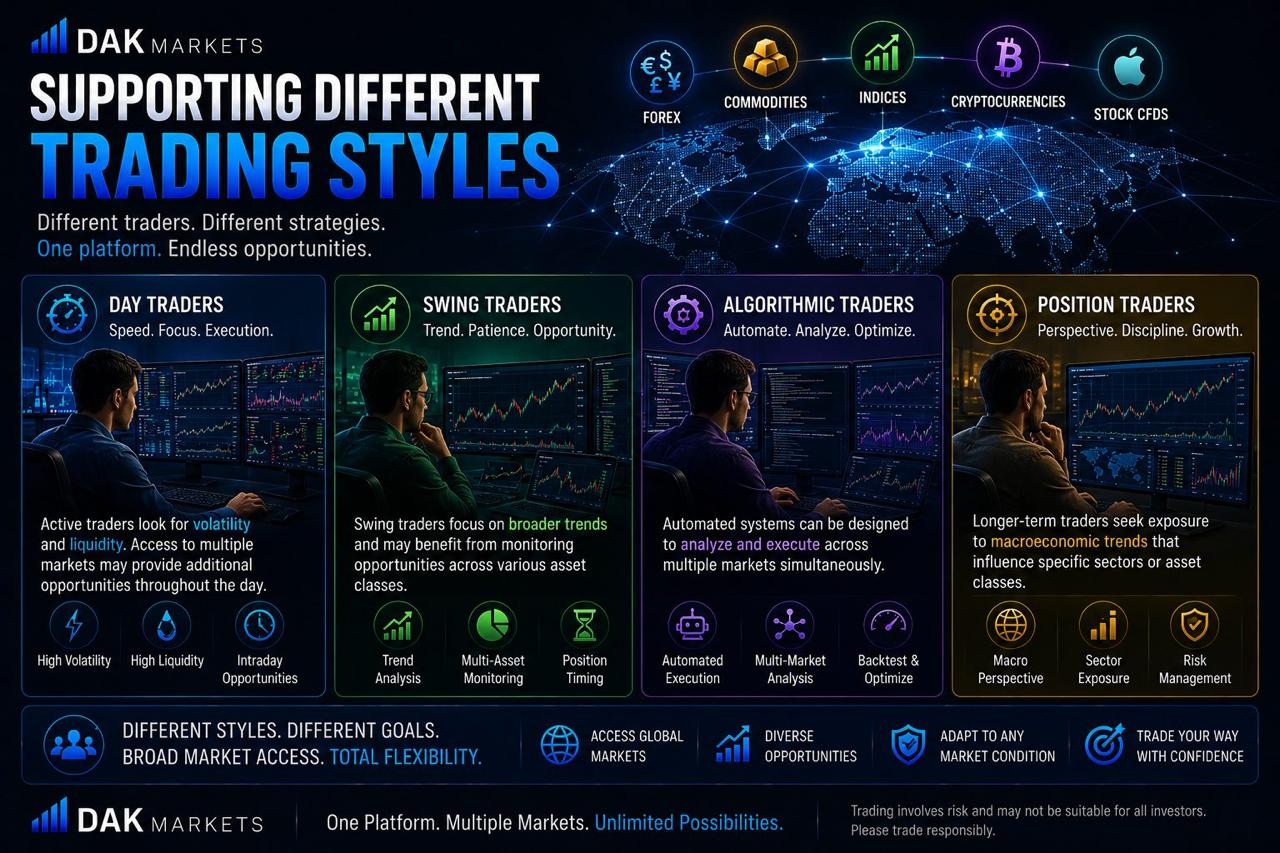
Market access can benefit traders regardless of their preferred trading style.
Day Traders
Active traders often look for volatility and liquidity.
Access to multiple markets may provide additional opportunities throughout the trading day.
Swing Traders
Swing traders often focus on broader trends and may benefit from monitoring opportunities across several asset classes.
Algorithmic Traders
Automated systems can be designed to analyze and execute across multiple markets simultaneously.
Position Traders
Longer-term traders may seek exposure to macroeconomic trends that influence specific sectors or asset classes.
Different trading styles often require different types of opportunities.
Broad market access supports this flexibility.
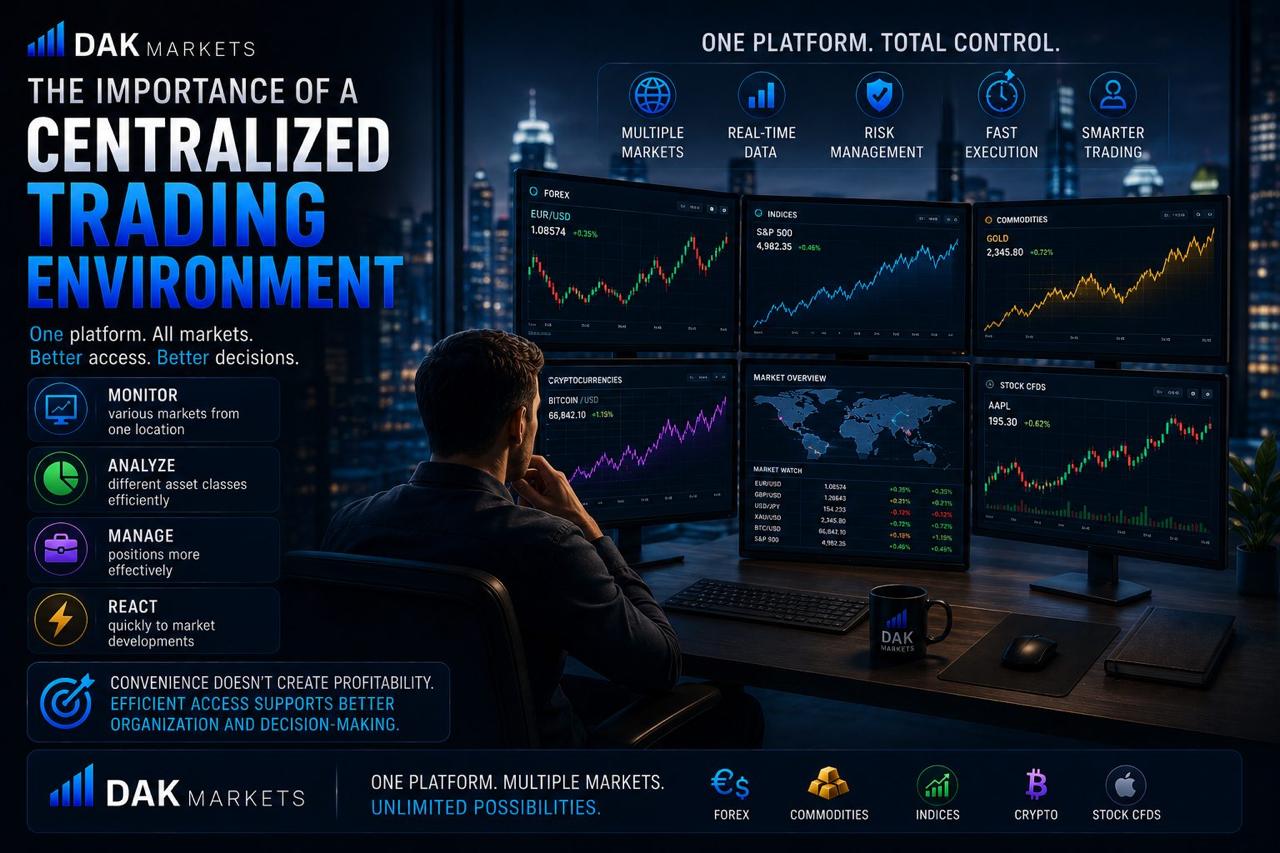
The Importance of a Centralized Trading Environment
Managing multiple markets becomes significantly more efficient when traders can access them through one unified platform.
A centralized trading environment allows traders to:
- Monitor various markets from one place
- Analyze different asset classes efficiently
- Manage positions more effectively
- React quickly to market developments
- Stay organized across multiple instruments
Convenience alone does not create profitability.
However, efficient market access can support better organization, faster decision-making, and a more structured trading process.
Why Global Markets Continue to Evolve
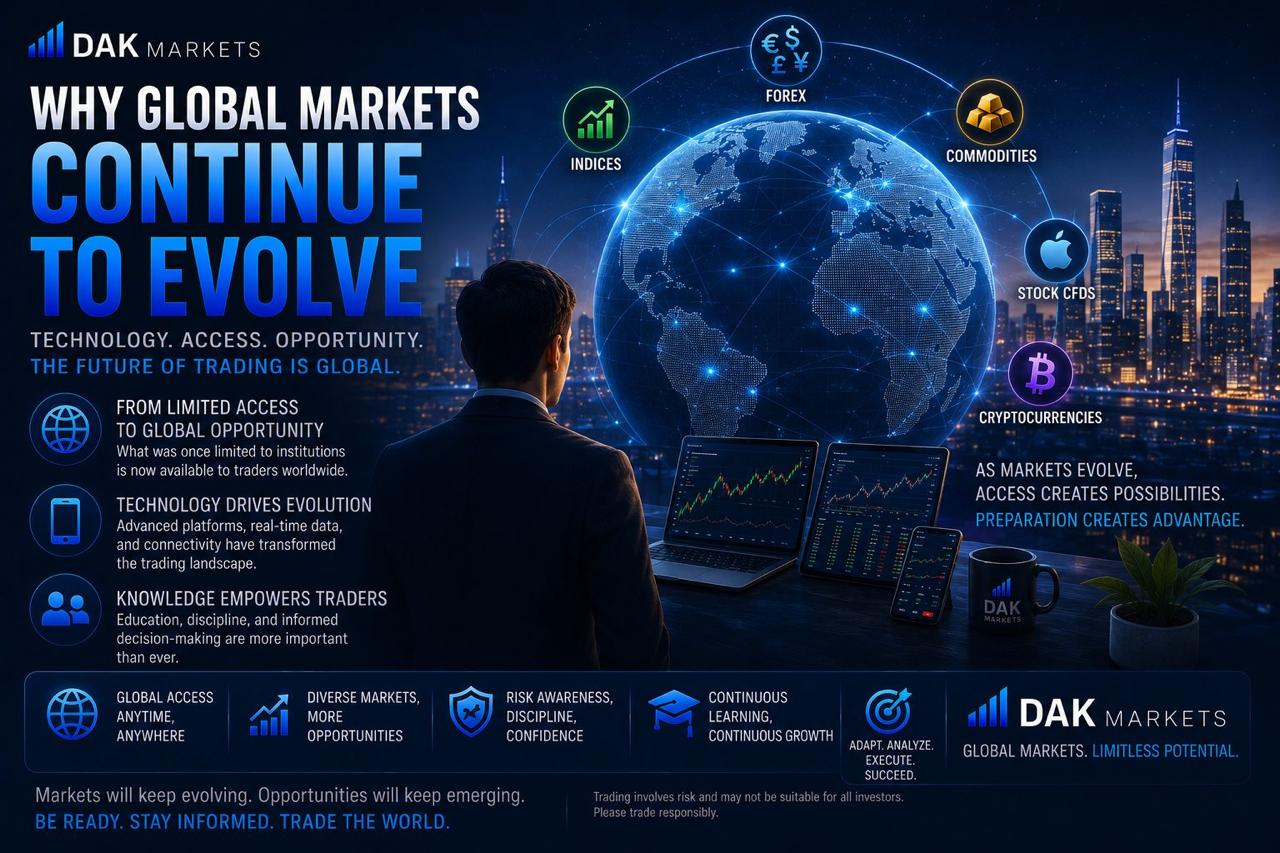
Technology has transformed how traders participate in financial markets.
Years ago, access to certain markets was largely limited to institutions and professional participants.
Today, retail traders can participate in a broad range of markets from virtually anywhere in the world.
This evolution has expanded opportunity.
At the same time, it has increased the importance of education, discipline, risk management, and informed decision-making.
As markets continue to evolve, access to diverse financial instruments remains an important consideration for modern traders.
Building a Broader Trading Perspective
Many traders begin their journey by focusing on a single market.
Over time, they often discover that broader market awareness can improve their understanding of economic trends, investor behavior, and global capital flows.
Following multiple asset classes encourages traders to think beyond individual charts and consider the larger financial landscape.
This broader perspective can help traders better understand:
- Economic developments
- Market sentiment
- Capital flows
- Global trends
- Relationships between asset classes
Knowledge creates context.
Context can improve decision-making.
Final Thoughts
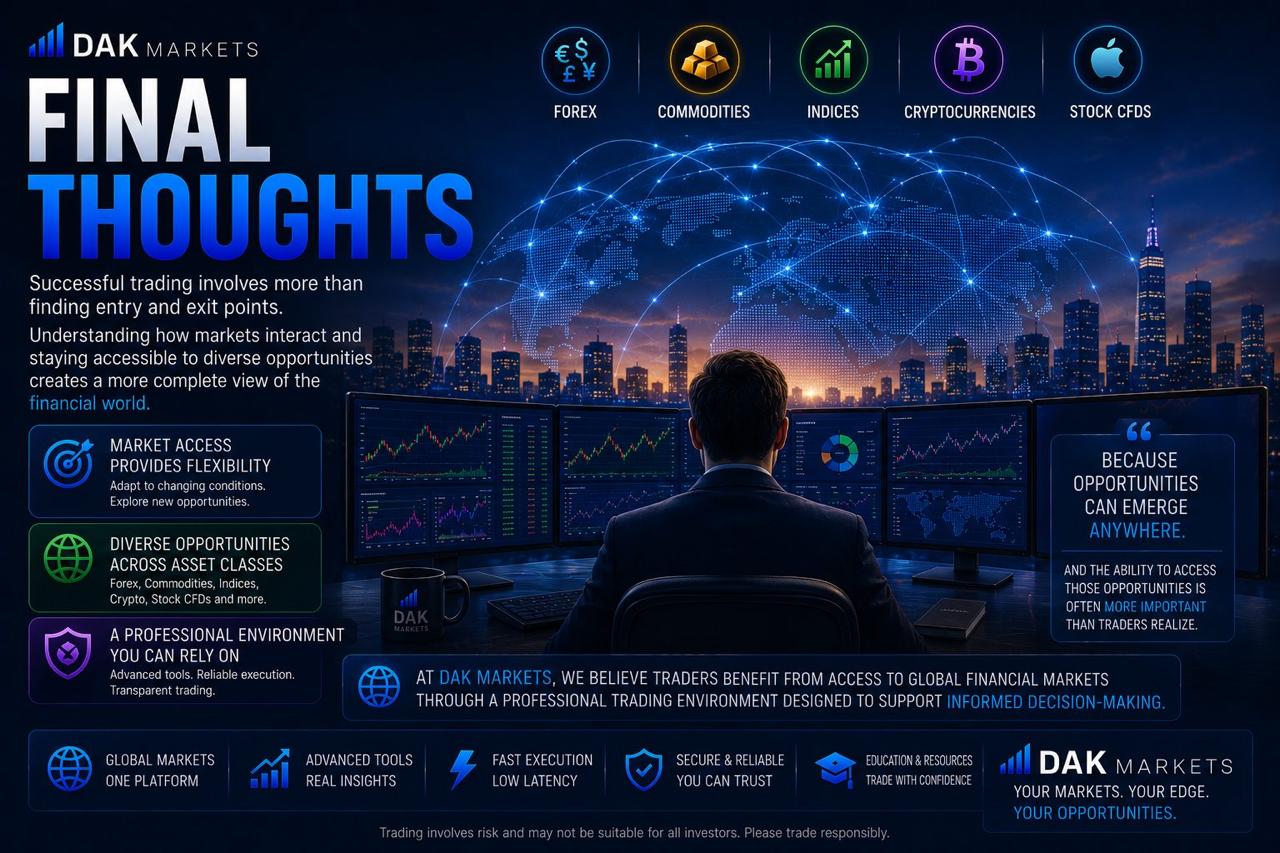
Successful trading involves much more than finding entry and exit points.
Understanding how different markets interact and maintaining access to a diverse range of opportunities can help traders build a more complete view of the financial world.
Market access provides flexibility, adaptability, and exposure to opportunities across multiple asset classes.
At DAK Markets, we believe traders benefit from having access to global financial markets through a professional trading environment designed to support informed decision-making.
Because opportunities can emerge anywhere.
And the ability to access those opportunities is often more important than many traders realize.