Introduction
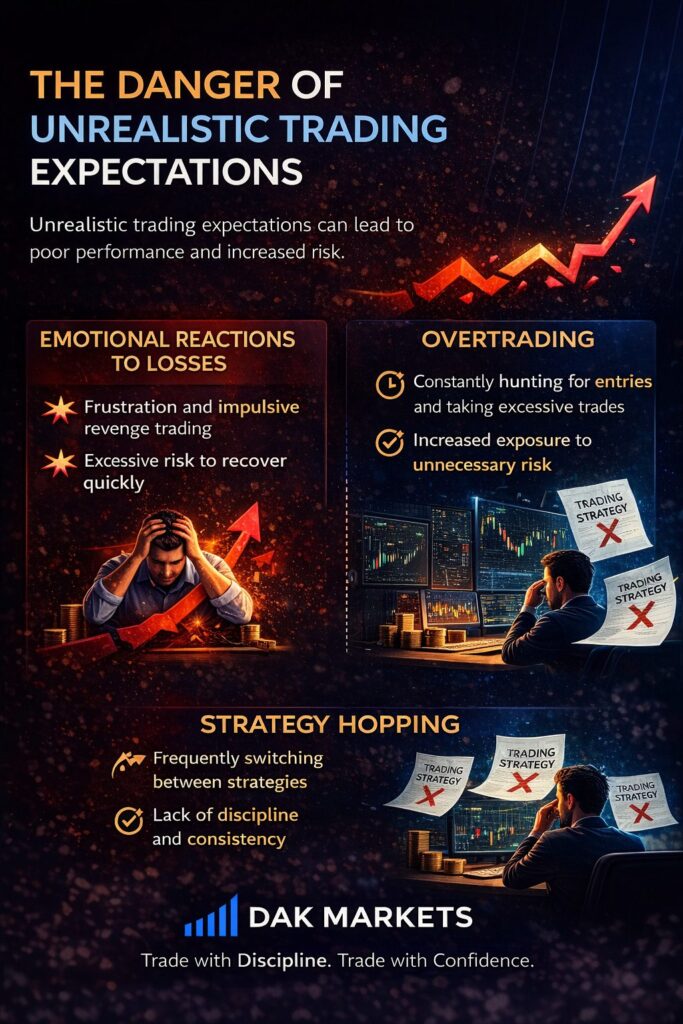
In the world of forex trading, expectations can quietly shape every decision a trader makes. Many traders focus heavily on strategies, indicators, and market analysis. However, one of the most powerful factors influencing performance is often overlooked: trading expectations.
The expectations you bring into the market can determine how you react to wins, losses, and market uncertainty. Unrealistic expectations can lead to frustration, impulsive decisions, and inconsistent performance. On the other hand, realistic trading expectations create the mindset required for long-term success.
At DAK Markets, disciplined traders understand that managing expectations is just as important as understanding charts and technical analysis.
Understanding how trading expectations affect your mindset can help you build a more consistent and professional approach to the market.
Why Trading Expectations Matter
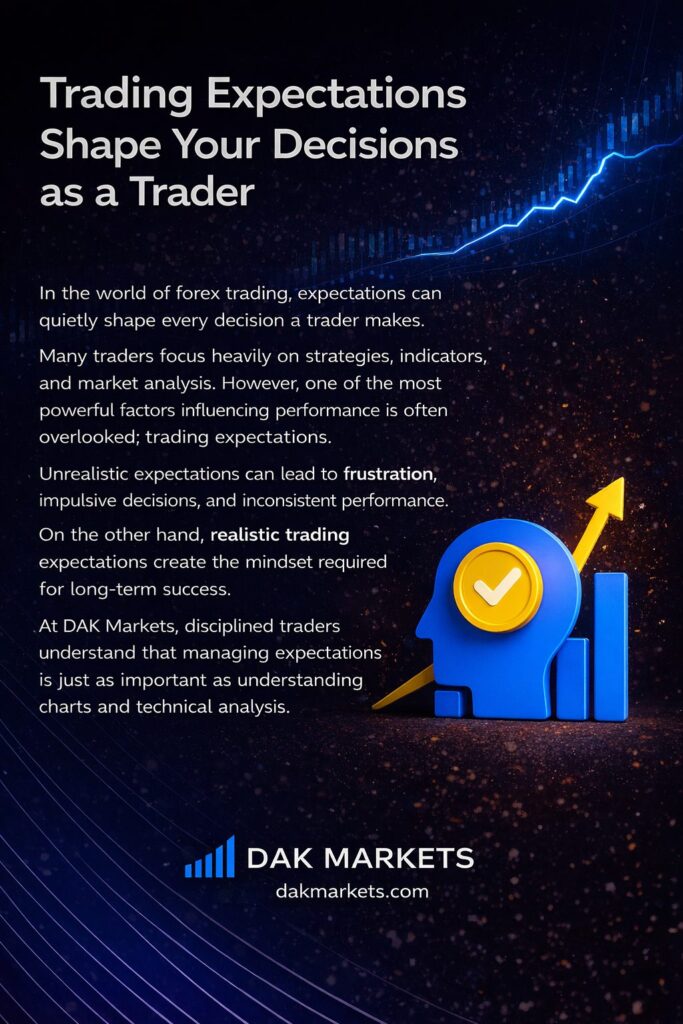
Trading expectations influence how traders interpret market movements and manage risk. When expectations are unrealistic, traders often feel pressure to achieve quick profits or maintain perfect performance.
For example, many beginner traders enter the market believing they must win most of their trades to succeed. This belief creates unnecessary stress and emotional pressure.
In reality, professional traders often operate with win rates between 40% and 60%. What matters more than winning frequently is maintaining proper risk management and a disciplined trading process.
When traders adjust their expectations to match the realities of the market, they reduce emotional pressure and improve decision-making.
The Danger of Unrealistic Trading Expectations
Unrealistic trading expectations can cause several problems that negatively affect performance.
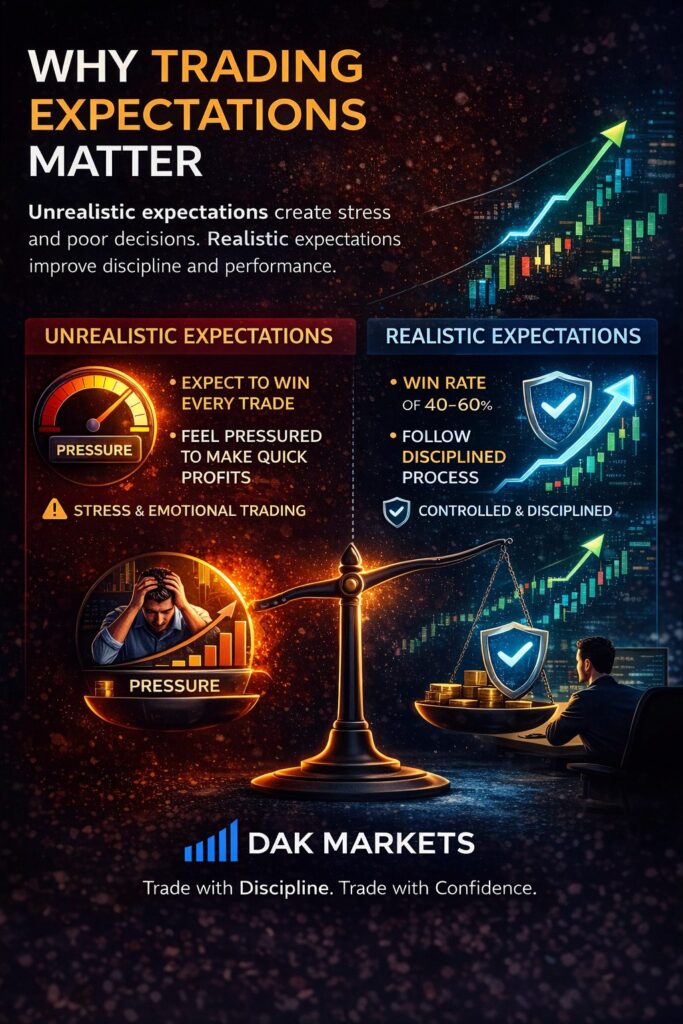
Emotional Reactions to Losses
If a trader expects to win most trades, even a normal losing trade can feel like failure. This emotional reaction often leads to frustration and impulsive behavior.
Instead of following a trading plan, traders may attempt to recover losses immediately through revenge trading or larger position sizes.
Overtrading
Traders who expect constant profit opportunities may feel the need to remain active in the market all day. However, professional traders understand that quality setups are limited.
Overtrading increases exposure to risk and often leads to unnecessary losses.
Strategy Hopping
When expectations are unrealistic, traders may abandon strategies too quickly. After experiencing a small drawdown, they assume the system no longer works.
As a result, they constantly switch strategies instead of developing discipline and consistency.
This behavior prevents traders from gaining the long-term experience needed to succeed.
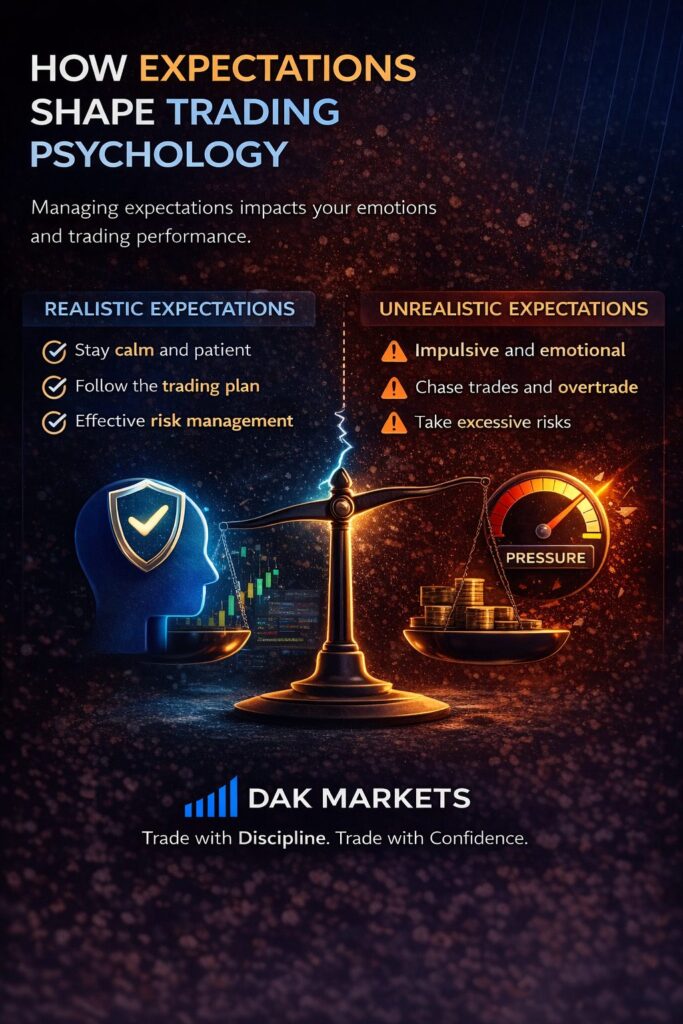
How Expectations Shape Trading Psychology
Trading psychology is closely connected to expectations. The beliefs a trader holds about the market influence emotional responses and decision-making.
When expectations are realistic, traders tend to remain calm and focused during market fluctuations. They understand that losses are a normal part of trading.
However, unrealistic expectations can create emotional instability.
For example, a trader expecting daily profits may feel pressure to force trades when the market does not provide clear opportunities.
This pressure can lead to impulsive entries, poor risk management, and inconsistent performance.
Professional traders at DAK Markets avoid this trap by focusing on process rather than short-term outcomes.
The Mindset of Professional Traders
Professional traders approach the market with a very different set of expectations. Instead of focusing on immediate profits, they concentrate on long-term consistency.
Several principles guide this mindset.
Accepting Losses
Professional traders understand that losing trades are unavoidable. Even the best trading strategies experience drawdowns.
Instead of fearing losses, disciplined traders manage them through proper risk control.
Focusing on Process
Rather than measuring success by individual trades, experienced traders evaluate how well they follow their trading plan.
If a trade follows the rules of the strategy, it is considered a successful decision regardless of the outcome.
Thinking in Probabilities
Markets are unpredictable. No strategy guarantees success on every trade.
Professional traders understand that trading is a probability-based activity. Over time, consistent execution of a profitable strategy produces positive results.

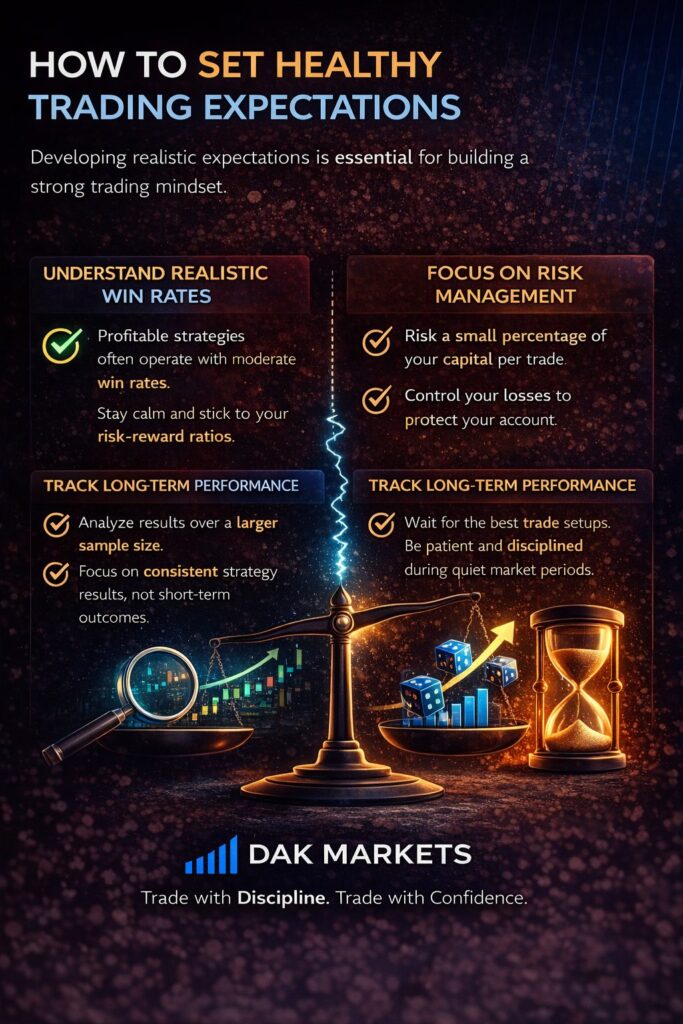
How to Set Healthy Trading Expectations
Developing realistic expectations is essential for building a strong trading mindset.
Here are several ways traders can improve their expectations.
Understand Realistic Win Rates
Successful traders do not need extremely high win rates. Many profitable strategies operate with moderate win percentages combined with strong risk-to-reward ratios.
Understanding this principle helps traders remain calm during losing streaks.
Focus on Risk Management
Risk management plays a major role in long-term profitability. Even with a moderate win rate, traders can remain profitable if they control losses carefully.
Professional traders typically risk only a small percentage of their capital per trade.
Track Long-Term Performance
Evaluating performance over a small number of trades can lead to incorrect conclusions. Instead, traders should analyze results over larger sample sizes.
This approach provides a clearer picture of strategy performance.
Develop Patience
Markets do not always provide immediate opportunities. Sometimes the best trading decision is simply to wait.
Patience allows traders to enter positions only when high-probability setups appear.
The Role of Discipline in Managing Expectations
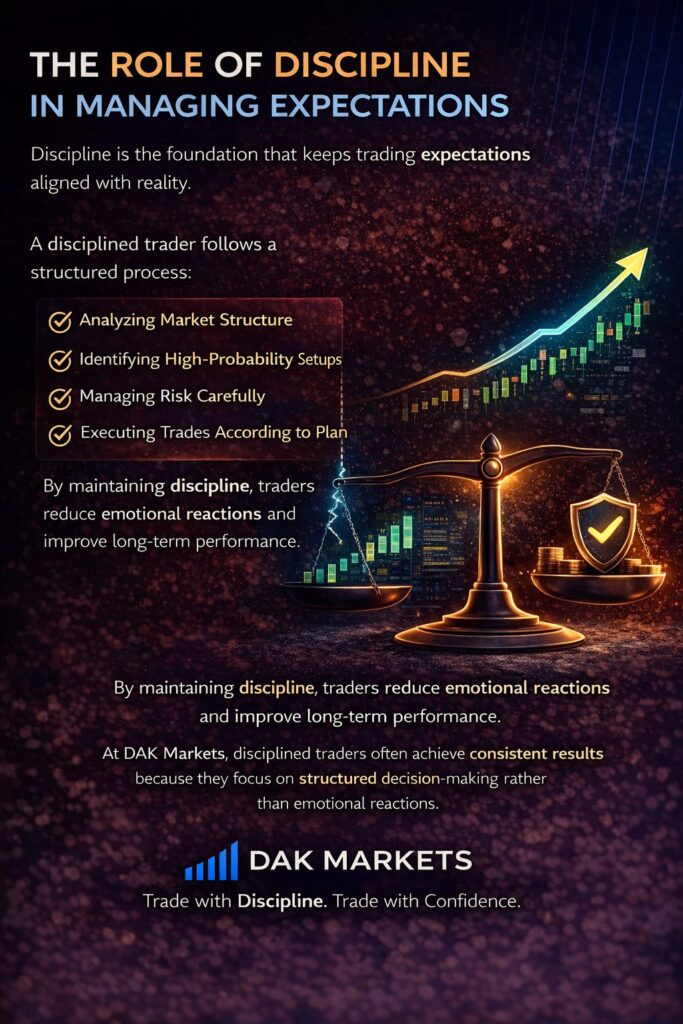
Discipline is the foundation that keeps trading expectations aligned with reality.
A disciplined trader follows a structured process:
• analyzing market structure
• identifying high-probability setups
• managing risk carefully
• executing trades according to plan
By maintaining discipline, traders reduce emotional reactions and improve long-term performance.
At DAK Markets, disciplined traders often achieve consistent results because they focus on structured decision-making rather than emotional reactions.
Final Thoughts
Trading success is not determined solely by strategies or indicators. In many cases, the difference between successful traders and struggling traders lies in their expectations.
Unrealistic expectations create emotional pressure, impulsive decisions, and inconsistent results. Realistic expectations, however, build the foundation for discipline, patience, and professional trading behavior.
Understanding how trading expectations influence mindset can dramatically improve trading performance.
By focusing on process, managing risk carefully, and maintaining realistic expectations, traders can develop the consistency required for long-term success.
At DAK Markets, traders are encouraged to build a disciplined mindset that supports sustainable growth in the financial markets.