Trading success is often associated with strategies, indicators, and technical analysis. Many traders spend years searching for the perfect setup or the most accurate trading system.
However, experienced traders understand an important truth.
Trading mastery is not only about strategy. It is also about psychology.
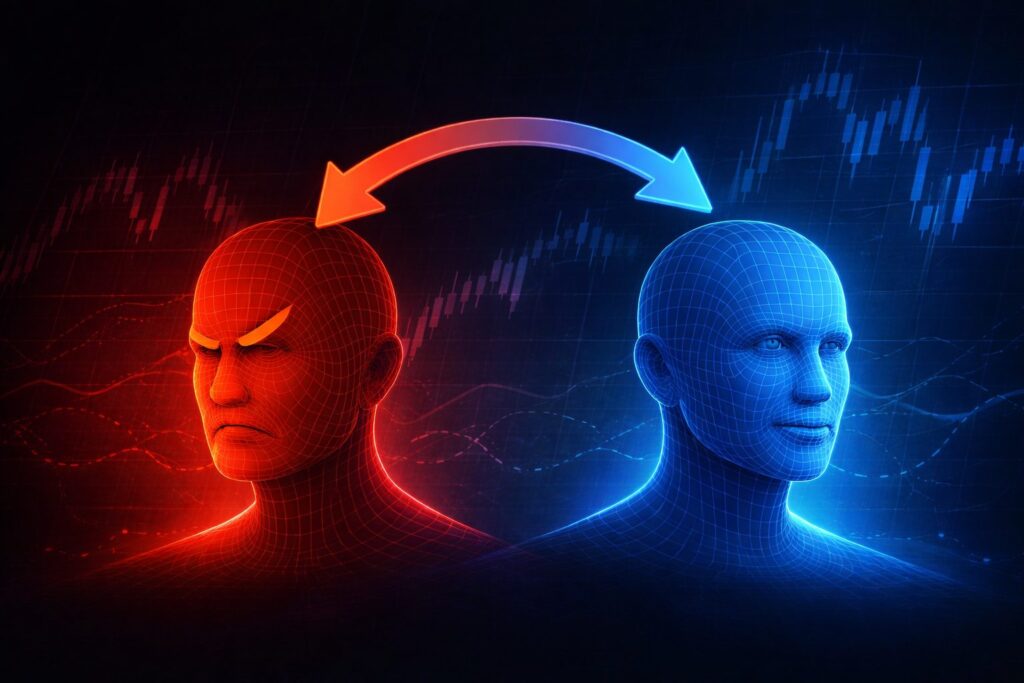
The difference between struggling traders and consistent traders is often the ability to move from fear to flow.
This psychological shift allows traders to execute their strategies with clarity, discipline, and emotional control.
Understanding how to transition from fear to flow can dramatically improve your performance in the financial markets.
Why Fear Dominates Many Traders
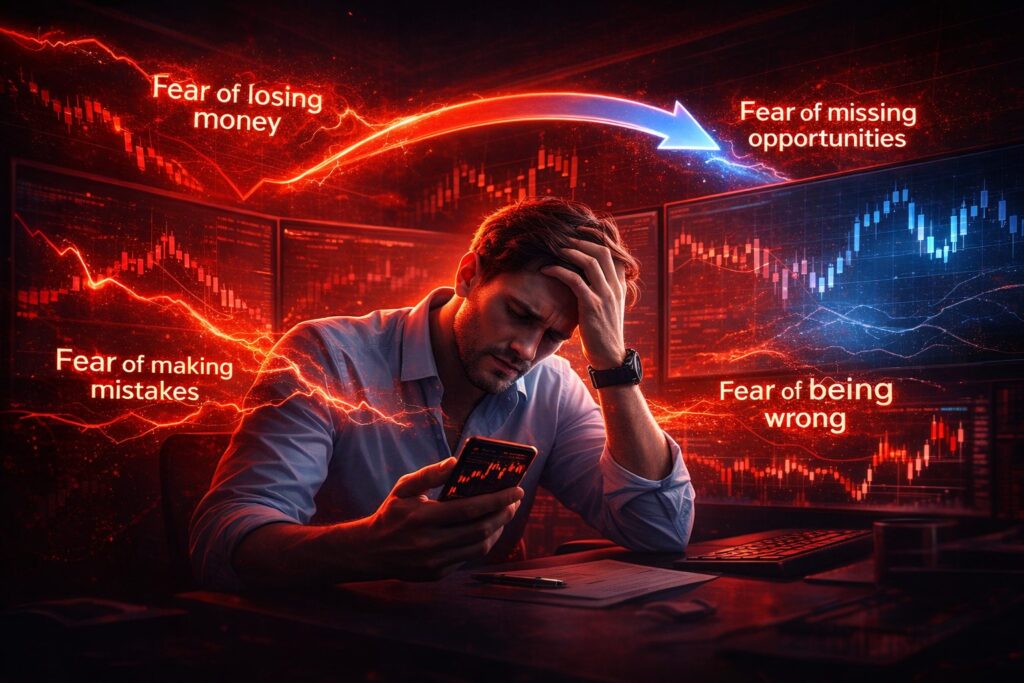
Fear is one of the most common emotions in trading. It appears in different forms during a trader’s journey.
For example, traders often experience:
- Fear of losing money
- Fear of missing opportunities
- Fear of making mistakes
- Fear of being wrong
These fears can strongly influence decision-making.
A trader may close winning trades too early because they fear the market reversing. Another trader may hesitate to enter a valid setup because they worry the trade will fail.
Over time, fear can lead to inconsistent trading behavior.
Instead of following a structured plan, traders react emotionally to market movements.
This emotional reaction often results in poor performance.
The Cost of Fear in Trading
Fear does more than create uncomfortable emotions. It also damages trading discipline.
When fear controls a trader’s decisions, several problems can appear.
For example:
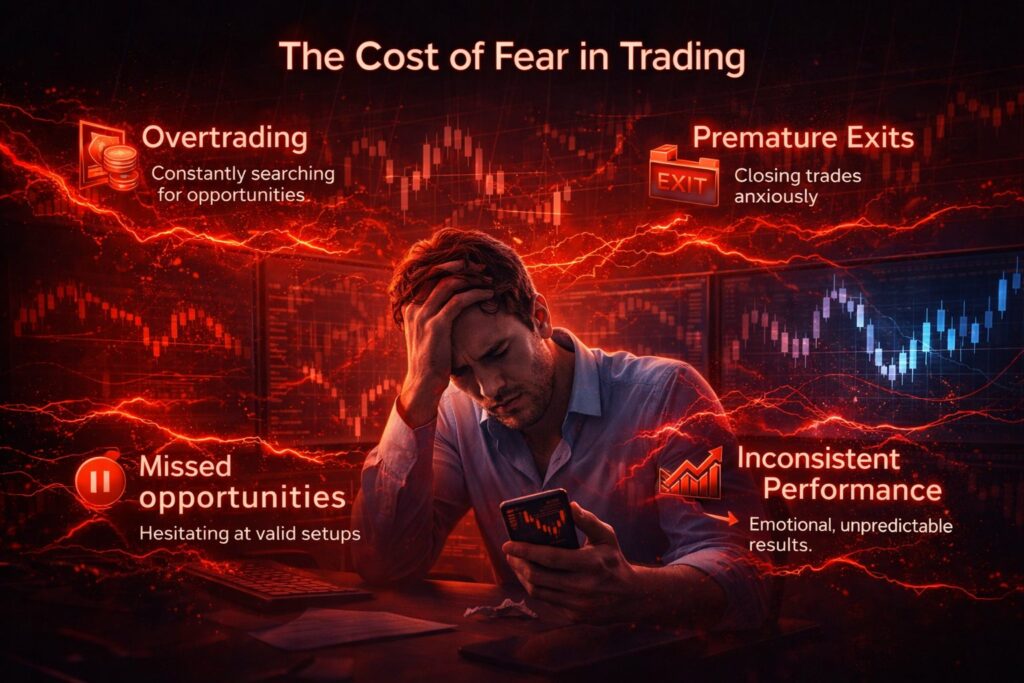
Overtrading
Traders may constantly search for opportunities because they feel pressure to make money quickly.
Premature exits
Fear can cause traders to close trades before the strategy has time to work.
Missed opportunities
Hesitation can prevent traders from entering high-probability setups.
Inconsistent performance
When emotions guide decisions, results become unpredictable.
These issues can prevent traders from achieving long-term success.
Understanding the Concept of Flow
The opposite of fear in trading is not confidence alone.
It is flow.
Flow is a psychological state where a person becomes fully focused on the task they are performing.
In trading, flow occurs when a trader executes their strategy calmly and without emotional interference.
During this state, traders:
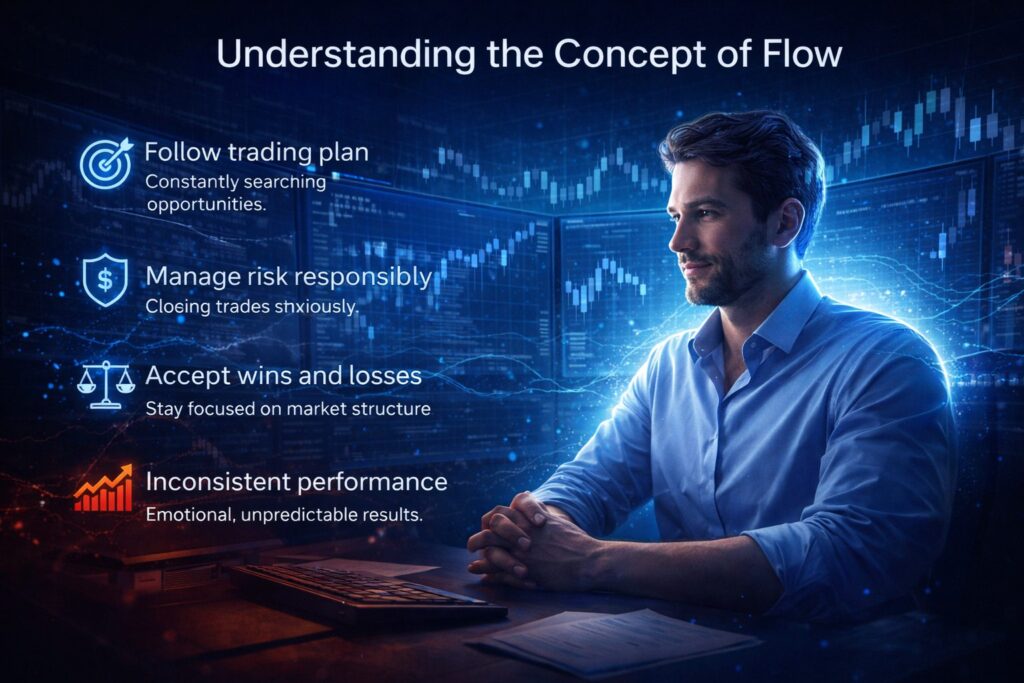
- Follow their trading plan
- Manage risk responsibly
- Accept both wins and losses
- Stay fully focused on market structure
Instead of reacting emotionally, traders simply execute their strategy with discipline.
This state allows traders to perform at their highest level.
How Professional Traders Enter the Flow State
Professional traders do not eliminate emotions entirely. Instead, they build systems that reduce emotional interference.
Several habits help traders move from fear to flow.
1. A Clearly Defined Trading Plan
A structured trading plan removes uncertainty.
When traders know exactly what conditions justify a trade, they no longer need to make emotional decisions.
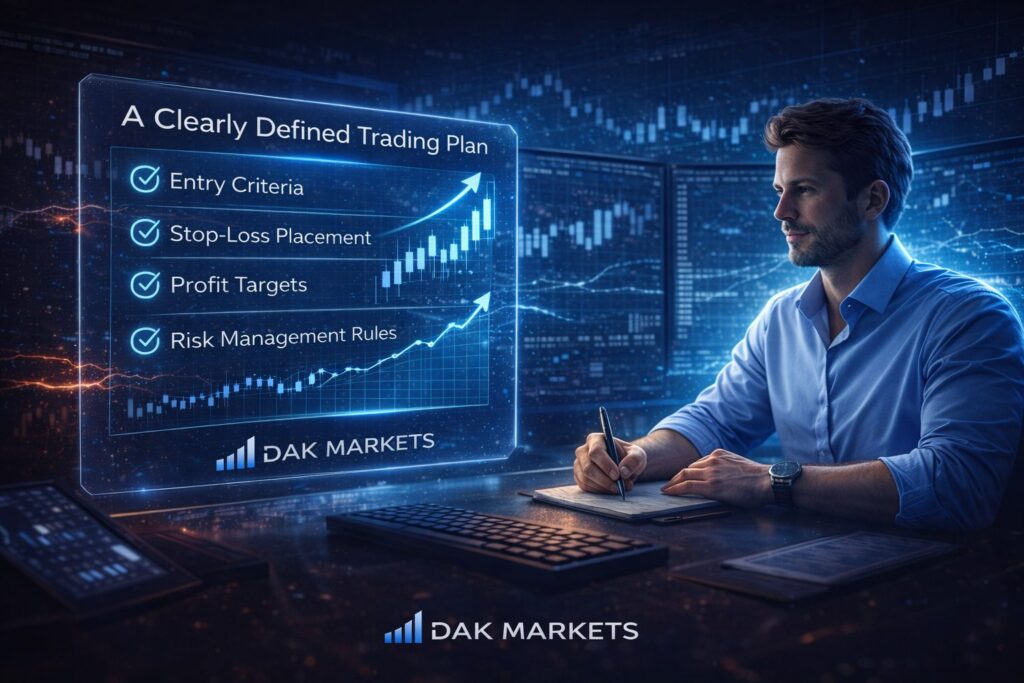
A trading plan usually includes:
- Entry criteria
- Stop-loss placement
- Profit targets
- Risk management rules
Clear rules make trading decisions easier.
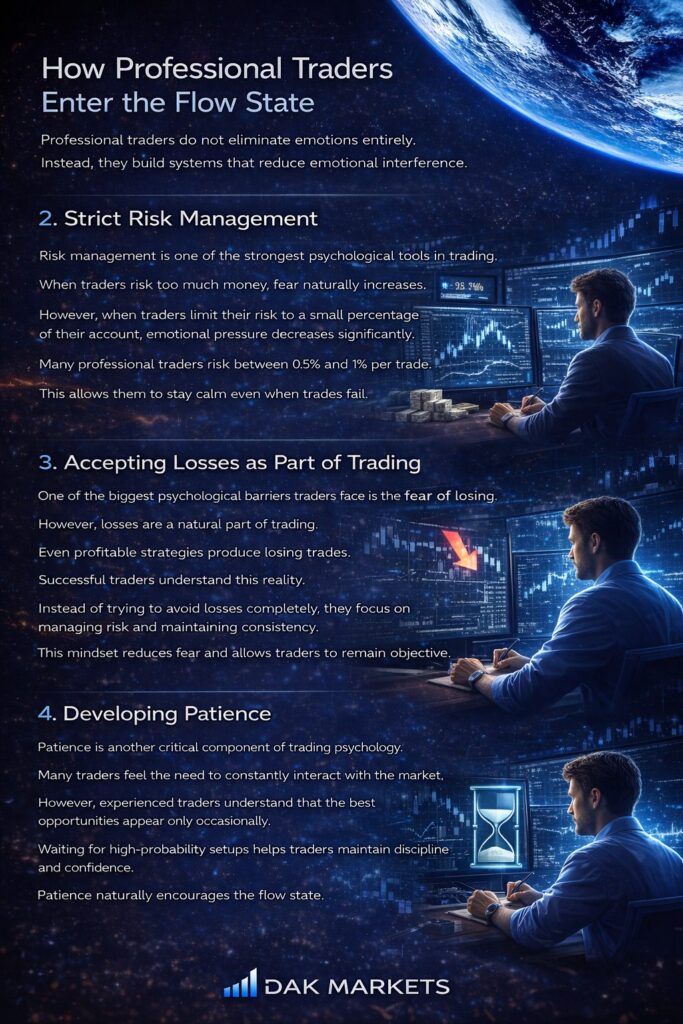
2. Strict Risk Management
Risk management is one of the strongest psychological tools in trading.
When traders risk too much money, fear naturally increases.
However, when traders limit their risk to a small percentage of their account, emotional pressure decreases significantly.
Many professional traders risk between 0.5% and 1% per trade.
This allows them to stay calm even when trades fail.
3. Accepting Losses as Part of Trading
One of the biggest psychological barriers traders face is the fear of losing.
However, losses are a natural part of trading.
Even profitable strategies produce losing trades.
Successful traders understand this reality.
Instead of trying to avoid losses completely, they focus on managing risk and maintaining consistency.
This mindset reduces fear and allows traders to remain objective.
4. Developing Patience
Patience is another critical component of trading psychology.
Many traders feel the need to constantly interact with the market.
However, experienced traders understand that the best opportunities appear only occasionally.
Waiting for high-probability setups helps traders maintain discipline and confidence.
Patience naturally encourages the flow state.
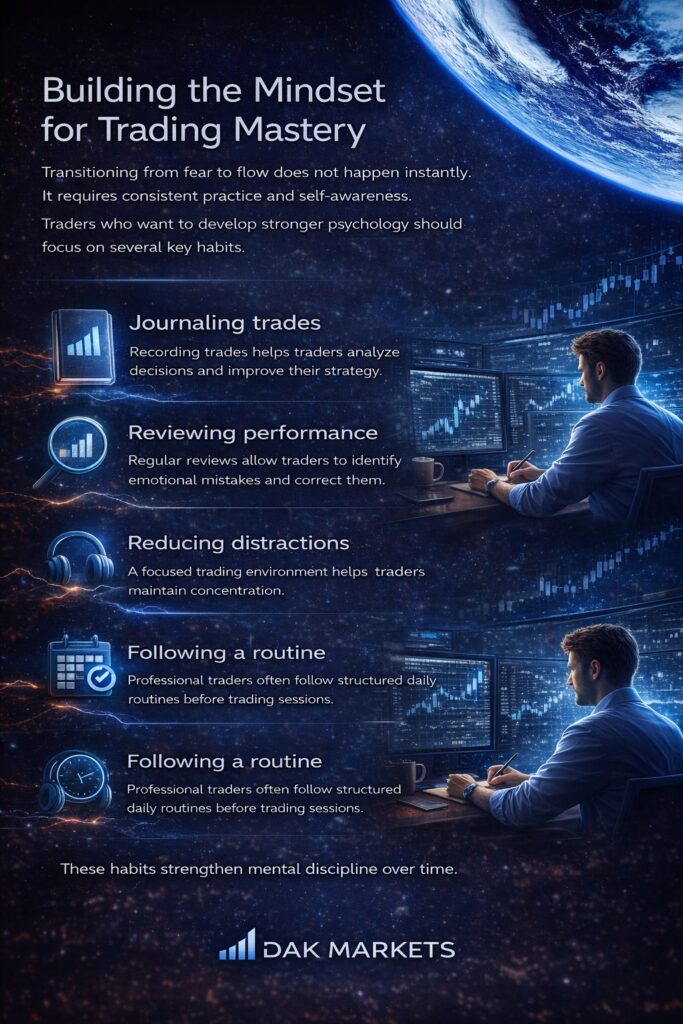
Building the Mindset for Trading Mastery
Transitioning from fear to flow does not happen instantly.
It requires consistent practice and self-awareness.
Traders who want to develop stronger psychology should focus on several key habits.
Journaling trades
Recording trades helps traders analyze decisions and improve their strategy.
Reviewing performance
Regular reviews allow traders to identify emotional mistakes and correct them.
Reducing distractions
A focused trading environment helps traders maintain concentration.
Following a routine
Professional traders often follow structured daily routines before trading sessions.
These habits strengthen mental discipline over time.
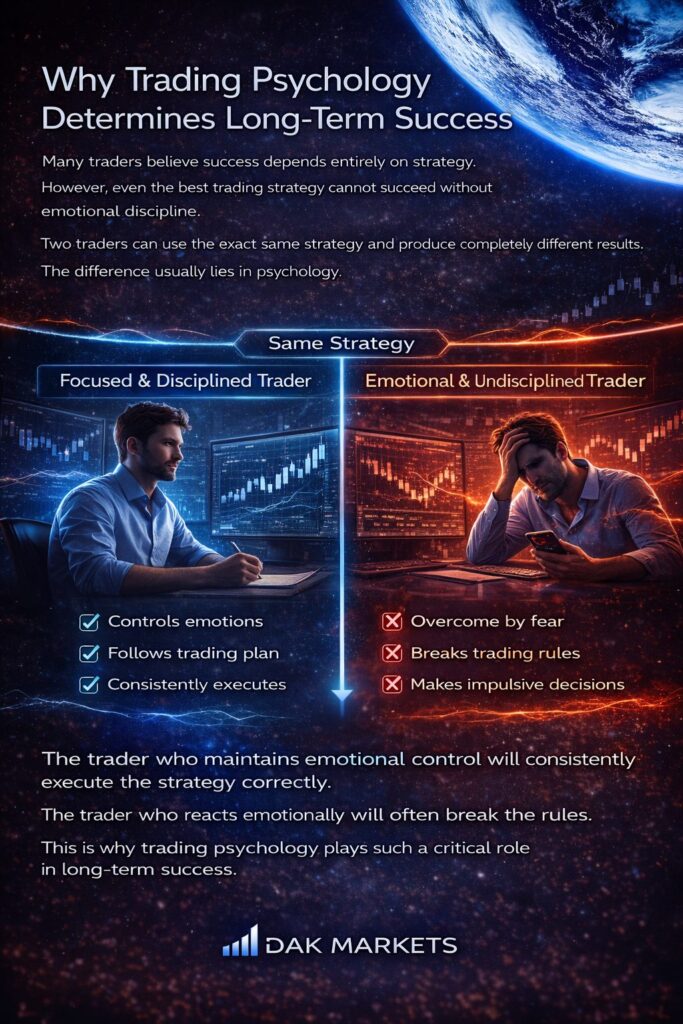
Why Trading Psychology Determines Long-Term Success
Many traders believe success depends entirely on strategy.
However, even the best trading strategy cannot succeed without emotional discipline.
Two traders can use the exact same strategy and produce completely different results.
The difference usually lies in psychology.
The trader who maintains emotional control will consistently execute the strategy correctly.
The trader who reacts emotionally will often break the rules.
This is why trading psychology plays such a critical role in long-term success.
Final Thoughts
The journey from fear to flow represents one of the most important transformations in a trader’s career.
Fear leads to hesitation, overtrading, and inconsistent results.
Flow creates clarity, discipline, and consistent execution.
By developing structured trading plans, strong risk management, and patience, traders can gradually shift their mindset.
Over time, this psychological transformation allows traders to operate with confidence and precision.
Trading mastery is not simply about predicting the market.
It is about mastering yourself.
When traders move beyond fear and enter the flow state, they unlock the mental discipline required for long-term success in the markets.