Trading can be an exciting and rewarding profession. However, many traders unknowingly fall into a dangerous psychological pattern known as the identity trap. This happens when a trader begins to tie their self-worth directly to the outcome of their trades.
At first, this may seem harmless. After all, success in trading often brings confidence and motivation. However, when traders start measuring their personal value based on wins and losses, emotional instability quickly follows.
At DAK Markets, professional traders understand that maintaining emotional discipline is essential for long-term success. Separating personal identity from trading performance is one of the most important psychological skills a trader can develop.
In this article, we will explore what the identity trap is, why it affects so many traders, and how you can avoid it to improve both your trading results and mental well-being.
What Is the Identity Trap in Trading?
The identity trap in trading occurs when a trader begins to believe that their personal worth is defined by their trading performance.
For example:
- A winning trade makes them feel intelligent and successful.
- A losing trade makes them feel incompetent or like a failure.
Over time, this emotional association creates a cycle where every trade becomes a judgment of personal value rather than a statistical outcome.
This mindset is extremely dangerous because trading is inherently uncertain. Even the best strategies experience losing trades. When traders attach their identity to outcomes, losses feel far more painful than they should.
As a result, emotional reactions start influencing trading decisions.

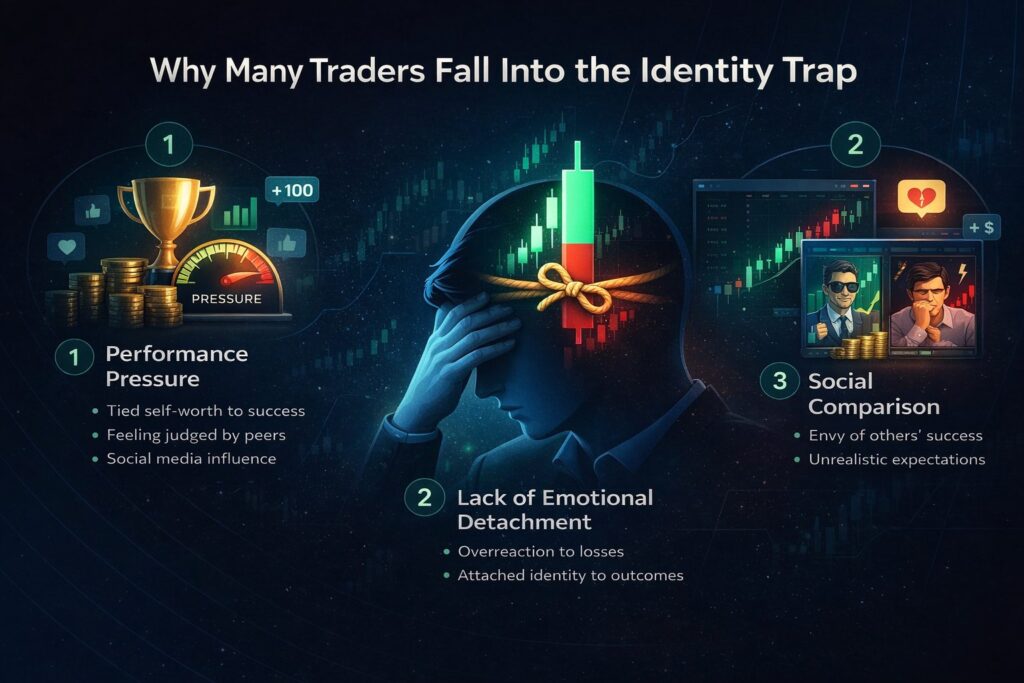
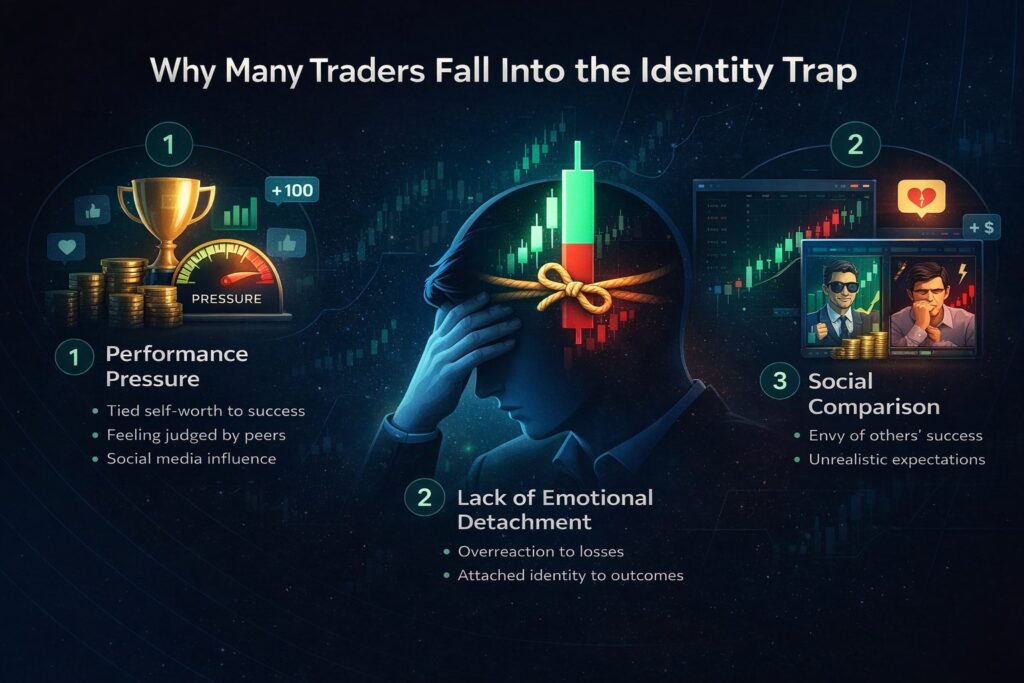
Why Many Traders Fall Into the Identity Trap
Many traders enter the markets with high expectations. Social media often portrays trading as a fast path to wealth and success. Because of this, traders begin to associate trading profits with personal achievement and status.
When profits appear, confidence increases. However, when losses occur, the emotional impact can be severe.
Several factors contribute to this psychological trap:
1. Performance Pressure
Many traders feel pressure to prove their skill. This pressure may come from themselves, their peers, or social media communities.
When performance becomes tied to identity, every trade feels like a test of competence.
2. Lack of Emotional Detachment
Professional traders treat trading as a probability-based activity, not a personal competition. However, newer traders often view trading results as proof of intelligence or talent.
This mindset makes losses emotionally difficult to accept.
3. Social Comparison
Online trading communities often highlight profitable trades while hiding losses. This creates unrealistic expectations.
Traders begin comparing themselves to others and measuring their worth based on trading results.
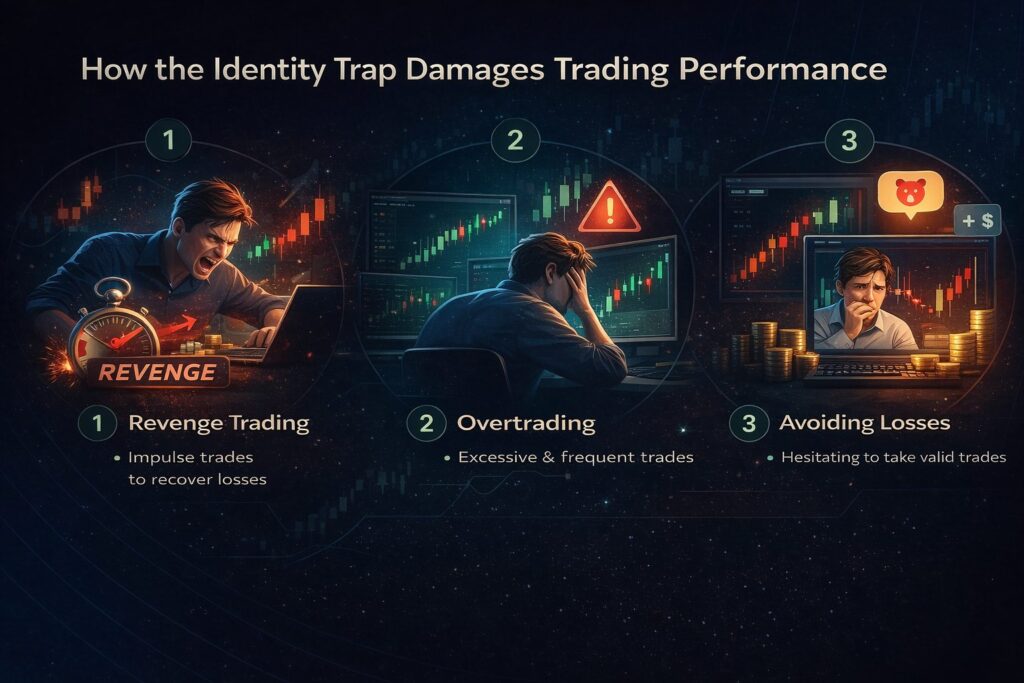
How the Identity Trap Damages Trading Performance
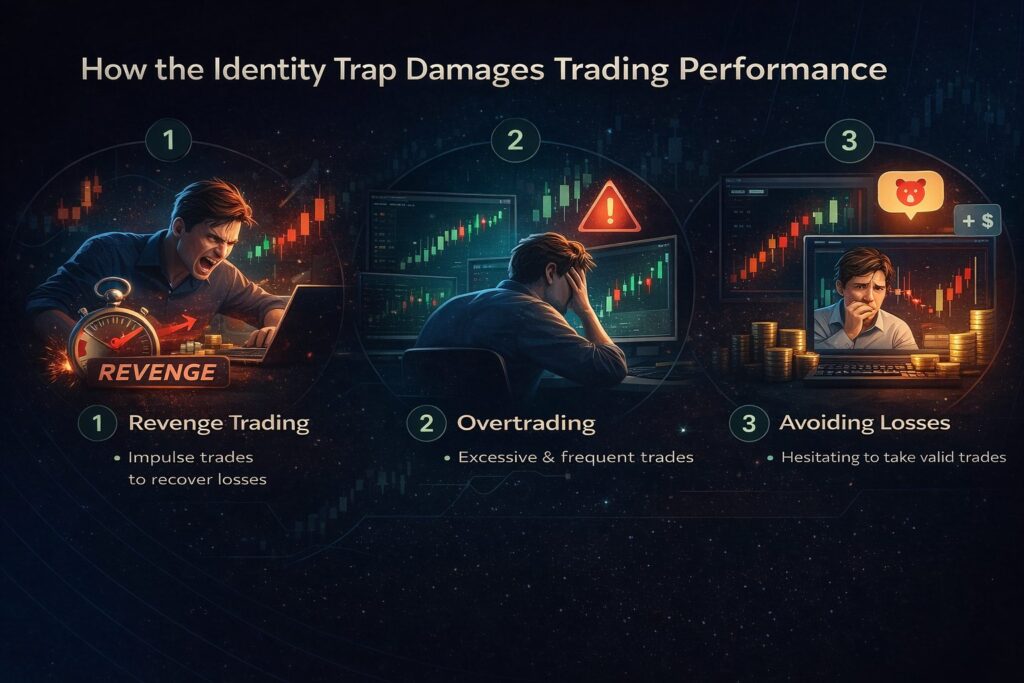
Ironically, tying self-worth to trading results usually makes traders perform worse.
Once emotions become involved, decision-making deteriorates. Instead of following their strategy, traders begin reacting to feelings such as fear, frustration, or the need to prove themselves.
This often leads to several destructive behaviors.
Revenge Trading
After a losing trade, a trader may feel the need to recover losses immediately. This can lead to impulsive trades that do not meet the original strategy criteria.
Overtrading
Traders who associate success with constant winning may start placing too many trades. Instead of waiting for high-quality setups, they chase every market movement.
Avoiding Losses
Some traders become so afraid of losses that they hesitate to take valid trades. This hesitation can cause missed opportunities and inconsistent performance.
Over time, these behaviors damage both trading accounts and trader confidence.
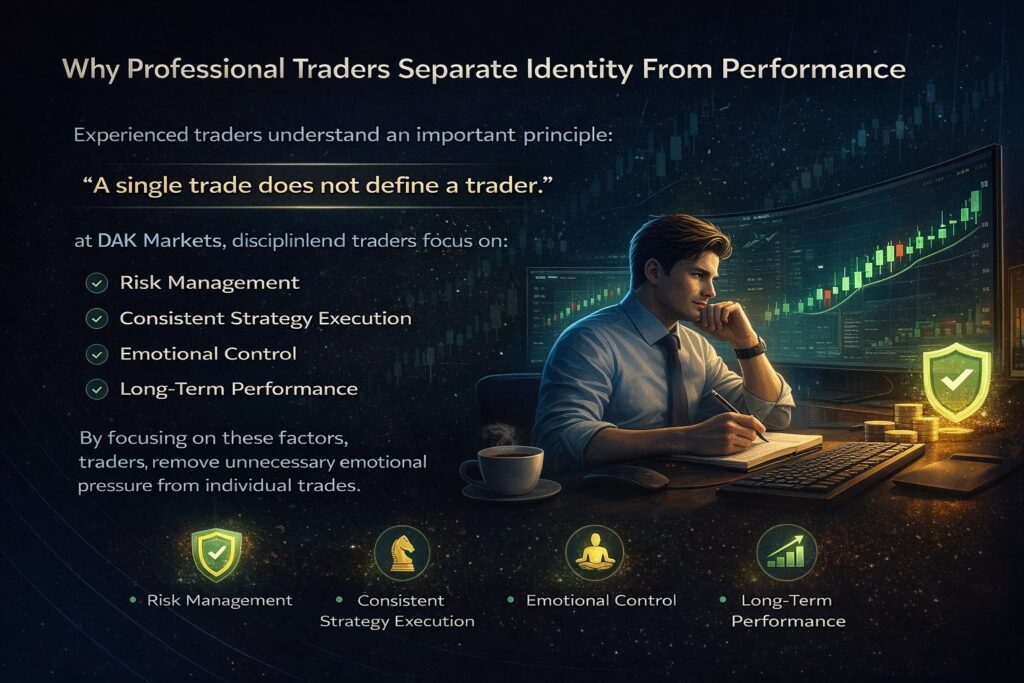
Why Professional Traders Separate Identity From Performance
Experienced traders understand an important principle:
A single trade does not define a trader.
Professional traders focus on process rather than outcomes. They judge their performance based on how well they executed their trading plan, not on whether the trade resulted in profit.
This mindset creates emotional stability and long-term consistency.
At DAK Markets, disciplined traders focus on:
- Risk management
- Consistent strategy execution
- Emotional control
- Long-term statistical performance
By focusing on these factors, traders remove unnecessary emotional pressure from individual trades.
How to Avoid the Identity Trap in Trading
Avoiding the identity trap requires conscious psychological discipline. Fortunately, several practical habits can help traders maintain emotional balance.
Focus on Process, Not Results
Instead of evaluating trades purely by profit or loss, focus on whether you followed your strategy.
Ask yourself:
- Did I follow my entry criteria?
- Did I manage risk properly?
- Did I remain disciplined?
If the answer is yes, the trade was successful from a process perspective, regardless of the outcome.
Accept That Losses Are Part of Trading
No trading strategy has a 100 percent win rate. Losses are simply part of the statistical nature of financial markets.
Understanding this reality helps traders stay emotionally neutral during losing trades.
Keep a Trading Journal
Maintaining a trading journal allows traders to review decisions objectively. Over time, patterns become visible, helping traders improve their strategy without emotional bias.
A journal shifts the focus from personal judgment to analytical improvement.
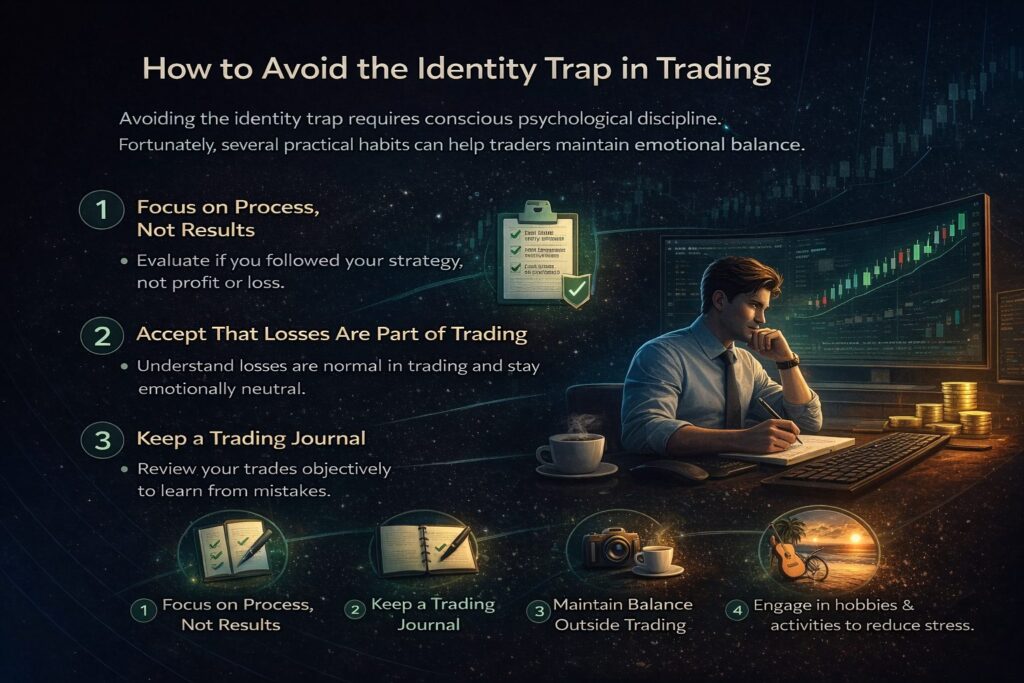
Maintain Balance Outside Trading
Successful traders maintain hobbies, relationships, and interests outside financial markets. When trading is the only source of identity, emotional pressure increases.
Maintaining a balanced lifestyle helps protect psychological stability.
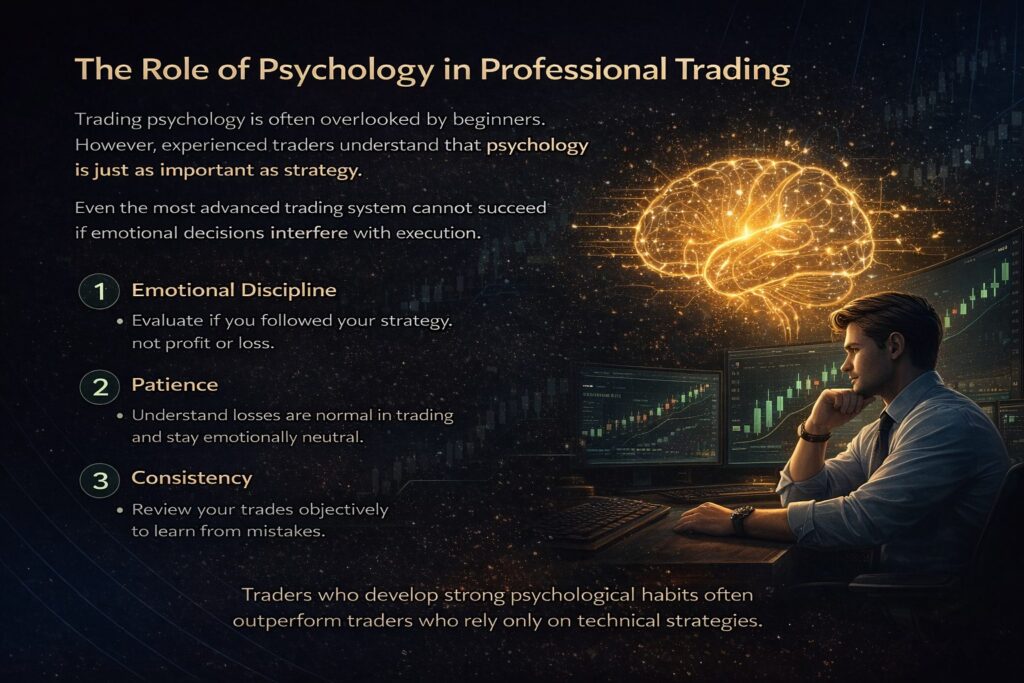
The Role of Psychology in Professional Trading
Trading psychology is often overlooked by beginners. However, experienced traders understand that psychology is just as important as strategy.
Even the most advanced trading system cannot succeed if emotional decisions interfere with execution.
Professional trading requires:
- Emotional discipline
- Patience
- Consistency
- Long-term thinking
Traders who develop strong psychological habits often outperform traders who rely only on technical strategies.
Trading With Discipline at DAK Markets
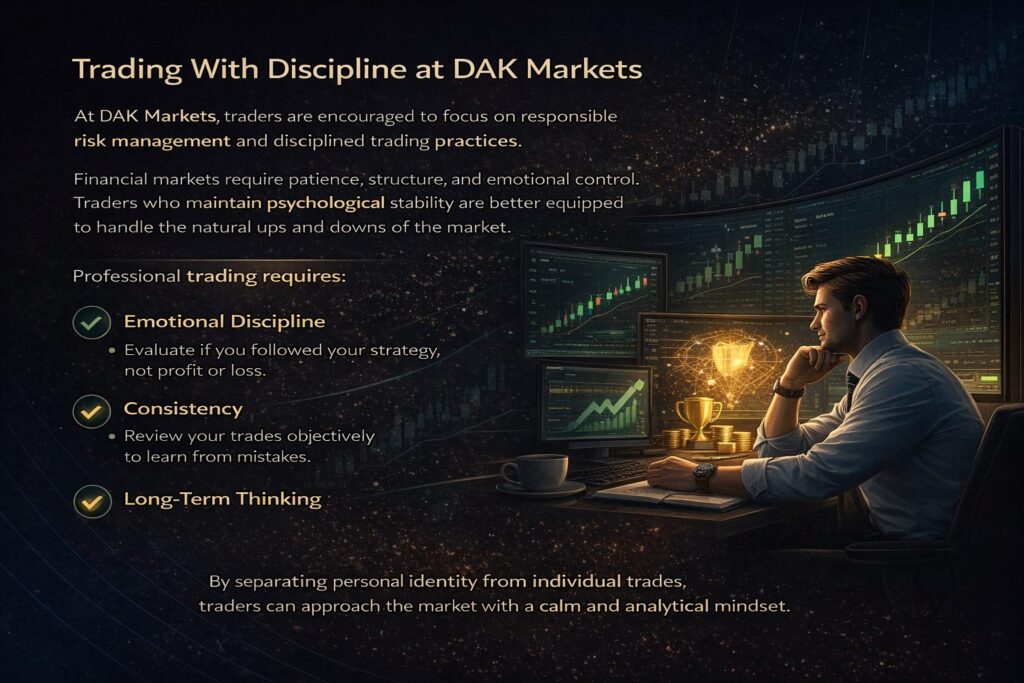
At DAK Markets, traders are encouraged to focus on responsible risk management and disciplined trading practices.
Financial markets require patience, structure, and emotional control. Traders who maintain psychological stability are better equipped to handle the natural ups and downs of the market.
By separating personal identity from individual trades, traders can approach the market with a calm and analytical mindset.
This approach allows traders to:
- Reduce emotional stress
- Maintain consistent execution
- Improve long-term performance
Final Thoughts
The identity trap is one of the most common psychological challenges in trading. When traders begin tying their self-worth to trading outcomes, emotional instability quickly follows.
However, by focusing on process, discipline, and long-term performance, traders can avoid this trap and build a healthier relationship with the markets.
Remember that trading success is not determined by a single trade. Instead, it is built through consistent execution, responsible risk management, and emotional resilience.
At DAK Markets, traders who develop these habits place themselves in the best position for sustainable success in the financial markets.