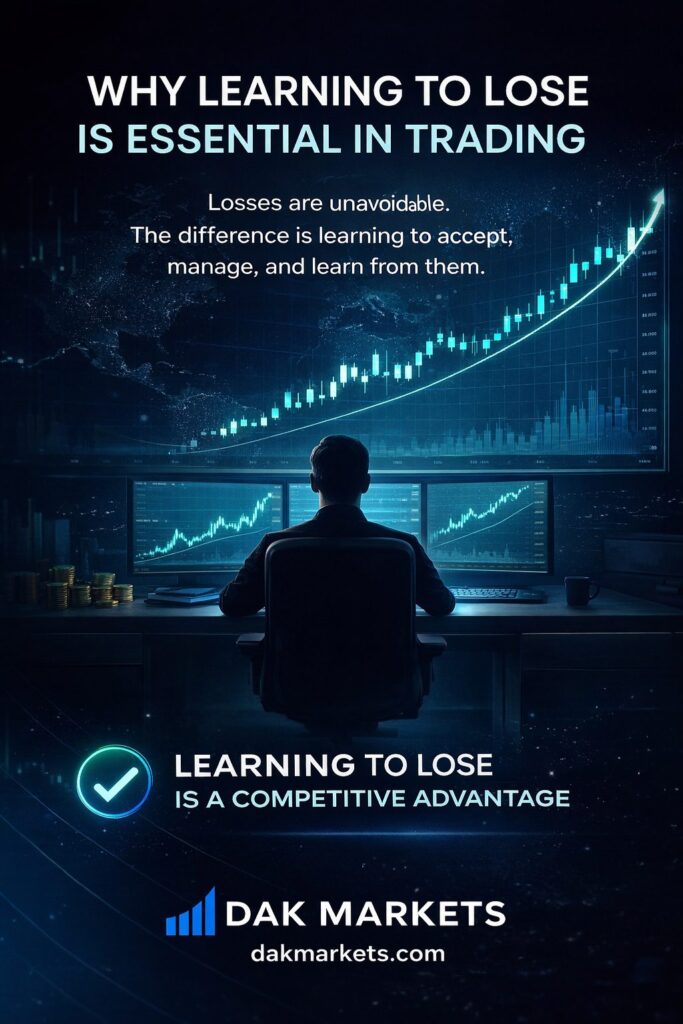
Introduction: Why Learning to Lose Is Essential in Trading
Every trader enters the market with one goal: to win. The idea of consistently making profits, growing capital, and achieving financial freedom is what attracts people to trading in the first place.
However, one of the most important truths about trading is this:
Losses are unavoidable.
The difference between successful traders and those who fail is not the absence of losses—it is the ability to accept, manage, and learn from them.
At DAK Markets, we emphasize that trading is not just about finding the right strategy. It is about building the mindset required to operate in uncertain market conditions.
Learning to lose is not a weakness. It is a competitive advantage.
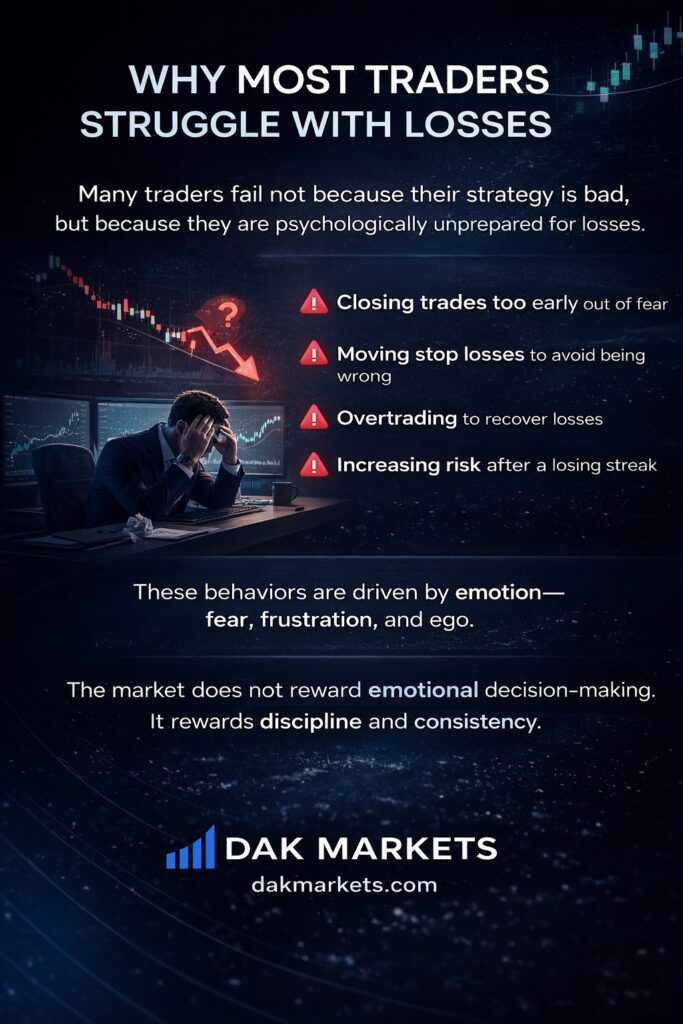
Why Most Traders Struggle with Losses
Many traders fail not because their strategy is bad, but because they are psychologically unprepared for losses.
Common reactions include:
- Closing trades too early out of fear
- Moving stop losses to avoid being wrong
- Overtrading to recover losses
- Increasing risk after a losing streak
These behaviors are driven by emotion—fear, frustration, and ego.
The market does not reward emotional decision-making. It rewards discipline and consistency.
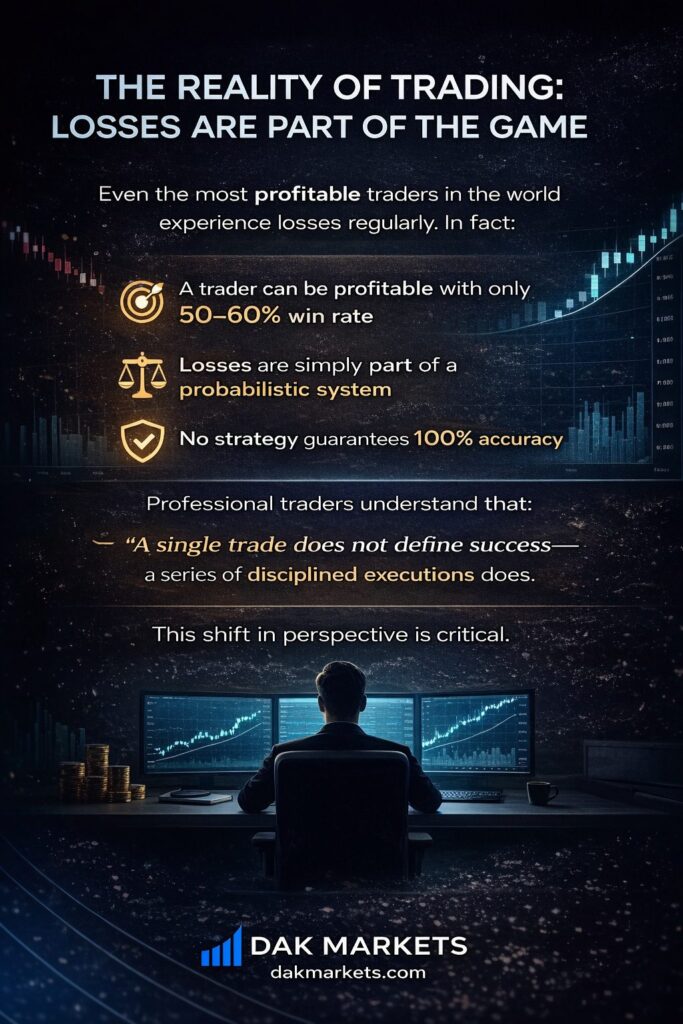
The Reality of Trading: Losses Are Part of the Game
Even the most profitable traders in the world experience losses regularly.
In fact:
- A trader can be profitable with only 50–60% win rate
- Losses are simply part of a probabilistic system
- No strategy guarantees 100% accuracy
Professional traders understand that:
A single trade does not define success—a series of disciplined executions does.
This shift in perspective is critical.
The Psychology Behind Accepting Losses
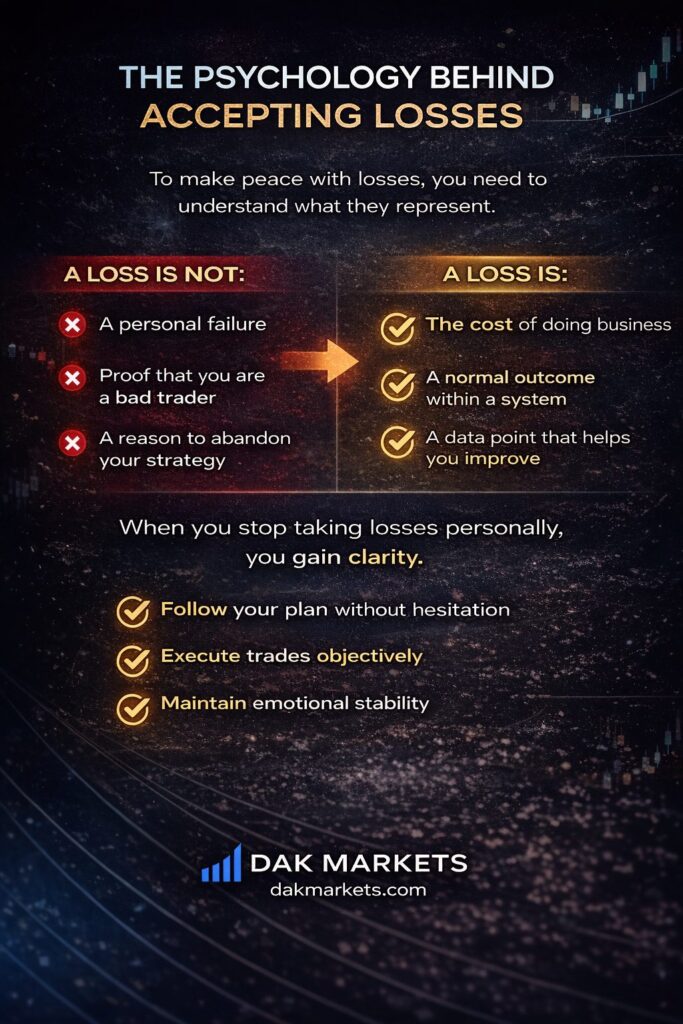
To make peace with losses, you need to understand what they represent.
A loss is not:
- A personal failure
- Proof that you are a bad trader
- A reason to abandon your strategy
A loss is:
- The cost of doing business
- A normal outcome within a system
- A data point that helps you improve
When you stop taking losses personally, you gain clarity.
This allows you to:
- Follow your plan without hesitation
- Execute trades objectively
- Maintain emotional stability
How to Make Peace with Losses
1. Accept Risk Before Entering a Trade
Before placing a trade, ask yourself:
“Am I fully comfortable losing this amount?”
If the answer is no, your position size is too large.
Accepting risk in advance removes fear during the trade and allows you to stay disciplined.
2. Use Proper Risk Management
Risk management is the foundation of long-term success.
Professional traders typically:
- Risk 1% or less per trade
- Use predefined stop losses
- Maintain consistent position sizing
This ensures that no single loss can significantly damage your account.
3. Focus on the Process, Not the Outcome
Many traders judge themselves based on individual trades.
This is a mistake.
Instead, focus on:
- Following your strategy
- Executing trades correctly
- Maintaining discipline
If your process is strong, results will follow over time.
4. Keep a Trading Journal
A trading journal is one of the most powerful tools for improvement.
Track:
- Entry and exit points
- Emotions during the trade
- Mistakes and lessons learned
Over time, patterns will emerge, allowing you to refine your approach.
5. Avoid Revenge Trading
After a loss, many traders feel the urge to “win it back.”
This often leads to:
- Overleveraging
- Poor decision-making
- Larger losses
The best traders step back, reset, and wait for the next high-quality setup.
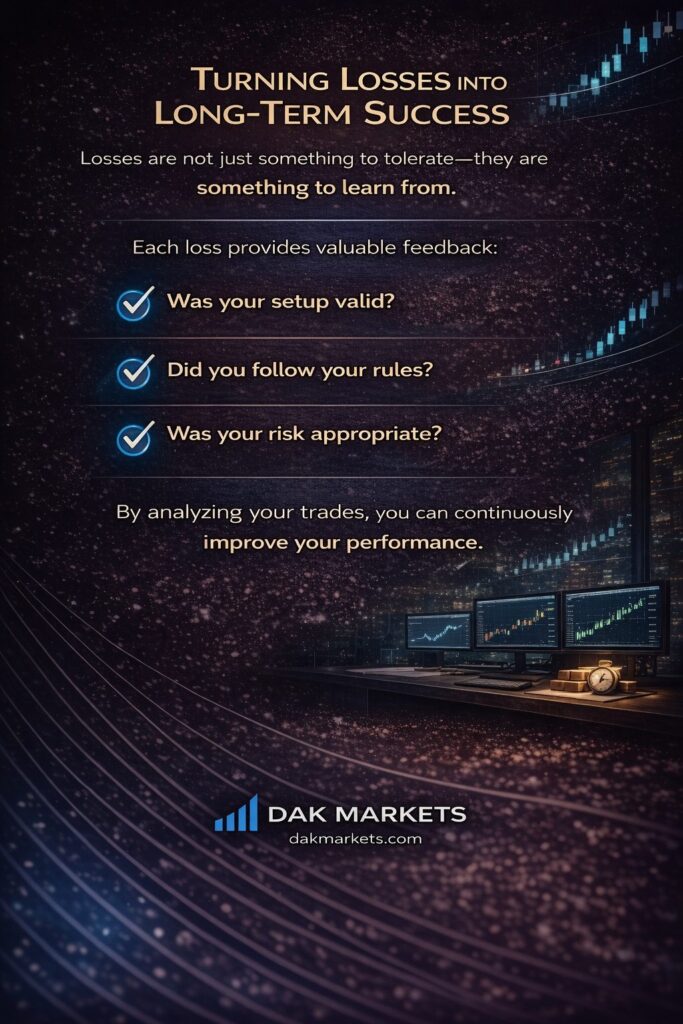
Turning Losses into Long-Term Success
Losses are not just something to tolerate—they are something to learn from.
Each loss provides valuable feedback:
- Was your setup valid?
- Did you follow your rules?
- Was your risk appropriate?
By analyzing your trades, you can continuously improve your performance.
Over time, small improvements compound into significant results.
The Role of Discipline in Trading
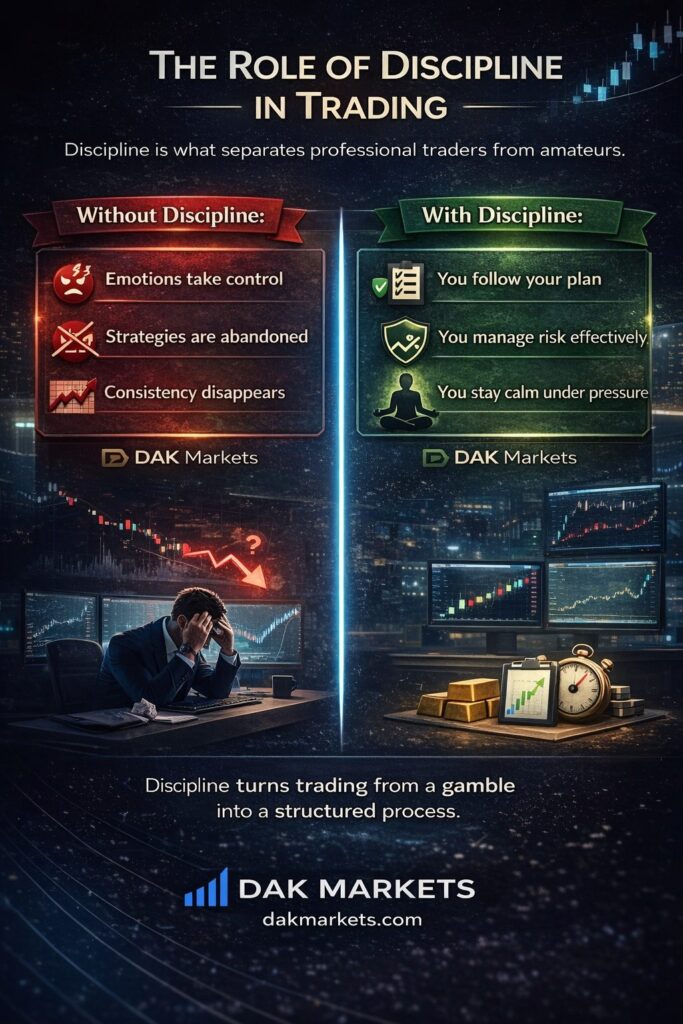
Discipline is what separates professional traders from amateurs.
Without discipline:
- Emotions take control
- Strategies are abandoned
- Consistency disappears
With discipline:
- You follow your plan
- You manage risk effectively
- You stay calm under pressure
Discipline turns trading from a gamble into a structured process.
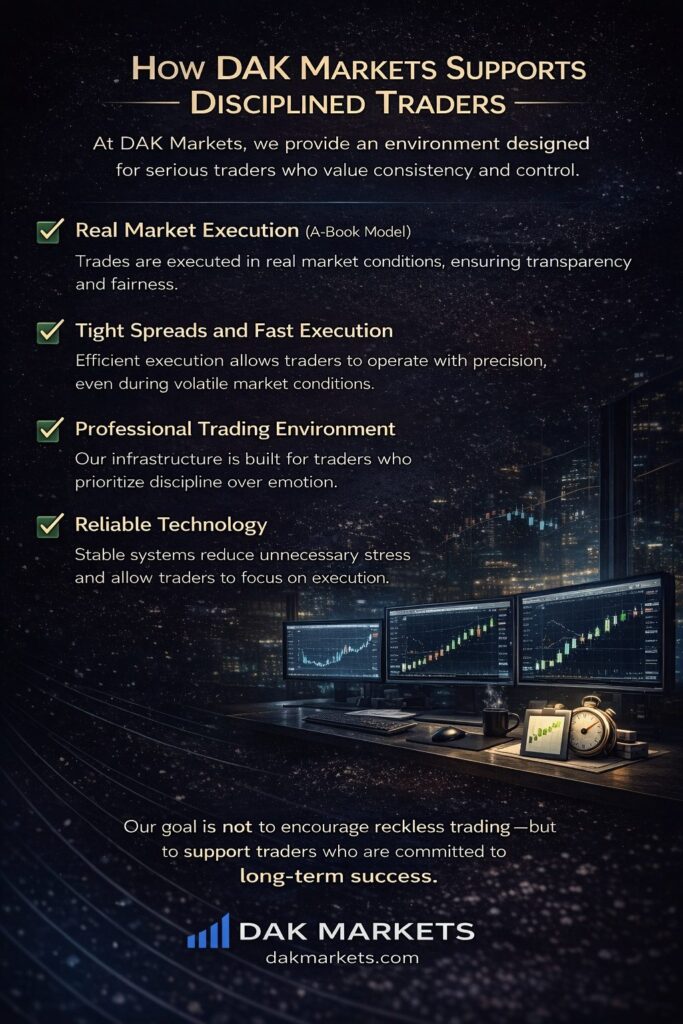
How DAK Markets Supports Disciplined Traders
At DAK Markets, we provide an environment designed for serious traders who value consistency and control.
Our platform offers:
✔ Real Market Execution (A-Book Model)
Trades are executed in real market conditions, ensuring transparency and fairness.
✔ Tight Spreads and Fast Execution
Efficient execution allows traders to operate with precision, even during volatile market conditions.
✔ Professional Trading Environment
Our infrastructure is built for traders who prioritize discipline over emotion.
✔ Reliable Technology
Stable systems reduce unnecessary stress and allow traders to focus on execution.
Our goal is not to encourage reckless trading—but to support traders who are committed to long-term success.
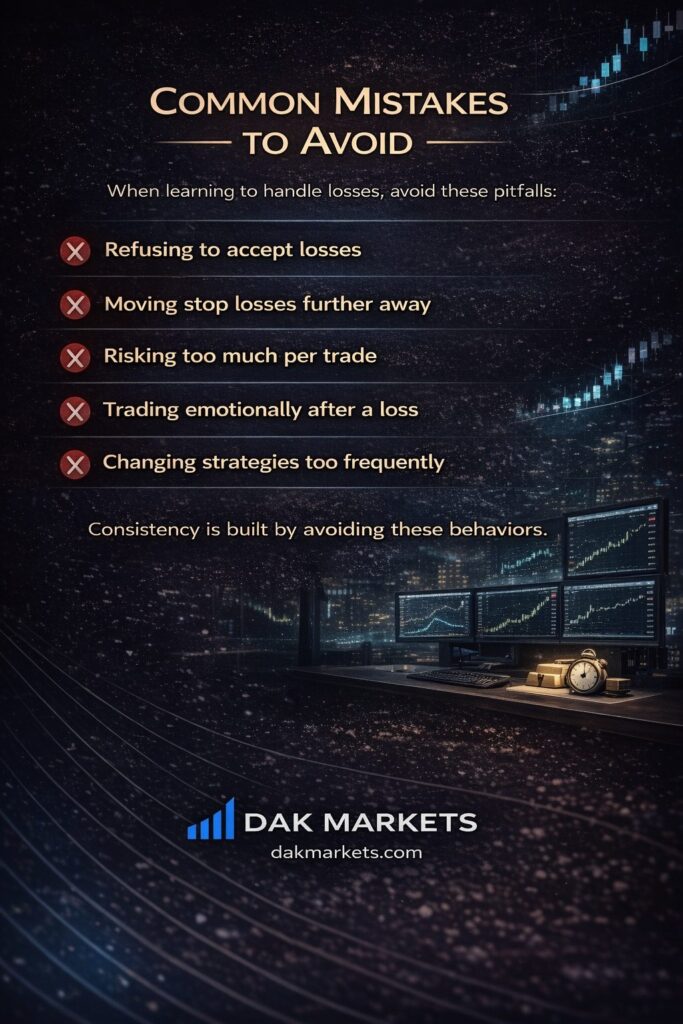
Common Mistakes to Avoid
When learning to handle losses, avoid these pitfalls:
❌ Refusing to accept losses
❌ Moving stop losses further away
❌ Risking too much per trade
❌ Trading emotionally after a loss
❌ Changing strategies too frequently
Consistency is built by avoiding these behaviors.
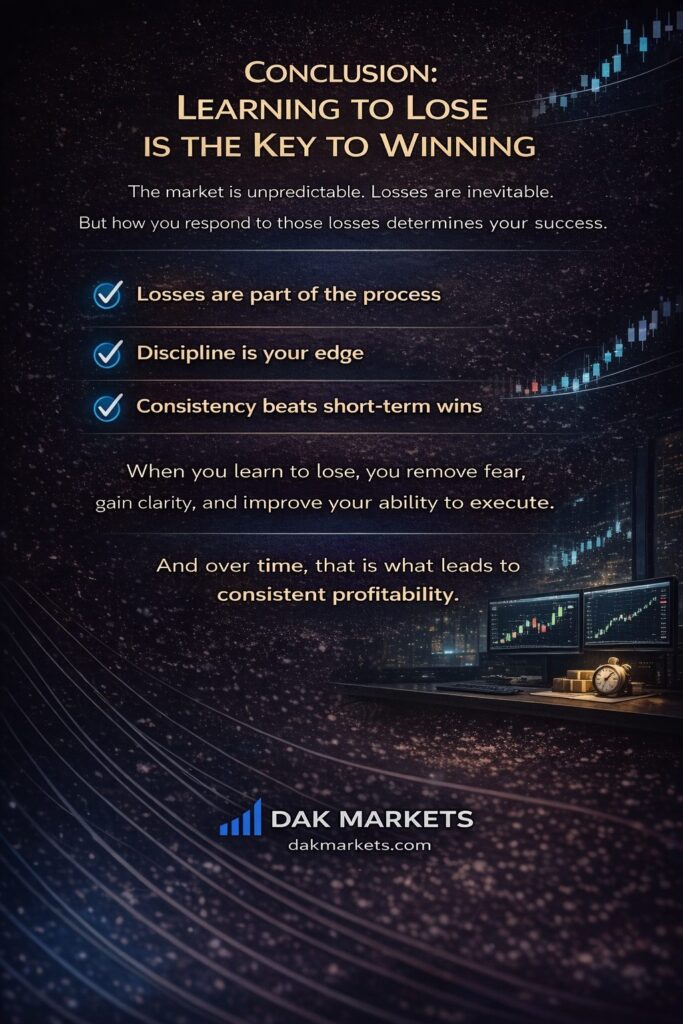
Conclusion: Learning to Lose Is the Key to Winning
The market is unpredictable. Losses are inevitable.
But how you respond to those losses determines your success.
Remember:
- Losses are part of the process
- Discipline is your edge
- Consistency beats short-term wins
When you learn to lose, you remove fear, gain clarity, and improve your ability to execute.
And over time, that is what leads to consistent profitability.