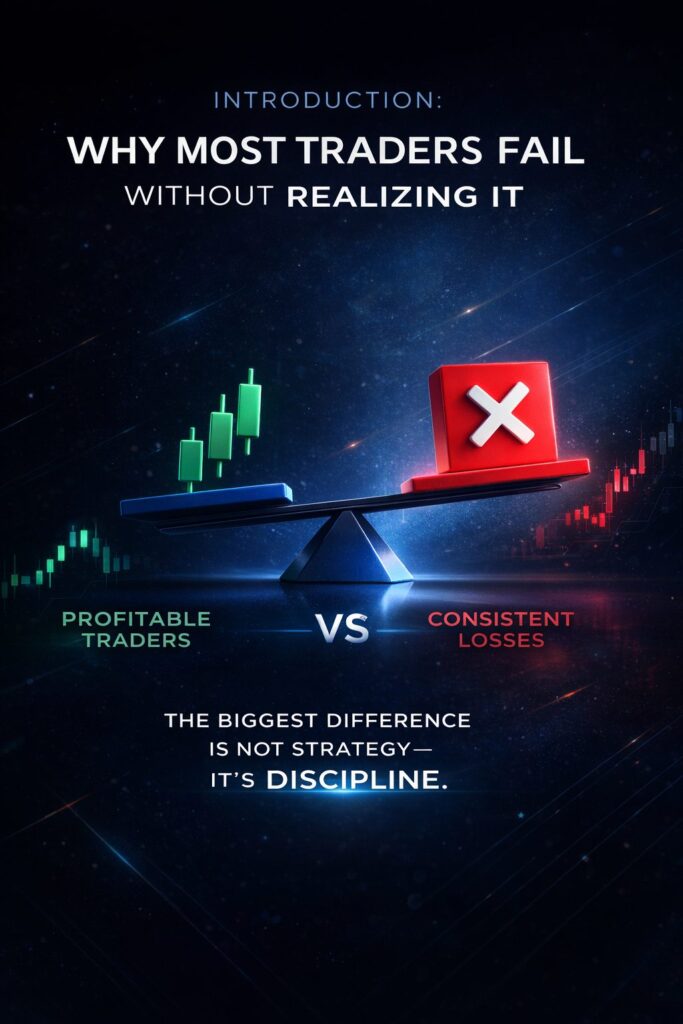
Introduction: Why Most Traders Fail Without Realizing It
In the world of financial markets, success is often misunderstood. Many traders believe that profitability comes from taking more trades, reacting quickly, or staying constantly active in the market. However, the reality is very different.
The biggest difference between profitable traders and those who consistently lose is not strategy—it’s discipline.
This is where the concept of trading vs overtrading becomes critical.
At DAK Markets, we emphasize precision, control, and execution quality. Understanding the difference between disciplined trading and emotional overtrading can completely transform your results.
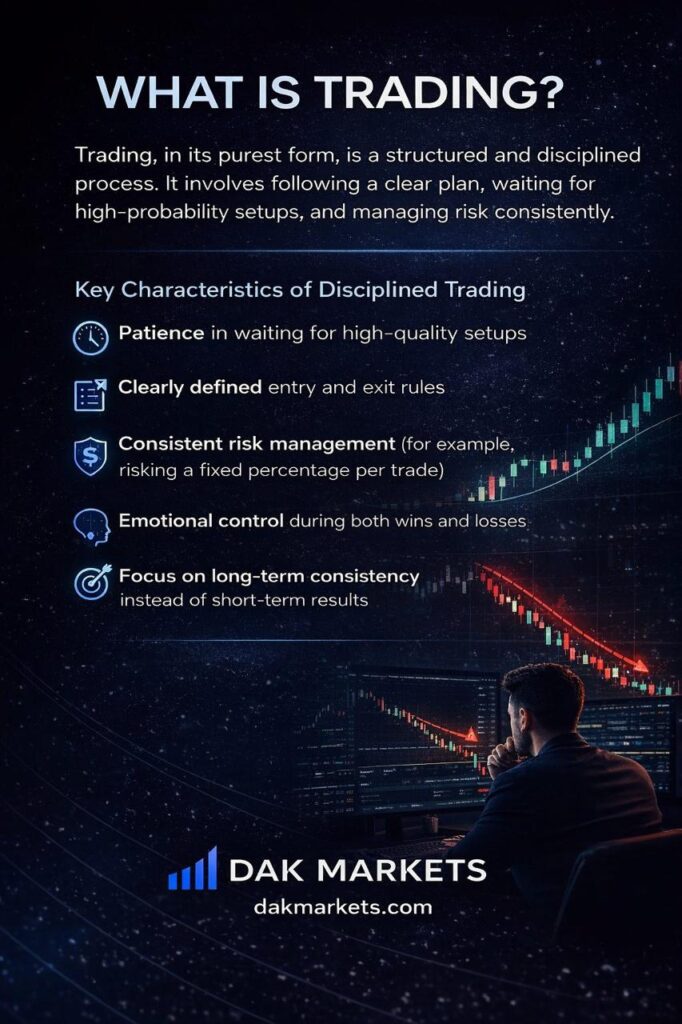
What Is Trading?
Trading, in its purest form, is a structured and disciplined process. It involves following a clear plan, waiting for high-probability setups, and managing risk consistently.
Professional traders do not aim to trade more—they aim to trade better.
Each trade is taken with intention, backed by analysis, and aligned with a long-term strategy.
Key Characteristics of Disciplined Trading
- Patience in waiting for high-quality setups
- Clearly defined entry and exit rules
- Consistent risk management (for example, risking a fixed percentage per trade)
- Emotional control during both wins and losses
- Focus on long-term consistency instead of short-term results
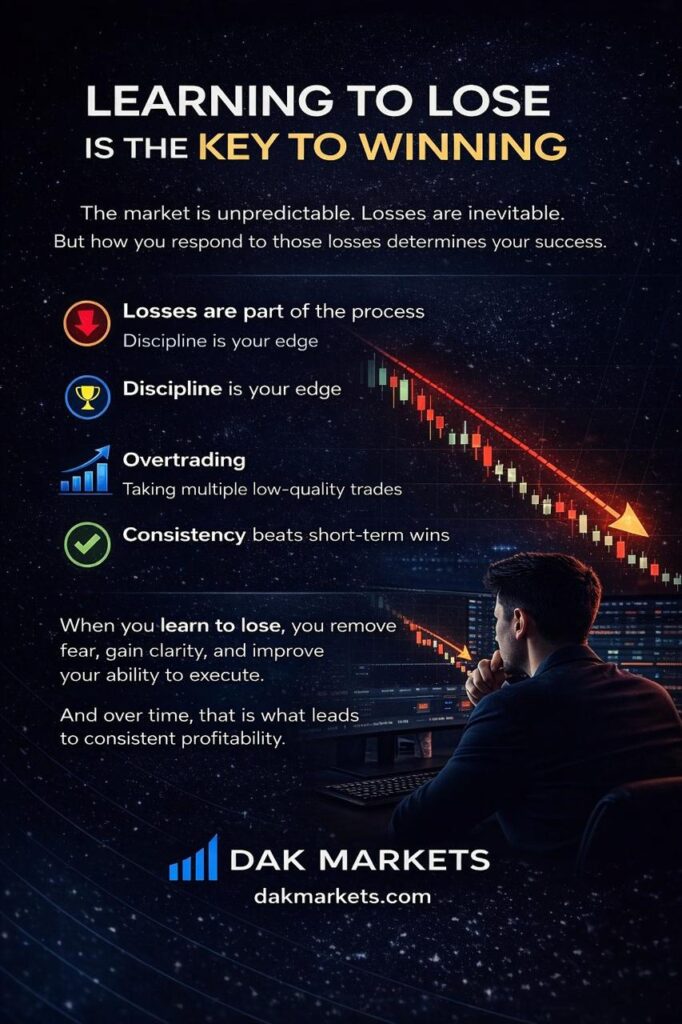
What Is Overtrading?
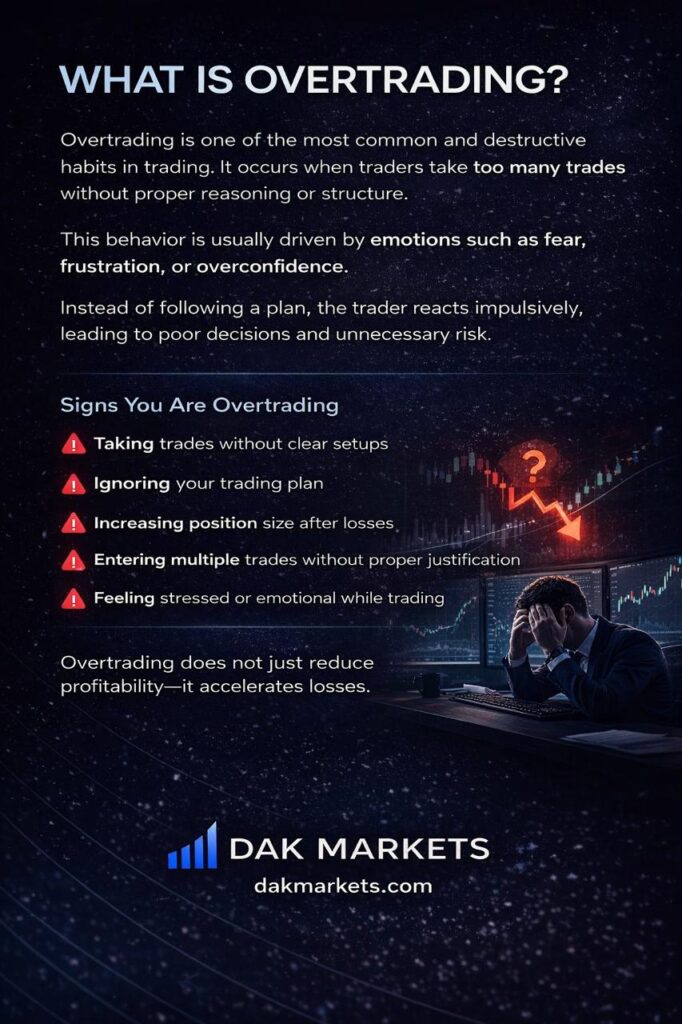
Overtrading is one of the most common and destructive habits in trading. It occurs when traders take too many trades without proper reasoning or structure.
This behavior is usually driven by emotions such as fear, frustration, or overconfidence.
Instead of following a plan, the trader reacts impulsively, leading to poor decisions and unnecessary risk.
Signs You Are Overtrading
- Taking trades without clear setups
- Ignoring your trading plan
- Increasing position size after losses
- Entering multiple trades without proper justification
- Feeling stressed or emotional while trading
Overtrading does not just reduce profitability—it accelerates losses.
The Psychological Trap Behind Overtrading
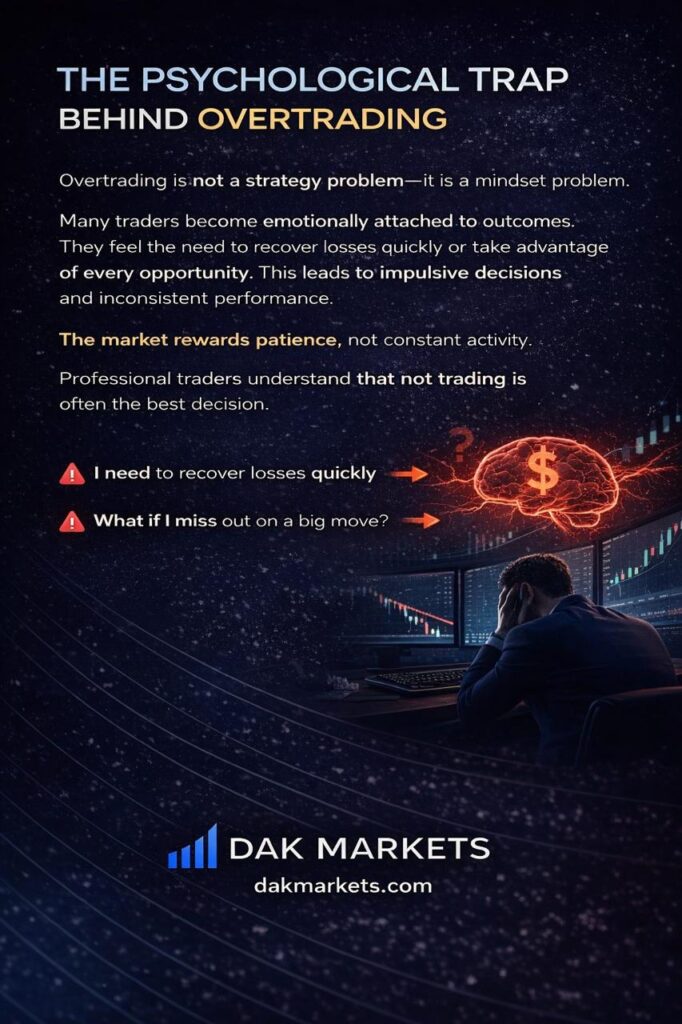
Overtrading is not a strategy problem—it is a mindset problem.
Many traders become emotionally attached to outcomes. They feel the need to recover losses quickly or take advantage of every opportunity. This leads to impulsive decisions and inconsistent performance.
The market rewards patience, not constant activity.
Professional traders understand that not trading is often the best decision.
Why Overtrading Destroys Your Performance
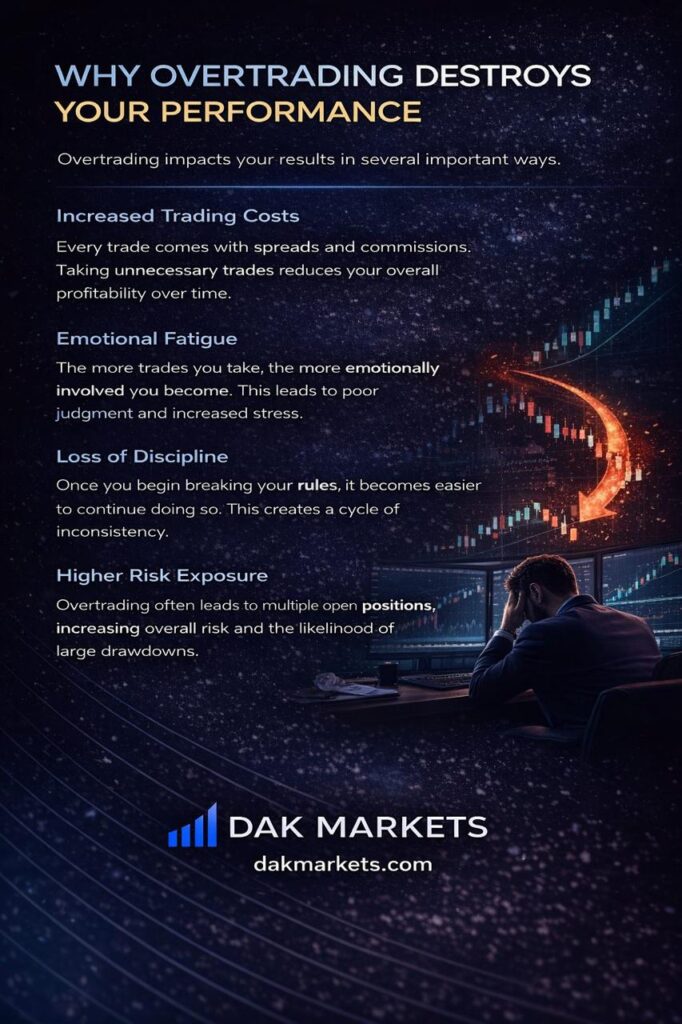
Overtrading impacts your results in several important ways.
Increased Trading Costs
Every trade comes with spreads and commissions. Taking unnecessary trades reduces your overall profitability over time.
Emotional Fatigue
The more trades you take, the more emotionally involved you become. This leads to poor judgment and increased stress.
Loss of Discipline
Once you begin breaking your rules, it becomes easier to continue doing so. This creates a cycle of inconsistency.
Higher Risk Exposure
Overtrading often leads to multiple open positions, increasing overall risk and the likelihood of large drawdowns.
The Power of Trading Less
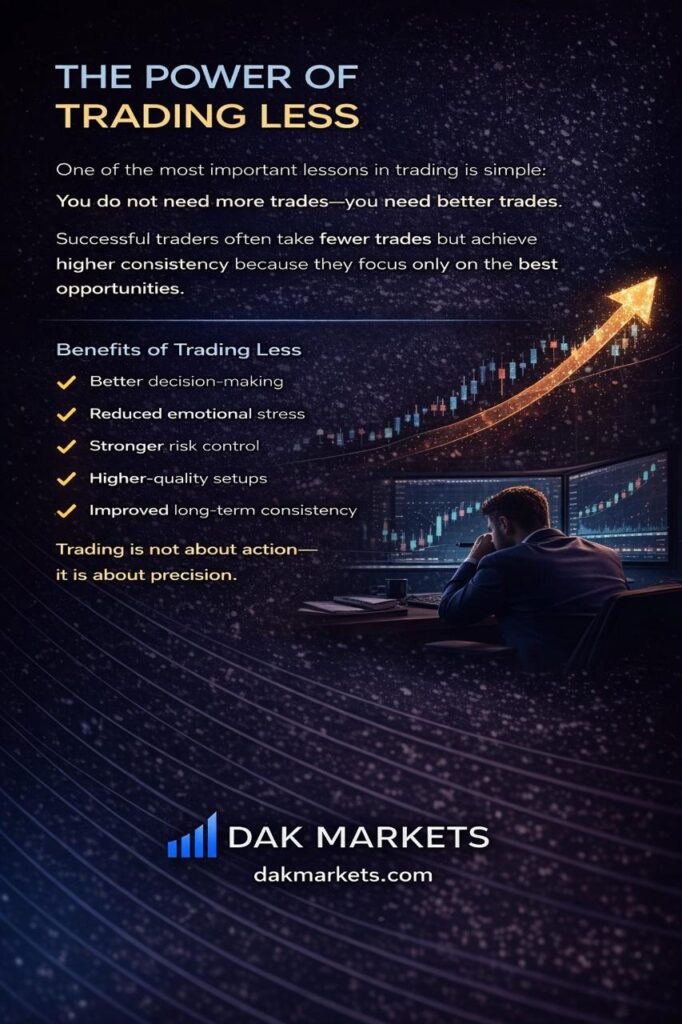
One of the most important lessons in trading is simple:
You do not need more trades—you need better trades.
Successful traders often take fewer trades but achieve higher consistency because they focus only on the best opportunities.
Benefits of Trading Less
- Better decision-making
- Reduced emotional stress
- Stronger risk control
- Higher-quality setups
- Improved long-term consistency
Trading is not about action—it is about precision.
Practical Steps to Avoid Overtrading
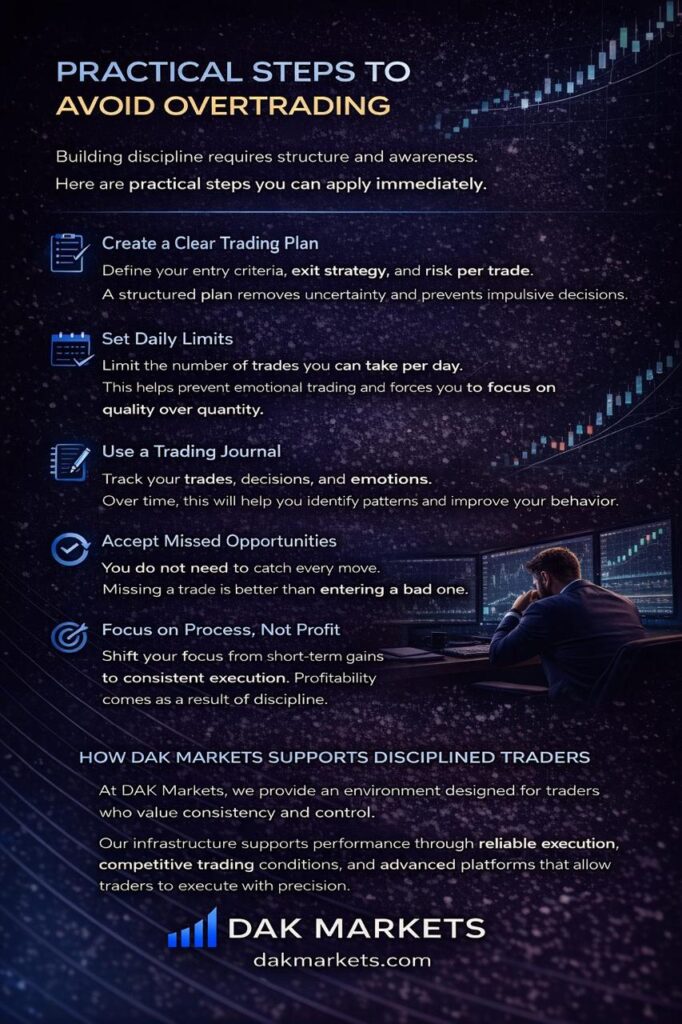
Building discipline requires structure and awareness. Here are practical steps you can apply immediately.
Create a Clear Trading Plan
Define your entry criteria, exit strategy, and risk per trade. A structured plan removes uncertainty and prevents impulsive decisions.
Set Daily Limits
Limit the number of trades you can take per day. This helps prevent emotional trading and forces you to focus on quality over quantity.
Use a Trading Journal
Track your trades, decisions, and emotions. Over time, this will help you identify patterns and improve your behavior.
Accept Missed Opportunities
You do not need to catch every move. Missing a trade is better than entering a bad one.
Focus on Process, Not Profit
Shift your focus from short-term gains to consistent execution. Profitability comes as a result of discipline.
How DAK Markets Supports Disciplined Traders
At DAK Markets, we provide an environment designed for traders who value consistency and control.
Our infrastructure supports performance through reliable execution, competitive trading conditions, and advanced platforms that allow traders to execute with precision.
By combining the right mindset with the right environment, traders can improve their performance and build long-term consistency.
Conclusion: Discipline Always Wins
The difference between trading and overtrading is simple but powerful.
Trading is controlled, structured, and intentional.
Overtrading is emotional, impulsive, and destructive.
If you want to succeed in the markets, you must focus on discipline over activity.
You do not need to trade more—you need to trade smarter.
Because in trading, discipline is your true edge.