Introduction
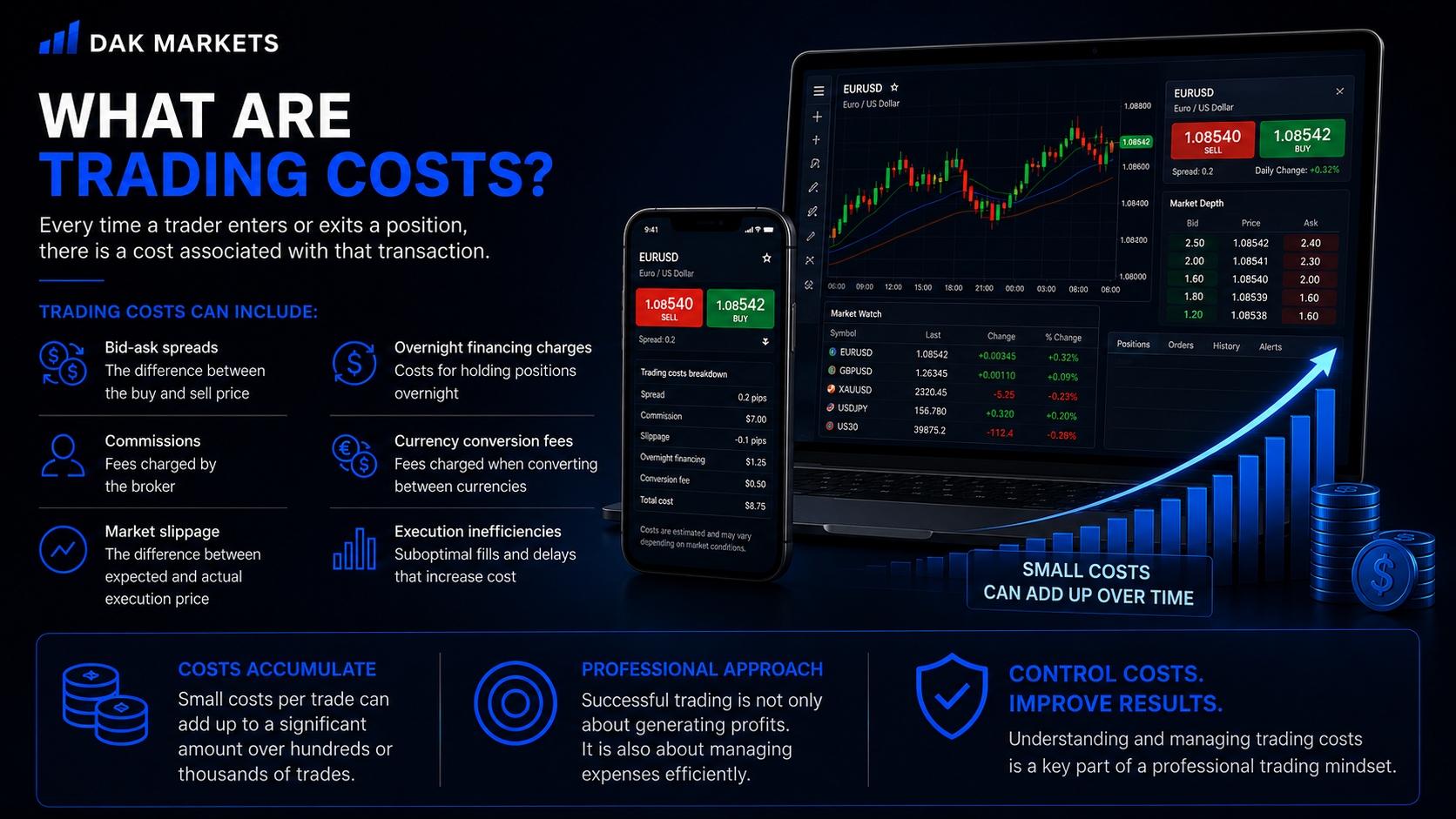
Most traders spend countless hours analyzing charts, studying market trends, and refining their trading strategies.
They search for better entries.
They search for better exits.
They search for better risk management.
However, one of the most important factors affecting trading performance often receives very little attention:
Trading costs.
Many traders assume that trading costs are simply part of participating in financial markets. While this is true, the impact of those costs is frequently underestimated.
Over time, spreads, commissions, execution quality, and pricing efficiency can significantly influence overall trading performance.
Understanding how trading costs affect results is an important step toward becoming a more informed and consistent trader.
What Are Trading Costs?
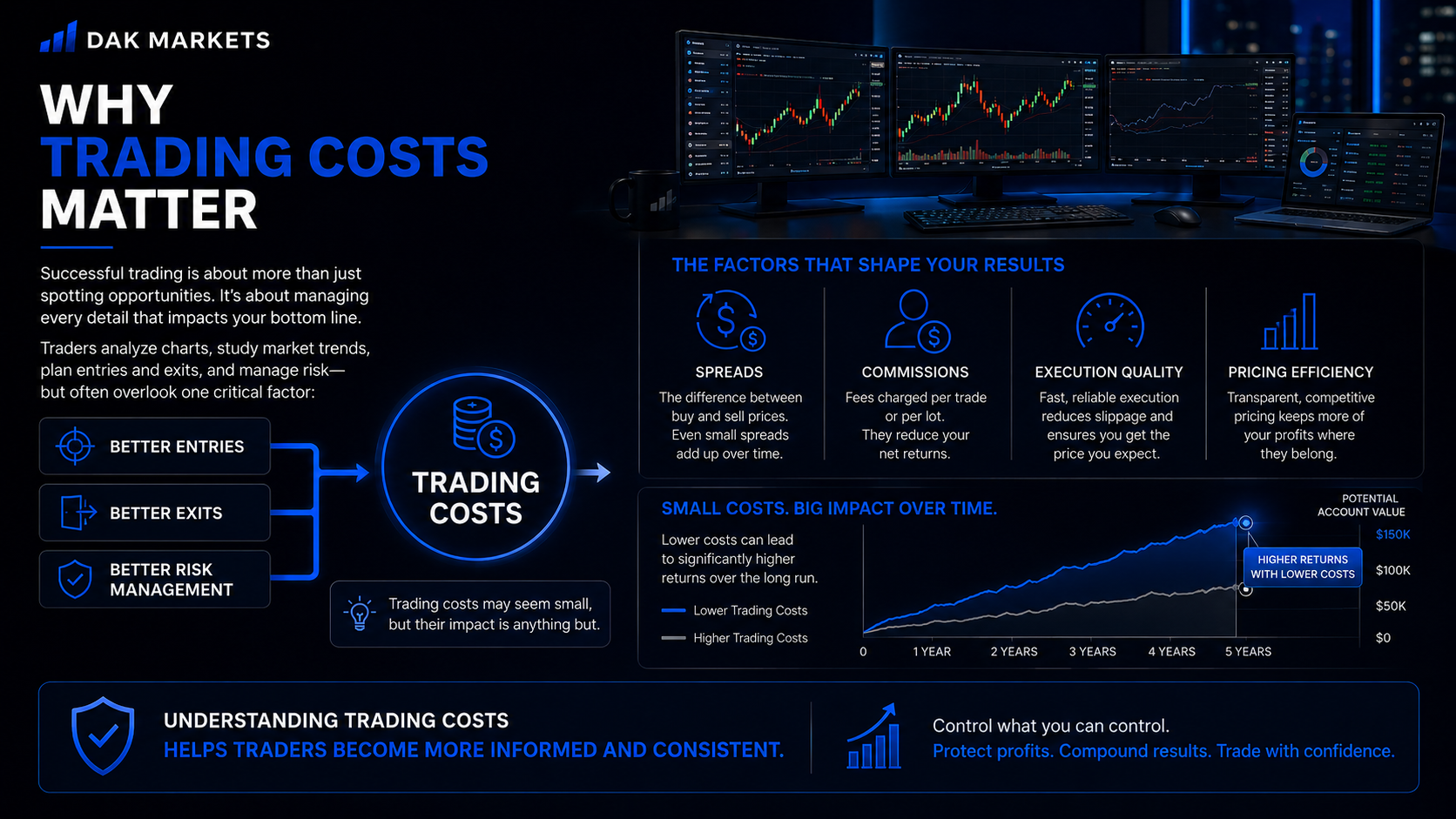
Every time a trader enters or exits a position, there is a cost associated with that transaction.
These costs can include:
- Bid-ask spreads
- Commissions
- Market slippage
- Overnight financing charges
- Currency conversion fees
- Execution inefficiencies
While individual costs may appear small, they can accumulate significantly over hundreds or even thousands of trades.
Professional traders understand that successful trading is not only about generating profits.
It is also about managing expenses efficiently.
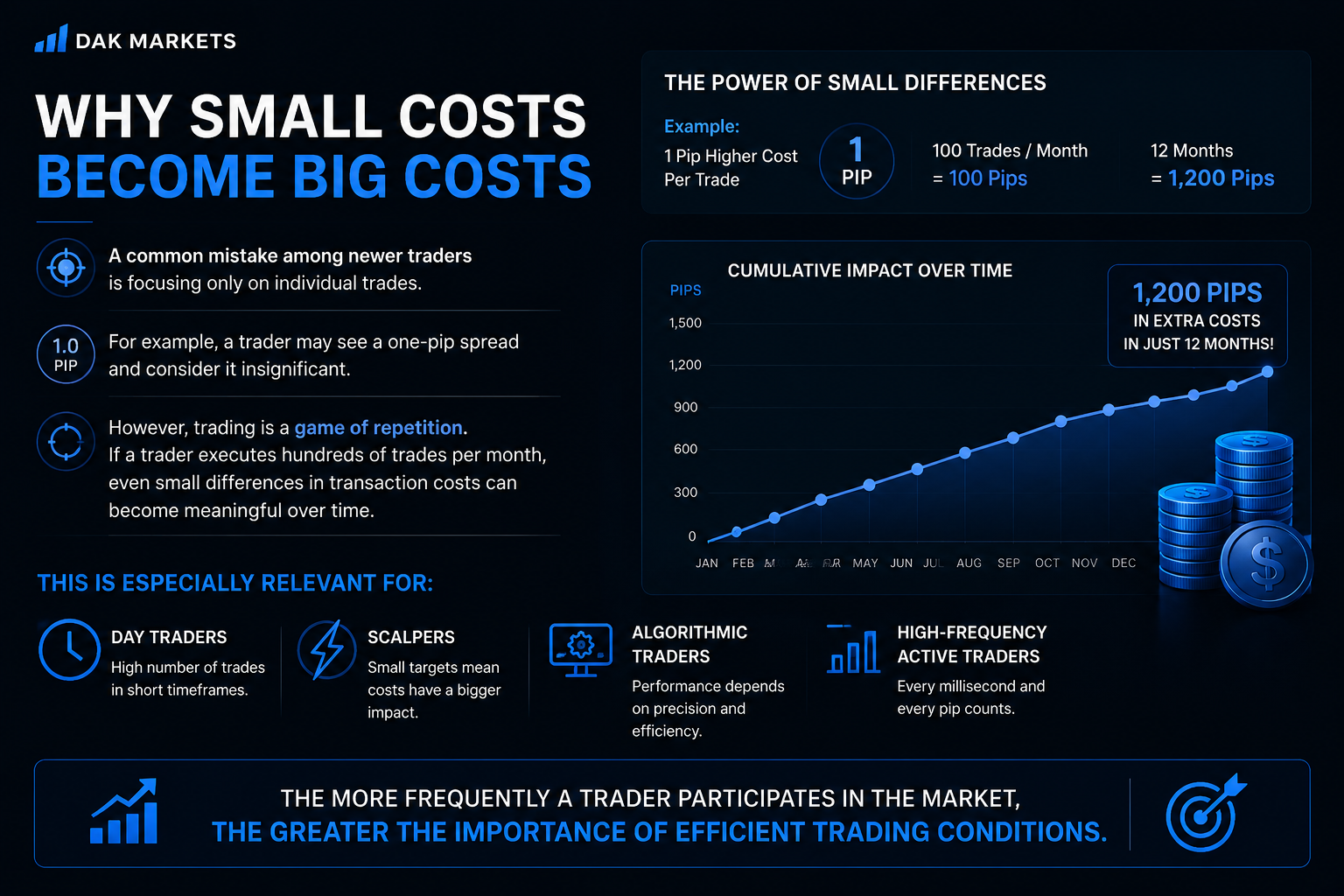
Why Small Costs Become Big Costs
A common mistake among newer traders is focusing only on individual trades.
For example, a trader may see a one-pip spread and consider it insignificant.
However, trading is a game of repetition.
If a trader executes hundreds of trades per month, even small differences in transaction costs can become meaningful over time.
This is especially relevant for:
- Day traders
- Scalpers
- Algorithmic traders
- High-frequency active traders
The more frequently a trader participates in the market, the greater the importance of efficient trading conditions.
The Relationship Between Costs and Risk Management
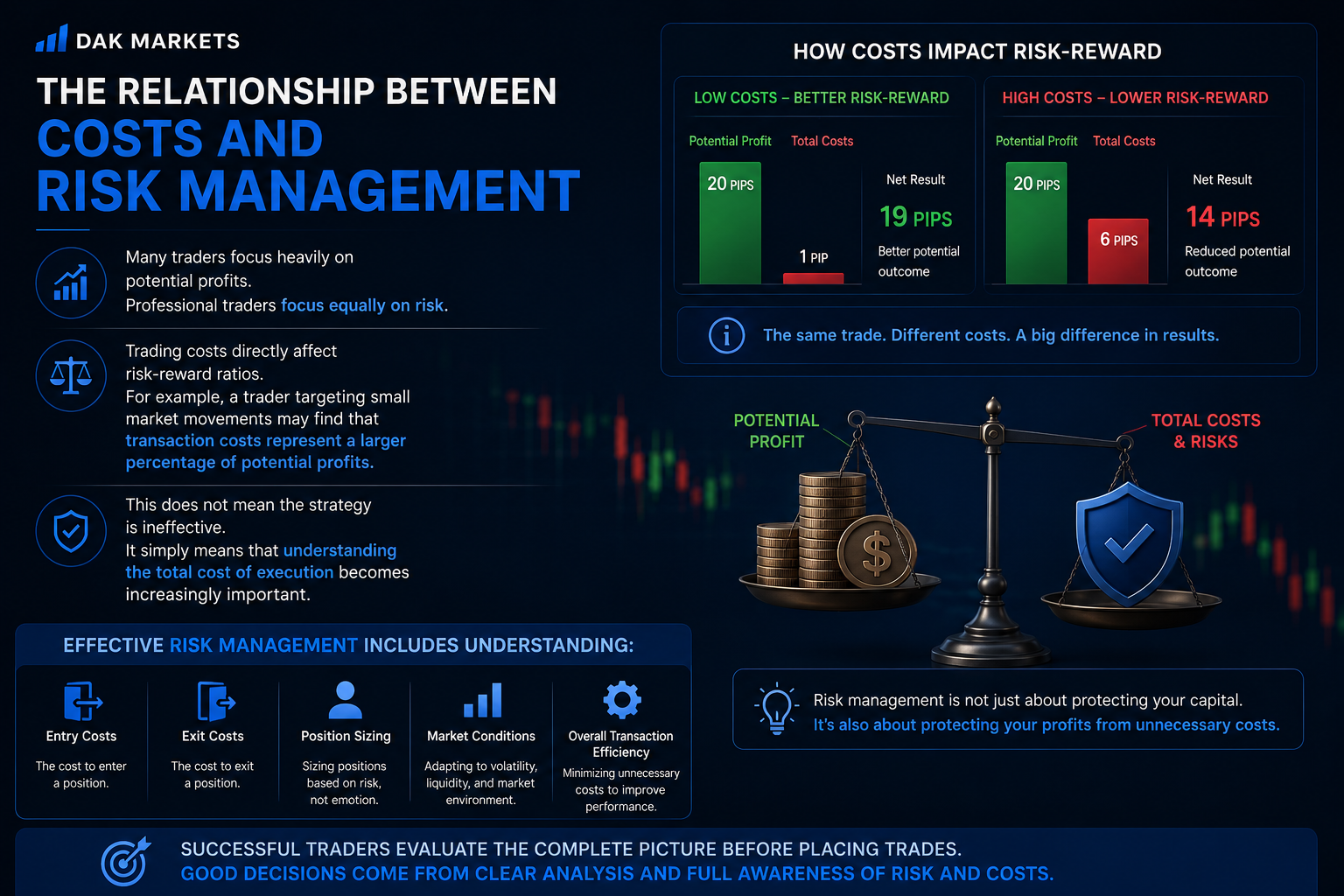
Many traders focus heavily on potential profits.
Professional traders focus equally on risk.
Trading costs directly affect risk-reward ratios. For example, a trader targeting small market movements may find that transaction costs represent a larger percentage of potential profits.
This does not mean the strategy is ineffective.
It simply means that understanding the total cost of execution becomes increasingly important.
Effective risk management includes understanding:
- Entry costs
- Exit costs
- Position sizing
- Market conditions
- Overall transaction efficiency
Successful traders evaluate the complete picture before placing trades.
Why Execution Quality Matters
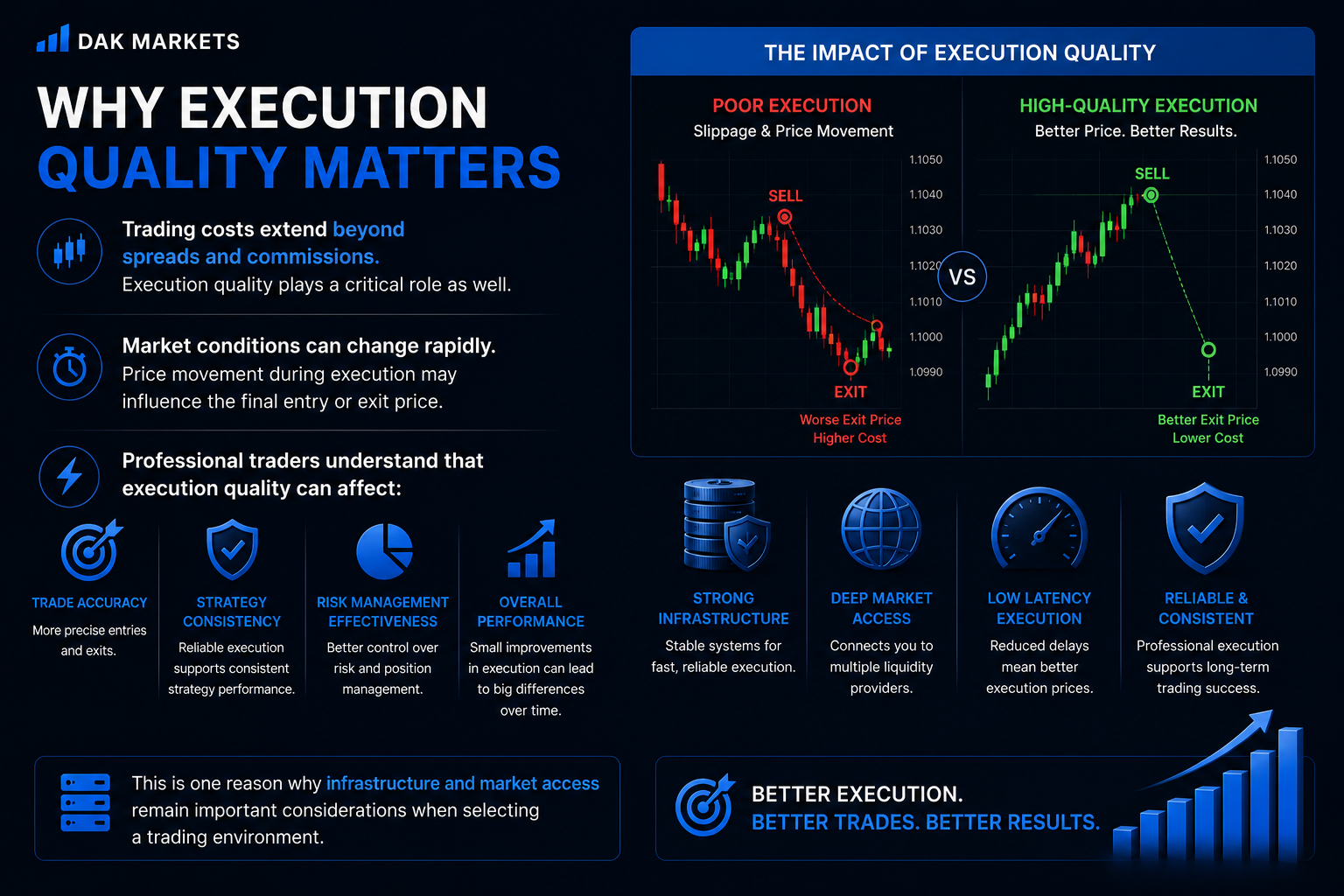
Trading costs extend beyond spreads and commissions.
Execution quality plays a critical role as well.
Market conditions can change rapidly. Price movement during execution may influence the final entry or exit price.
Professional traders understand that execution quality can affect:
- Trade accuracy
- Strategy consistency
- Risk management effectiveness
- Overall performance
This is one reason why infrastructure and market access remain important considerations when selecting a trading environment.
Understanding Market Liquidity
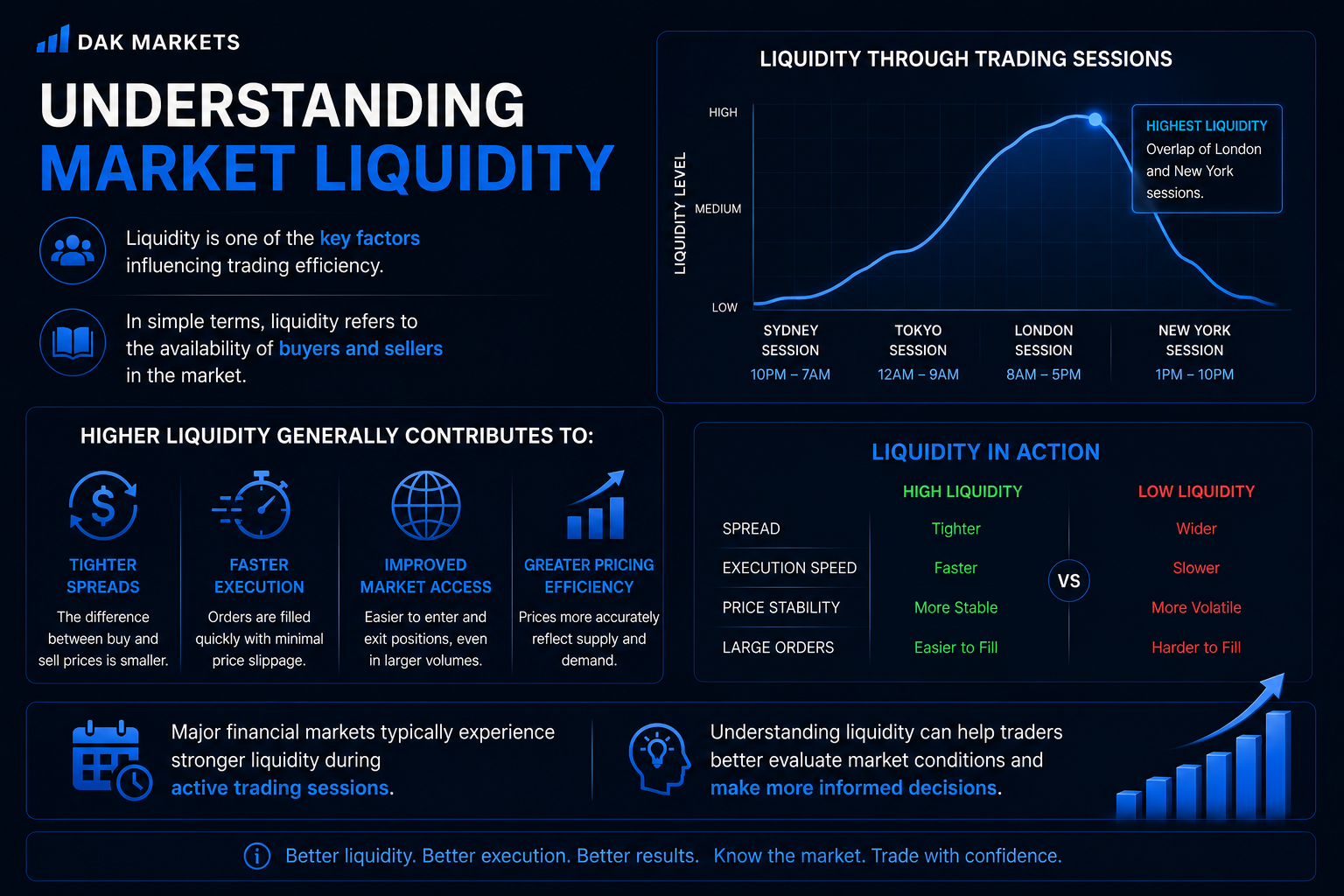
Liquidity is one of the key factors influencing trading efficiency.
In simple terms, liquidity refers to the availability of buyers and sellers in the market.
Higher liquidity generally contributes to:
- Tighter spreads
- Faster execution
- Improved market access
- Greater pricing efficiency
Major financial markets typically experience stronger liquidity during active trading sessions.
Understanding liquidity can help traders better evaluate market conditions and make more informed decisions.
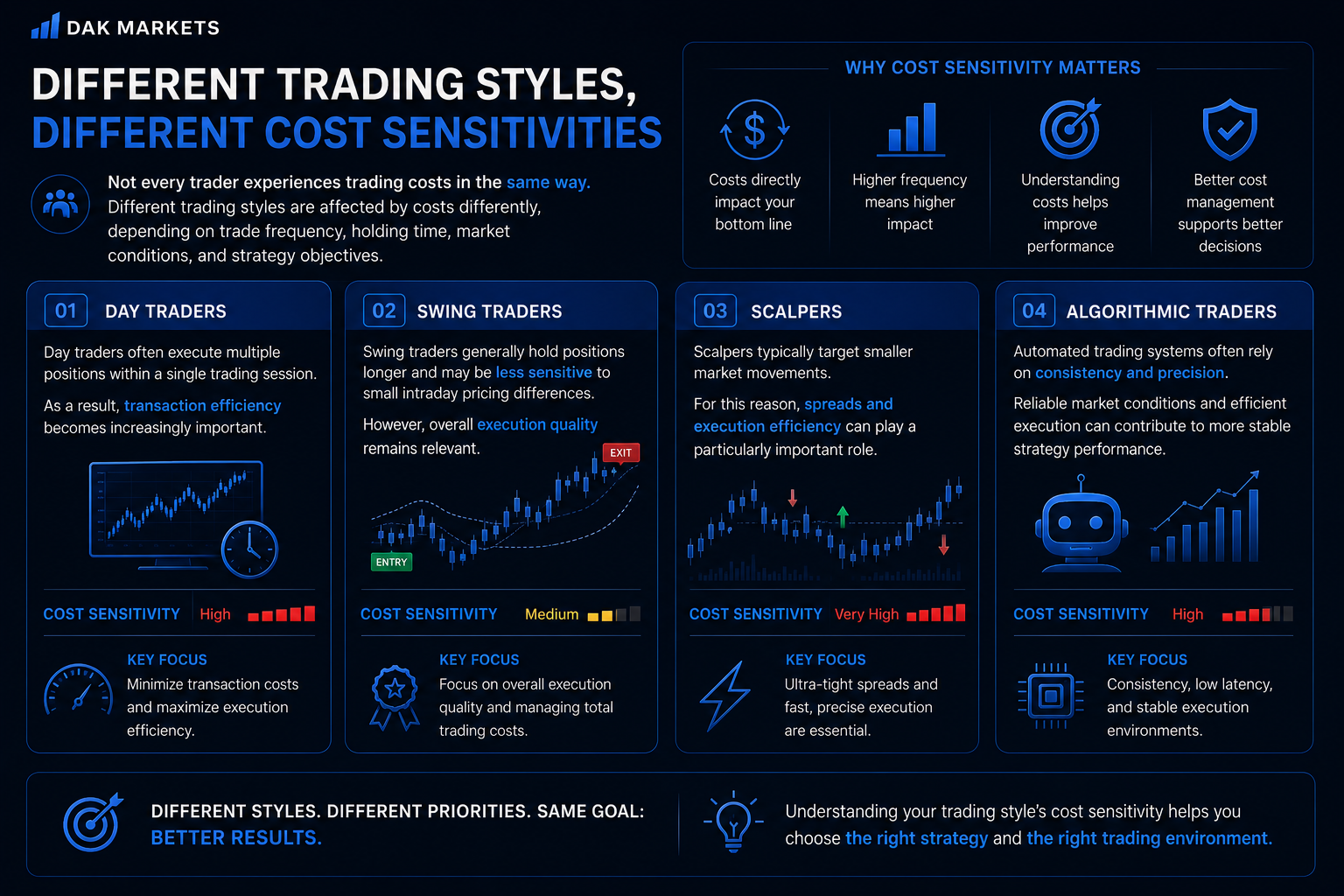
Different Trading Styles, Different Cost Sensitivities
Not every trader experiences trading costs in the same way.
Different trading styles are affected by costs differently, depending on trade frequency, holding time, market conditions, and strategy objectives.
Day Traders
Day traders often execute multiple positions within a single trading session.
As a result, transaction efficiency becomes increasingly important.
Swing Traders
Swing traders generally hold positions longer and may be less sensitive to small intraday pricing differences.
However, overall execution quality remains relevant.
Scalpers
Scalpers typically target smaller market movements.
For this reason, spreads and execution efficiency can play a particularly important role.
Algorithmic Traders
Automated trading systems often rely on consistency and precision.
Reliable market conditions and efficient execution can contribute to more stable strategy performance.
The Importance of Evaluating the Full Trading Environment
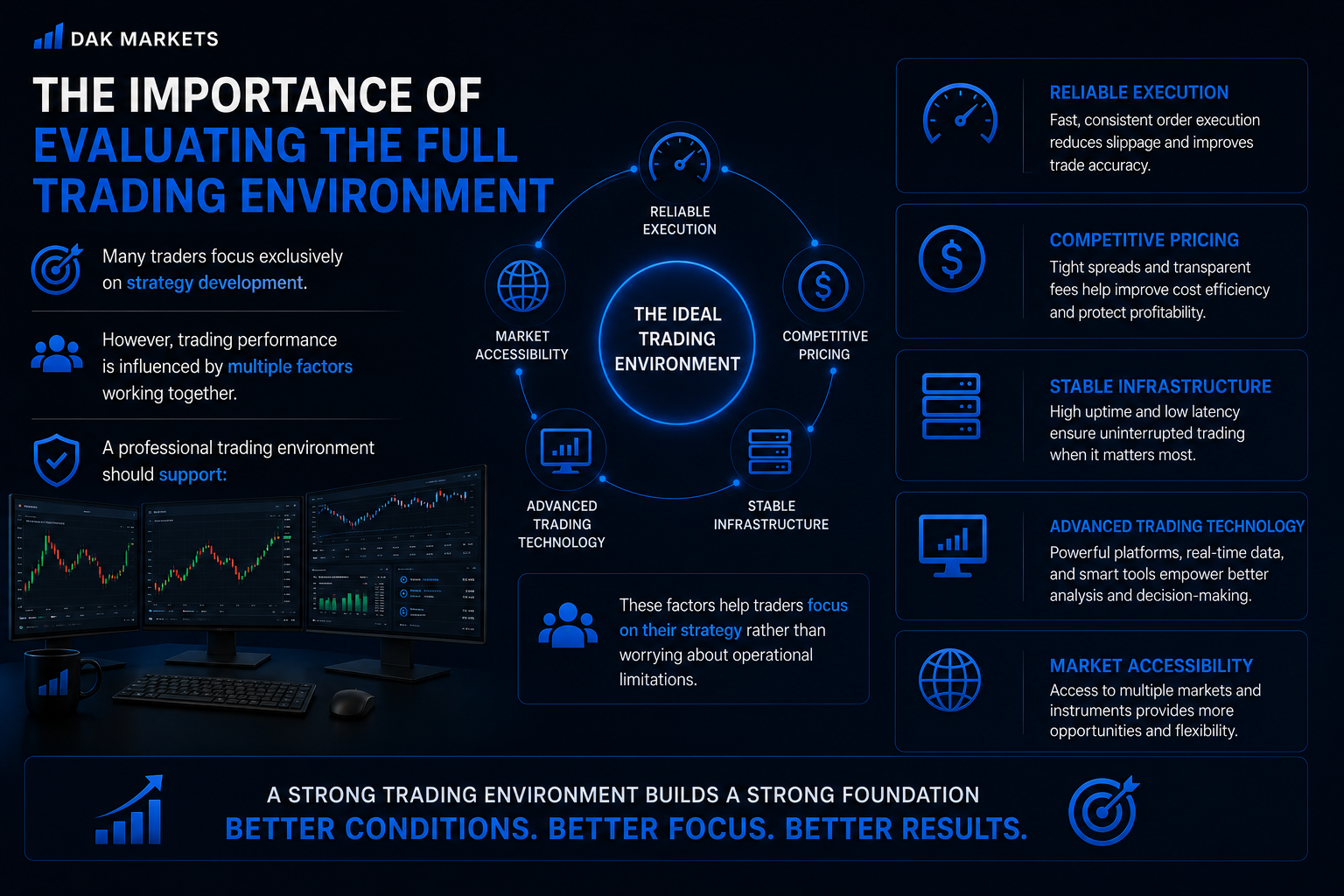
Many traders focus exclusively on strategy development.
However, trading performance is influenced by multiple factors working together.
A professional trading environment should support:
- Reliable execution
- Competitive pricing
- Stable infrastructure
- Advanced trading technology
- Market accessibility
These factors help traders focus on their strategy rather than worrying about operational limitations.
Building a Long-Term Trading Mindset
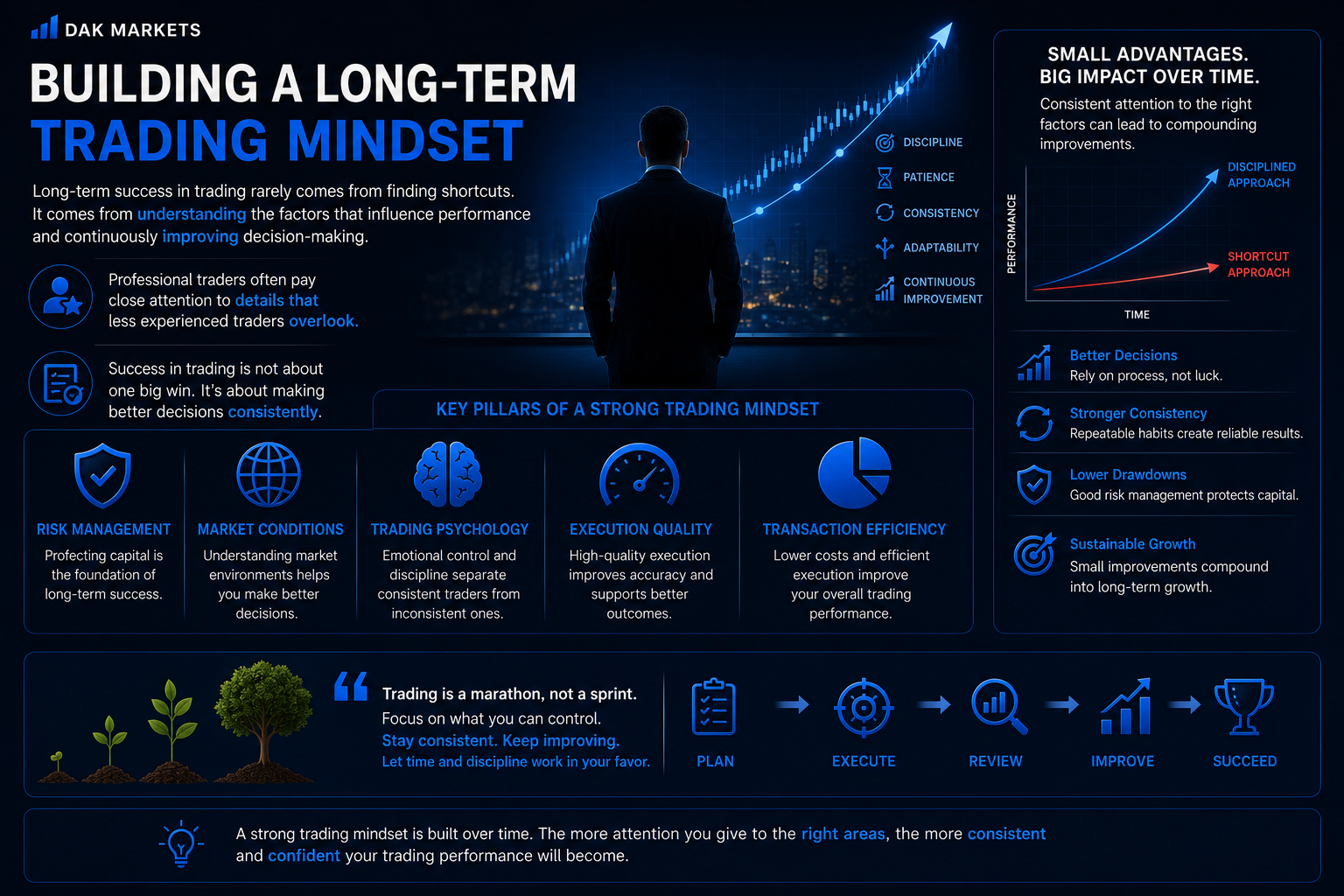
Long-term success in trading rarely comes from finding shortcuts.
It comes from understanding the factors that influence performance and continuously improving decision-making.
Professional traders often pay close attention to details that less experienced traders overlook.
This includes:
- Risk management
- Market conditions
- Trading psychology
- Execution quality
- Transaction efficiency
Over time, these small advantages can compound into meaningful improvements.
Why Awareness Creates Better Decisions
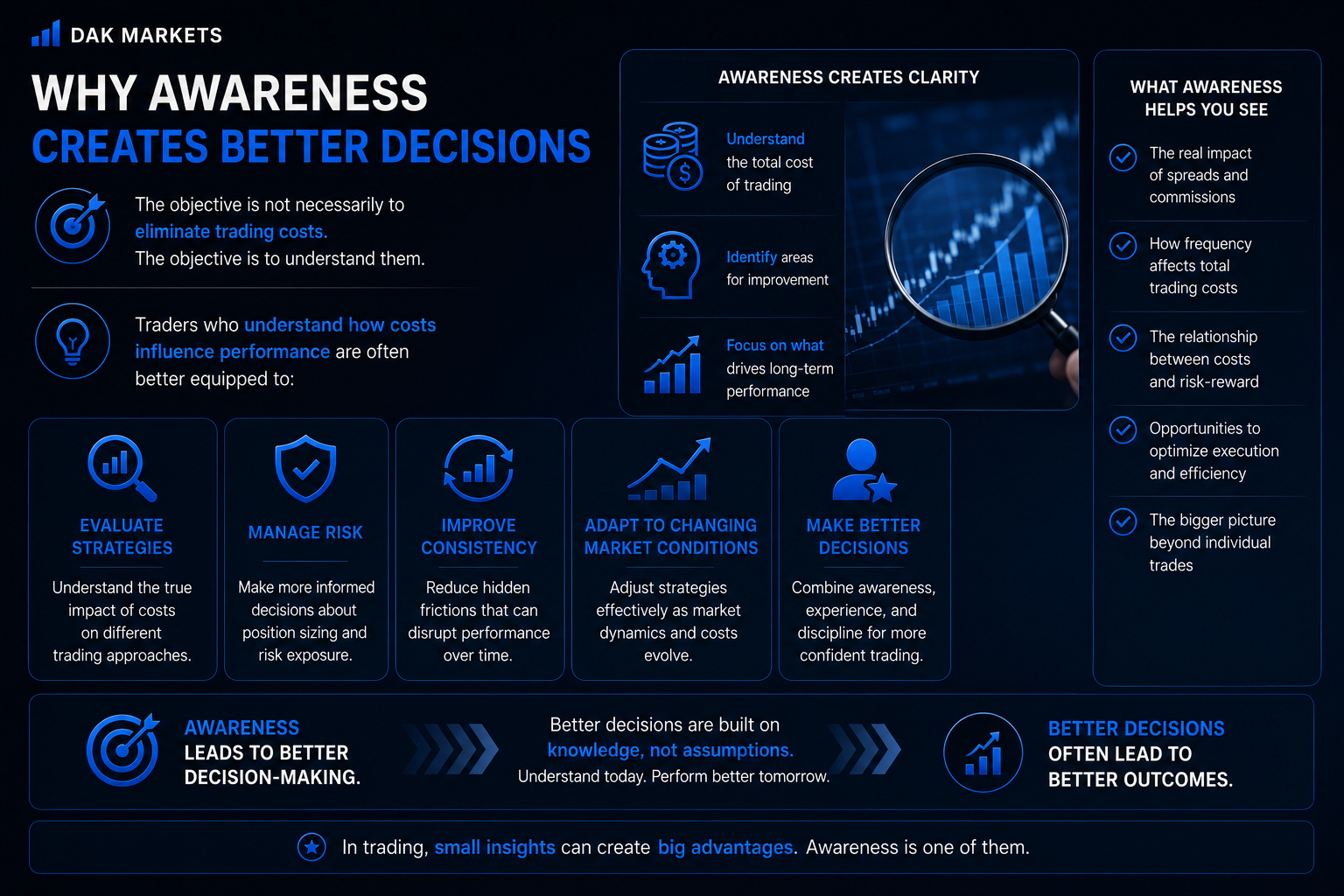
The objective is not necessarily to eliminate trading costs.
The objective is to understand them.
Traders who understand how costs influence performance are often better equipped to:
- Evaluate strategies
- Manage risk
- Improve consistency
- Adapt to changing market conditions
Awareness leads to better decision-making.
And better decisions often lead to better outcomes.
Final Thoughts
Trading success is influenced by far more than market analysis alone.
While strategy remains important, understanding trading costs is an essential part of becoming a well-rounded trader.
Spreads, commissions, liquidity, execution quality, and transaction efficiency all contribute to the overall trading experience.
At DAK Markets, we believe informed traders make better decisions.
By understanding the factors that influence performance, traders can approach the markets with greater confidence and a stronger long-term perspective.
Because in trading, small details matter.
And over time, those details can make a significant difference.