How Expectations in Trading Affect Your Decisions and Results
In trading, expectations can be both a powerful motivator and a hidden trap. Every trader enters the markets with certain beliefs about profits, risk, and success. However, unrealistic trading expectations often lead to frustration, impulsive decisions, and inconsistent performance. Understanding how expectations affect trading psychology is essential if you want long-term success in the financial markets.
In this article, we’ll explore how expectations shape trading decisions, why unrealistic goals harm performance, and how to set SMART trading goals that support discipline and consistency.
What Are Trading Expectations?
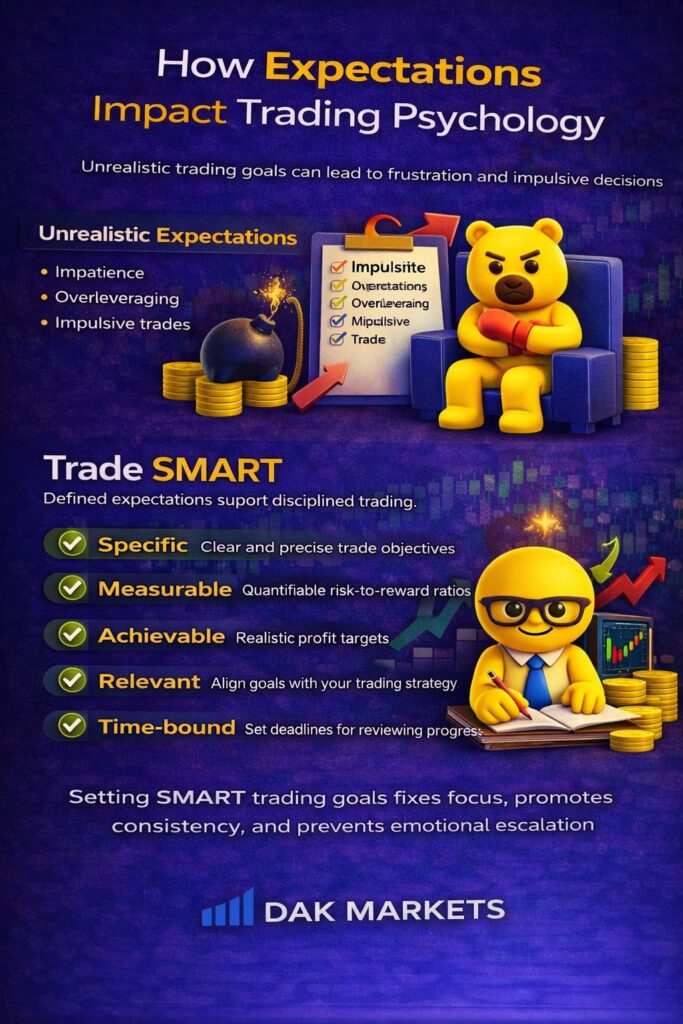
An expectation is a strong belief that something will happen. In trading, expectations can take many forms:
- Expecting to make money quickly
- Expecting every trade to be profitable
- Expecting a strategy to work flawlessly
- Expecting consistent daily returns
For beginners, these expectations are often influenced by social media, online ads, and stories of overnight trading success. The idea of making large profits with a few clicks is appealing. But the reality of trading is far different.
Professional trading requires:
- Time and continuous learning
- Strategy development and backtesting
- Risk management
- Emotional discipline
When expectations don’t match reality, disappointment sets in. And disappointment is one of the most dangerous emotional triggers in trading psychology.
Why Unrealistic Expectations Hurt Trading Performance
Unrealistic expectations can directly impact trading decisions and results. When traders expect too much, too quickly, they tend to:
- Overtrade to meet profit goals
- Increase position sizes unnecessarily
- Move stop losses further away
- Close trades prematurely out of fear
- Abandon tested strategies
Instead of following a structured trading plan, traders begin reacting emotionally. The focus shifts from process to outcome, which is a recipe for inconsistency.
For example, a trader who expects to make 1% profit every single day may feel pressure when the market is slow. Instead of waiting for high-probability setups, they may force trades just to “hit the target.” This behavior often leads to unnecessary losses.
In trading, more effort does not always mean better results. Sometimes, patience and restraint produce superior performance.

The Psychological Trap: Expecting Only Profits
One of the biggest trading mistakes is expecting every trade to be profitable. Even the best trading strategies have losing trades. Losses are part of the statistical edge.
When traders expect only gains:
- They struggle to accept losses
- They hesitate to close losing positions
- They widen stop losses
- They blame the market instead of reviewing their process
This behavior often leads to larger drawdowns. The inability to accept losses usually comes from emotional attachment to outcomes rather than commitment to the trading system.
Professional traders think differently. They understand that:
- Losses are business expenses
- Risk management protects capital
- Consistency matters more than single trades
- The long-term edge plays out over time
Expectations must be aligned with probability, not fantasy.

How Expectations Influence Trade Execution
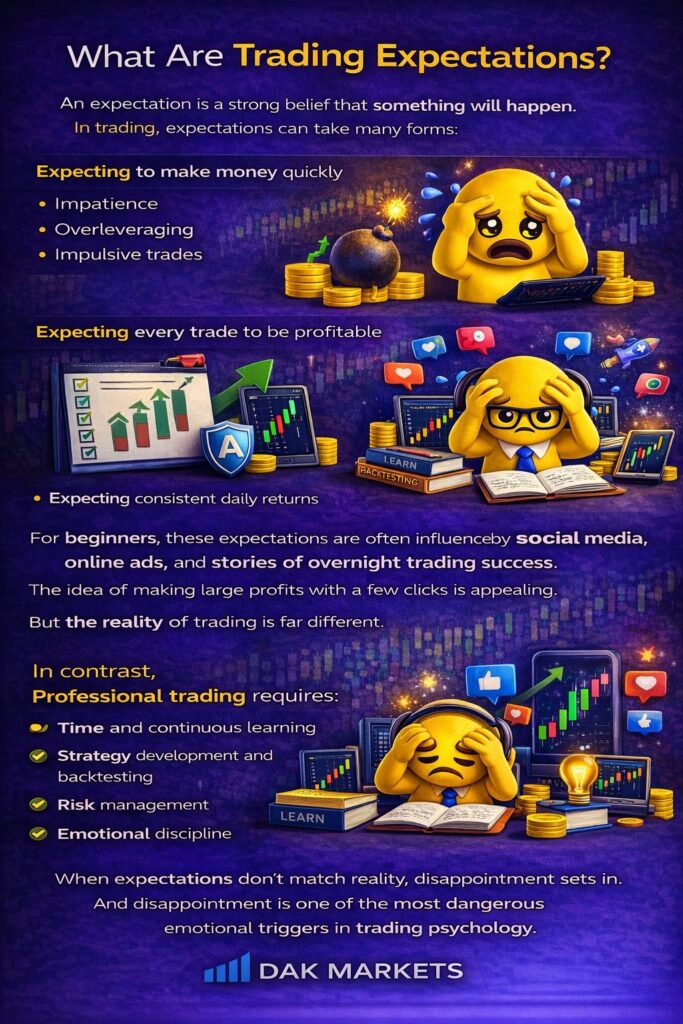
Expectations do not only exist before trading begins. They also appear during trade execution.
If a trader expects a loss, they may close a winning trade too early out of fear. If they strongly expect profit, they may refuse to accept a loss when the market moves against them.
This is why having a predefined trading plan with clear rules for:
- Entry
- Stop Loss
- Take Profit
- Risk per trade
is essential. A structured trading plan reduces emotional interference caused by expectations.
Before entering a trade, professional traders consider two scenarios:
Plan A: Trade reaches Take Profit
Plan B: Trade hits Stop Loss
By preparing for both outcomes, traders remove emotional shock. The loss is not unexpected; it is already accounted for.
The Importance of Realistic Trading Goals
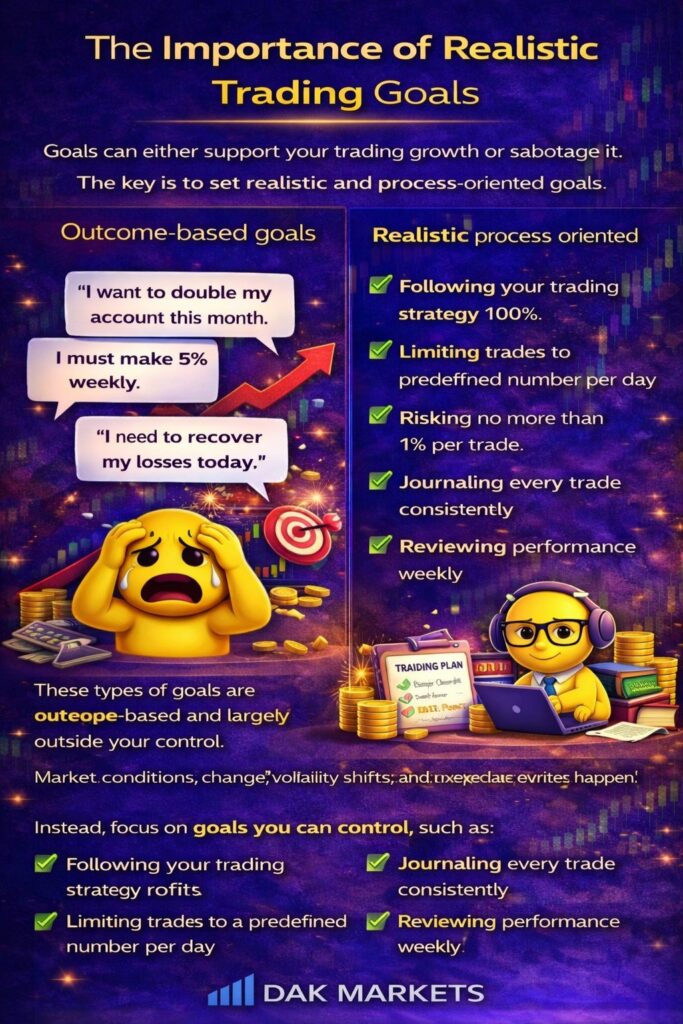
Goals can either support your trading growth or sabotage it. The key is to set realistic and process-oriented goals.
Many traders focus exclusively on financial targets such as:
- “I want to double my account this month.”
- “I must make 5% weekly.”
- “I need to recover my losses today.”
These types of goals are outcome-based and largely outside your control. Market conditions change, volatility shifts, and unexpected events happen.
Instead, focus on goals you can control, such as:
- Following your trading strategy 100%
- Limiting trades to a predefined number per day
- Risking no more than 1% per trade
- Journaling every trade consistently
- Reviewing performance weekly
When you focus on process rather than profits, results tend to improve naturally.
Using the SMART Method for Trading Goals
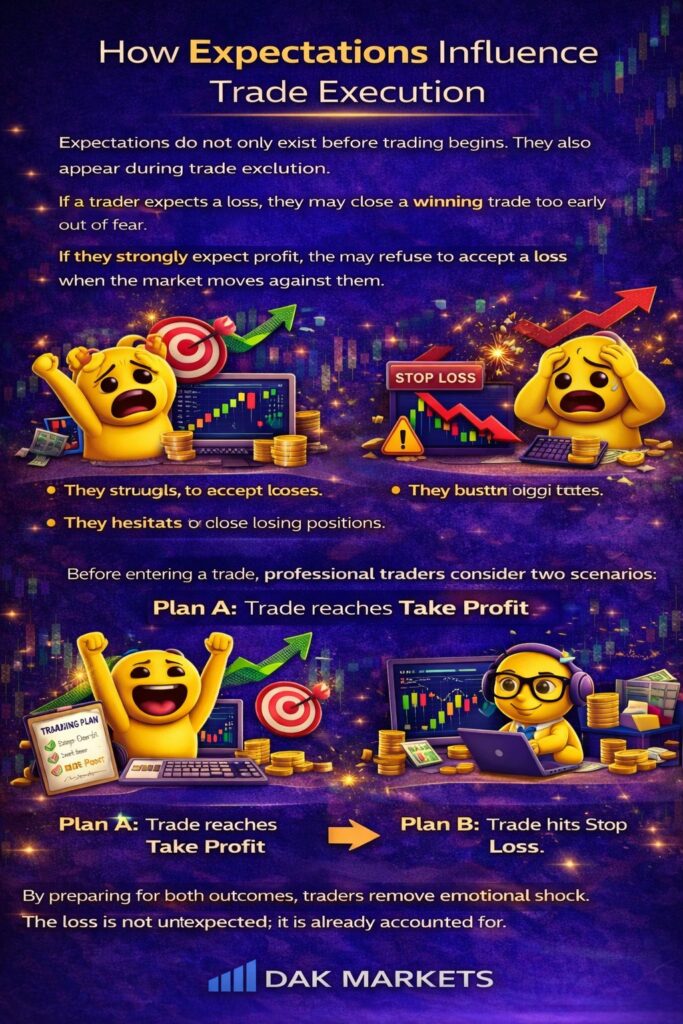
One of the best ways to manage expectations is by applying the SMART goal framework. SMART stands for:
- S – Specific
- M – Measurable
- A – Achievable
- R – Relevant
- T – Time-Bound
Let’s compare two trading goals:
Goal 1: “Make 1% profit every day.”
This goal is specific and measurable, but it may not be achievable or realistic in all market conditions. It also depends heavily on factors outside your control.
Goal 2: “For the next 30 days, execute no more than two trades per day and follow my checklist before every entry.”
This goal is specific, measurable, achievable, relevant to improving discipline, and time-bound.
The second goal improves behavior. The first one increases pressure.
Trading success is built on disciplined execution, not daily profit targets.

Managing Expectations in Volatile Markets
Market volatility can amplify expectations. During strong trends, traders may expect continued profits and become overconfident. During drawdowns, they may expect further losses and become fearful.
To manage expectations during volatile conditions:
- Reduce position sizes if necessary
- Stick to your predefined risk management rules
- Avoid revenge trading
- Take breaks when emotionally overwhelmed
- Review performance objectively
Emotional awareness plays a crucial role. Ask yourself:
- What am I expecting from this trade?
- Am I reacting to recent wins or losses?
- Am I following my trading plan?
Self-awareness brings you back to a rational state of mind.

The Process Over Outcome Mindset
One of the most important principles in trading psychology is focusing on the process instead of the outcome.
Outcome-focused traders say:
- “Did I make money today?”
Process-focused traders say:
- “Did I follow my rules today?”
You cannot control whether the next trade wins or loses. You can control:
- Your discipline
- Your risk management
- Your strategy execution
- Your emotional responses
When you consistently execute a profitable edge, the results follow over time.

How to Reset Unhealthy Trading Expectations
If you recognize that unrealistic expectations are affecting your trading, take the following steps:
- Review your original motivations for trading
- Adjust profit targets to realistic long-term growth
- Focus on risk-adjusted returns
- Accept that losses are part of the business
- Build a structured trading routine
- Use journaling to track emotional triggers
- Set SMART, process-based goals
The key is not eliminating expectations entirely. It is aligning them with reality.

Conclusion: Control What You Can
Expectations influence trading decisions more than most traders realize. Unrealistic profit goals, fear of losses, and emotional reactions can sabotage even the best trading strategies.
To improve your trading performance:
- Focus on discipline rather than daily profits
- Prepare for both winning and losing trades
- Use SMART goals to guide behavior
- Commit to consistent risk management
- Evaluate your process, not just results
You cannot control the market. You can control your preparation, your mindset, and your actions.
When expectations are realistic and aligned with a structured trading plan, frustration decreases and consistency improves. And in trading, consistency over time is far more powerful than any single profitable trade.