Every trader experiences losses. Whether you are trading forex, indices, commodities, or CFDs, losing trades are an unavoidable part of the trading journey. However, what separates successful traders from struggling ones is not the absence of losses—it’s how they respond to them.
At DAK Markets, we believe that mastering trading psychology is just as important as mastering technical analysis. Understanding how to manage losing trades can significantly improve long-term trading performance and overall consistency.
In this article, we’ll explore why traders overestimate losses, how losing trades impact decision-making, and how you can build emotional resilience while trading with DAK Markets.
Why Traders Overestimate Losses
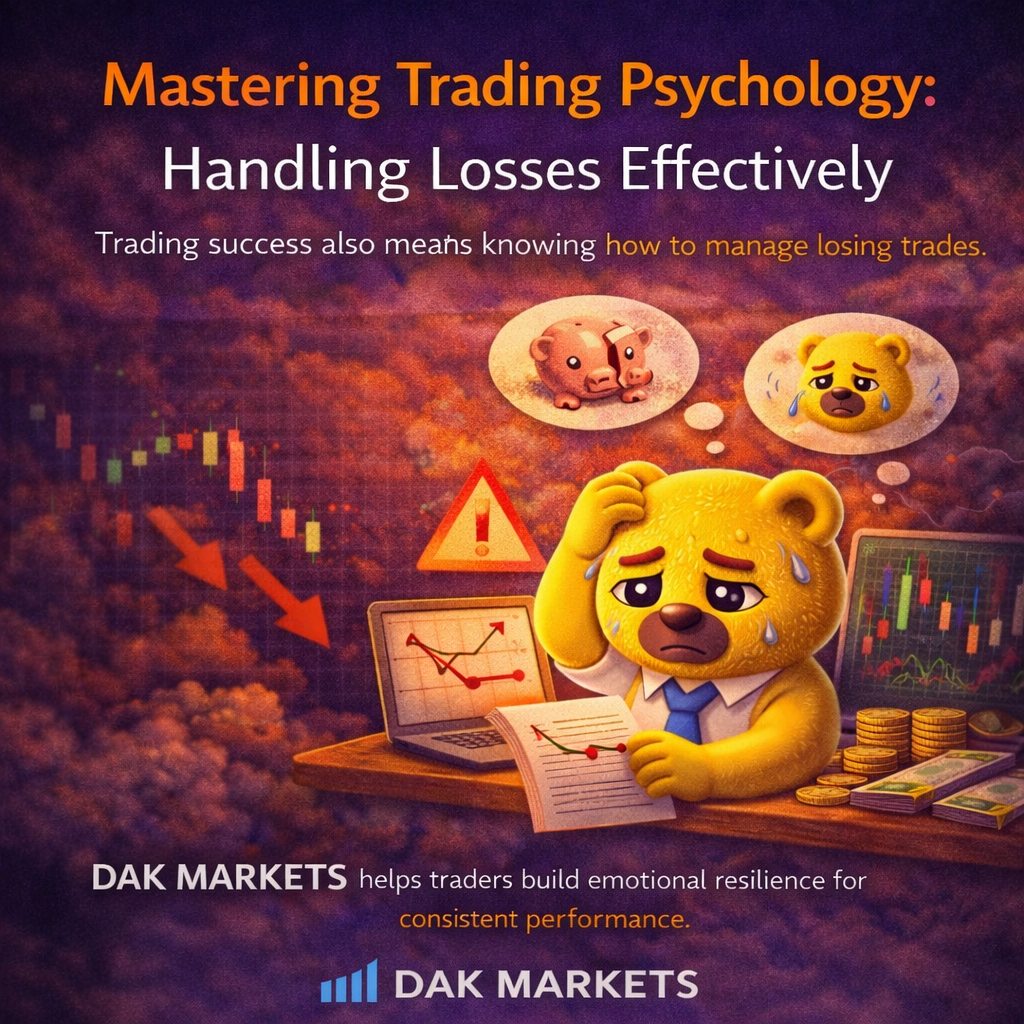
One of the most powerful psychological biases in trading is loss aversion. Research shows that people feel losses more intensely than gains of the same size. In trading, this means:
- A $200 loss feels worse than a $200 gain feels good.
- A single losing trade can overshadow multiple winning trades.
- Emotional reactions can distort rational thinking.
When traders overestimate the impact of one losing trade, they may:
- Doubt their trading strategy
- Hesitate on future setups
- Increase risk to recover losses
- Abandon their trading plan
The key to success is understanding that losses are statistical events—not personal failures.
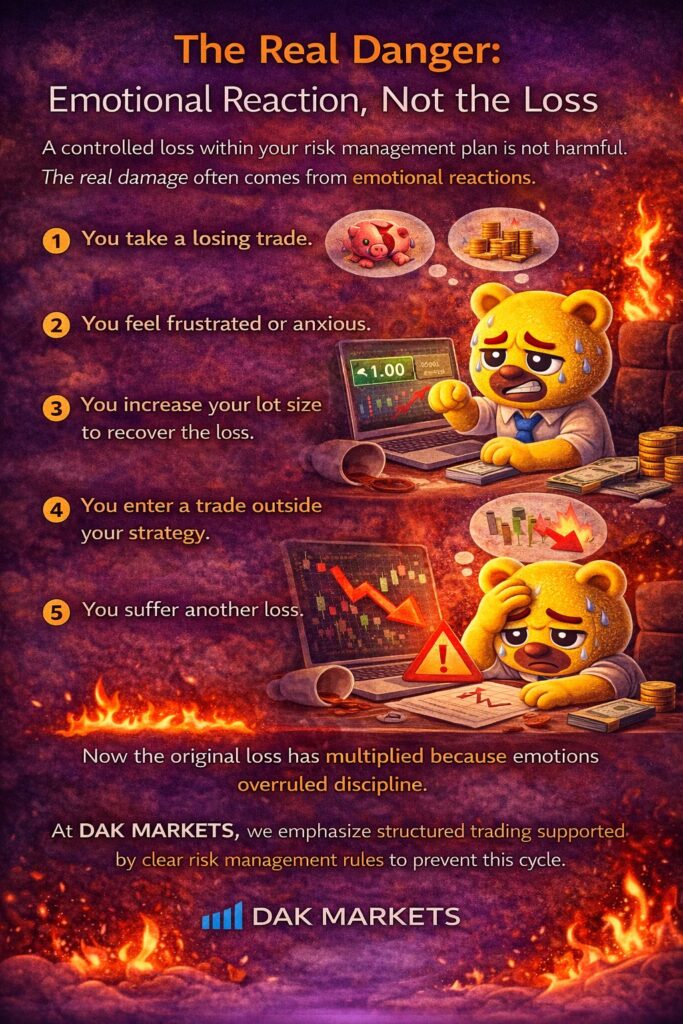
The Real Danger: Emotional Reaction, Not the Loss
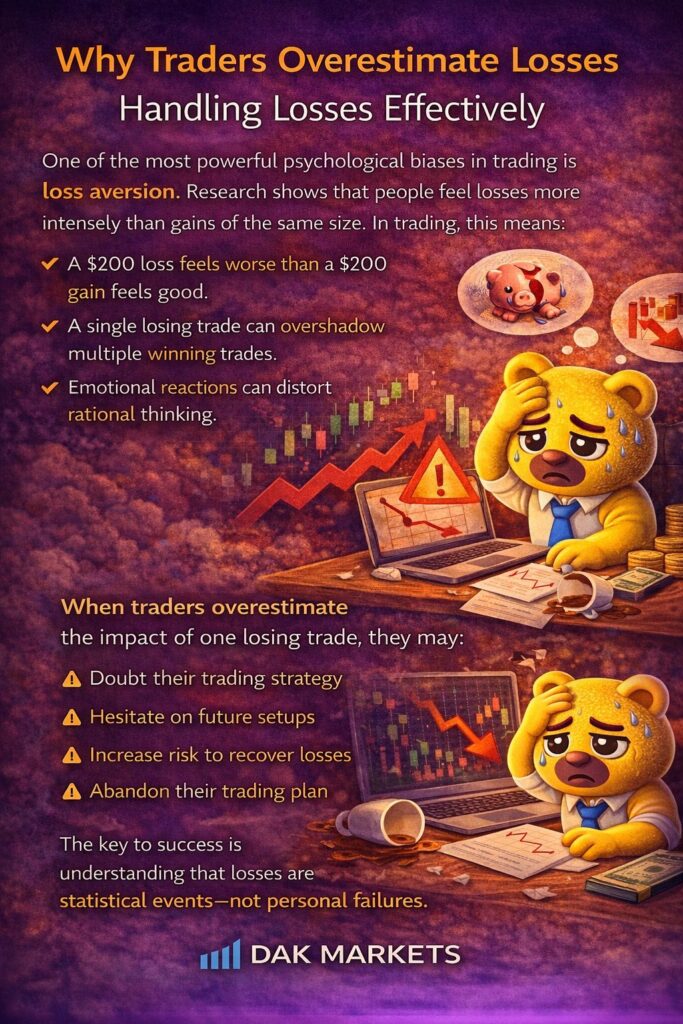
A controlled loss within your risk management plan is not harmful. The real damage often comes from emotional reactions.
For example:
- You take a losing trade.
- You feel frustrated or anxious.
- You increase your lot size to recover the loss.
- You enter a trade outside your strategy.
- You suffer another loss.
Now the original loss has multiplied because emotions overruled discipline.
At DAK Markets, we emphasize structured trading supported by clear risk management rules to prevent this cycle.
Losses Are Part of Professional Trading
Even the most experienced traders at global institutions experience losing trades regularly. What makes them consistent is:
- Proper position sizing
- Strict Stop Loss discipline
- Long-term perspective
- Emotional control
Trading forex and CFDs with DAK Markets gives you access to professional-grade execution and trading conditions—but success still depends on your mindset.
Losses are not optional in trading. They are part of the process.

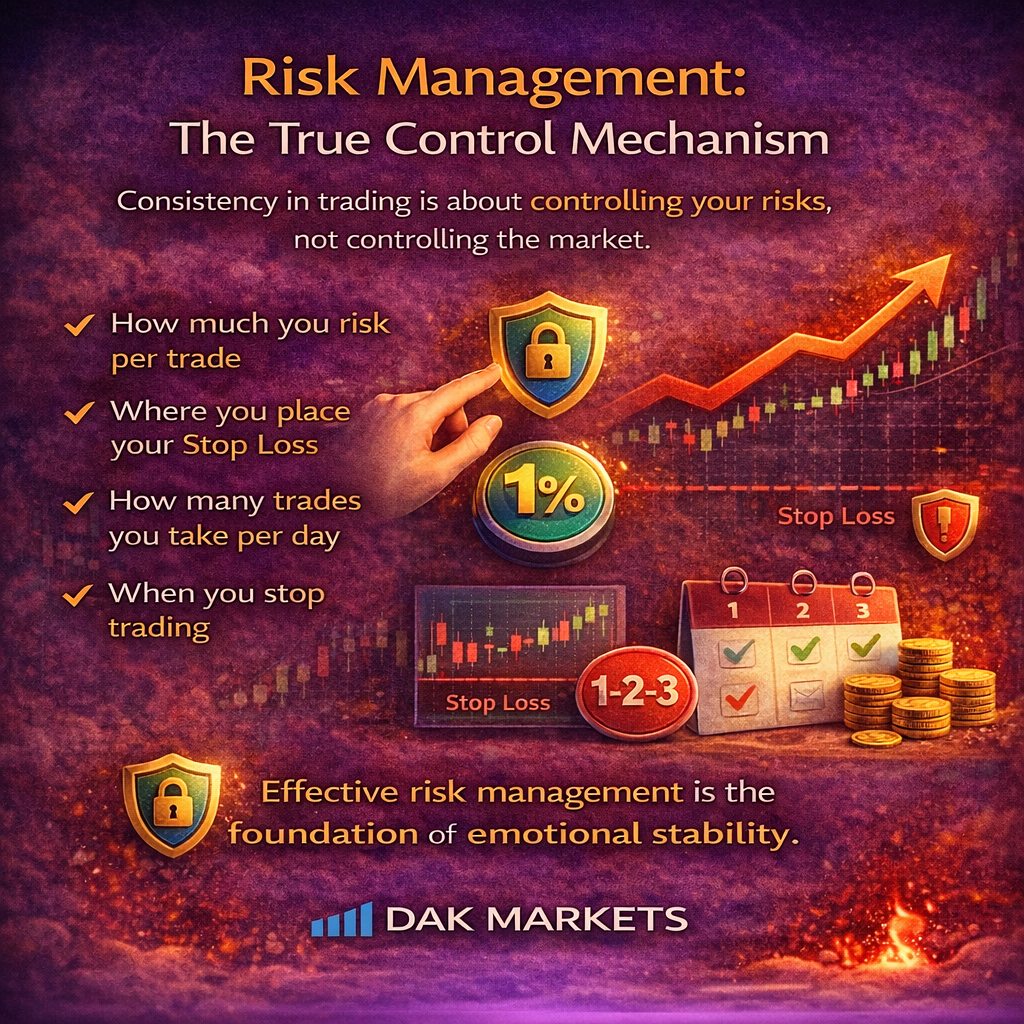
Risk Management: The True Control Mechanism
You cannot control market movements.
You can control:
- How much you risk per trade
- Where you place your Stop Loss
- How many trades you take per day
- When you stop trading
Effective risk management in forex trading is the foundation of emotional stability.
For example, risking only 1% of your capital per trade ensures that even a series of five consecutive losses results in only a 5% drawdown—manageable and recoverable.
With disciplined risk management, losses become expected expenses—not emotional crises.
Why Inexperienced Traders Struggle More
Many new traders enter the forex market expecting quick profits. When the first losing trade occurs, it conflicts with unrealistic expectations.
Common reactions include:
- “My strategy doesn’t work.”
- “I need a new indicator.”
- “I must recover this immediately.”
Without a tested trading strategy and clear trading plan, even one loss can destabilize confidence.
That’s why education, preparation, and realistic goal-setting are essential—values that DAK Markets supports through responsible trading principles.

How to Get Used to Losing Trades
Getting comfortable with losses doesn’t mean ignoring them. It means understanding their role in a probability-based system.
Here’s how to build resilience:
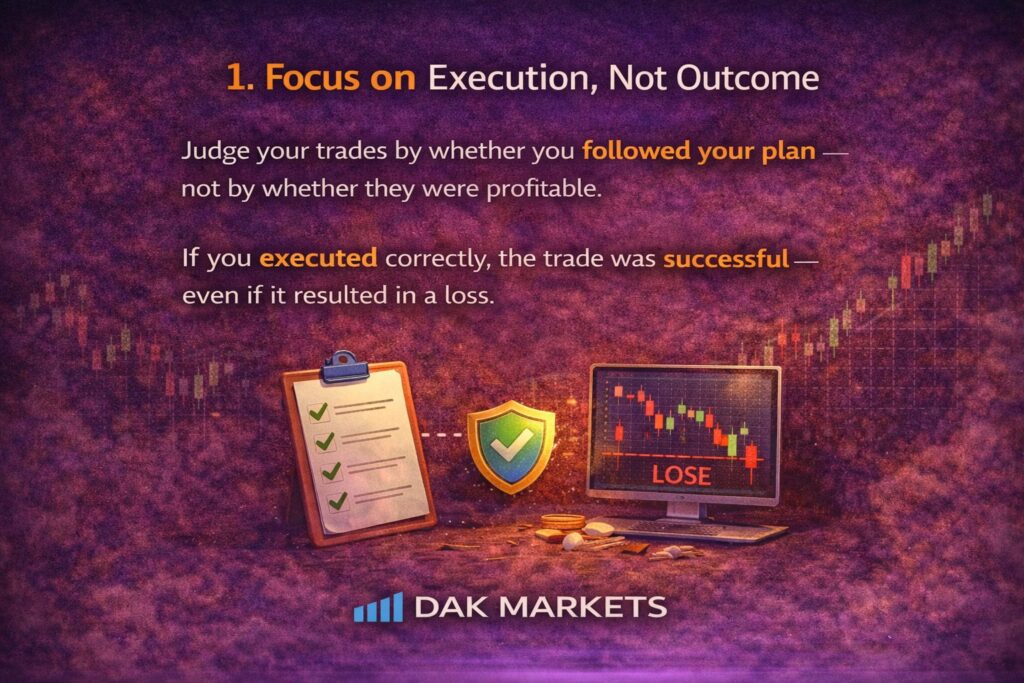
1. Focus on Execution, Not Outcome
Judge your trades by whether you followed your plan—not by whether they were profitable.
If you executed correctly, the trade was successful—even if it resulted in a loss.
2. Develop a Tested Trading Strategy
Confidence comes from data. Backtest your strategy. Understand your:
- Win rate
- Risk-to-reward ratio
- Average drawdown
When you know your numbers, a single loss loses emotional weight.

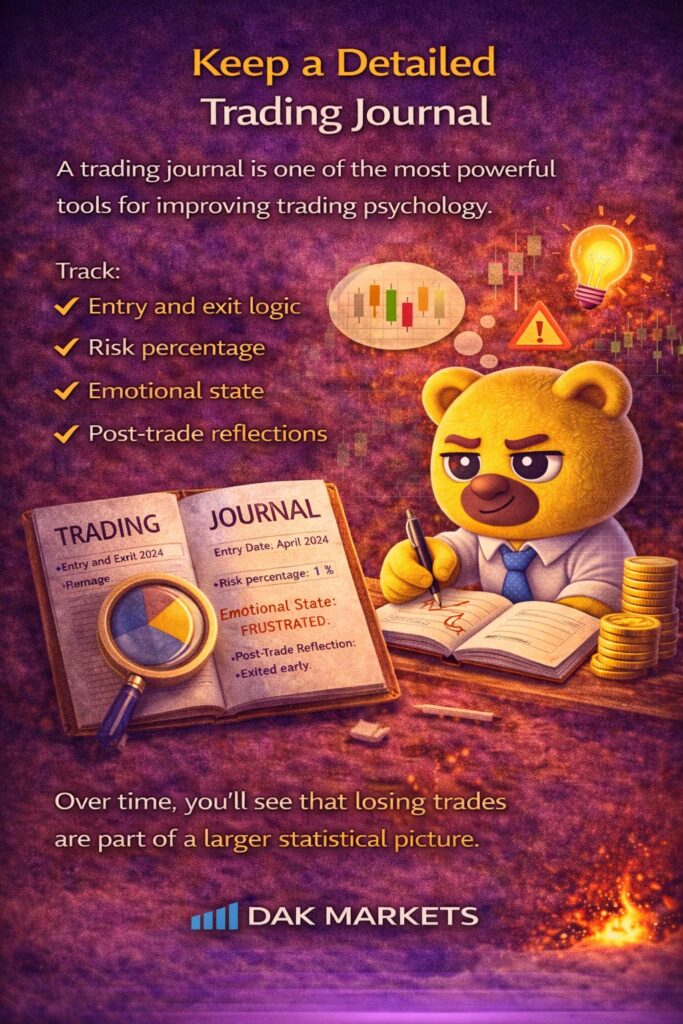
3. Keep a Detailed Trading Journal
A trading journal is one of the most powerful tools for improving trading psychology.
Track:
- Entry and exit logic
- Risk percentage
- Emotional state
- Post-trade reflections
Over time, you’ll see that losing trades are part of a larger statistical picture.
4. Avoid Revenge Trading
Revenge trading is one of the fastest ways to damage an account.
Signs of revenge trading include:
- Increasing position size impulsively
- Removing Stop Loss orders
- Entering trades without confirmation
- Trading outside your plan
After a loss, step away. Reset emotionally. The market will still be there.

The Long-Term Perspective: Think in Series, Not Single Trades
Professional traders do not think in individual trades. They think in series of 50, 100, or 200 trades.
A single losing trade is meaningless within a larger performance sample.
For example:
- A strategy with a 50% win rate and a 1:2 risk-reward ratio can be highly profitable long term.
- That same strategy will still produce frequent losses.
Consistency is built on trust in probabilities—not emotional reactions.
Trading with DAK Markets provides a stable execution environment, but long-term profitability depends on disciplined decision-making.

Emotional Control Is a Competitive Advantage
Most retail traders struggle with emotional discipline.
Those who accept losses calmly gain an edge because they:
- Maintain structured risk management
- Avoid impulsive trades
- Protect capital during drawdowns
- Stay consistent in execution
Emotional resilience is not a personality trait—it’s a skill developed through repetition and awareness.

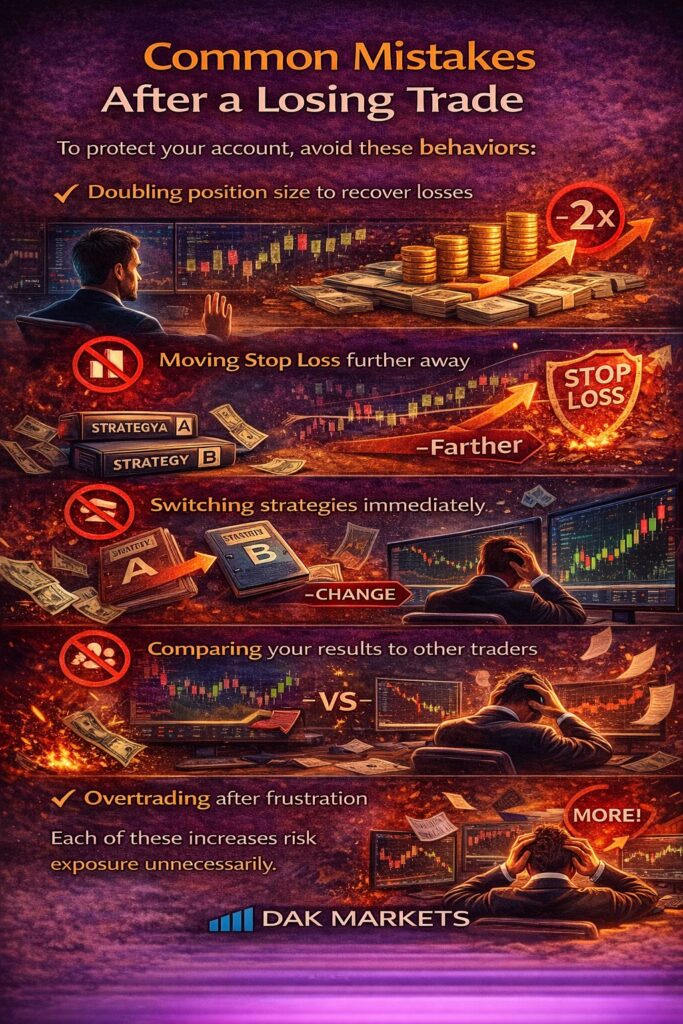
Common Mistakes After a Losing Trade
To protect your account, avoid these behaviors:
- Doubling position size to recover losses
- Moving Stop Loss further away
- Switching strategies immediately
- Comparing your results to other traders
- Overtrading after frustration
Each of these increases risk exposure unnecessarily.
Accepting Losses as a Necessary Cost of Trading
Losses are not signs of failure. They are the cost of participating in financial markets.
Just like businesses have operating expenses, traders have losing trades.
The goal is not to eliminate losses—but to:
- Keep them small
- Keep them controlled
- Keep them consistent
When managed properly, losses become part of a sustainable trading model.

Final Thoughts: Trade with Discipline at DAK Markets
If you want to succeed in forex and CFD trading, you must stop overestimating losses.
Instead:
- Build a structured trading plan
- Apply disciplined risk management
- Focus on long-term performance
- Develop emotional resilience
At DAK Markets, we support traders by providing competitive trading conditions, transparent execution, and a professional trading environment. But ultimately, your success depends on mindset and discipline.
Accept losses.
Control risk.
Stay consistent.
That is the foundation of sustainable trading success with DAK Markets.