In the world of forex and CFD trading, success is often associated with strategy, risk management, and market knowledge. However, one of the most powerful forces influencing trading performance is not technical or fundamental analysis — it’s psychology.
One of the most damaging psychological biases traders face is confirmation bias.
Understanding how confirmation bias affects trading decisions can dramatically improve your long-term performance. In this article, we’ll explore what confirmation bias is, how it impacts traders, how it distorts backtesting, and most importantly, how to overcome it.
What Is Confirmation Bias in Trading?
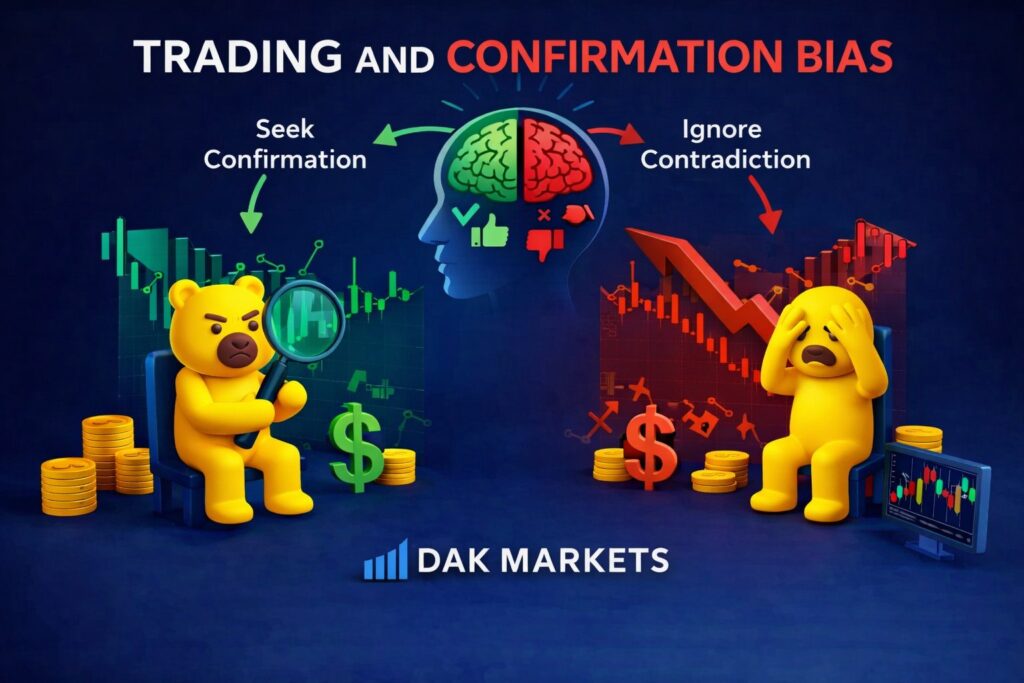
Confirmation bias is a cognitive bias where individuals seek, interpret, and remember information that confirms their existing beliefs while ignoring or downplaying information that contradicts them.
In trading, this means:
- You look for analysis that supports your current position.
- You ignore signals that suggest the market may move against you.
- You interpret neutral data in a way that fits your bias.
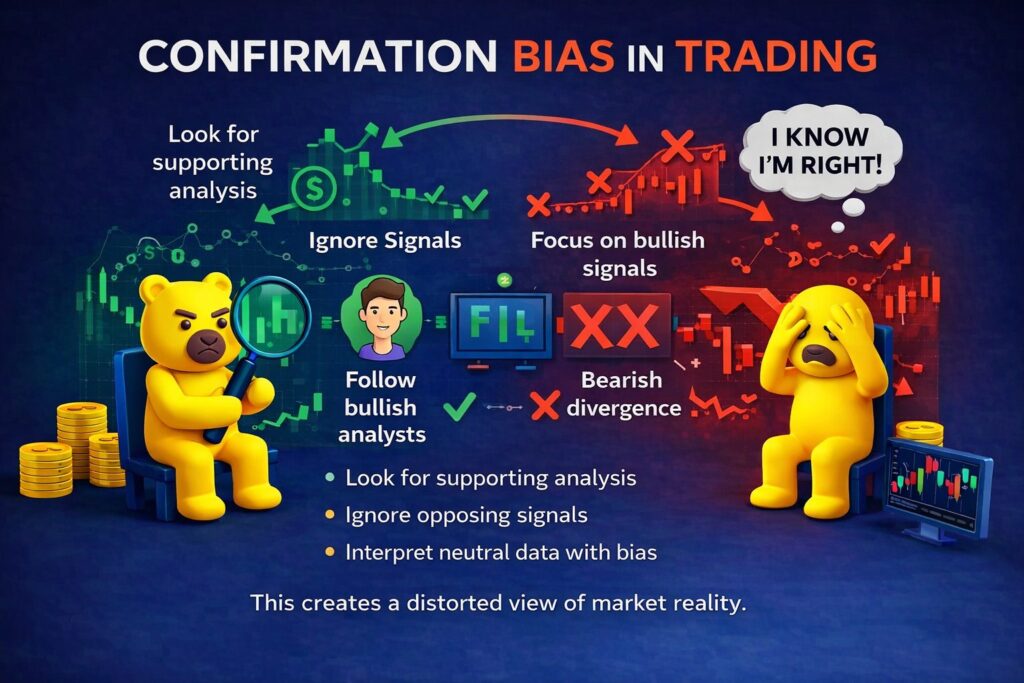
For example, if you believe EUR/USD is bullish, you might:
- Focus only on bullish technical patterns.
- Follow analysts who predict higher prices.
- Ignore bearish divergence signals.
- Hold losing positions because you “know” you’re right.
This creates a distorted view of market reality.
How Confirmation Bias Destroys Trading Performance
Confirmation bias directly affects both decision-making and long-term trading results.
1. Selective Analysis
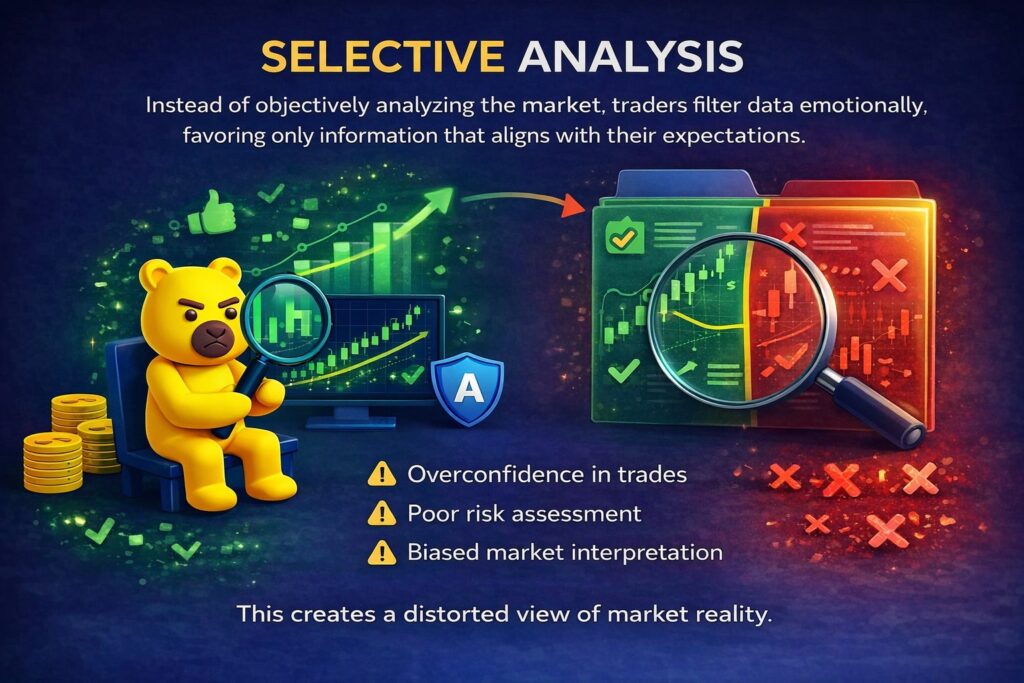
Instead of objectively analyzing the market, traders filter data emotionally. They give more weight to indicators that align with their expectations and disregard contradictory evidence.
This leads to:
- Overconfidence in trades
- Poor risk assessment
- Biased market interpretation
2. Holding Losing Trades Too Long
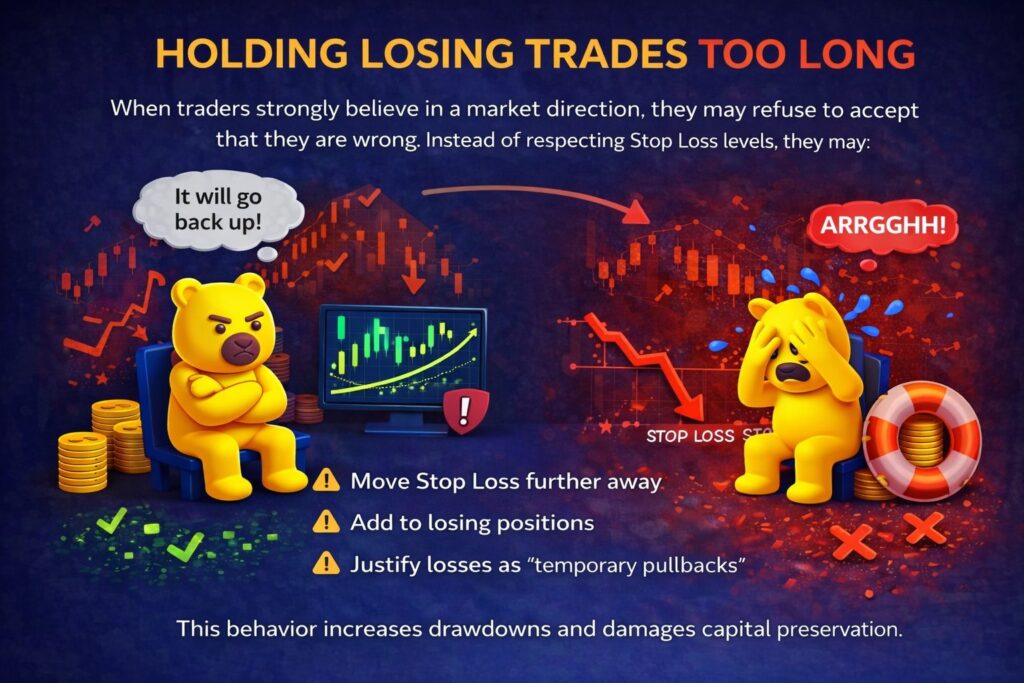
When traders strongly believe in a market direction, they may refuse to accept that they are wrong.
Instead of respecting Stop Loss levels, they may:
- Move Stop Loss further away
- Add to losing positions
- Justify losses as “temporary pullbacks”
This behavior increases drawdowns and damages capital preservation.
3. Missing New Opportunities
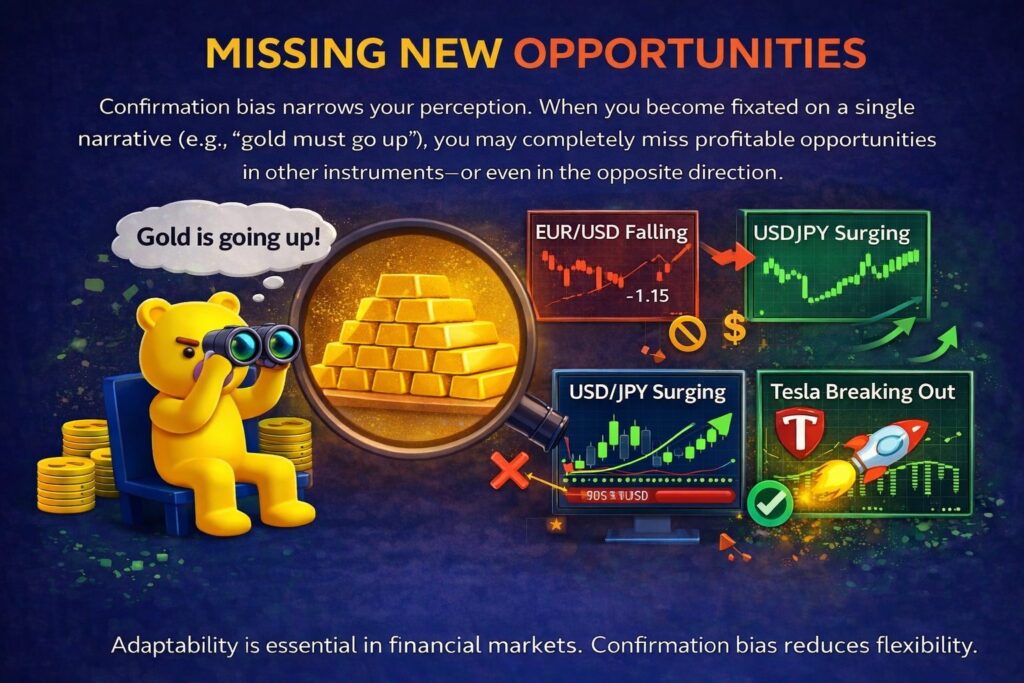
Confirmation bias narrows perception.
If you are fixated on one narrative (e.g., gold must go up), you may completely miss profitable opportunities in other instruments or even in the opposite direction.
Adaptability is essential in financial markets. Confirmation bias reduces flexibility.
Confirmation Bias in Backtesting and Strategy Development
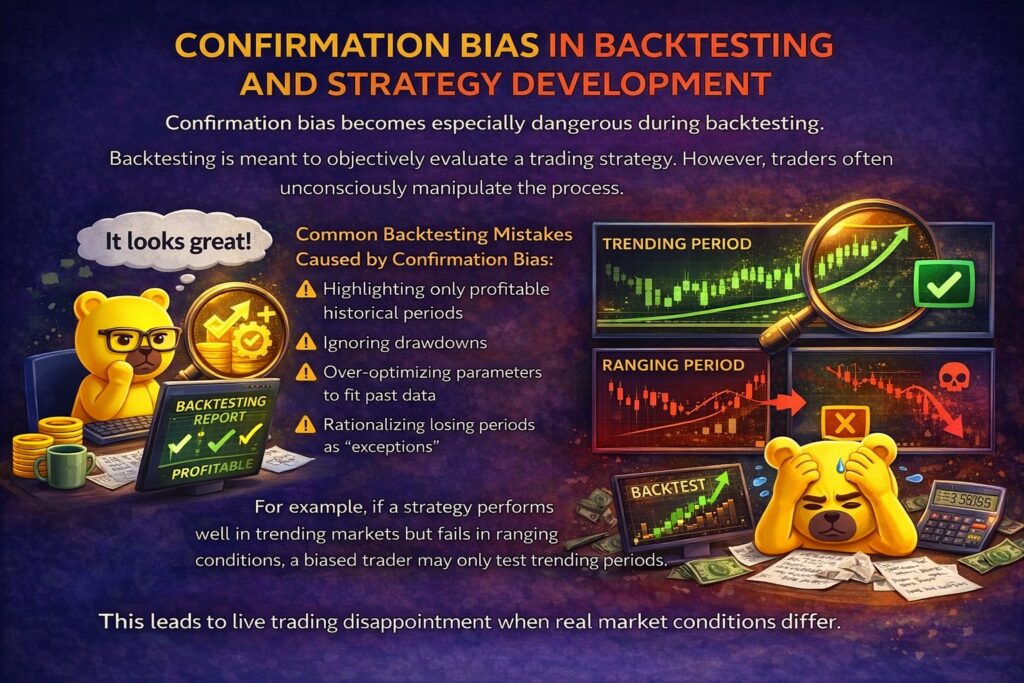
Confirmation bias becomes especially dangerous during backtesting.
Backtesting is meant to objectively evaluate a trading strategy. However, traders often unconsciously manipulate the process.
Common Backtesting Mistakes Caused by Confirmation Bias:
- Highlighting only profitable historical periods
- Ignoring drawdowns
- Over-optimizing parameters to fit past data
- Rationalizing losing periods as “exceptions”
For example, if a strategy performs well in trending markets but fails in ranging conditions, a biased trader may only test trending periods.
The result? A misleading sense of confidence.
This leads to live trading disappointment when real market conditions differ.
Emotional Attachment to Market Views
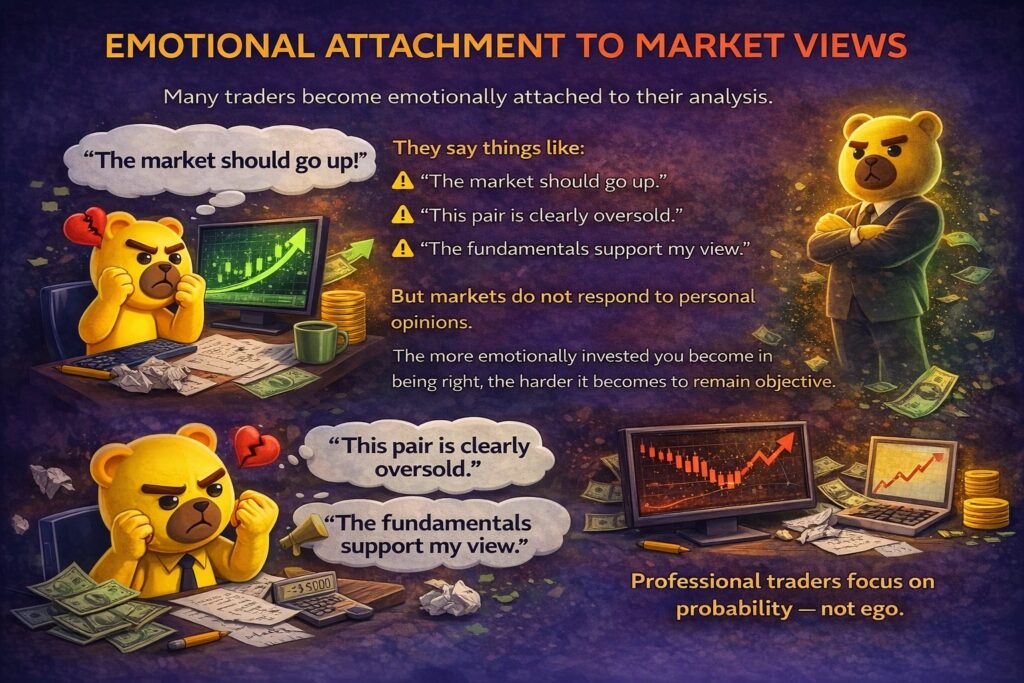
Many traders become emotionally attached to their analysis.
They say things like:
- “The market should go up.”
- “This pair is clearly oversold.”
- “The fundamentals support my view.”
But markets do not respond to personal opinions.
The more emotionally invested you become in being right, the harder it becomes to remain objective.
Professional traders focus on probability — not ego.
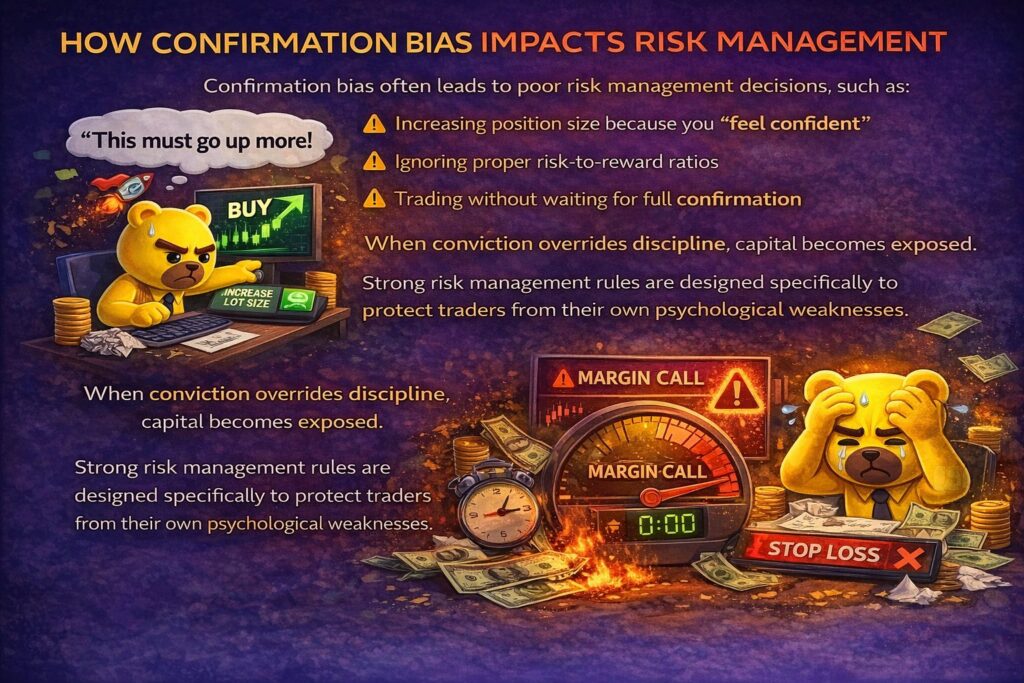
How Confirmation Bias Impacts Risk Management
Confirmation bias often leads to poor risk management decisions, such as:
- Increasing position size because you “feel confident”
- Ignoring proper risk-to-reward ratios
- Trading without waiting for full confirmation
When conviction overrides discipline, capital becomes exposed.
Strong risk management rules are designed specifically to protect traders from their own psychological weaknesses.
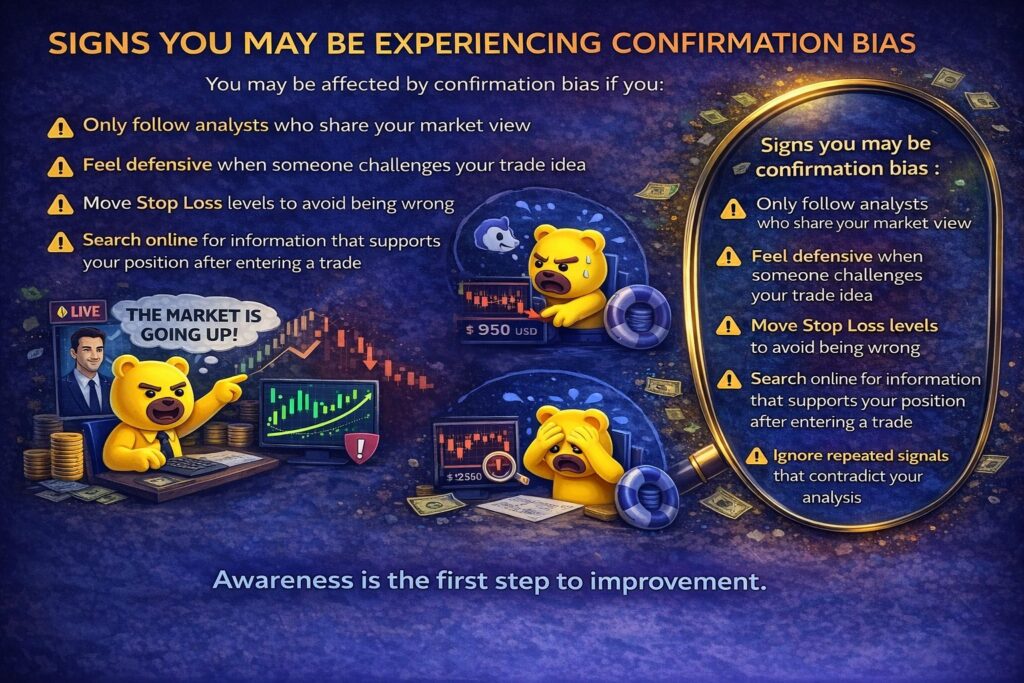
Signs You May Be Experiencing Confirmation Bias
You may be affected by confirmation bias if you:
- Only follow analysts who share your market view
- Feel defensive when someone challenges your trade idea
- Move Stop Loss levels to avoid being wrong
- Search online for information that supports your position after entering a trade
- Ignore repeated signals that contradict your analysis
Awareness is the first step to improvement.
How to Overcome Confirmation Bias in Trading
While confirmation bias is natural, it can be managed.
Here are practical strategies to reduce its impact:
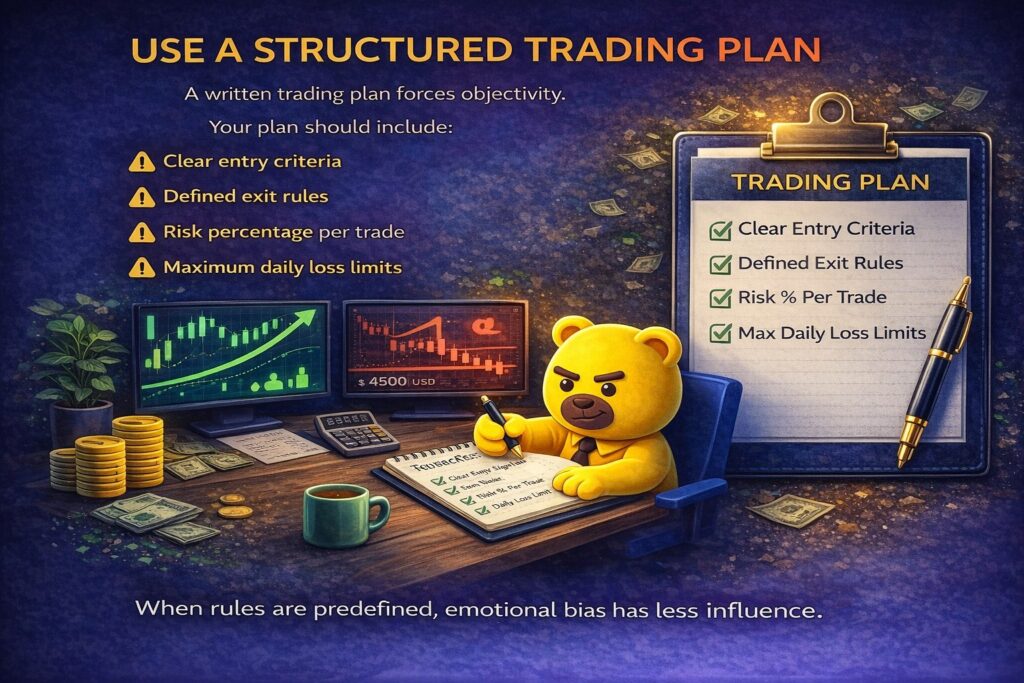
1. Use a Structured Trading Plan
A written trading plan forces objectivity.
Your plan should include:
- Clear entry criteria
- Defined exit rules
- Risk percentage per trade
- Maximum daily loss limits
When rules are predefined, emotional bias has less influence.
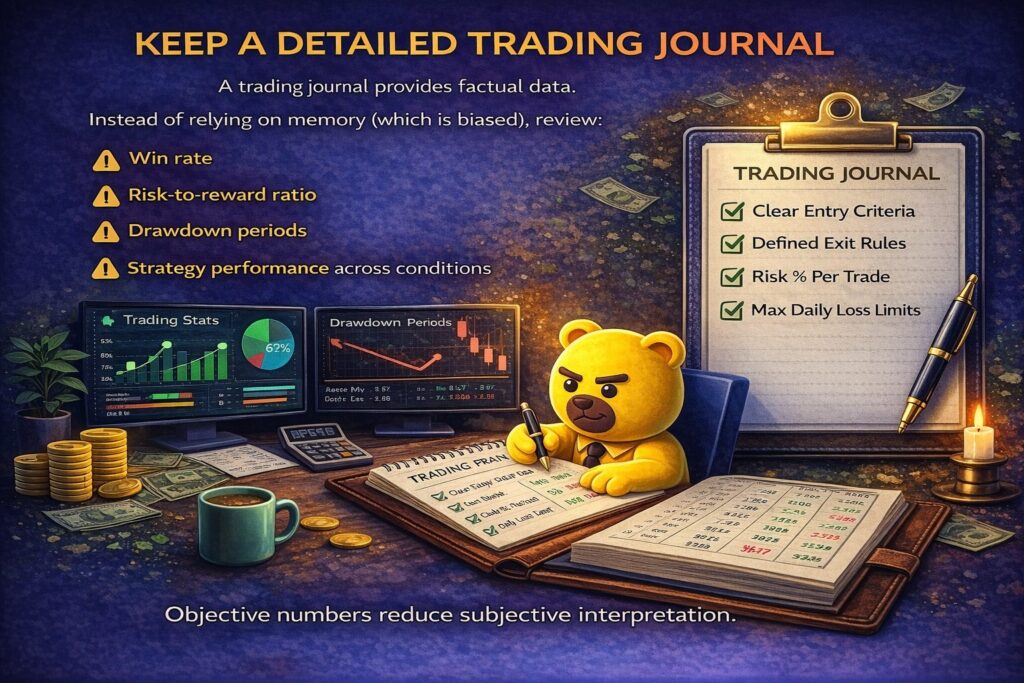
2. Keep a Detailed Trading Journal
A trading journal provides factual data.
Instead of relying on memory (which is biased), review:
- Win rate
- Risk-to-reward ratio
- Drawdown periods
- Strategy performance across conditions
Objective numbers reduce subjective interpretation.
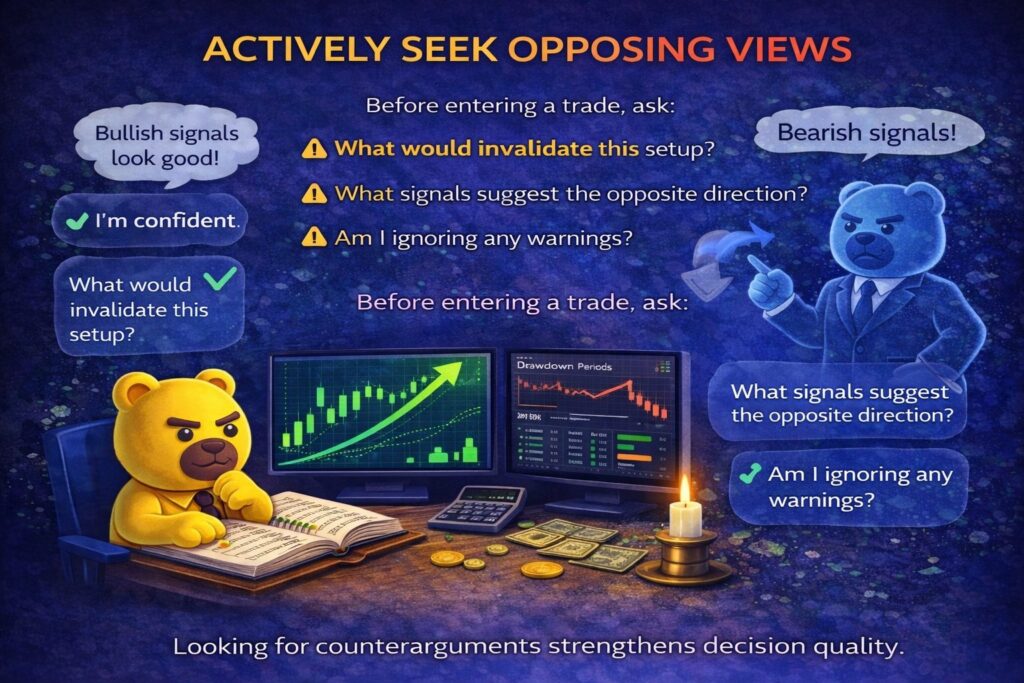
3. Actively Seek Opposing Views
Before entering a trade, ask:
- What would invalidate this setup?
- What signals suggest the opposite direction?
- Am I ignoring any warnings?
Looking for counterarguments strengthens decision quality.
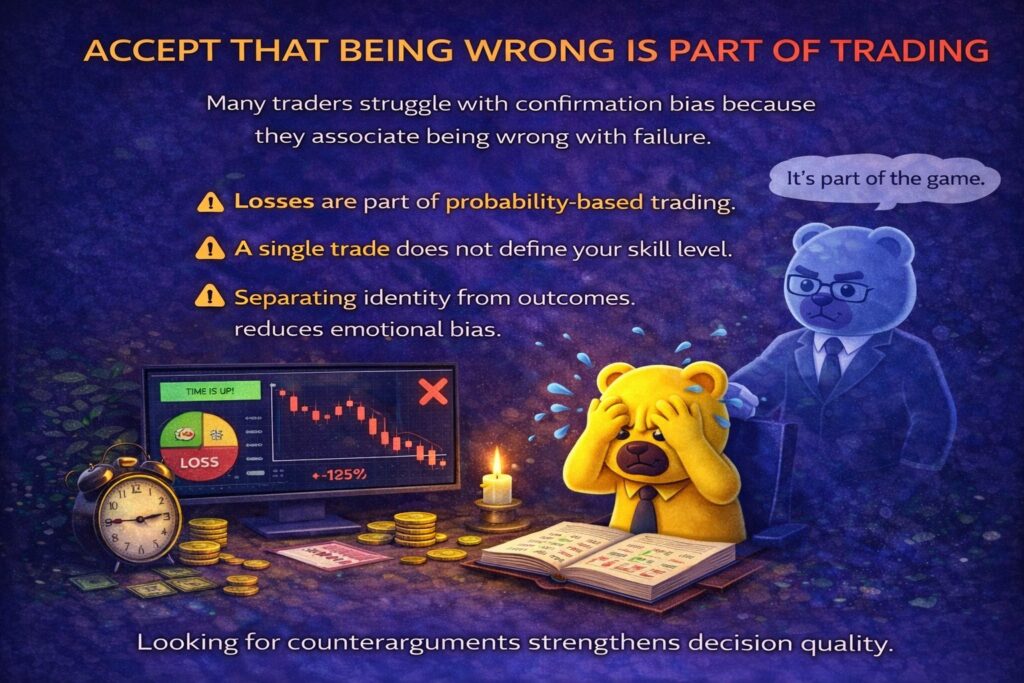
4. Accept That Being Wrong Is Part of Trading
Many traders struggle with confirmation bias because they associate being wrong with failure.
In reality:
Losses are part of probability-based trading.
A single trade does not define your skill level.
Separating identity from outcomes reduces emotional bias.
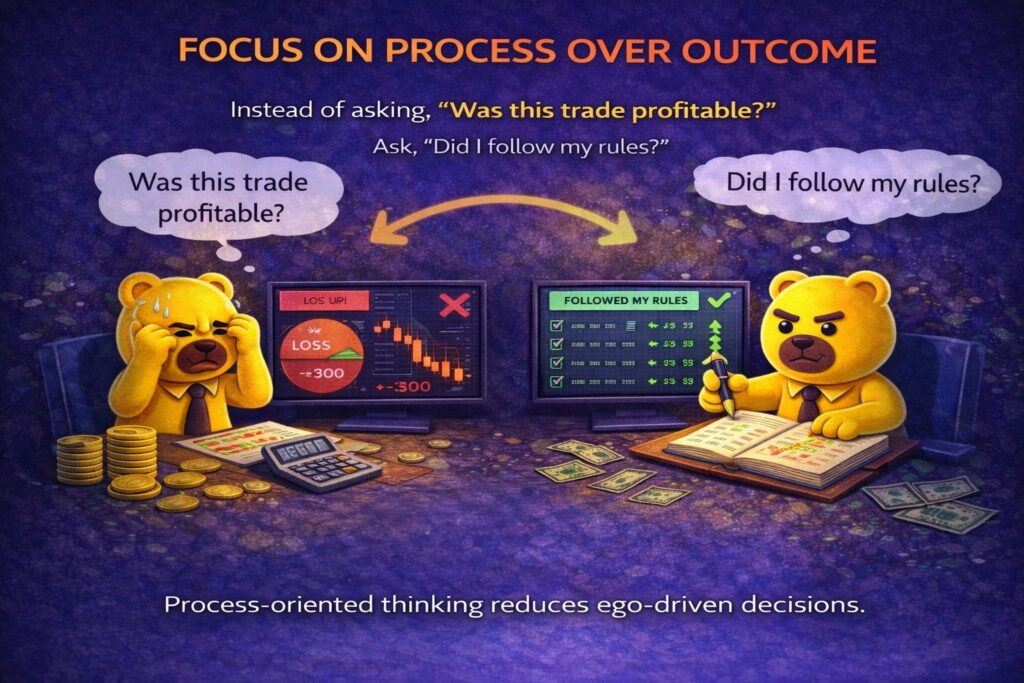
5. Focus on Process Over Outcome
Instead of asking, “Was this trade profitable?”
Ask, “Did I follow my rules?”
Process-oriented thinking reduces ego-driven decisions.
The Long-Term Impact of Managing Confirmation Bias
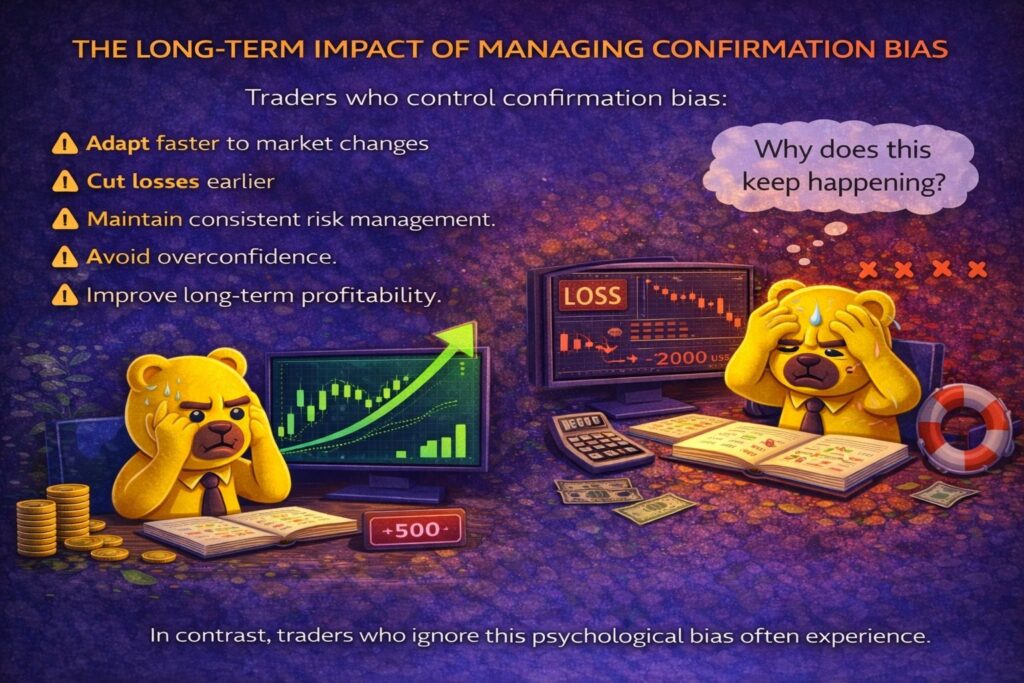
Traders who control confirmation bias:
- Adapt faster to market changes
- Cut losses earlier
- Maintain consistent risk management
- Avoid overconfidence
- Improve long-term profitability
In contrast, traders who ignore this psychological bias often experience repeated drawdowns and emotional stress.
Final Thoughts: Objective Analysis Wins in Trading
Confirmation bias is one of the most dangerous psychological traps in forex and CFD trading. It distorts perception, weakens risk management, and reinforces poor habits.
Markets reward objectivity, discipline, and adaptability — not stubborn conviction.
If you want to improve your trading performance:
- Follow structured rules
- Analyze both sides of every setup
- Respect Stop Losses
- Evaluate strategies with honest data
- Embrace flexibility
The more objective your analysis, the stronger your results.
Trading success is not about proving yourself right — it’s about managing probabilities intelligently and protecting capital consistently.