Self-compassion means treating yourself with patience and understanding when things do not go as planned. In trading, this is especially important because losses are inevitable.
Even the most experienced traders do not win every trade. Markets are unpredictable, and no strategy has a 100 percent win rate. When traders practice self-compassion, they understand that mistakes and losses are part of learning.
Instead of saying:
“I completely failed with that trade.”
A self-compassionate trader might say:
“That trade did not work out, but I can learn from it.”
This small shift in thinking can have a big impact on long-term performance.
Traders who practice self-compassion tend to recover faster from setbacks and stay committed to their trading plan.
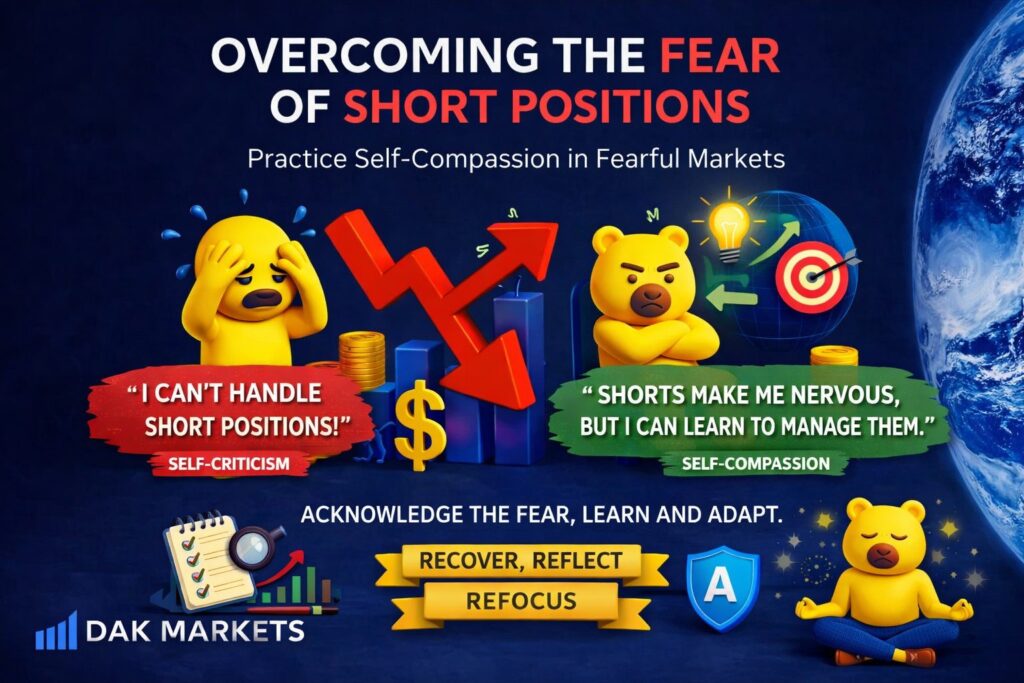
Why Self-Criticism Is Dangerous for Traders
Many traders fall into the trap of negative self-talk. After a losing trade, emotions can quickly spiral into frustration or doubt.
You might hear thoughts such as:
- “I will never succeed at trading.”
- “I always make mistakes.”
- “I should have known better.”
This type of thinking damages confidence and creates emotional stress.
When traders criticize themselves too harshly, they often respond with impulsive actions. This may include:
- Revenge trading
- Increasing position size out of frustration
- Ignoring risk management rules
- Abandoning their trading strategy
These emotional decisions often lead to bigger losses.
At DAK Markets, we encourage traders to focus on discipline and long-term growth rather than perfection.
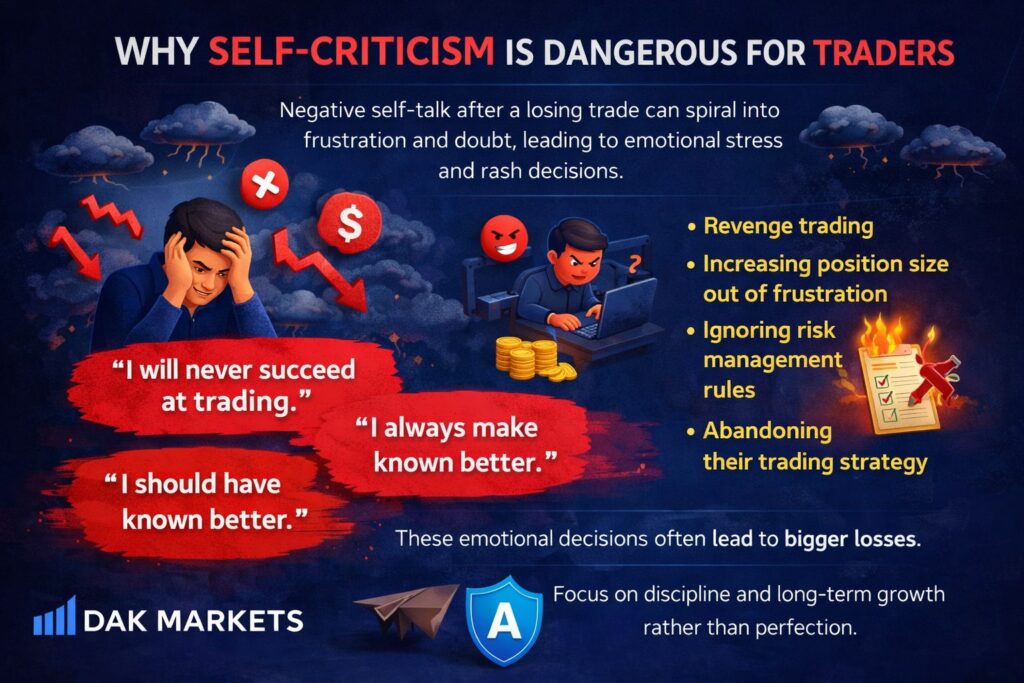
The Science Behind Self-Compassion and Performance
Psychological studies show that self-compassion improves performance in many high-pressure environments. Athletes, entrepreneurs, and professional traders all benefit from this mindset.
Research in performance psychology reveals that people who practice self-compassion:
- Recover faster from setbacks
- Maintain focus during stressful situations
- Make more rational decisions under pressure
- Show higher levels of long-term persistence
Trading is a mental game. When emotions take control, even the best strategy can fail. Self-compassion helps traders remain calm and objective.
Instead of reacting emotionally to losses, traders can analyze their decisions and improve their process.
This approach supports long-term profitability and sustainable trading habits.
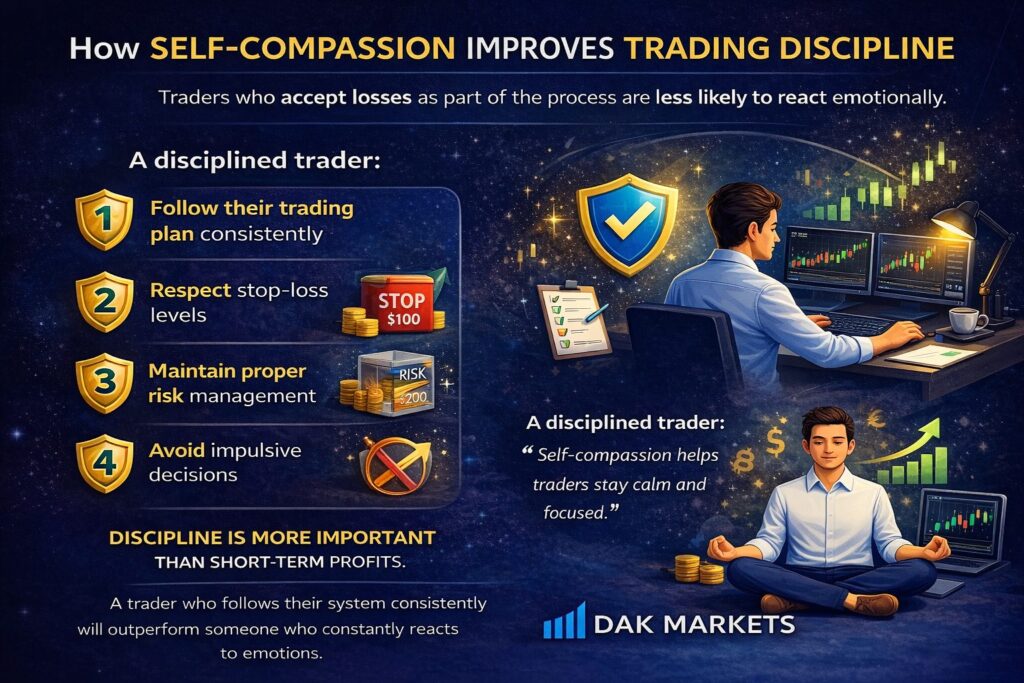
How Self-Compassion Improves Trading Discipline
Self-compassion directly strengthens trading discipline. Traders who accept losses as part of the process are less likely to react emotionally.
This mindset helps traders:
- Follow their trading plan consistently
- Respect stop-loss levels
- Maintain proper risk management
- Avoid impulsive decisions
At DAK Markets, we emphasize that discipline is more important than short-term profits.
A trader who follows their system consistently will outperform someone who constantly reacts to emotions.
Practical Ways to Practice Self-Compassion in Trading
Developing self-compassion is a skill that traders can practice every day. Here are several practical techniques that can help.
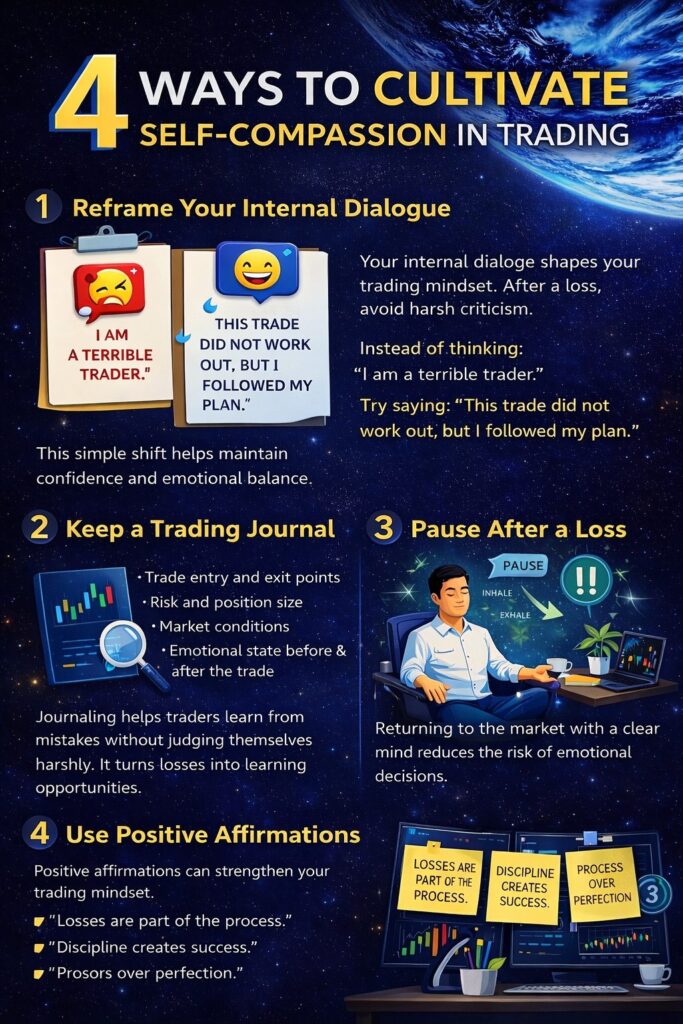
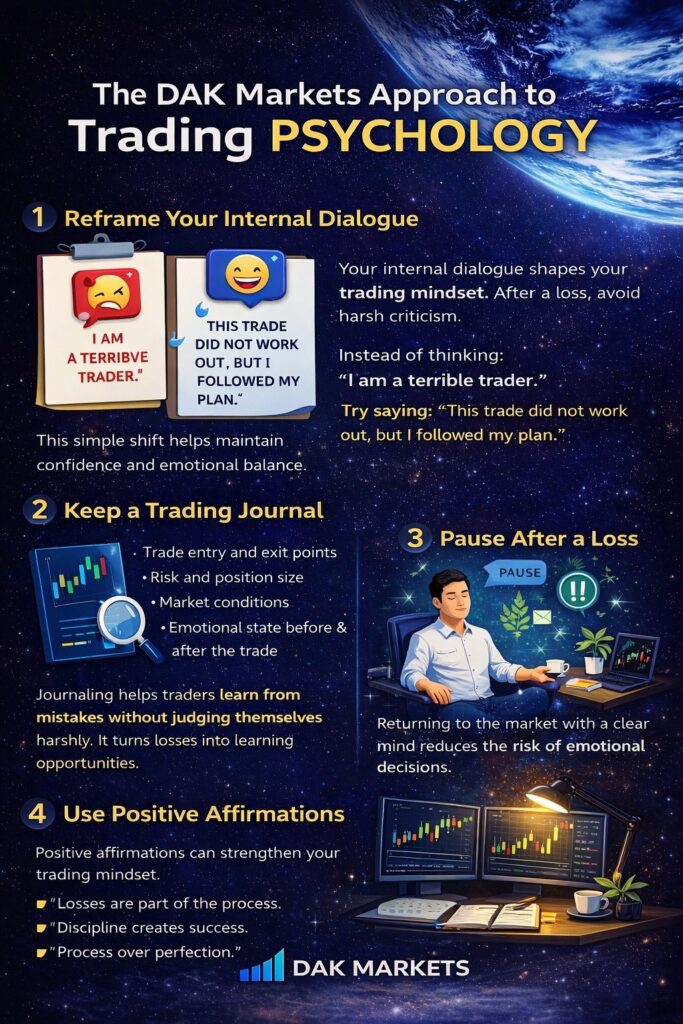
1. Reframe Your Internal Dialogue
Your internal dialogue shapes your trading mindset. After a loss, avoid harsh criticism.
Instead of thinking:
“I am a terrible trader.”
Try saying:
“This trade did not work out, but I followed my plan.”
This simple shift helps maintain confidence and emotional balance.
2. Keep a Trading Journal
A trading journal is one of the most powerful tools for improving performance.
At DAK Markets, we recommend recording:
- Trade entry and exit points
- Risk and position size
- Market conditions
- Emotional state before and after the trade
Journaling helps traders learn from mistakes without judging themselves harshly.
It turns losses into learning opportunities.
3. Pause After a Loss
After a losing trade, take a moment to reset your mindset.
Step away from your screen if necessary. Deep breathing or a short break can calm your nervous system and restore focus.
Returning to the market with a clear mind reduces the risk of emotional decisions.
4. Use Positive Affirmations
Positive affirmations can strengthen your trading mindset.
Place reminders near your trading desk such as:
- “Losses are part of the process.”
- “Discipline creates success.”
- “Process over perfection.”
These messages help train your mind to stay calm and focused during difficult moments.
The DAK Markets Approach to Trading Psychology
At DAK Markets, we believe successful traders combine technical knowledge with psychological strength.
Our platform provides traders with:
- Advanced trading tools
- Tight spreads and competitive pricing
- Fast order execution
- Reliable trading infrastructure
However, technology alone does not create successful traders.
Mental discipline, patience, and emotional resilience are equally important.
Self-compassion plays a key role in developing these qualities.
Traders who maintain a balanced mindset can navigate market volatility with greater confidence.
Building Long-Term Trading Success
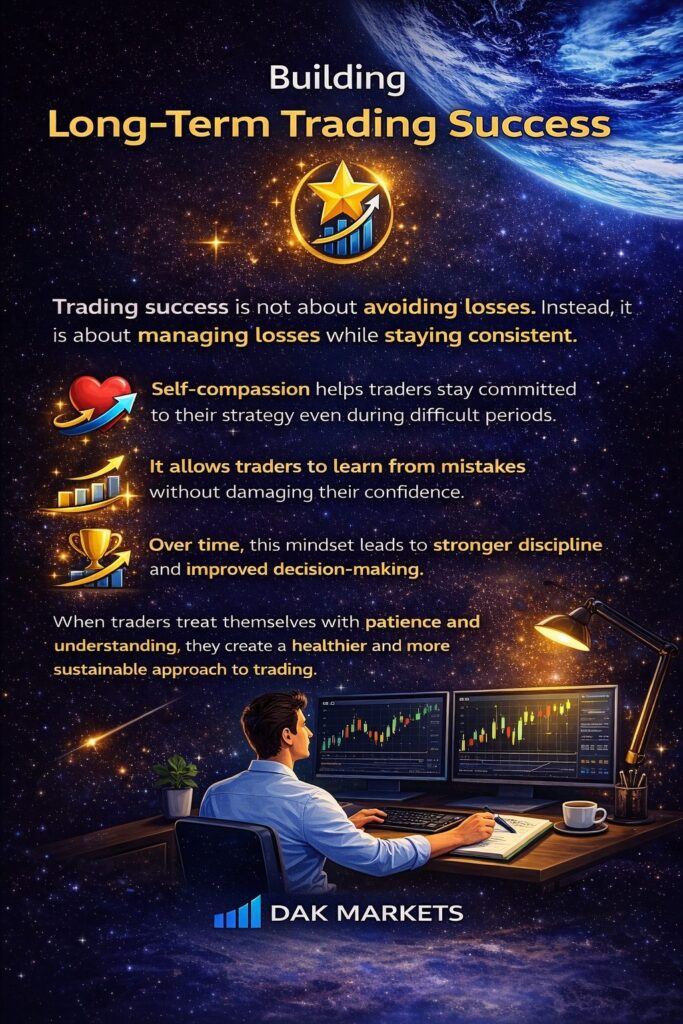
Trading success is not about avoiding losses. Instead, it is about managing losses while staying consistent.
Self-compassion helps traders stay committed to their strategy even during difficult periods.
It allows traders to learn from mistakes without damaging their confidence.
Over time, this mindset leads to stronger discipline and improved decision-making.
When traders treat themselves with patience and understanding, they create a healthier and more sustainable approach to trading.
Final Thoughts
Self-compassion in trading is often overlooked, but it can be a powerful advantage.
Markets will always test your strategy and your emotions. Losses will happen, and mistakes are part of the journey.
What matters most is how you respond.
Traders who practice self-compassion recover faster, stay disciplined, and continue improving their skills.
At DAK Markets, we encourage traders to combine strong analysis with a resilient mindset.
The next time you log into your trading platform, remember:
You do not need to be perfect to succeed in trading.
You only need patience, discipline, and the willingness to keep learning.