Many beginner traders believe they must achieve a 90% win rate to become profitable. This idea is common on social media and trading forums. However, it is also one of the biggest misconceptions in the trading industry.
The truth is simple.
You do not need a 90% win rate to become a profitable trader.
In fact, many professional traders succeed with win rates between 40% and 60%. What matters more is risk management, discipline, and reward-to-risk ratio.
At DAK Markets, experienced traders understand that profitability does not come from winning every trade. Instead, it comes from managing losses and maximizing winning trades.
Let’s explore why a high win rate is not the key to long-term trading success.

Why Win Rate Alone Does Not Determine Profitability
A win rate only tells you how often a trader wins trades. It does not show how much money they make or lose.
Consider this example.
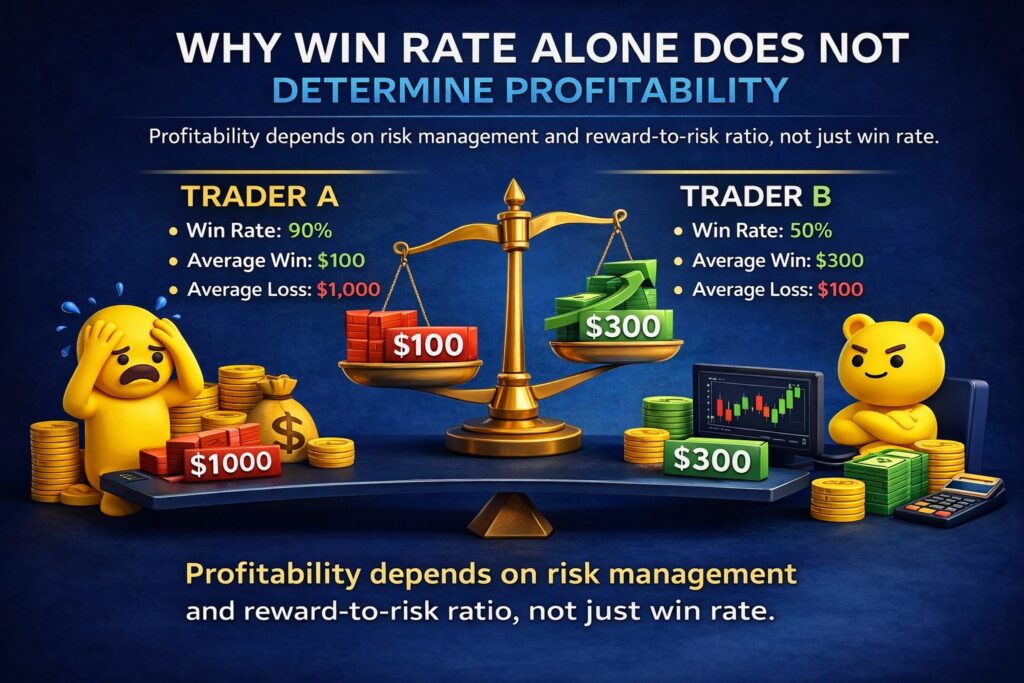
Trader A
- Win rate: 90%
- Average win: $100
- Average loss: $1,000
If Trader A loses just one trade, it can wipe out the profit from many winning trades.
Trader B
- Win rate: 50%
- Average win: $300
- Average loss: $100
Trader B wins only half of the trades. However, each winning trade is three times larger than each loss.
Over time, Trader B becomes profitable.
This example shows an important principle.
Profitability depends on risk management and reward-to-risk ratio, not just win rate.
The Power of Risk-to-Reward Ratios
Professional traders focus heavily on the risk-to-reward ratio.
This ratio measures how much a trader risks compared to how much they expect to gain.
For example:
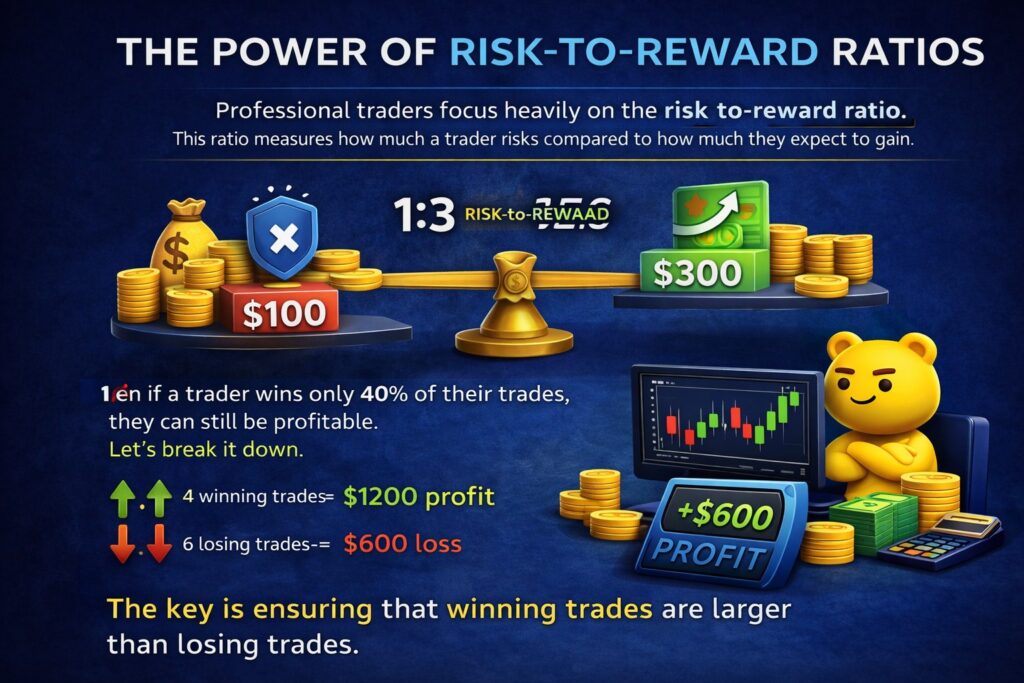
- Risk: $100
- Potential reward: $300
This creates a 1:3 risk-to-reward ratio.
Even if a trader wins only 40% of their trades, they can still be profitable.
Let’s break it down.
Out of 10 trades:
- 4 winning trades = $1200 profit
- 6 losing trades = $600 loss
Total result:
+$600 profit
This example shows that a trader can succeed with a relatively low win rate.
The key is ensuring that winning trades are larger than losing trades.
Why Professional Traders Accept Losses
Many beginners try to avoid losses completely. Unfortunately, this mindset leads to emotional trading and poor decisions.
Losses are a normal part of trading.
Even the best traders in the world lose trades regularly.
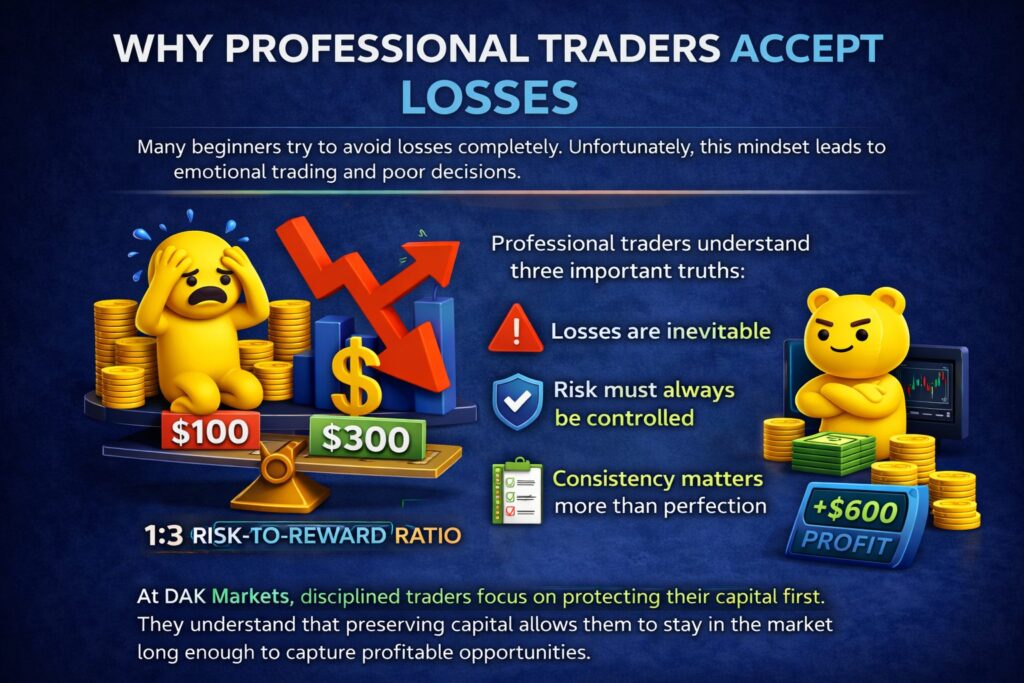
Professional traders understand three important truths:
- Losses are inevitable
- Risk must always be controlled
- Consistency matters more than perfection
At DAK Markets, disciplined traders focus on protecting their capital first. They understand that preserving capital allows them to stay in the market long enough to capture profitable opportunities.
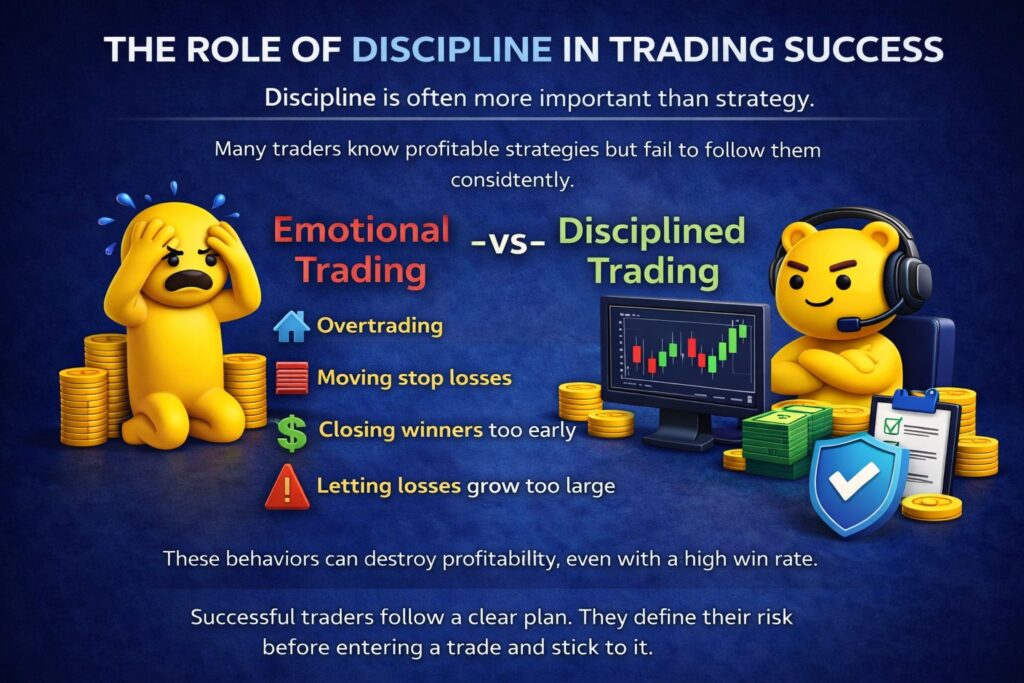
The Role of Discipline in Trading Success
Discipline is often more important than strategy.
Many traders know profitable strategies but fail to follow them consistently.
For example, emotional trading can lead to:
- Overtrading
- Moving stop losses
- Closing winners too early
- Letting losses grow too large
These behaviors can destroy profitability, even with a high win rate.
Successful traders follow a clear plan. They define their risk before entering a trade and stick to it.
This approach creates long-term consistency.
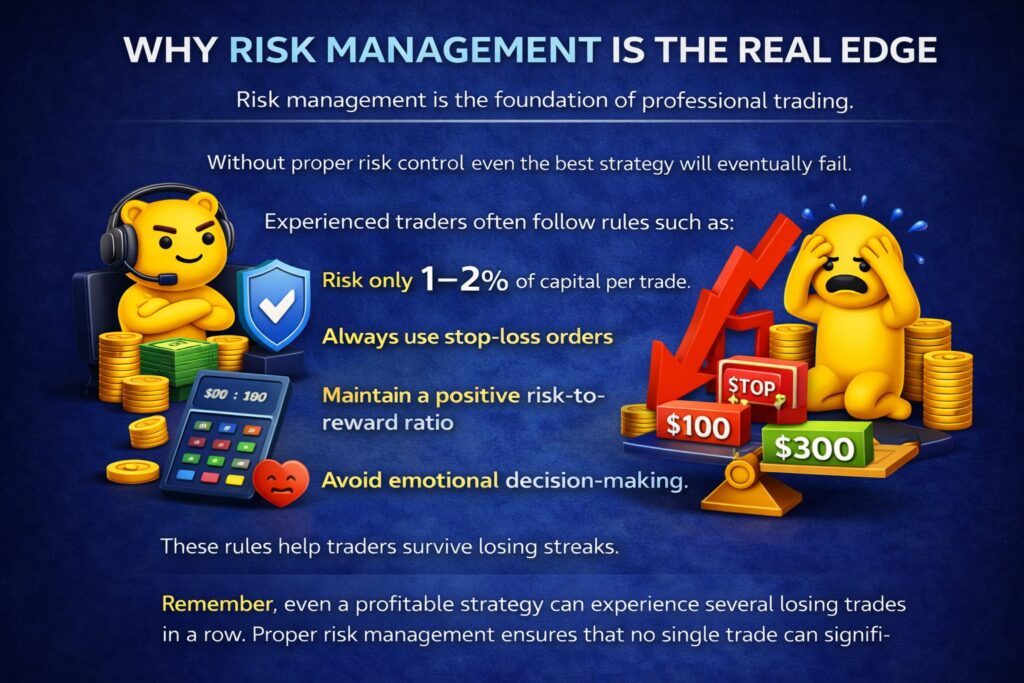
Why Risk Management Is the Real Edge
Risk management is the foundation of professional trading.
Without proper risk control, even the best strategy will eventually fail.
Experienced traders often follow rules such as:
- Risk only 1–2% of capital per trade
- Always use stop-loss orders
- Maintain a positive risk-to-reward ratio
- Avoid emotional decision-making
These rules help traders survive losing streaks.
Remember, even a profitable strategy can experience several losing trades in a row. Proper risk management ensures that no single trade can significantly damage the account.
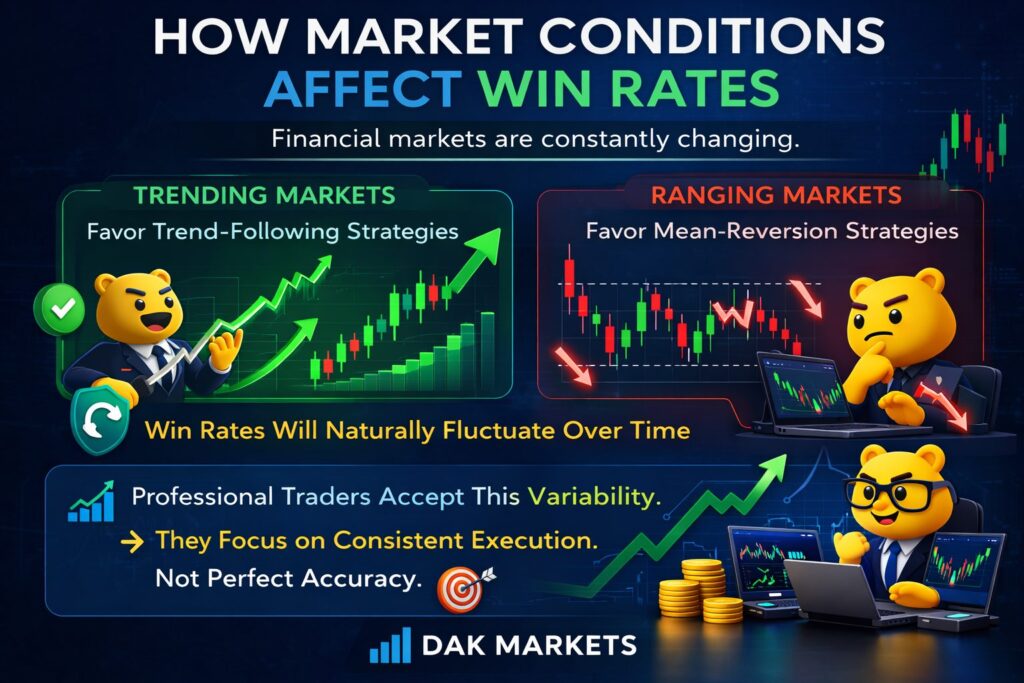
How Market Conditions Affect Win Rates
Financial markets are constantly changing.
Strategies that work in one environment may perform differently in another.
For example:
- Trending markets favor trend-following strategies
- Ranging markets favor mean-reversion strategies
Because of these changes, win rates will naturally fluctuate over time.
Professional traders accept this variability.
Instead of chasing perfect accuracy, they focus on consistent execution of their strategy.
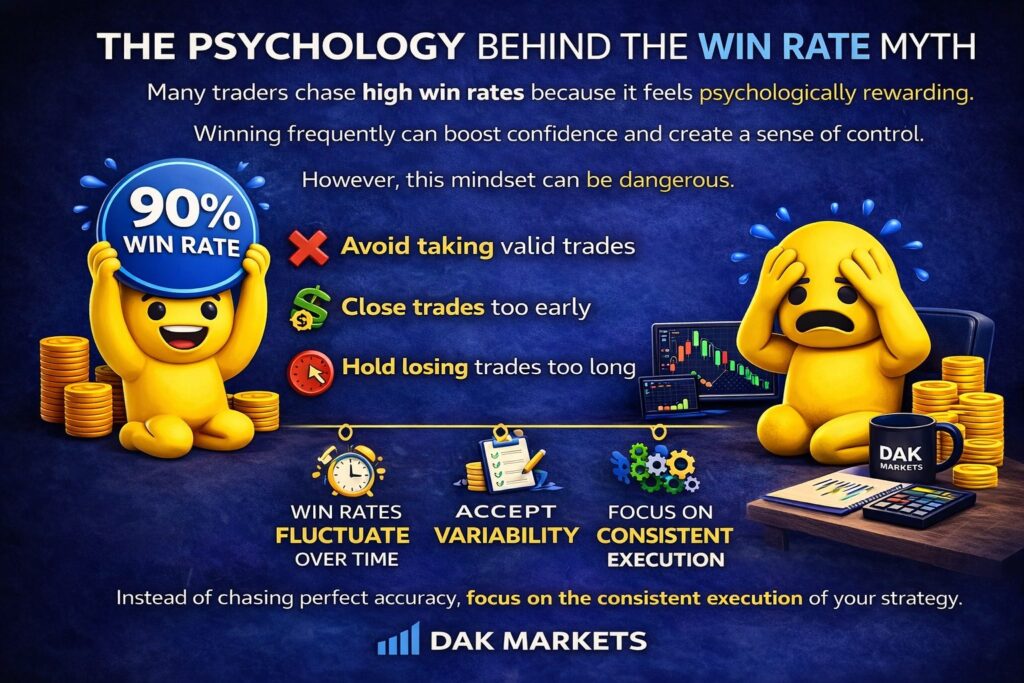
The Psychology Behind the Win Rate Myth
Many traders chase high win rates because it feels psychologically rewarding.
Winning frequently can boost confidence and create a sense of control.
However, this mindset can be dangerous.
Traders who focus only on win rate often:
- Avoid taking valid trades
- Close trades too early
- Hold losing trades too long
Ironically, this behavior can reduce overall profitability.
The most successful traders focus on process over outcomes.
They execute their strategy consistently and allow probabilities to play out over time.
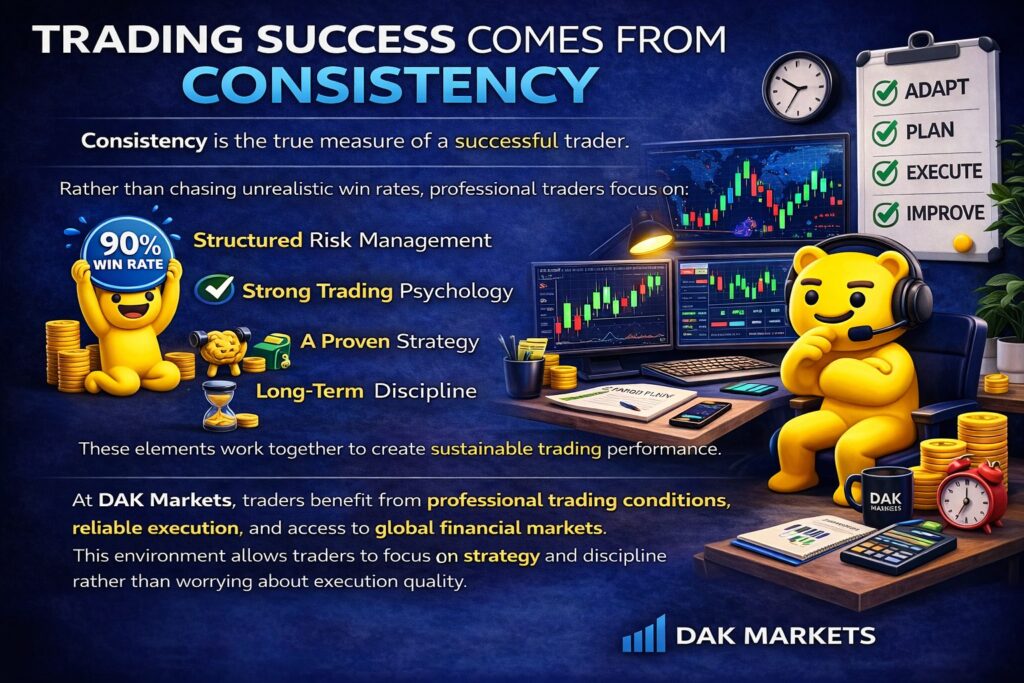
Trading Success Comes From Consistency
Consistency is the true measure of a successful trader.
Rather than chasing unrealistic win rates, professional traders focus on:
- Structured risk management
- Strong trading psychology
- A proven strategy
- Long-term discipline
These elements work together to create sustainable trading performance.
At DAK Markets, traders benefit from professional trading conditions, reliable execution, and access to global financial markets. This environment allows traders to focus on strategy and discipline rather than worrying about execution quality.
Final Thoughts
The idea that traders need a 90% win rate is a myth.
Many profitable traders operate successfully with win rates around 40–60%. Their success comes from managing risk and maximizing profitable trades.
If you want to improve your trading performance, focus on the fundamentals:
- Risk management
- Reward-to-risk ratios
- Discipline
- Consistency
Trading is not about being right every time.
It is about managing probabilities over hundreds of trades.
With the right mindset and proper risk control, traders can build long-term profitability — even without a 90% win rate.