Introduction: The Invisible Problem in Trading
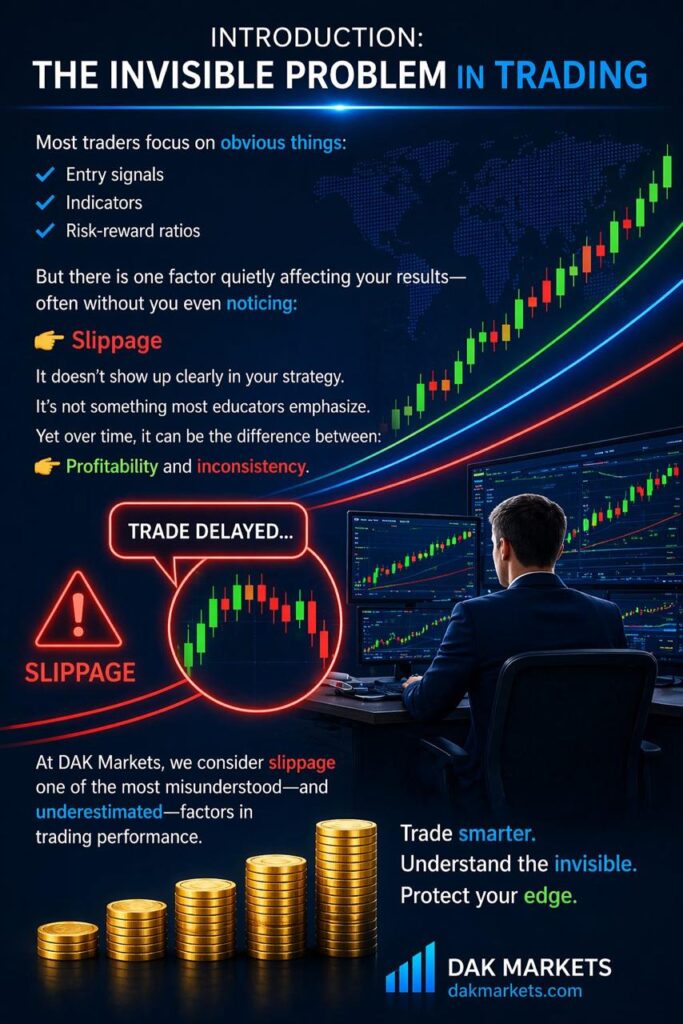
Most traders focus on obvious things:
- Entry signals
- Indicators
- Risk-reward ratios
But there is one factor quietly affecting your results—often without you even noticing:
👉 Slippage
It doesn’t show up clearly in your strategy.
It’s not something most educators emphasize.
Yet over time, it can be the difference between:
👉 Profitability and inconsistency
At DAK Markets, we consider slippage one of the most misunderstood—and underestimated—factors in trading performance.
What Is Slippage in Trading?
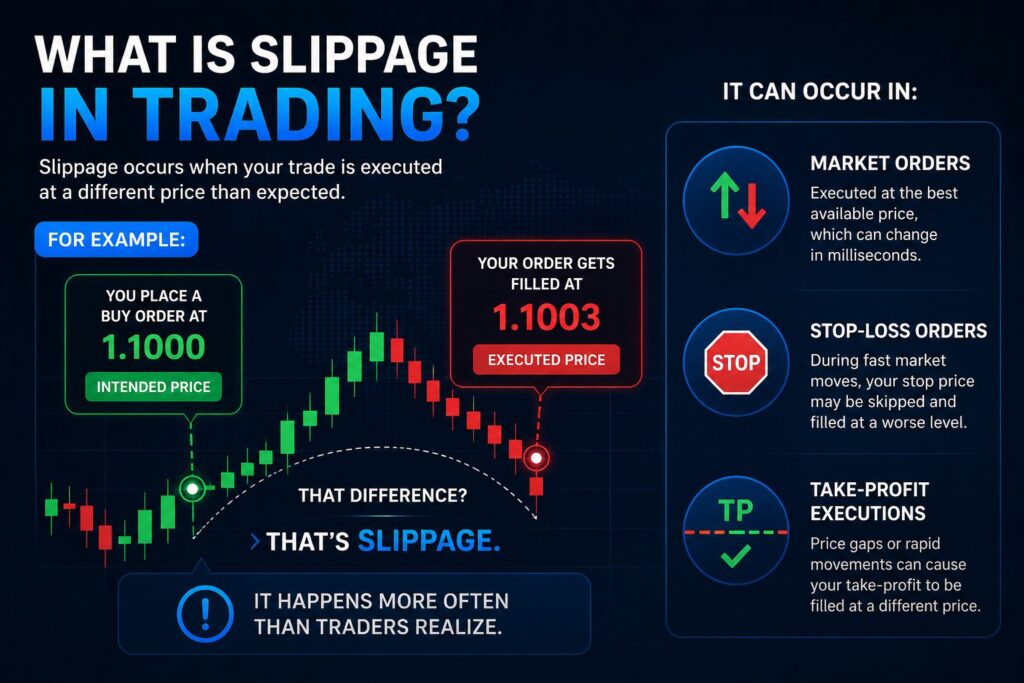
Slippage occurs when your trade is executed at a different price than expected.
For example:
- You place a buy order at 1.1000
- Your order gets filled at 1.1003
That difference?
👉 That’s slippage
It can occur in:
- Market orders
- Stop-loss orders
- Take-profit executions
And it happens more often than traders realize.
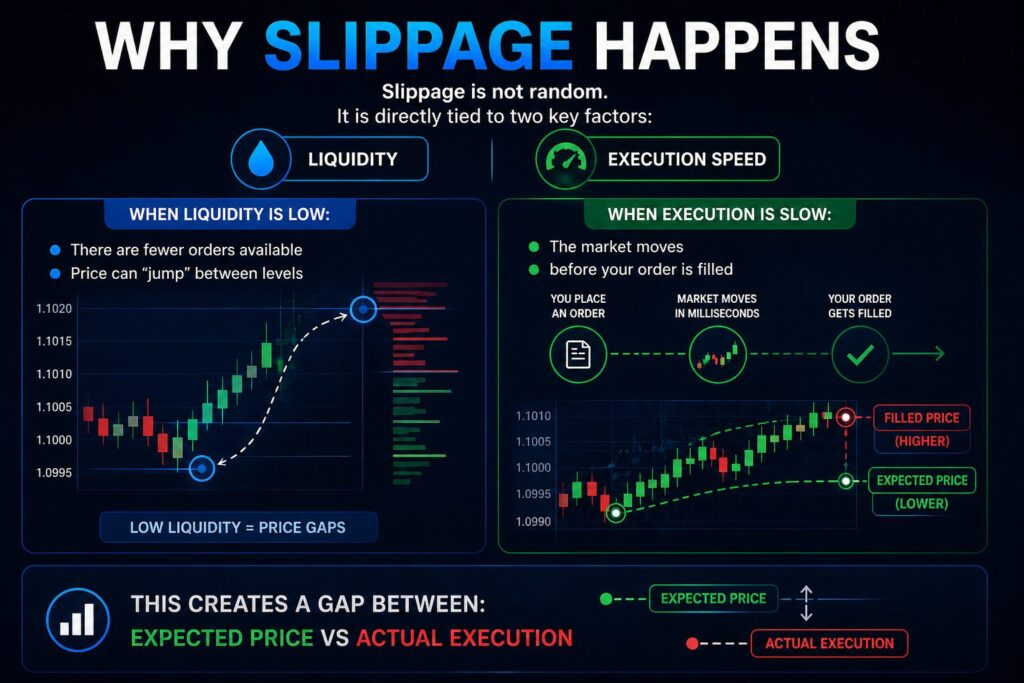
Why Slippage Happens
Slippage is not random.
It is directly tied to two key factors:
👉 Liquidity
👉 Execution speed
When liquidity is low:
- There are fewer orders available
- Price can “jump” between levels
When execution is slow:
- The market moves before your order is filled
This creates a gap between:
👉 Expected price vs actual execution
The Real Impact of Slippage on Your Performance
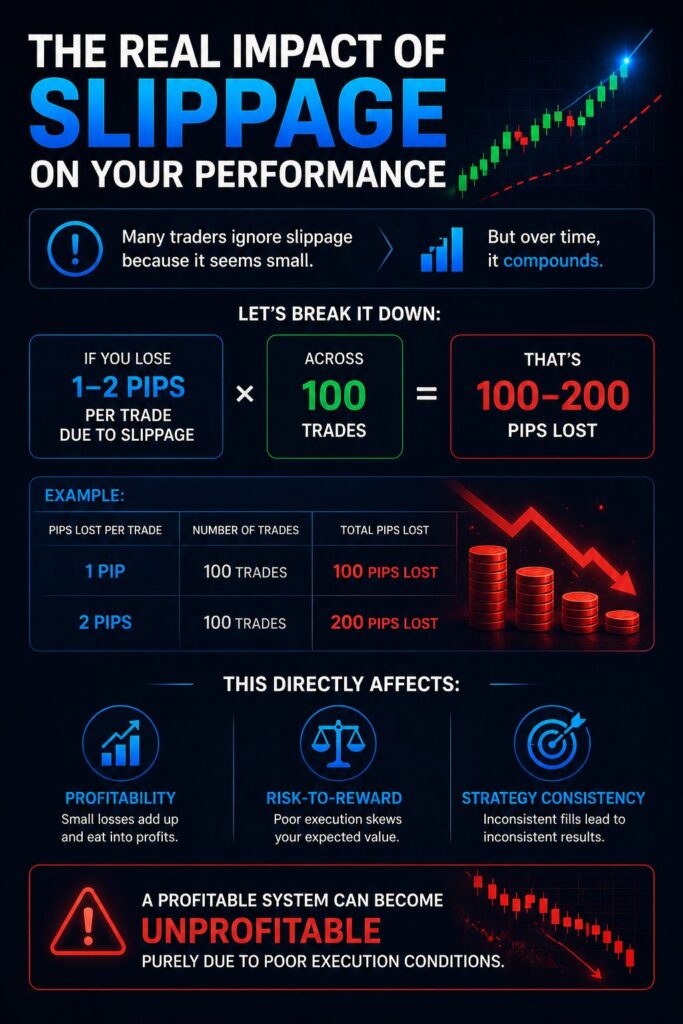
Many traders ignore slippage because it seems small.
But over time, it compounds.
Let’s break it down:
If you lose:
- 1–2 pips per trade due to slippage
- Across 100 trades
👉 That’s 100–200 pips lost
This directly affects:
- Profitability
- Risk-to-reward ratios
- Strategy consistency
👉 A profitable system can become unprofitable purely due to poor execution conditions.
Where Slippage Happens Most
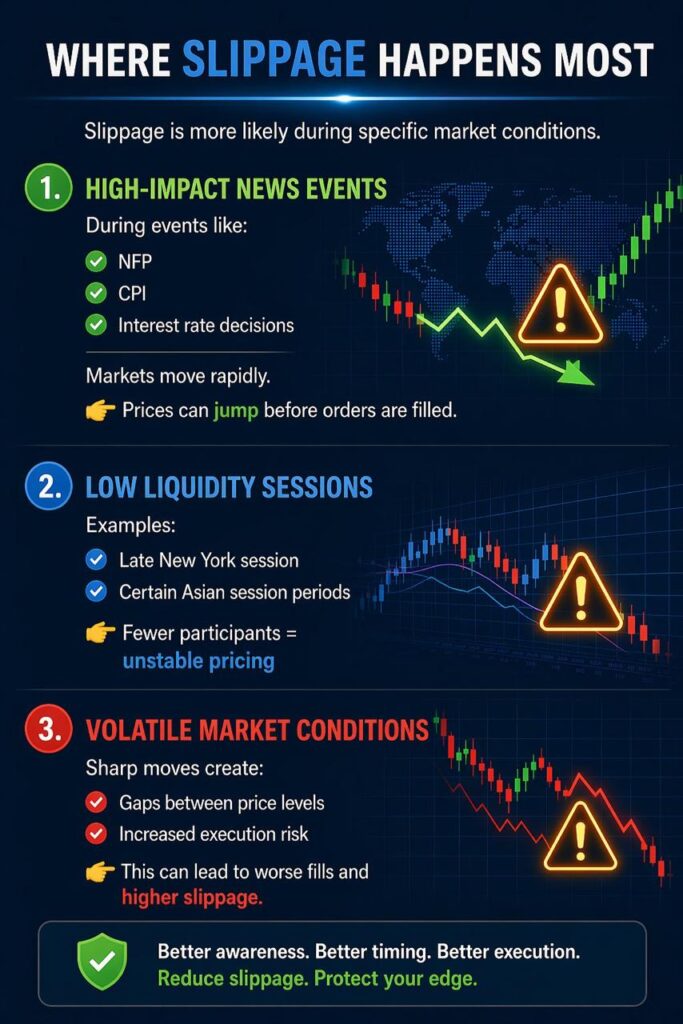
Slippage is more likely during specific market conditions.
1. High-Impact News Events
During events like:
- NFP
- CPI
- Interest rate decisions
Markets move rapidly.
👉 Prices can jump before orders are filled
2. Low Liquidity Sessions
Examples:
- Late New York session
- Certain Asian session periods
👉 Fewer participants = unstable pricing
3. Volatile Market Conditions
Sharp moves create:
- Gaps between price levels
- Increased execution risk
Why Most Traders Underestimate Slippage
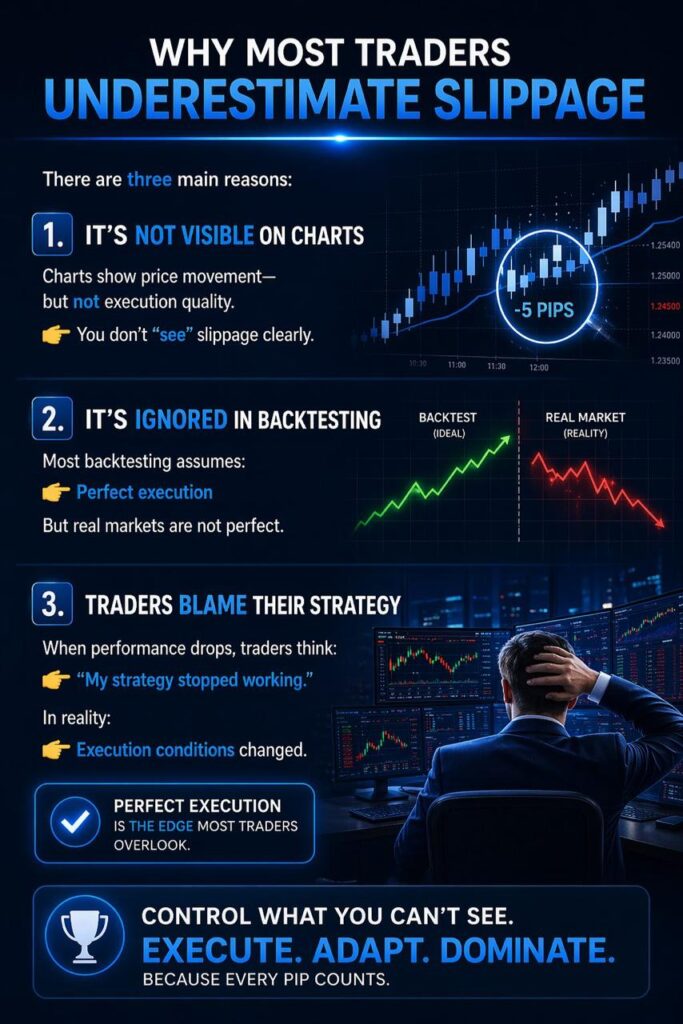
There are three main reasons:
1. It’s Not Visible on Charts
Charts show price movement—but not execution quality.
👉 You don’t “see” slippage clearly
2. It’s Ignored in Backtesting
Most backtesting assumes:
👉 Perfect execution
But real markets are not perfect.
3. Traders Blame Their Strategy
When performance drops, traders think:
👉 “My strategy stopped working.”
In reality:
👉 Execution conditions changed
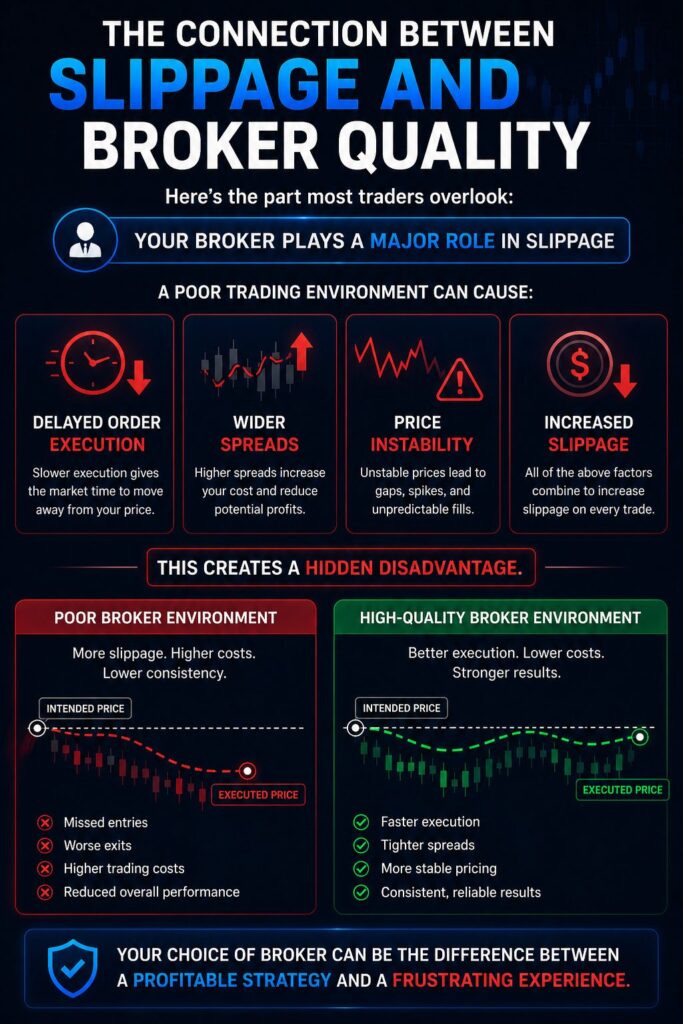
The Connection Between Slippage and Broker Quality
Here’s the part most traders overlook:
👉 Your broker plays a major role in slippage
A poor trading environment can cause:
- Delayed order execution
- Wider spreads
- Price instability
- Increased slippage
This creates a hidden disadvantage.
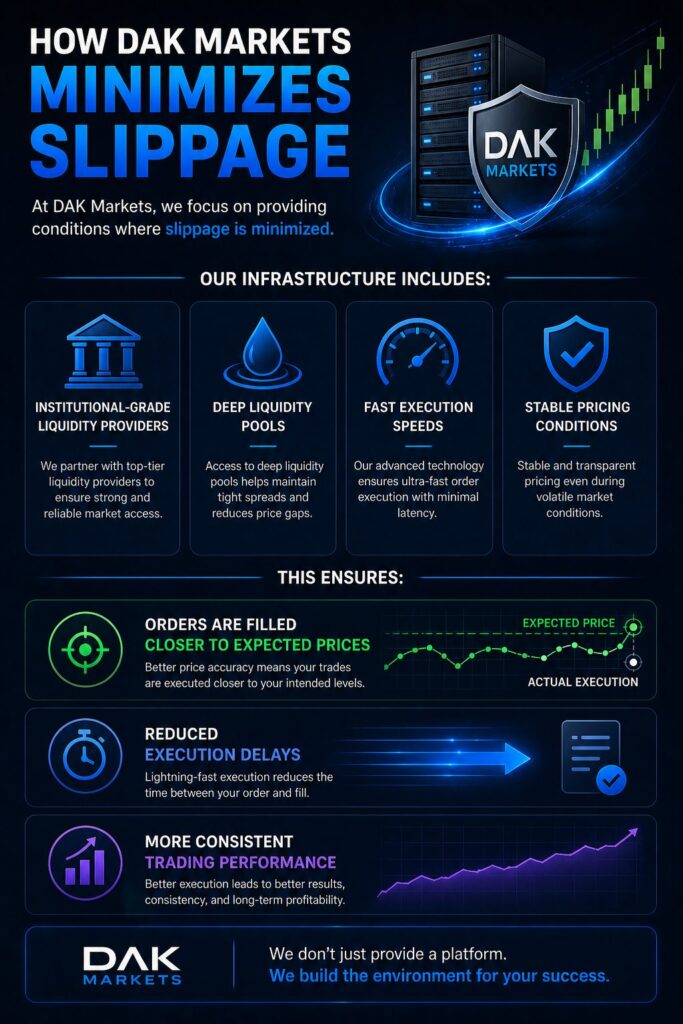
How DAK Markets Minimizes Slippage
At DAK Markets, we focus on providing conditions where slippage is minimized.
Our infrastructure includes:
- Institutional-grade liquidity providers
- Deep liquidity pools
- Fast execution speeds
- Stable pricing conditions
This ensures:
👉 Orders are filled closer to expected prices
👉 Reduced execution delays
👉 More consistent trading performance
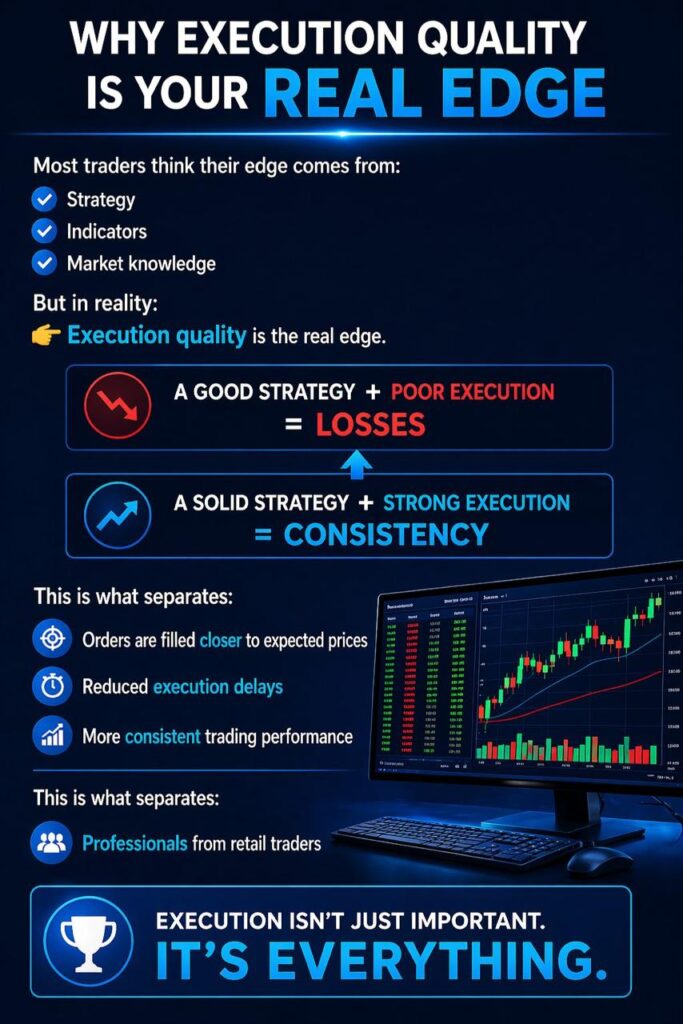
Why Execution Quality Is Your Real Edge
Most traders think their edge comes from:
- Strategy
- Indicators
- Market knowledge
But in reality:
👉 Execution quality is the real edge
Because:
- A good strategy + poor execution = losses
- A solid strategy + strong execution = consistency
This is what separates:
👉 Professionals from retail traders
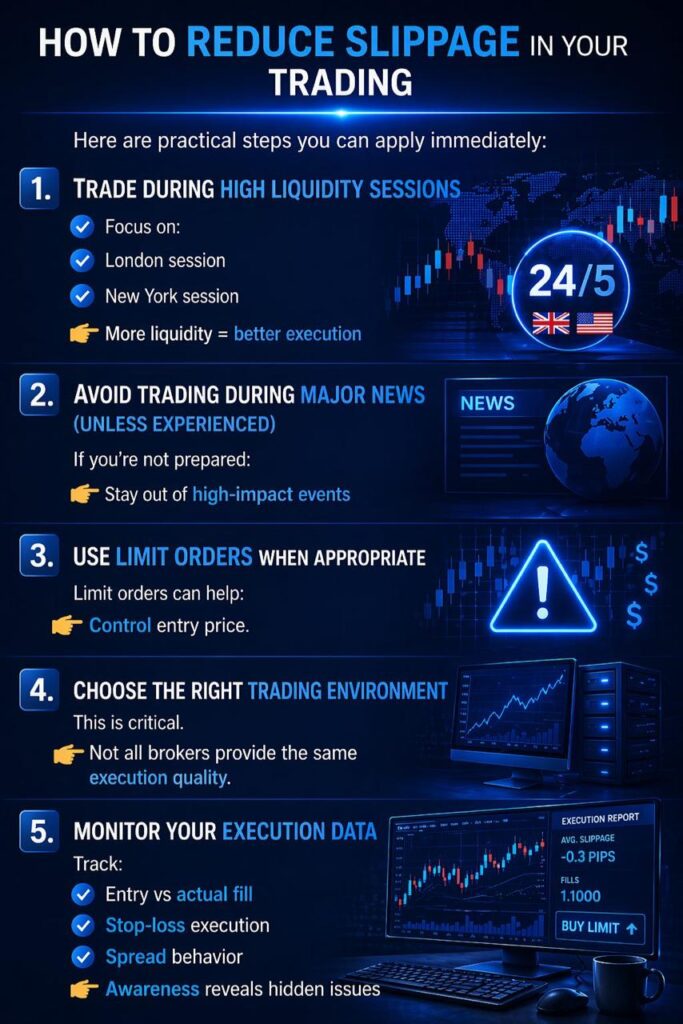
How to Reduce Slippage in Your Trading
Here are practical steps you can apply immediately:
1. Trade During High Liquidity Sessions
Focus on:
- London session
- New York session
👉 More liquidity = better execution
2. Avoid Trading During Major News (Unless Experienced)
If you’re not prepared:
👉 Stay out of high-impact events
3. Use Limit Orders When Appropriate
Limit orders can help:
👉 Control entry price
4. Choose the Right Trading Environment
This is critical.
👉 Not all brokers provide the same execution quality
5. Monitor Your Execution Data
Track:
- Entry vs actual fill
- Stop-loss execution
- Spread behavior
👉 Awareness reveals hidden issues
The Long-Term Advantage
When you understand and manage slippage, you begin to:
- Protect your edge
- Improve consistency
- Reduce unnecessary losses
Over time:
👉 Small improvements in execution create major differences in results
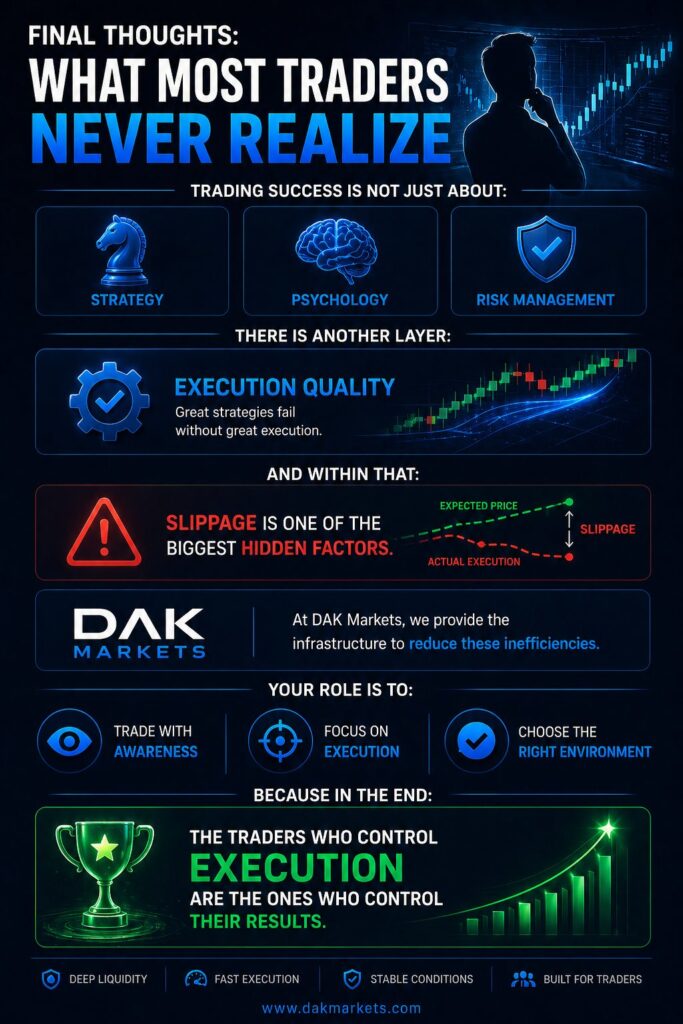
Final Thoughts: What Most Traders Never Realize
Trading success is not just about:
- Strategy
- Psychology
- Risk management
There is another layer:
👉 Execution quality
And within that:
👉 Slippage is one of the biggest hidden factors
At DAK Markets, we provide the infrastructure to reduce these inefficiencies.
Your role is to:
👉 Trade with awareness
👉 Focus on execution
👉 Choose the right environment
Because in the end:
👉 The traders who control execution are the ones who control their results