DAK Markets

Author name: DAK Markets

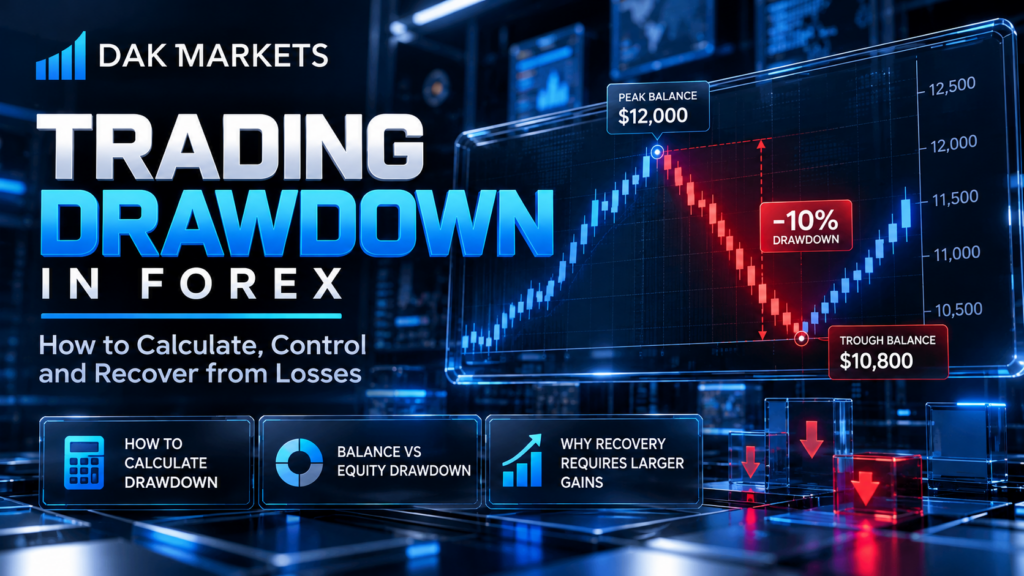
DAK Markets trading drawdown in forex infographic showing a 10% account decline from $12,000 to $10,800, with a trading chart illustrating drawdown and recovery.
Uncategorized

Trading Drawdown in Forex: How to Calculate, Control and Recover from Losses

Understanding **trading drawdown in forex** is essential for effective risk management and long-term trading discipline. Learn how to calculate balance and equity drawdown, understand the difference between temporary and realized losses, and discover why recovering from significant account losses requires increasingly larger percentage gains. DAK Markets explains practical drawdown examples and risk-management principles to help traders better evaluate their trading performance.

DAK Markets trading expectancy in forex infographic comparing 40% and 80% win rates, average winning and losing trades, and expected trading outcomes.
Uncategorized

Trading Expectancy in Forex: How to Calculate Your Strategy’s Expected Outcome

Understanding **trading expectancy in forex** helps traders evaluate whether a strategy has the potential to generate positive results over time. Learn how to calculate expectancy using win rate, average profit, and average loss, and discover why a strategy with an 80% win rate can still lose money. DAK Markets explains trading expectancy through practical examples, risk-to-reward calculations, and essential forex risk management principles.

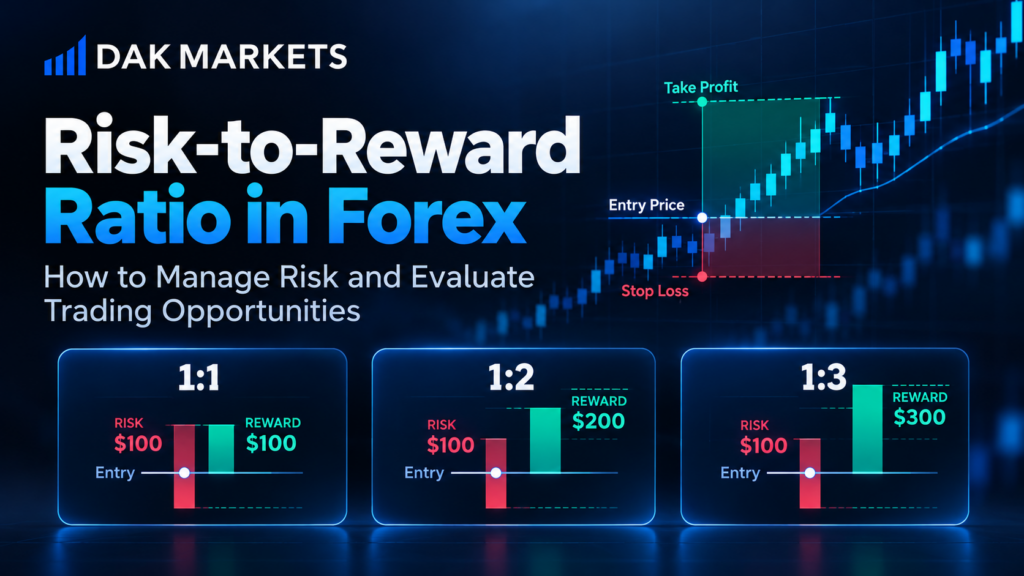
DAK Markets forex risk-to-reward ratio infographic comparing 1:1, 1:2, and 1:3 ratios with stop-loss, entry price, and take-profit levels.
Forex Education, Forex Trading 101

Risk-to-Reward Ratio in Forex: How to Manage Risk and Evaluate Trading Opportunities

Understanding the **risk-to-reward ratio in forex trading** is essential for effective risk management. Learn how to calculate potential profits and losses, compare 1:1, 1:2, and 1:3 risk-to-reward ratios, and discover why a high win rate does not always mean profitability. DAK Markets explains how stop-loss placement, take-profit targets, and position sizing help traders evaluate opportunities and make more disciplined trading decisions.

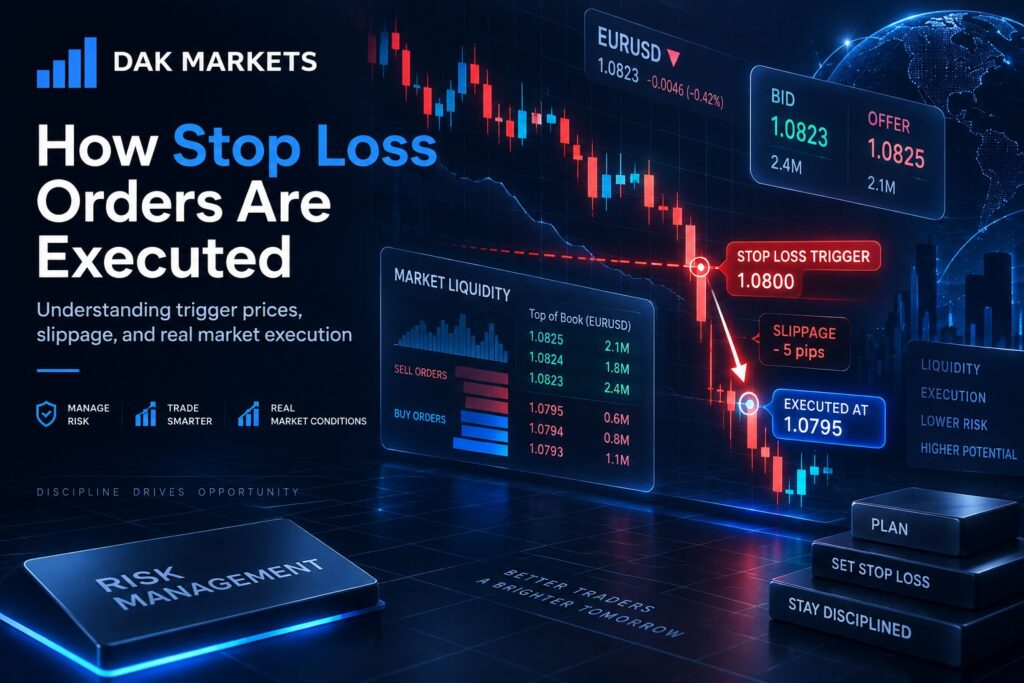
Slippage in forex trading explained with EURUSD requested price and positive and negative execution price examples.
Forex Trading 101

What Is Slippage in Forex Trading?

Slippage in forex trading occurs when an order is executed at a different price than originally requested. Learn why slippage happens, how positive and negative slippage work, when it is most likely to occur, and how traders can manage execution risk.

Scroll to Top