DAK Markets

Author name: DAK Markets

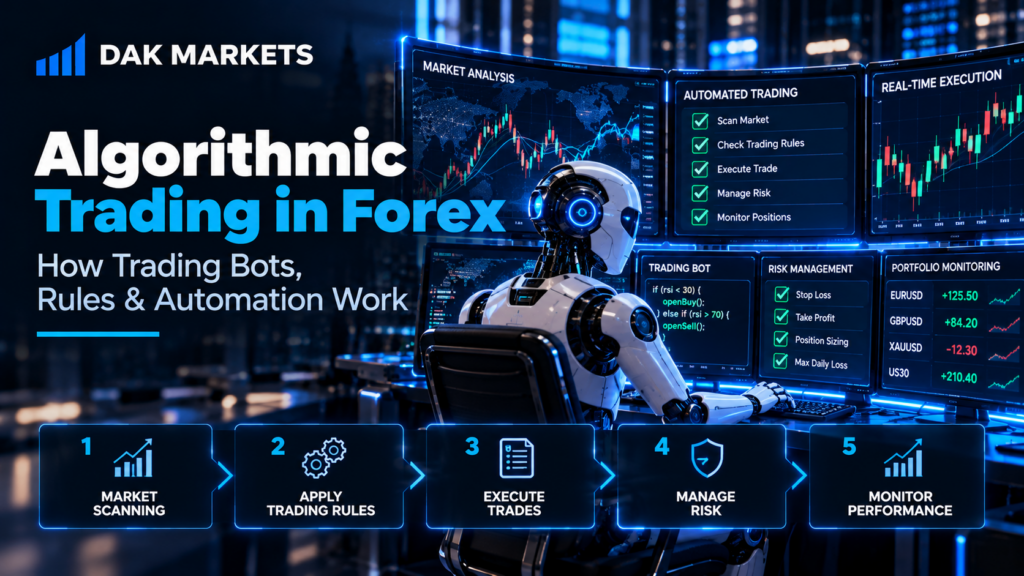
DAK Markets algorithmic trading in forex infographic showing an automated trading robot, market analysis, trading rules, order execution, and risk management.
Forex Education, Forex Trading 101

Algorithmic Trading in Forex: How Trading Bots, Rules & Automation Work

Discover how **algorithmic trading in forex** uses automated trading bots, predefined rules, and advanced technology to analyze market conditions and execute trades. DAK Markets explains how forex trading algorithms work, including signal generation, automated order execution, risk management, backtesting, and VPS hosting. Learn the advantages and limitations of automated forex trading, why human monitoring remains essential, and how traders can evaluate algorithmic strategies while managing execution risks and protecting trading capital.

DAK Markets forex trading VPS infographic showing a trader's computer connected to a remote VPS, broker servers, and global forex markets.
Forex Education, Forex Trading 101

Forex Trading VPS Explained: How Automated Strategies Stay Connected

Understanding how a **forex trading VPS** works is essential for traders using automated strategies and Expert Advisors (EAs). Discover how Virtual Private Servers support continuous trading platform operation, remote access, and reliable connectivity to broker infrastructure. DAK Markets explains how VPS hosting can reduce dependence on personal computers, potentially improve network latency, and support algorithmic trading while highlighting the importance of server location, system monitoring, and effective risk management.

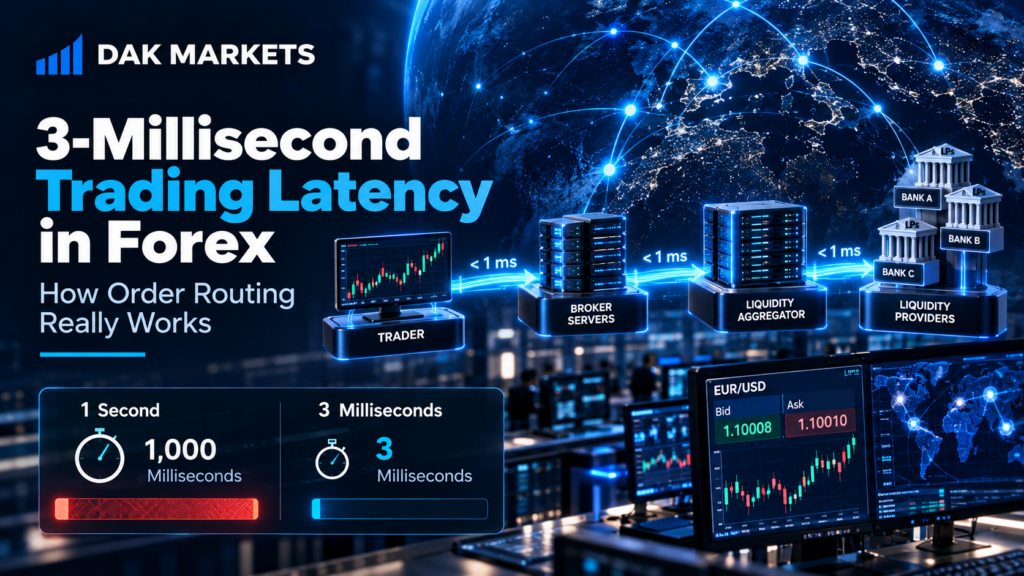
DAK Markets forex trading latency infographic illustrating 3-millisecond infrastructure latency, broker servers, liquidity aggregation, order routing and liquidity providers.
Forex Education, Forex Trading 101

3-Millisecond Trading Latency in Forex: How Order Routing Really Works

Understanding **trading latency in forex** is essential for evaluating order execution speed, price accuracy, and trading performance. Discover how low-latency trading infrastructure, including connections as fast as 3 milliseconds under optimal conditions, supports efficient order routing and market access. DAK Markets explains how orders travel between traders, broker servers, liquidity aggregators, and liquidity providers, while exploring the impact of network delays, slippage, and market volatility on forex execution quality.

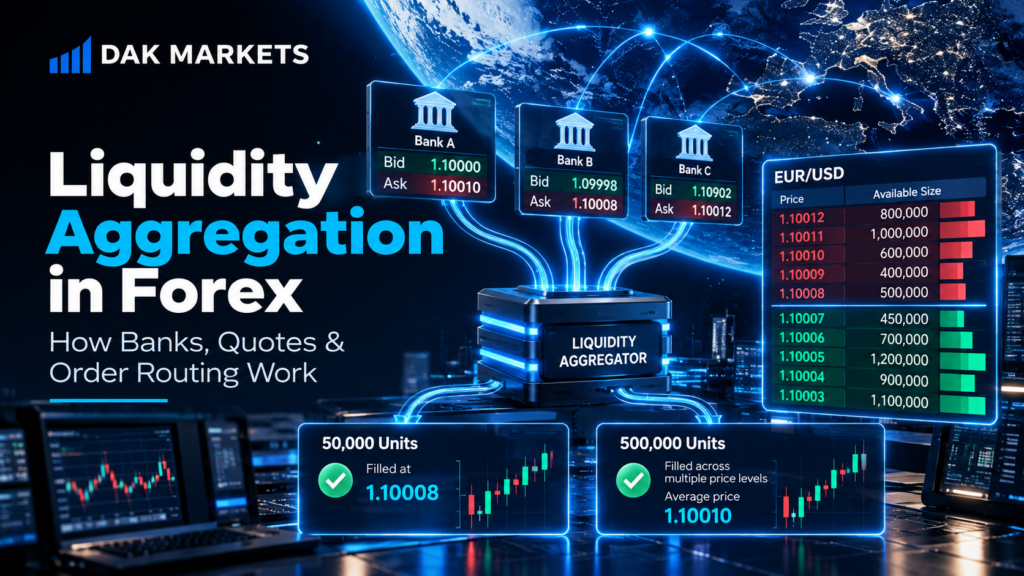
DAK Markets liquidity aggregation in forex infographic showing three liquidity providers, EUR/USD bid and ask quotes, an order book, and trade execution.
Forex Education, Forex Trading 101

Liquidity Aggregation in Forex: How Banks, Quotes & Order Routing Work

Understanding **liquidity aggregation in forex trading** is essential for evaluating market pricing, order execution, and trading costs. Discover how brokers combine quotes from multiple liquidity providers, including banks and financial institutions, to access competitive bid and ask prices. DAK Markets explains how liquidity aggregation, order routing, market depth, and volume-weighted execution affect spreads, slippage, and larger trading positions, helping traders better understand the mechanics of forex market execution.

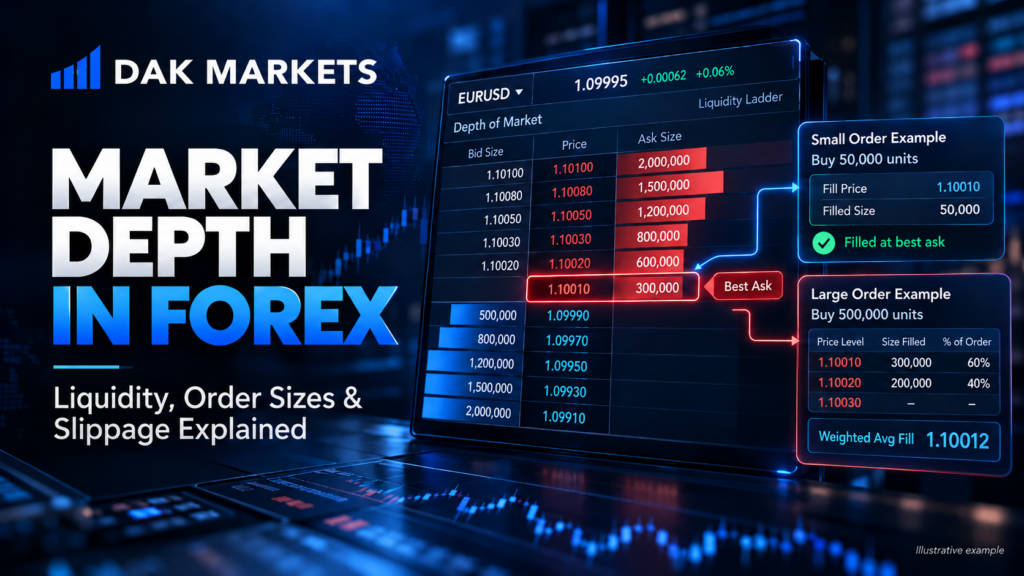
DAK Markets market depth in forex infographic showing EUR/USD order book liquidity, bid and ask prices, and execution of 50,000-unit and 500,000-unit buy orders.
Forex Education, Forex Trading 101

Market Depth in Forex: Liquidity, Order Sizes & Slippage Explained

Understanding **market depth in forex trading** is essential for evaluating liquidity, order execution, and potential slippage. Learn how available buy and sell orders at different price levels affect trade execution, why larger positions may experience multiple fills, and how liquidity conditions influence trading costs. DAK Markets explains market depth through practical examples, including order book liquidity, volume-weighted execution prices, and important forex risk management principles to help traders make more informed trading decisions.

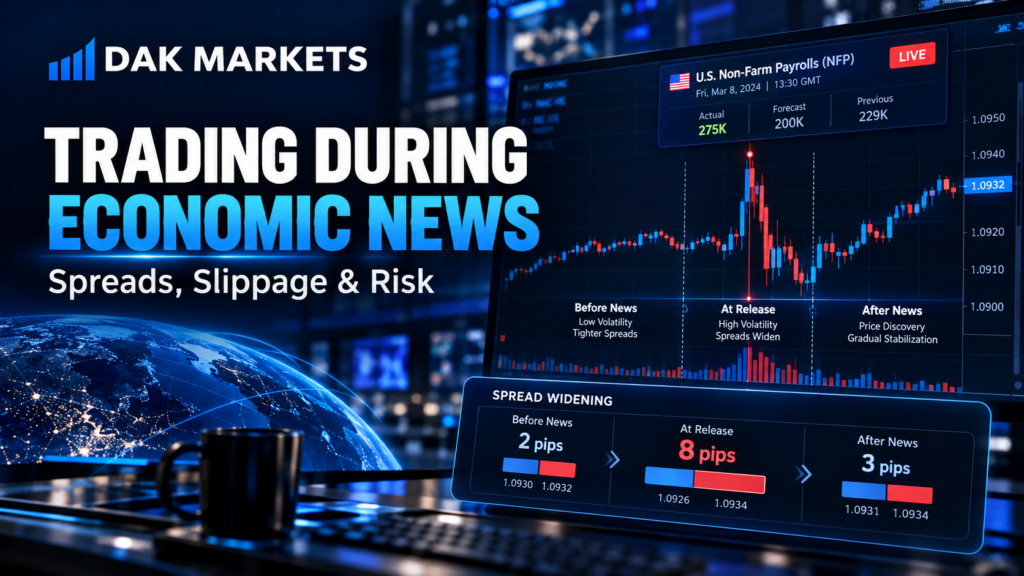
DAK Markets forex trading infographic showing economic news volatility, NFP market reactions, and spreads widening from 2 to 8 pips.
Forex Education, Forex Trading 101

Trading During Economic News in Forex: Spreads, Slippage & Risk

Understanding **trading during economic news in forex** is essential for managing market volatility and execution risk. Major economic announcements, including interest rate decisions, inflation reports, and employment data, can trigger sudden price movements, wider spreads, and increased slippage. DAK Markets explains how high-impact news affects forex trading conditions, why stop-loss orders may execute at unexpected prices, and how traders can approach economic announcements with more effective risk management.

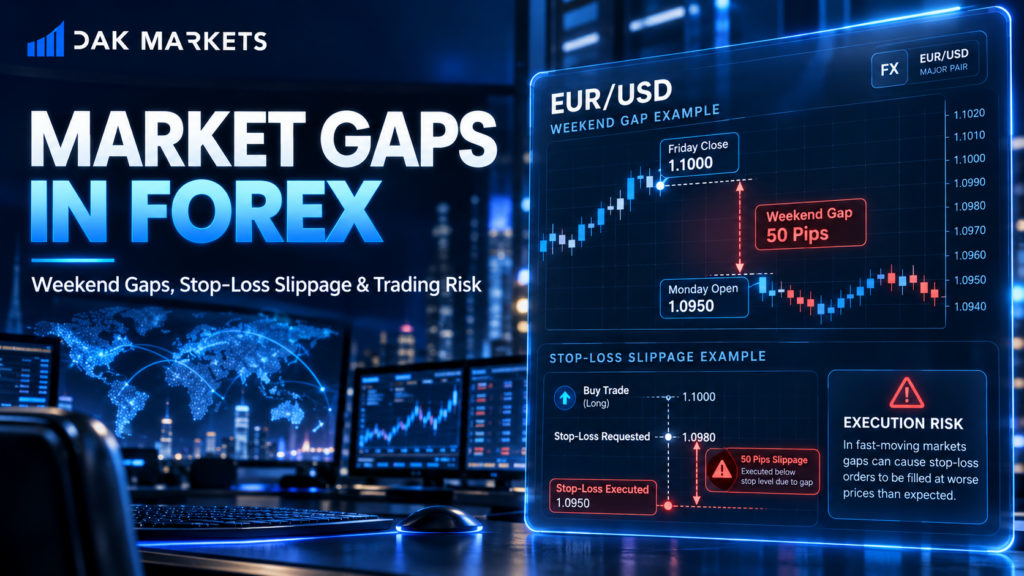
Forex market gaps infographic showing a 50-pip EUR/USD weekend gap between Friday's closing price of 1.1000 and Monday's opening price of 1.0950.
Forex Education, Forex Trading 101

Market Gaps in Forex: Weekend Gaps, Stop-Loss Slippage & Trading Risk

Understanding **market gaps in forex trading** is essential for managing execution risk and unexpected price movements. Learn why weekend gaps occur, how gap-ups and gap-downs affect open positions, and why stop-loss orders may execute at prices different from those requested. DAK Markets explains market gaps through practical EUR/USD examples, including a 50-pip weekend gap, stop-loss slippage, and important risk-management considerations for forex traders.

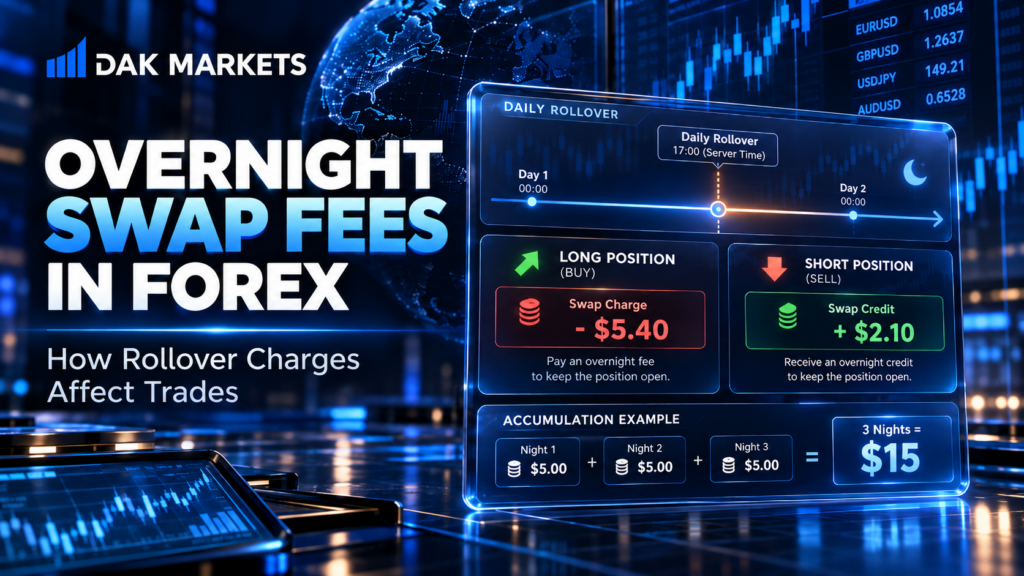
DAK Markets overnight swap fees in forex infographic showing daily rollover, long and short position swap charges and credits, and accumulated financing costs.
Forex Education, Forex Trading 101

Overnight Swap Fees in Forex: How Rollover Charges Affect Trades

Understanding **overnight swap fees in forex trading** is essential for evaluating the true cost of holding positions beyond the daily rollover. Learn how swap charges and credits work, why long and short positions may have different financing rates, and how multi-day rollover adjustments can influence trading results. DAK Markets explains overnight financing through practical examples to help traders better understand trading costs, position management, and forex risk management.

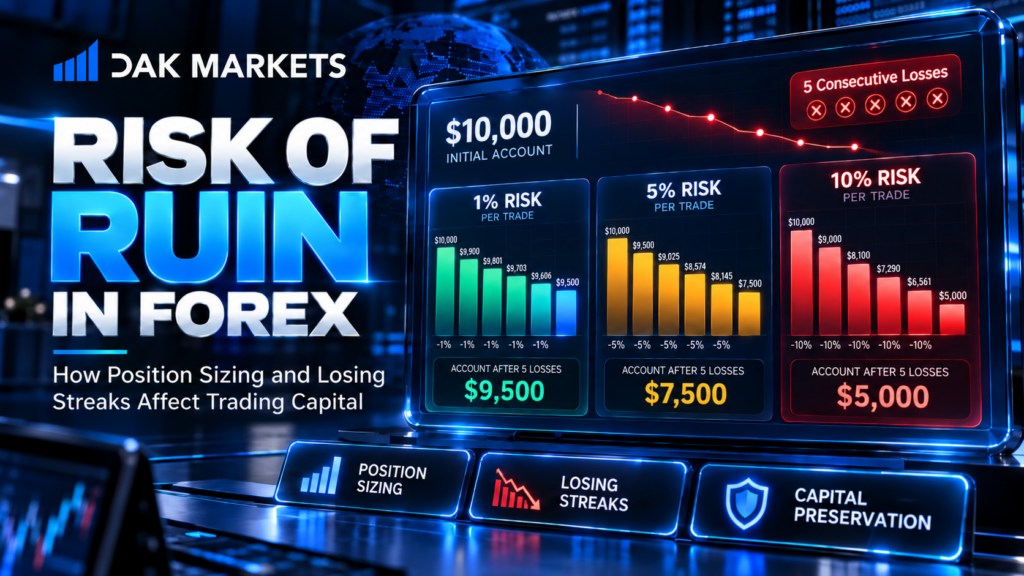
DAK Markets risk of ruin in forex infographic comparing 1%, 5%, and 10% risk per trade during five consecutive trading losses on a $10,000 account.
Uncategorized

Risk of Ruin in Forex: How Position Sizing and Losing Streaks Affect Trading Capital

Understanding **risk of ruin in forex trading** is essential for effective risk management and long-term capital preservation. Discover how position sizing, consecutive losing trades, and risking 1%, 5%, or 10% per trade can affect your trading account. DAK Markets explains the relationship between risk exposure, account drawdowns, trading expectancy, and capital recovery, helping traders understand how disciplined risk management can reduce the likelihood of significant trading losses.

Scroll to Top